Arctic Surge Brings -30°F Wind Chills and 55‑Mph Gusts Across Mid‑Atlantic
Updated (15 articles)
-
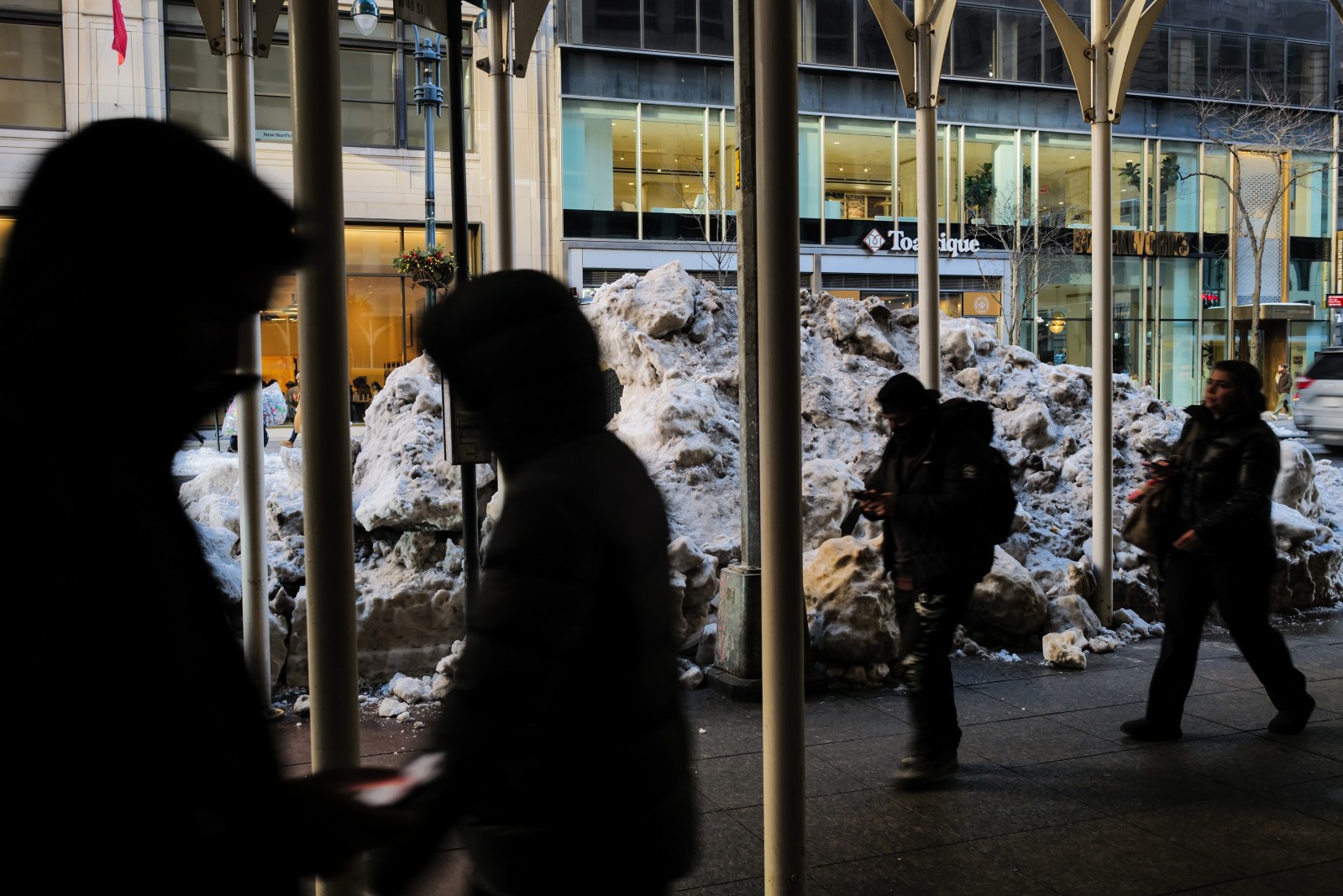 Image: NewsweekNEW YORK, NEW YORK- FEBRUARY 04: Mounds of snow build up on a New York City sidewalk on February 04, 2026 in New York City. The new New York City Mayor, Zohran Mamdani, is facing increased pressure from public officials and homeless advocates after at least 16 people have died since a massive snowstorm hit the city, ushering in more than a week of below-freezing temperatures. While not all of the people were thought to be homeless, many were without shelter. It is estimated that there are over 158,000 homeless individuals in New York City, one of the highest rates in the nation. (Photo by Spencer Platt/Getty Images) Source Full size
 -
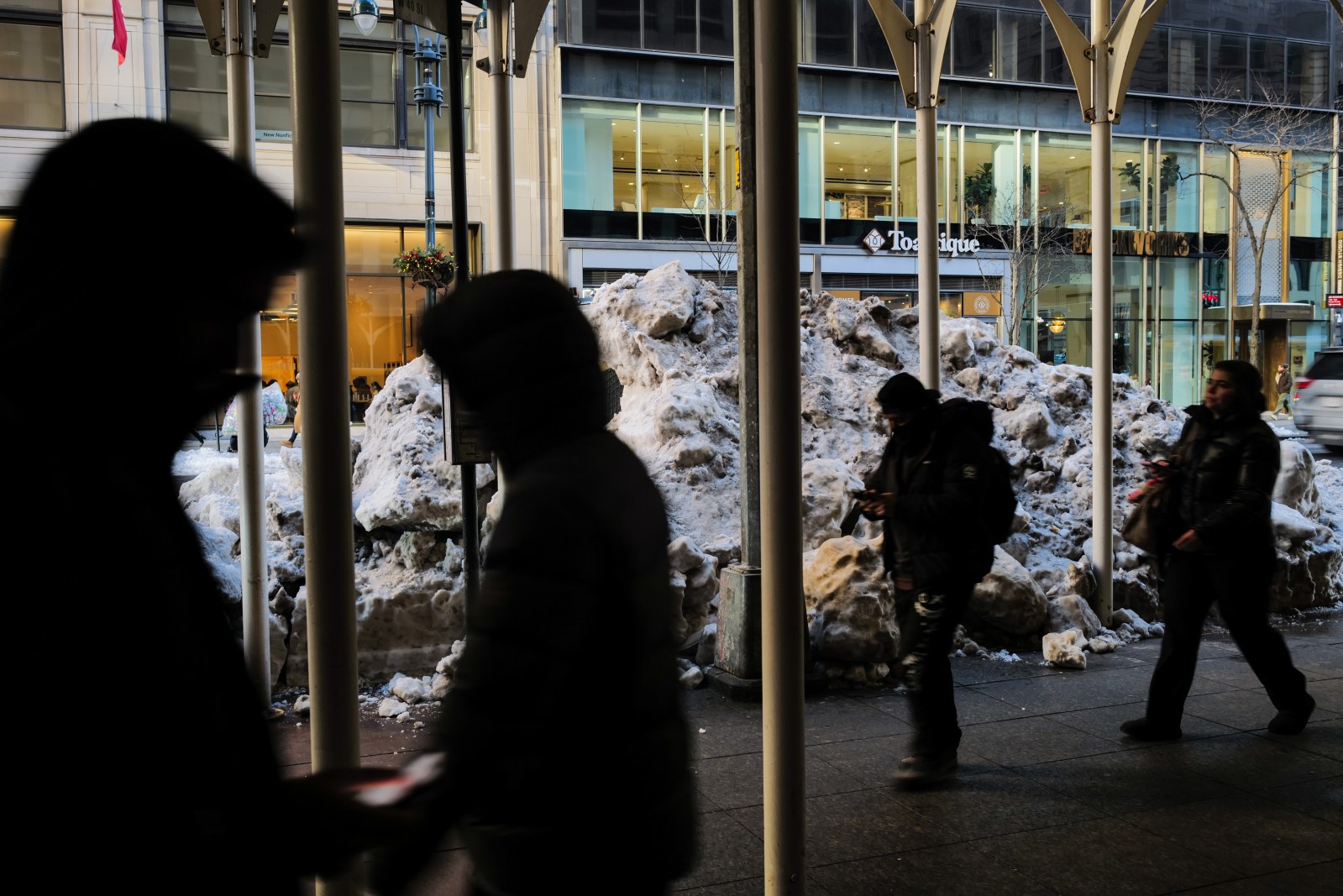 Image: NewsweekNEW YORK, NEW YORK- FEBRUARY 04: Mounds of snow build up on a New York City sidewalk on February 04, 2026 in New York City. The new New York City Mayor, Zohran Mamdani, is facing increased pressure from public officials and homeless advocates after at least 16 people have died since a massive snowstorm hit the city, ushering in more than a week of below-freezing temperatures. While not all of the people were thought to be homeless, many were without shelter. It is estimated that there are over 158,000 homeless individuals in New York City, one of the highest rates in the nation. (Photo by Spencer Platt/Getty Images) Source Full size
Arctic Air Mass Drives Record Cold Across Region The Arctic air mass is advancing from the Great Lakes into the Ohio Valley, bringing wind chills as low as minus 30°F from West Virginia to Maine. A cold watch is in effect Friday night through the weekend, covering the Mid‑Atlantic and Northeast. Forecasters expect the most severe values along the I‑95 corridor, where temperatures will plunge sharply [1].
Wind Chill and Gust Forecasts Intensify Saturday The National Weather Service in Albany warned wind chills could reach 25‑35°F below zero, a range that can cause rapid frostbite and hypothermia. Winds are projected at 30‑40 mph on Friday, strengthening to 50‑55 mph by Saturday across the Mid‑Atlantic, Northeast, and New England. These gusts are likely to exacerbate wind‑chill values and trigger scattered power outages [1].
Health and Safety Warnings Issued by NWS Meteorologist Frank Pereira emphasized the heightened risk of hypothermia and frostbite, urging residents to wear layered clothing, limit travel, and protect animals. He noted that the extreme wind chills could break regional records, especially in densely populated areas. The agency also advised drivers to reduce speed due to reduced visibility from blowing snow [1].
Snowfall and Visibility Problems Expected Light snow will begin Friday night, with 1‑3 inches forecast for most locations. As winds increase Saturday, blowing snow will further reduce visibility, prompting travel cautions for motorists. The combination of snow and high winds creates hazardous road conditions throughout the affected states [1].
Cold Spell Projected to Moderate Early Next Week Pereira indicated the Arctic front should move out of the region after the weekend, allowing temperatures to gradually rise. The extreme cold is expected to ease early next week, diminishing the immediate threat to residents and infrastructure. Continued monitoring will determine the exact timing of the moderation [1].
Timeline
Nov 2025 – The polar vortex weakens in late November, allowing frigid Arctic air to spill southward into the United States, setting the stage for a series of cold outbreaks later in the winter [2].
Dec 3, 2025 – An Arctic air mass descends across the Plains, Midwest, Great Lakes and Northeast, bringing record lows of –11 °F in Des Moines and –7 °F in Cedar Rapids, while wind chills reach –10 °F to –25 °F; Amy Butler warns that a second cold wave could hit by mid‑December as the vortex “becomes more stretched out” [2].
Dec 8, 2025 – The National Weather Service forecasts a new Arctic blast for Dec 12‑14 in the Northeast, part of multiple Arctic waves through mid‑December, with a potential –3 °F low in Madison, Wisconsin [7].
Dec 9, 2025 – Judah Cohen of AER JANUS predicts mid‑December will bring the coldest period of the season, citing a stretched polar vortex that drives Arctic air far south; the CPC 6‑10‑day outlook shows below‑average temperatures Dec 12‑16 [12].
Dec 9, 2025 – A second surge of frigid air is expected Dec 12‑16, potentially delivering the coldest temperatures of the season across the Eastern U.S., as the polar vortex elongates between East Asia and North America [15].
Dec 12, 2025 – The NWS projects Arctic air moving south from the High Plains on Friday, spreading into the Central Plains Saturday and the Mid‑South Sunday, with temperatures 20‑30 °F below normal, wind chills under 30 °F, and extreme lows of 10‑15 °F below zero in Minneapolis and 0‑5 °F below zero in Chicago [6].
Dec 13, 2025 – Extreme cold warnings cover North Dakota, West Virginia and Virginia; near‑record lows threaten the High Plains to the Mid‑Atlantic, the USPS alerts of mail delays in 13 states, and forecasters say the most intense cold will ease before Christmas [5].
Dec 27, 2025 – Renee Duff notes that a pair of potent cold fronts will plunge into the northern tier as 2025 ends, bringing a bitter Jan 1‑5 across the Northeast and Great Lakes; a prior winter storm drops heavy snow and ice, causing >650 flight delays, >600 cancellations, and power outages for >30,000 Michigan customers [4].
Jan 12, 2026 – A powerful Arctic surge spills southward into the Midwest and East over the next ten days; the first front pushes through the Great Lakes Tuesday night, the second arrives early weekend with sub‑zero wind chills and gusts near 40 mph, and snow totals could exceed a foot in higher elevations, with pockets reaching the Tennessee River Valley [11][14].
Jan 17, 2026 – A winter storm blankets the Midwest and East Coast, creating whiteout conditions in Cleveland, sub‑zero wind chills from the Plains to the Northeast, and up to four inches of snow from the Florida Panhandle to Maine; the event echoes a record‑breaking Jan 2025 Panhandle snowstorm [8].
Jan 19, 2026 – An Arctic blast targets the South weekend, with the front reaching Kansas‑Kentucky Friday and racing into Texas‑Louisiana Saturday, delivering cold rain, freezing rain, ice and snow; temperatures sit 20‑30 °F below average with highs in the 30s‑40s, prompting officials to urge vehicle winterization and emergency kits [10][13].
Jan 20, 2026 – The Arctic blast dominates the forecast through Tuesday, keeping highs in the 20s, wind chills of –5 °F to –15 °F, and prompting 10TV to declare a Weather Impact Alert Day alongside a NWS Cold Weather Advisory; forecasters warn the cold could return next weekend [9].
Jan 22, 2026 – The Arctic blast sweeps 30 states, threatening 160 million people; snowfall may exceed 12 inches from Colorado to New York, wind chills could plunge below –50 °F across the Northern Plains, and Governors of Arkansas, Georgia, Texas, North Carolina and South Carolina declare emergencies, with Texas Gov. Greg Abbott stressing that resources are ready for residents [1].
Feb 6, 2026 – An Arctic surge hits the Mid‑Atlantic and Northeast, driving wind chills to –30 °F and gusts up to 55 mph; NWS meteorologist Frank Pereira warns of rapid frostbite, hypothermia and possible record lows along the I‑95 corridor, while light snow and blowing snow reduce visibility; the extreme cold is expected to moderate early next week [3].
Dive deeper (10 sub-stories)
-
Newsweek: Mid‑Atlantic and Northeast Brace for ‑30°F Wind Chills as Arctic Surge Hits
-
BBC: Arctic Cold Wave Threatens 160 Million Americans with Heavy Snow and Extreme Wind Chill
-
WBNS (Columbus, OH): Arctic blast brings subzero wind chills to central Ohio through Tuesday
-
Arctic Blast Set to Slam Southern States With Ice, Snow, and Freezing Rain This Weekend
(2 articles)
-
AP: Winter storm blankets Midwest and East Coast with snow and subfreezing wind chills
-
Arctic Air Surge Brings Subzero Wind Chills and Foot‑Plus Snow Across Midwest, Northeast
(2 articles)
-
Newsweek: Arctic blast to start 2026 with dangerous cold and travel disruptions
-
Polar Vortex Triggers Extreme Cold Warnings, Mail Delays Across Central and Eastern U.S.
(2 articles)
-
Mid‑December Arctic Blast Set to Deliver Coldest Temperatures of Season to Eastern U.S.
(3 articles)
-
CNN: Arctic Air Mass Brings Record Cold to Midwest and Northeast
All related articles (15 articles)
-
Newsweek: Mid‑Atlantic and Northeast Brace for ‑30°F Wind Chills as Arctic Surge Hits
-
BBC: Arctic Cold Wave Threatens 160 Million Americans with Heavy Snow and Extreme Wind Chill
-
WBNS (Columbus, OH): Arctic blast brings subzero wind chills to central Ohio through Tuesday
-
WBNS (Columbus, OH): Arctic blast forecast to bring ice and cold rain to the South this weekend
-
King5 (Seattle, WA): Arctic blast to bring cold rain and ice to the South this weekend
-
AP: Winter storm blankets Midwest and East Coast with snow and subfreezing wind chills
-
WBNS (Columbus, OH): Arctic air surge to bring deep cold and snow to Midwest and East this week
-
King5 (Seattle, WA): Arctic air surge to sweep Midwest and East with heavy snow forecast
-
Newsweek: Arctic blast to start 2026 with dangerous cold and travel disruptions
-
Newsweek: Polar Vortex Brings Extreme Cold Across Central and Eastern U.S.
-
Newsweek: Polar Vortex Forecast: Near Record Cold Expected Through Sunday Across Midwest and East
-
WBNS (Columbus, OH): Arctic blast could bring the coldest December temperatures to the Eastern U.S.
-
King5 (Seattle, WA): Arctic blast could bring coldest temperatures of the season to parts of the U.S.
-
Newsweek: Polar Vortex Forecast: Fresh Arctic Blast Expected Dec. 12‑14 Across Northeast
-
CNN: Arctic Air Mass Brings Record Cold to Midwest and Northeast
External resources (13 links)
- https://forecast.weather.gov/wwamap/wwatxtget.php?cwa=usa&wwa=Extreme%20Cold%20Warning (cited 2 times)
- https://forecast.weather.gov/wwamap/wwatxtget.php?cwa=usa&wwa=Extreme%20Cold%20Watch (cited 2 times)
- https://forecast.weather.gov/wwamap/wwatxtget.php?cwa=usa&wwa=Freezing%20Fog%20Advisory (cited 2 times)
- https://www.cpc.ncep.noaa.gov/products/predictions/610day/ (cited 1 times)
- https://www.weather.gov/tae/2025WinterStorm (cited 1 times)
- https://www.tiktok.com/tag/cold?refer=embed (cited 1 times)
- https://www.tiktok.com/tag/fyp?refer=embed (cited 1 times)
- https://www.tiktok.com/tag/ohio?refer=embed (cited 1 times)
- https://www.tiktok.com/tag/ohwx?refer=embed (cited 1 times)
- https://www.tiktok.com/tag/weather?refer=embed (cited 1 times)
- https://x.com/NWS/status/1999264196995817875 (cited 1 times)
- https://x.com/juanlozano70 (cited 1 times)