Bayer Offers $7.25 Billion to Settle U.S. Roundup Cancer Lawsuits
Updated (2 articles)
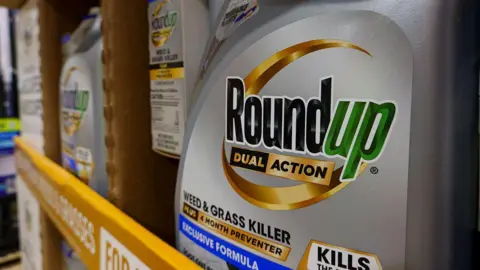
$7.25 bn proposal seeks judicial approval to end litigation Bayer announced a $7.25 billion settlement package intended to resolve U.S. lawsuits alleging its Roundup herbicide causes cancer, subject to court endorsement. The offer follows roughly $10 billion already spent on defending related cases. Bayer’s legal team frames the deal as a “final resolution” for the current wave of claims [1].
Eligibility limited to pre‑Feb 17 exposures and lymphoma diagnoses The settlement applies to individuals who used Roundup before 17 February 2026 and later developed non‑Hodgkin lymphoma within a 16‑year latency period. Payments will be distributed over 21 years, with the majority of funds disbursed in the first five years. Claimants must submit medical documentation to qualify for compensation [1].
130,000 claims settled, 65,000 remain pending Bayer reports that more than 130,000 lawsuits have been resolved under the new agreement, while about 65,000 additional cases await adjudication. The company continues to face the risk of future claims because cancer can manifest long after exposure. This settlement represents a substantial reduction in the litigation backlog but does not eliminate all liability [1].
Glyphosate still classified as probable carcinogen The International Agency for Research on Cancer (IARC) listed glyphosate, Roundup’s active ingredient, as a probable human carcinogen in 2015. Bayer and the U.S. Environmental Protection Agency dispute the classification, yet juries in several states have previously awarded billions to plaintiffs. The settlement does not constitute an admission of wrongdoing regarding the IARC finding [1].
Additional $3 bn expected for other Roundup suits and Supreme Court fight Bayer anticipates paying another $3 billion to resolve separate lawsuits, including state actions tied to “forever chemicals.” The firm is also pursuing a Supreme Court case to determine whether regulatory approval shields it from stricter state warning‑label requirements. These parallel legal strategies aim to cap total exposure while preserving market access [1].
Trump administration brief lifts Bayer’s share price A brief filed by the Trump administration last year that supported Bayer’s position in the Supreme Court dispute contributed to a rise in the company’s stock. Investors interpreted the brief as a signal that the high court may rule favorably for Bayer. The share price boost underscores the market’s sensitivity to regulatory and legal developments surrounding Roundup [1].
Timeline
2015 – The International Agency for Research on Cancer classifies glyphosate, Roundup’s active ingredient, as a probable human carcinogen, a finding that underpins many U.S. lawsuits against Bayer. [1]
2022 – A California jury awards more than $86 million to plaintiffs in a Roundup cancer case; the U.S. Supreme Court declines to review the verdict, illustrating selective high‑court intervention in such litigation. [2]
2025 – The Trump administration files a brief backing Bayer’s argument that EPA approval without a cancer warning should shield the company from state tort claims, a move that lifts Bayer’s share price. [1]
Jan 16, 2026 – The U.S. Supreme Court agrees to hear Bayer’s appeal to block thousands of state lawsuits over Roundup cancer warnings, centering on a Missouri case where a jury awarded $1.25 million for non‑Hodgkin lymphoma linked to the herbicide. [2]
Feb 17, 2026 – Bayer proposes a $7.25 billion settlement to resolve U.S. Roundup cancer claims for exposures before this date, covering 130,000 settled claims, leaving about 65,000 pending, with payouts spread over 21 years, most in the first five years. [1]
Feb 17, 2026 – Bayer anticipates paying an additional $3 billion for other Roundup‑related suits, including state lawsuits tied to “forever chemicals,” while continuing to seek a Supreme Court win on federal labeling immunity. [1]
Feb 17, 2026 – Bayer has set aside roughly $16 billion to settle Roundup‑related claims and pursues state legislation that aligns with its push for federal labeling standards to limit liability. [2]