Northeast Governors Declare Emergencies as Blizzard Threatens 12‑18 Inches of Snow
Updated (2 articles)
-
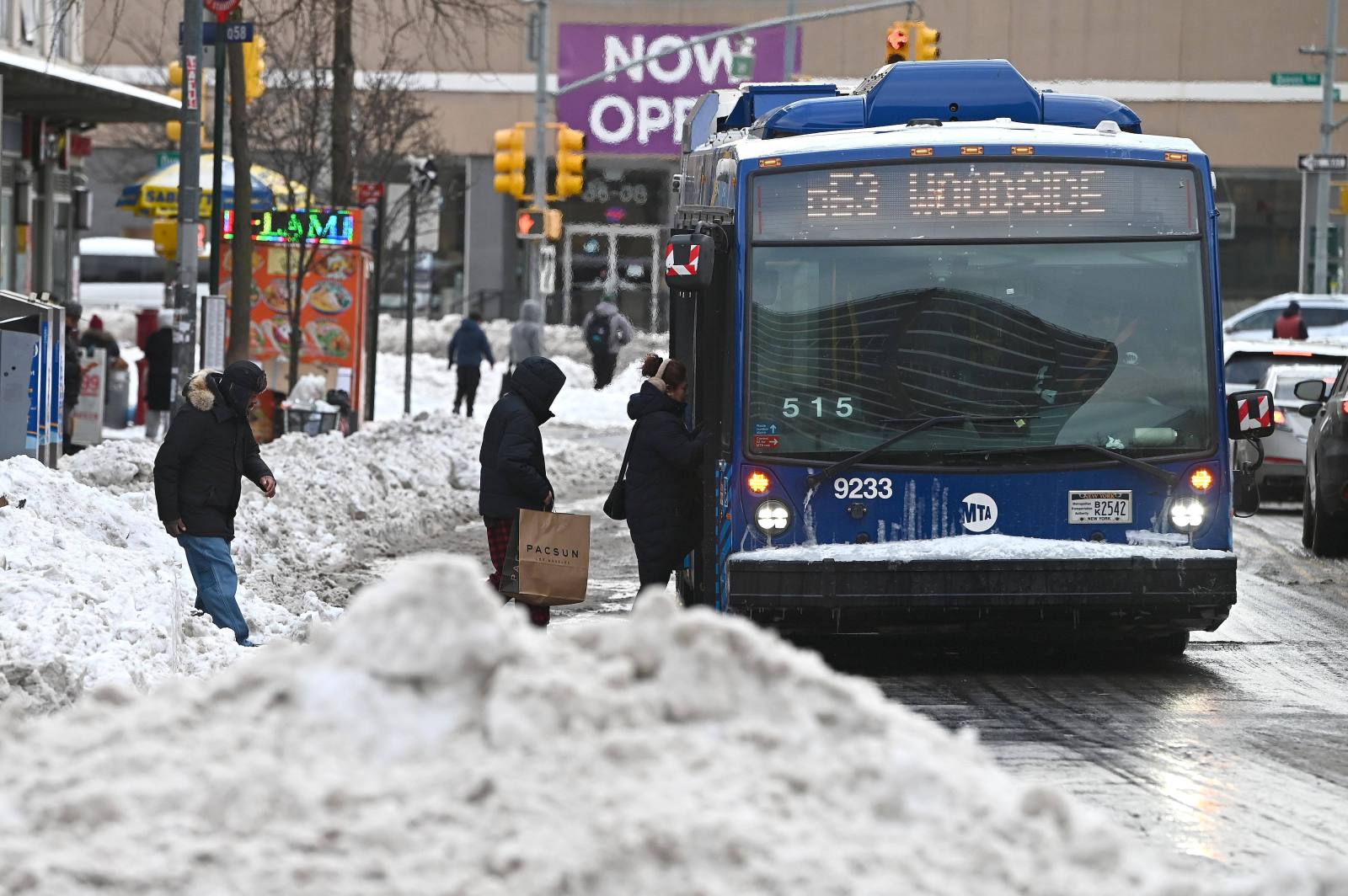 Image: NewsweekCommuters walk over berms of snow created by snow plows to board their bus in the New York City Borough of Queens, NY, January 26, 2026. New York City and it’s five boroughs saw more than 10 inches of snow fall at a rate of 1 to 2 inches per hour with freezing gusts of wind after a massive winter storm blanketed the US East Coast. (Photo by Anthony Behar/Sipa USA)(Sipa via AP Images) Source Full size
 -
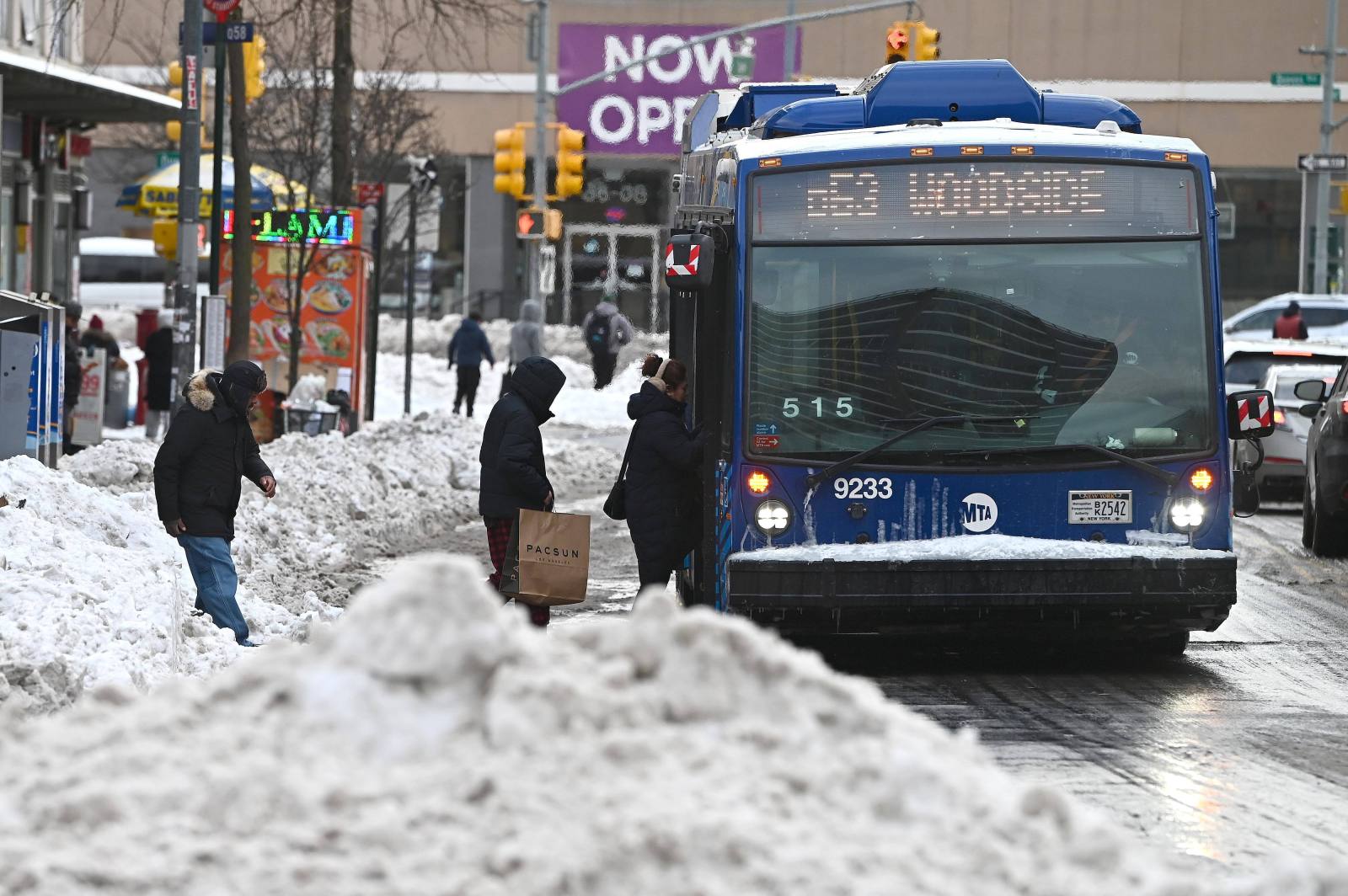 Image: NewsweekCommuters walk over berms of snow created by snow plows to board their bus in the New York City Borough of Queens, NY, January 26, 2026. New York City and it’s five boroughs saw more than 10 inches of snow fall at a rate of 1 to 2 inches per hour with freezing gusts of wind after a massive winter storm blanketed the US East Coast. (Photo by Anthony Behar/Sipa USA)(Sipa via AP Images) Source Full size
State Leaders Activate Emergency Protocols Governors Kathy Hochul of New York and Mikie Sherrill of New Jersey announced states of emergency on February 21, targeting more than 14 million residents, while Westchester County Executive Ken Jenkins issued a county‑wide emergency the same day [1]. The New York National Guard mobilized 100 Guard members to Long Island, New York City, and the Lower Hudson Valley in anticipation of flooding and life‑threatening conditions [1]. City officials, including Mayor Zohran Mamdani, launched real‑time alerts and a “NotifyNYC” text line to coordinate assistance for vulnerable populations [1].
Weather Service Issues Widespread Blizzard Warnings The National Weather Service placed blizzard warnings on New York, Connecticut, New Jersey, Pennsylvania, Rhode Island, and Massachusetts, forecasting snowfall rates exceeding one inch per hour [1]. Total accumulations are expected to reach 15‑20 inches, with some areas possibly seeing 1‑2 feet, accompanied by wind gusts of 40‑70 mph and whiteout conditions [1]. The Weather Prediction Center highlighted the likelihood of scattered to numerous power outages through Monday [1].
Public Safety Advisories Emphasize Three‑Day Preparedness Authorities urged residents to remain home, stock food, medication, and charge electronic devices for at least three days due to anticipated power outages [1]. Officials warned that heavy, wet snow combined with strong winds could cause widespread outages and hazardous travel, prompting a recommendation to limit non‑essential trips [1]. City of New York provided hotlines (311) and text services to support vulnerable individuals during the storm [1].
Timeline
Jan 24, 2026 – The National Weather Service warns that an “extremely dangerous” winter storm will begin Friday, bringing heavy snow, freezing rain and sub‑zero temperatures that threaten hypothermia and frostbite across more than 200 million Americans[1].
Jan 24‑25, 2026 – Governors in Arkansas, Georgia, Texas, North Carolina, South Carolina and 11 other states declare emergencies, authorizing National Guard deployments and stockpiling resources such as 1,600 snow plows and 114,000 tonnes of salt in New York, while Texas Governor Greg Abbott says there is “no expectation whatsoever” of a grid failure[1].
Jan 24‑25, 2026 – New York City Mayor Zohran Mamdani orders thousands of sanitation workers, 700 salt spreaders and 2,200 snow plows to be on standby once two inches of snow accumulate, and urges residents to stay home as NWS meteorologists Rich Otto and Tony Fracasso warn travel could be “nearly impossible during the peak of the storm”[1].
Jan 25‑26, 2026 – Major airlines cancel over 3,200 flights on Saturday and more than 4,800 on Sunday, offering fee‑free changes as the storm’s snowfall rates exceed a foot in many areas and wind chills dip to –15 °F in New York City[1].
Jan 26‑Feb 2, 2026 – A strong Arctic air mass from Canada continues to blanket the eastern United States, maintaining freezing temperatures and wind chills below –50 °F in the Northern Plains and keeping the region frigid into the following week[1].
Feb 21, 2026 – New York Governor Kathy Hochul and New Jersey Governor Mikie Sherrill declare states of emergency ahead of a storm expected to dump 12‑18 inches of snow on over 14 million people in the Northeast[2].
Feb 21, 2026 – The National Weather Service issues blizzard warnings for New York, Connecticut, New Jersey, Pennsylvania, Rhode Island and Massachusetts, forecasting snowfall rates over 1 inch per hour, total accumulations of 15‑20 inches and whiteout conditions with wind gusts of 40‑70 mph[2].
Feb 21, 2026 – State officials urge residents to stock three days of food, medication and power, and to limit travel as power outages are likely from the heavy, wet snow and strong winds[2].
Feb 21, 2026 – Governor Hochul activates 100 New York National Guard members to stage across Long Island, New York City and the Lower Hudson Valley to support vulnerable communities during the storm[2].
Feb 21, 2026 – Mayor Zohran Mamdani posts on X, telling citizens to text “NotifyNYC” to 629‑629 for real‑time alerts and to call 311 for assistance, reinforcing the city’s emergency communication plan[2].