Coroner Orders Health Regulator Review of Psychiatrist Linked to Bondi Stabbing
Updated (2 articles)
Coroner’s Recommendation Targets Psychiatrist The NSW coroner concluded that psychiatrist Dr Andrea Boros‑Lavack should be investigated by Queensland health authorities after she ignored repeated family warnings about patient Joel Cauchi’s deteriorating mental state [1]. The recommendation follows a five‑week, 800‑page inquiry that found her failure to intervene contributed to the later violence [1]. The coroner’s report explicitly calls for a formal health‑regulator review to assess professional misconduct [1].
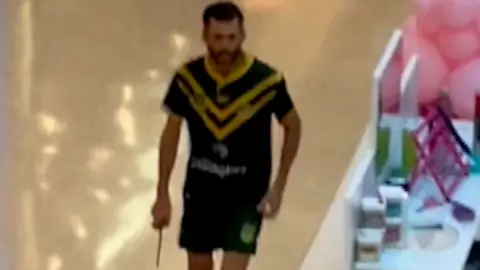
April 2024 Bondi Junction Attack Details On 12 April 2024, Joel Cauchi, a homeless man with untreated schizophrenia, entered Westfield Bondi Junction and stabbed 16 people, killing six, within six minutes [1]. Victims included Dawn Singleton (25) and Yixuan Cheng (27); ten others, among them an infant, sustained injuries [1]. Police inspector Amy Scott shot and killed Cauchi after the rampage, ending the attack [1].
Systemic Failures Identified in Inquest The coroner highlighted lapses by police, shopping‑centre security, and health services, noting an ignored email about Cauchi’s condition and an incompetent CCTV guard [1]. Over the investigation, multiple agencies were found to lack effective inter‑operability, hampering timely intervention [1]. Despite these shortcomings, the coroner praised the rapid police and emergency response as “commendably rapid and extensive” [1].
Recommendations Aim to Prevent Future Violence Teresa O’Sullivan’s 23 recommendations call for expanded mental‑health outreach, short‑term housing for vulnerable individuals, and a public “escape, hide, tell” campaign [1]. The report also urges media guidelines from the Australian Press Council and proposes bravery awards for officers and civilians who intervened [1]. Implementing these measures is intended to close the gaps that allowed the Bondi Junction tragedy to occur [1].
Timeline
April 2024 – Joel Cauchi, diagnosed with schizophrenia in his teens and living homeless without medication, carries out a six‑minute stabbing spree at Westfield Bondi Junction, killing six people (Dawn Singleton, Yixuan Cheng, Jade Young, Ashlee Good, Faraz Tahir, Pikria Darchia) and wounding ten others before police inspector Amy Scott shoots him; the police and emergency services response is later described as “commendably rapid and extensive”[1].
December 14, 2025 – A mass shooting at the “Chanukah by the Sea” event in Bondi kills 15 people and injures many, disrupting the scheduled release of the coroner’s findings on the 2024 Bondi Junction stabbing and intensifying community trauma[2].
December 14, 2025 – The same paramedic who was first on scene at the 2024 Westfield stabbing also arrives first at the Chanukah shooting, highlighting the overlapping burdens on emergency responders in the area[2].
December 2025 – Community members gather outside Bondi Pavilion with flowers, candles, and menorah lights, while leaders and volunteers call for solidarity and ongoing acts of kindness to counter hatred after the two attacks within 18 months[2].
December 2025 – NSW and federal governments announce tighter protest rules, new police powers, and a review of federal police and intelligence agencies in response to the recent attacks, aiming to strengthen security and counter‑extremism[2].
February 5, 2026 – NSW coroner releases an 800‑page inquest into the April 2024 stabbing, recommending that psychiatrist Dr Andrea Boros‑Lavack be investigated by Queensland health authorities for ignoring family warnings about Cauchi’s mental state[1].
February 5, 2026 – The coroner identifies multiple systemic failures—including ignored emails about Cauchi’s condition, inadequate CCTV monitoring, and lapses by police and shopping‑centre security—that contributed to the 2024 tragedy[1].
February 5, 2026 – Teresa O’Sullivan’s 23 recommendations call for expanded mental‑health outreach, short‑term housing for vulnerable individuals, improved inter‑agency interoperability, a public “escape, hide, tell” campaign, and new media guidelines for the Australian Press Council to prevent future attacks[1].
February 5, 2026 – The coroner praises the police response as “commendably rapid and extensive” and proposes bravery awards for the shooting officer, two French civilians who intervened, Jade Young’s husband, and Ashlee Good for shielding her infant during the attack[1].
2026 and beyond – Authorities plan to roll out the “escape, hide, tell” public awareness campaign and enforce the media guidelines outlined in the coroner’s recommendations, aiming to improve community safety and crisis communication in the Bondi region[1].