Dominican Republic Positions Itself as U.S. Strategic Partner Ahead of 2026 Summit
Updated (2 articles)
-
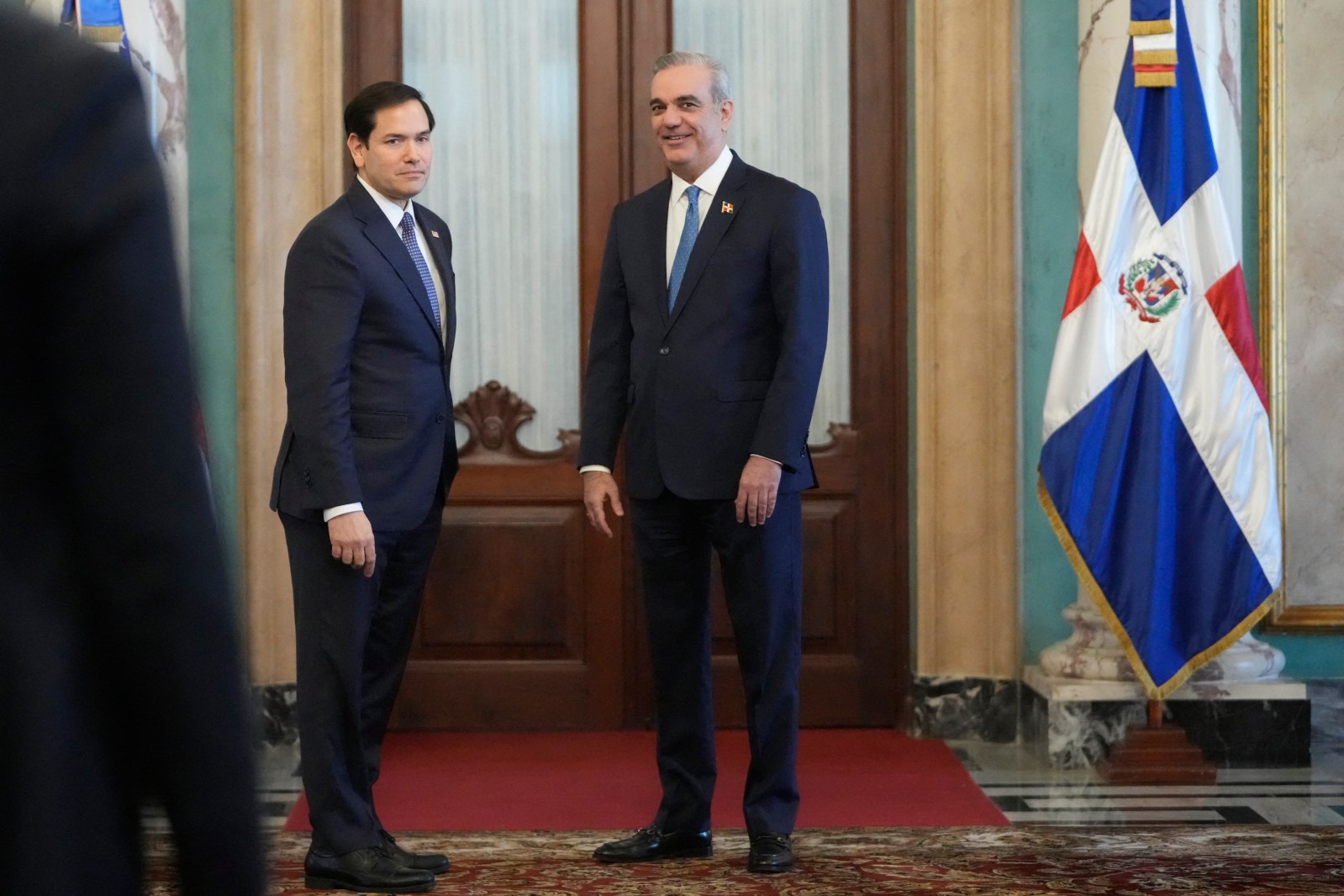 Image: NewsweekUS Secretary of State Marco Rubio (L) stands with Dominican Republic President Luis Abinader at the end of their joint news conference at the National Palace in Santo Domingo, on February 6, 2025. (Photo by Mark Schiefelbein / POOL / AFP) (Photo by MARK SCHIEFELBEIN/POOL/AFP via Getty Images) Source Full size
-
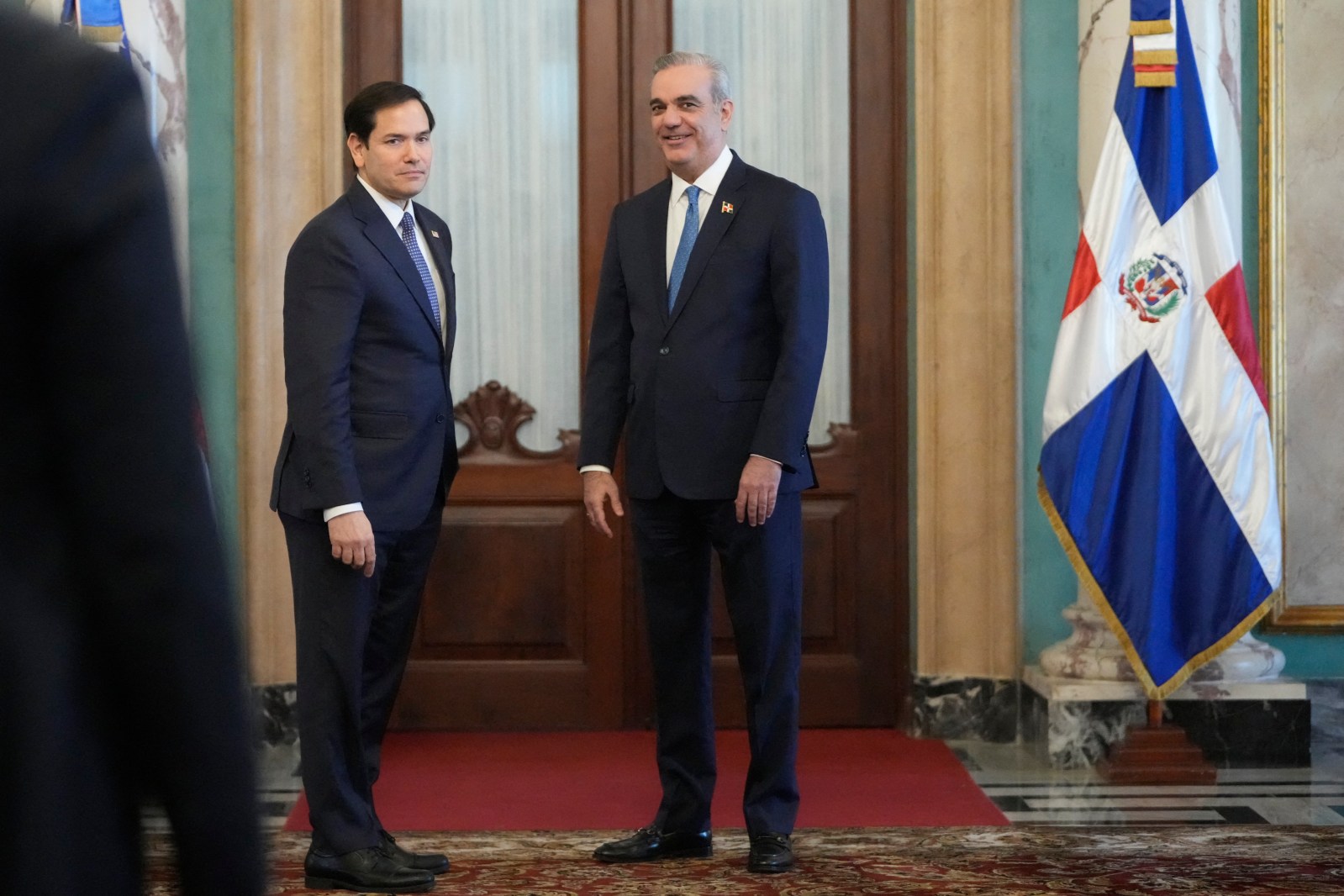 Image: NewsweekUS Secretary of State Marco Rubio (L) stands with Dominican Republic President Luis Abinader at the end of their joint news conference at the National Palace in Santo Domingo, on February 6, 2025. (Photo by Mark Schiefelbein / POOL / AFP) (Photo by MARK SCHIEFELBEIN/POOL/AFP via Getty Images) Source Full size
U.S. Military Action Triggers Regional Realignment On January 3, 2026 the United States launched a military operation that removed Venezuelan President Nicolás Maduro, instantly dividing Latin American governments into pro‑U.S. and anti‑U.S. blocs and reshaping hemispheric politics [1]. The power vacuum intensified diplomatic activity across the region, prompting several countries to reassess security and trade alignments [1]. Analysts note that the shift creates new opportunities for nations with stable institutions to assume leadership roles [1].
Dominican Republic’s Economic Growth Outpaces Neighbors The Dominican Republic has sustained an average annual GDP growth of nearly 5 percent over the past fifty years, roughly double the growth rates of most Latin American peers [1]. Its diversified economy now includes $3 billion in medical‑device exports, attracting firms seeking nearshoring alternatives to Asia and Mexico [1]. The government is actively courting semiconductor assembly, testing, and packaging facilities to broaden its high‑tech manufacturing base [1].
Deepening Security and Diplomatic Ties With Washington In the last two years the island hosted U.S. Secretaries of State Antony Blinken and Marco Rubio, signaling heightened diplomatic engagement [1]. It has permitted U.S. anti‑drug aircraft to refuel at its airports and partnered with the U.S. Army Corps of Engineers to explore rare‑earth mineral deposits, reinforcing security cooperation [1]. These moves are viewed as part of a broader strategy to embed the Dominican Republic within U.S. regional initiatives [1].
Strategic Events and Tech Initiatives Elevate Global Profile The Dominican Republic will host the Summit of the Americas in December 2026, positioning it as a focal point for hemispheric dialogue [1]. It is collaborating with NVIDIA to launch an AI Center of Excellence for Central America and the Caribbean, underscoring its ambition in emerging technologies [1]. Tourist arrivals reached nearly 12 million in 2025, further demonstrating the island’s expanding economic and geopolitical clout [1].
Six Decades of Uninterrupted Democracy Foster Investor Confidence Approximately 60 years of continuous democratic governance have cultivated broad political consensus around a market‑oriented model [1]. This stability has attracted sustained foreign investment and ensured policy continuity across successive administrations [1]. Investors cite the Dominican Republic’s democratic track record as a key factor in its reputation as a reliable partner [1].
Timeline
2022 – Colombia re‑establishes diplomatic ties with Venezuela, but President Gustavo Petro later distances Caracas, saying “Maduro has no links to drug trafficking” while condemning Venezuela’s democratic deficit. [1]
2024 – Nicolás Maduro wins a contested presidential election, prompting left‑wing governments in Brazil, Chile, Mexico and Colombia to scale back engagement with his Chavismo‑inspired administration. [1]
2025 – Cuba’s foreign minister Bruno Rodríguez repeatedly declares “full support for Caracas,” signaling that despite Venezuela’s isolation it retains nominal backing from Havana. [1]
2025 – Nicaraguan President Daniel Ortega denounces the U.S. military buildup in the Caribbean while offering no concrete assistance to Venezuela, leaving Caracas with limited practical allies. [1]
Nov 30, 2025 – Honduras holds a presidential election; preliminary results place right‑leaning candidates Salvador Nasralla and Nasry Asfura ahead of leftist protégé Rixi Moncada, both pledging to sever diplomatic ties with Venezuela. [1]
Dec 2025 – In the week after the November 30 vote, Venezuela’s Maduro loses two regional allies as Honduras and St. Vincent and the Grenadines elect governments that promise to cut ties with Caracas, deepening his diplomatic isolation. [1]
Dec 2025 – St. Vincent and the Grenadines elect Godwin Friday’s party to 14 of 15 parliamentary seats, ending Prime Minister Ralph Gonsalves’s long‑standing support for Maduro and shifting the island toward a center‑right orientation. [1]
2025 – The Dominican Republic welcomes almost 12 million tourists, underscoring its growing appeal as a stable, high‑growth economy in the Caribbean. [2]
2025 – The Dominican Republic’s economy records an average 5 % annual GDP growth over the past five decades, roughly double the rate of most Latin American peers, reinforcing its reputation as a regional oasis of stability. [2]
2025 – Dominican manufacturers report $3 billion in medical‑device sales, fueling a nearshoring push that attracts firms from Asia and Mexico and prompting the government to court semiconductor assembly, testing and packaging investors. [2]
Jan 3, 2026 – A U.S. military operation removes Nicolás Maduro from power, triggering a split in Latin America between countries that back the new regime and those that oppose it, reshaping the hemisphere’s political landscape. [2]
2024‑2026 – Over the past two years, the Dominican Republic hosts U.S. Secretaries of State Antony Blinken and Marco Rubio, permits airport refueling for U.S. anti‑drug flights, and partners with the U.S. Army Corps of Engineers to explore rare‑earth mineral deposits, deepening security and economic cooperation. [2]
Dec 2026 – The Dominican Republic will host the Summit of the Americas, launch an AI Center of Excellence with NVIDIA, and showcase its emerging role as a strategic U.S. partner in the Caribbean. [2]