DOJ Pulls Thousands of Epstein Files After Redaction Failures, Survivors Demand Protection
Updated (202 articles)

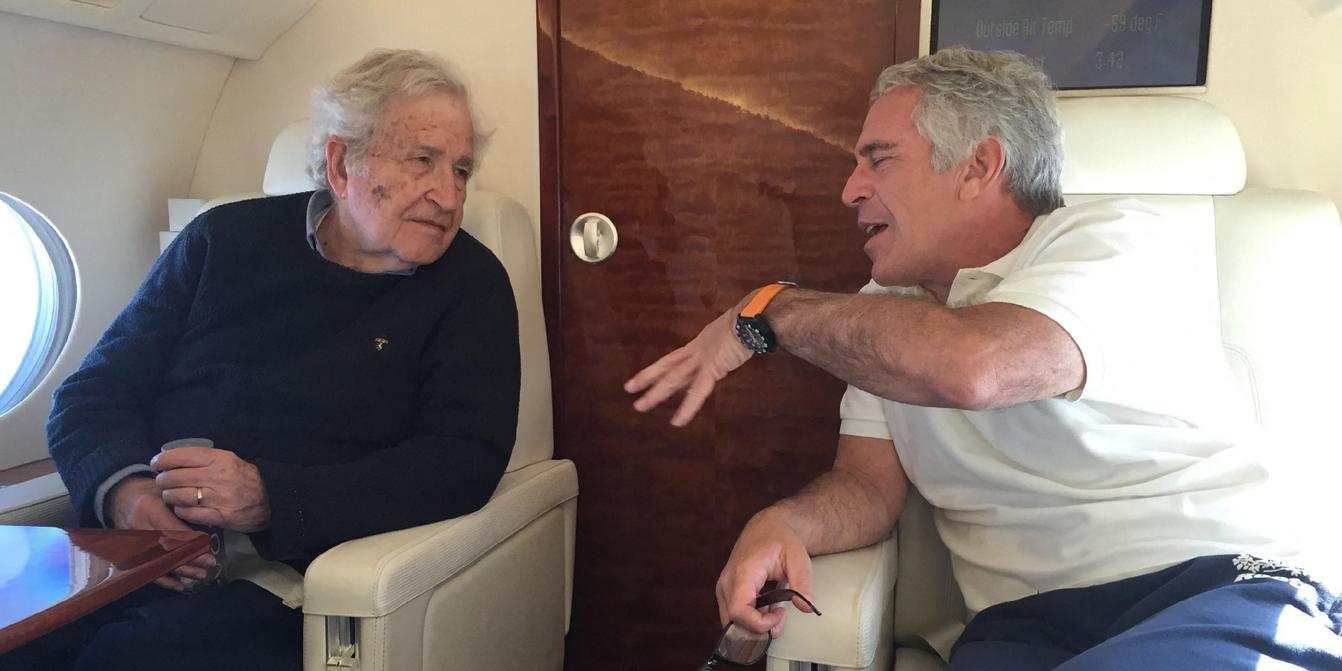

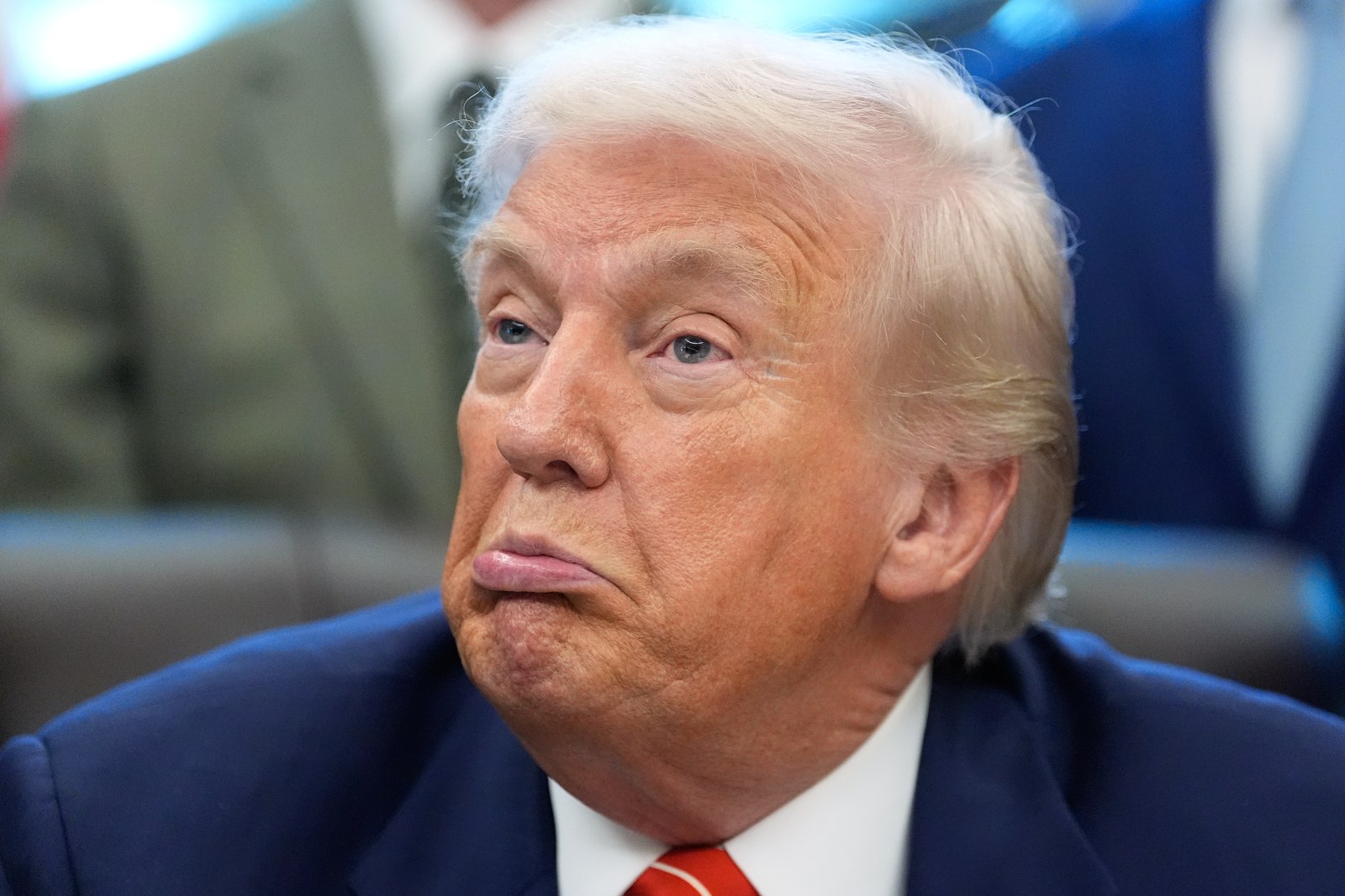

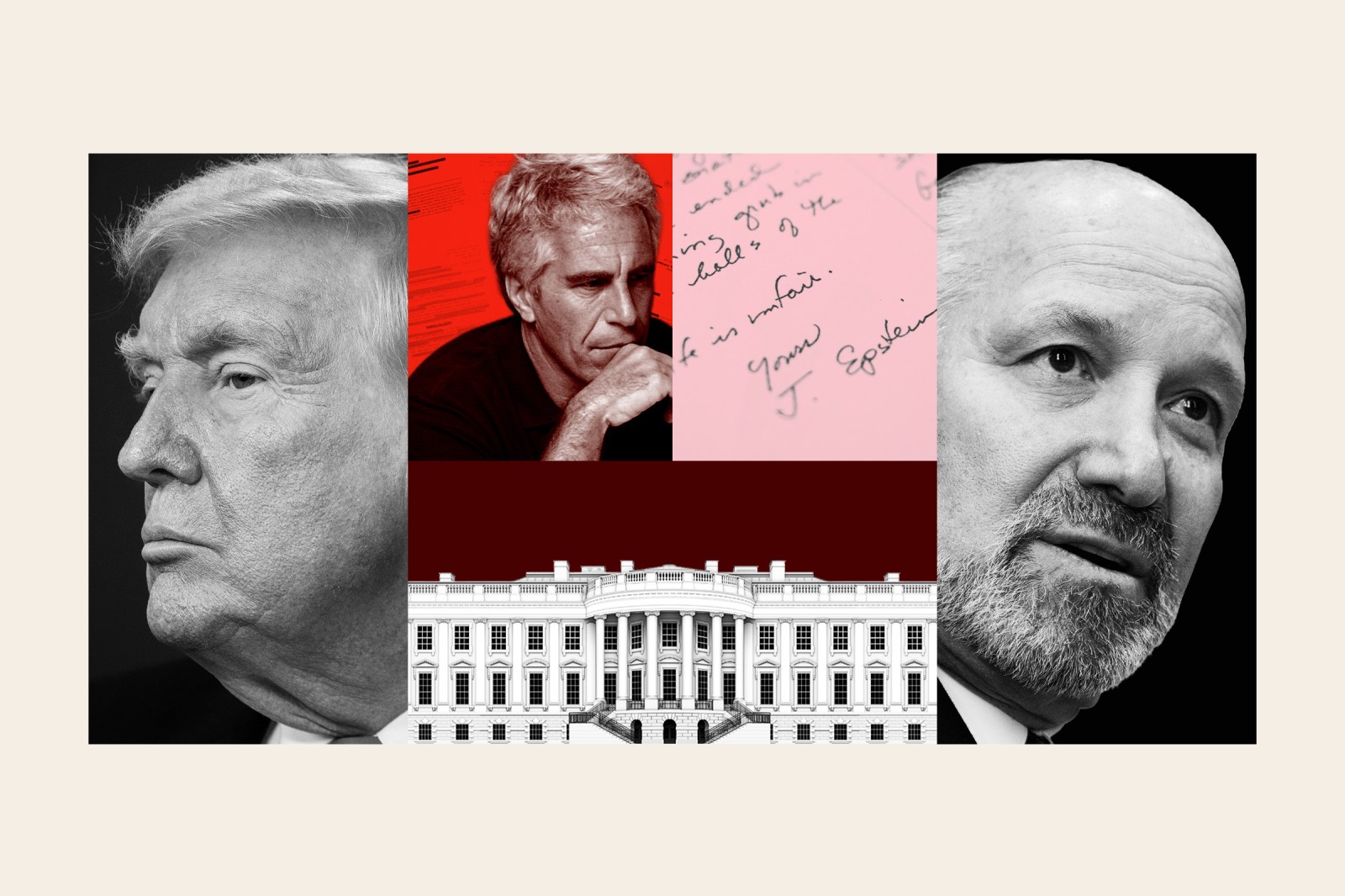

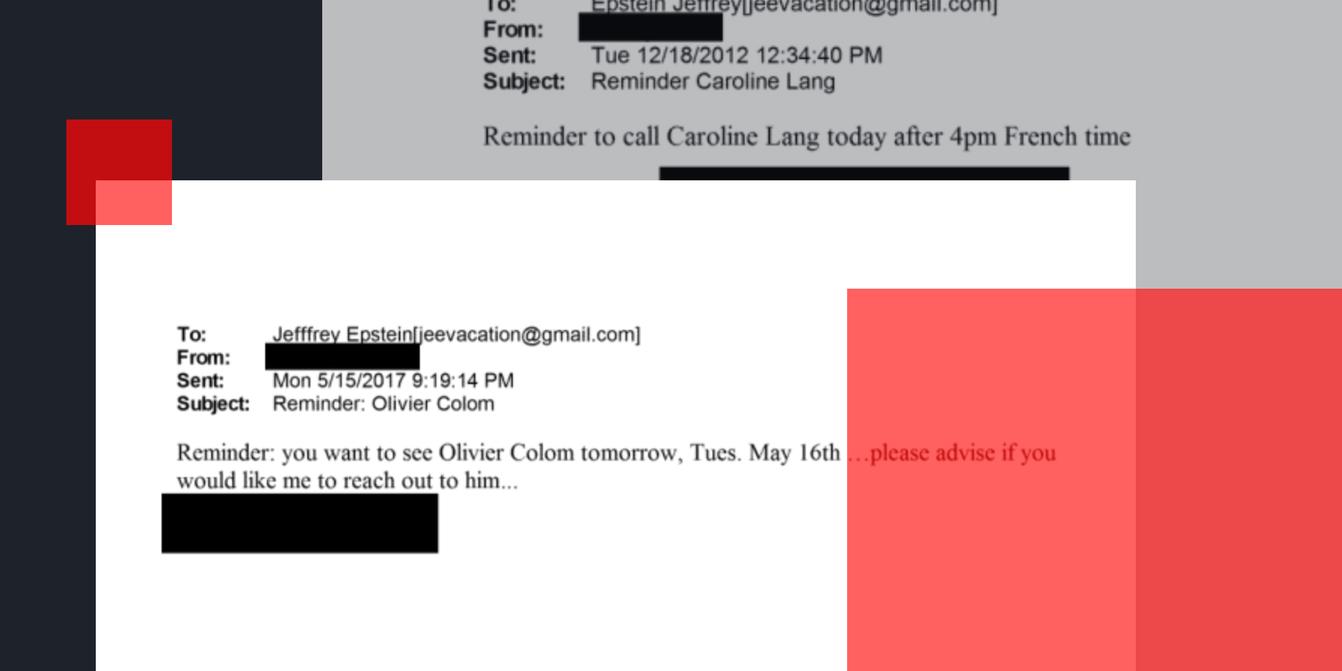


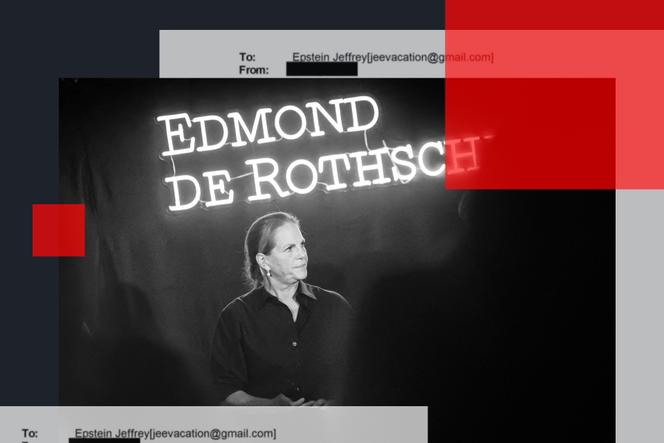
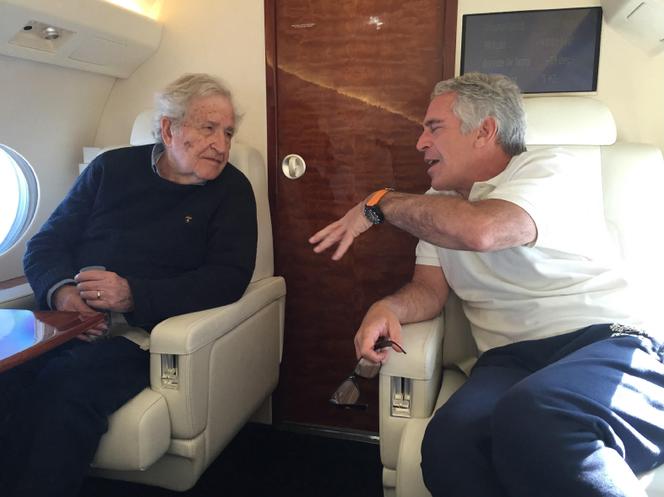
Massive document dump sparks privacy nightmare On 30 January 2026 the U.S. Justice Department posted more than three million pages of Epstein‑related emails, videos and images, including 180 000 photos and 2 000 videos [15][19]. The release, mandated by the Epstein Files Transparency Act, listed dozens of global elites—from former presidents to tech billionaires—without initially redacting victim identifiers [15][20]. Within hours, unredacted nude photographs and full names of under‑age victims appeared online, prompting immediate criticism from media and survivor groups [5][9][12].
Redaction errors expose survivors’ personal data CNN and the Associated Press documented dozens of instances where victims’ names, Social Security numbers, addresses and even medical scans were visible, violating federal privacy rules [2][9][13]. Survivors such as Dani Bensky and Jess Michaels reported threats and emotional distress after seeing their information publicly [2][5]. Legal counsel for the victims demanded the site’s shutdown and an independent monitor, while a New York judge scheduled a hearing to address the breach [9][18].
DOJ acknowledges mistakes and begins remediation Deputy Attorney General Todd Blanche admitted “mistakes were made,” ordered the removal of thousands of files, and pledged a comprehensive review of the remaining material [2][12][15]. The department attributed the failures to “technical or human error” caused by staff being diverted to meet a 30‑day statutory deadline [9][12]. Congressional leaders, including Rep. Ro Khanna and Rep. Thomas Massie, threatened impeachment or contempt actions if the Justice Department does not fully comply with the law [2][15].
Settlement reached to shield nearly 100 victims On 3 February 2026 a confidential agreement between victims’ lawyers and the Justice Department was filed in Manhattan federal court, securing a privacy‑protecting deal for roughly one hundred survivors [18]. Judge Richard Berman cancelled the scheduled public hearing after the settlement, noting the parties’ “extensive and constructive discussions” [18]. The DOJ reported that only about 0.1 % of the pages contained unredacted victim data after the pull‑back, but continues to audit the archive for additional errors [12][15].
Sources
-
1.
Le Monde: US Justice Department Release Links French Figures to Jeffrey Epstein Emails: Details French politicians and cultural leaders appearing in the 3 million‑page dump, noting no direct trafficking links .
-
2.
CNN: DOJ’s flawed Epstein file release sparks survivor outcry and congressional push: Highlights unredacted victim details, survivor threats, and Rep. Khanna’s impeachment warning .
-
3.
Le Monde: Musk, Gates, Hoffman Linked to Epstein Files as New Docs Reveal Failed Island Visit: Shows Elon Musk’s aborted island trip plan and statements from Gates and Hoffman .
-
4.
Le Monde: Epstein’s advisory role and naming dispute within Edmond de Rothschild Group: Reveals Epstein’s advisory work for Ariane de Rothschild from 2013‑2019 .
-
5.
BBC: Unredacted Nude Images Persist in Released Epstein Files, Prompting DOJ Remediation: Reports ongoing online exposure of nude photos and victim harm .
-
6.
The Hindu: Bill Gates regrets every minute spent with Jeffrey Epstein: Covers Gates’s February 4 interview expressing regret and denying a draft incriminating email .
-
7.
BBC: Emails Reveal Noam Chomsky’s Advice to Jeffrey Epstein on Media Strategy: Describes Chomsky’s 2019 counsel to ignore press coverage .
-
8.
CNN: Melinda French Gates Reacts to New Gates‑Epstein Documents: Shares Melinda’s sadness and Gates’s denial of wrongdoing .
-
9.
AP: DOJ’s Epstein file dump leaks victims’ private data: Documents widespread redaction failures and survivor lawyers’ demands .
-
10.
BBC: Melinda French Gates Reacts to Bill Gates’ Appearance in New Epstein Files: Notes Melinda’s emotional response and Gates’s public regret .
-
11.
BBC: Sports Executives’ Ongoing Contacts with Jeffrey Epstein Revealed in New Files: Lists post‑conviction communications by Jean Todt, Flavio Briatore, Josh Harris, Todd Boehly, and Steve Tisch .
-
12.
BBC: DOJ Pulls Thousands of Epstein Files After Redaction Errors Expose Victims: Reports the removal of flagged documents and court‑approved settlement .
-
13.
Newsweek: New DOJ Epstein Files Prompt Debate Over Trump’s Political Risk: Analyzes potential impact on Trump and other elites .
-
14.
Le Monde: Emails Reveal Noam Chomsky Advised Jeffrey Epstein on Media Strategy Months Before Suicide: Reiterates Chomsky’s advice and December photos with high‑profile figures .
-
15.
CNN: DOJ Releases Millions of Files Linking Epstein to Global Elite: Maps Epstein’s connections to presidents, royalty, and tech leaders; includes Blanche’s “not a crime to party” comment .
-
16.
Newsweek: Trump Dismisses Epstein File Mentions of Musk and Lutnick: Covers Trump’s refusal to comment on the files and Lutnick’s alleged island contact .
-
17.
Newsweek: Melinda French Gates Responds to New Epstein Files Linking Bill Gates: Summarizes French Gates’s stance that accountability lies elsewhere .
-
18.
AP: Deal Reached to Protect Identities of Epstein Victims: Details the settlement protecting nearly 100 survivors and cancelled hearing .
-
19.
BBC: Newly Released Epstein Files Name Hundreds of Global Elite: Lists names like Richard Branson, Bill Gates, Elon Musk, and Trump, emphasizing no implication of wrongdoing .
-
20.
CNN: New Wave of Epstein Files Highlights High‑Profile Contacts and Controversies: Highlights contacts by Trump, Clinton, Gates, Musk, and Lutnick, plus survivor outrage over nude images .
Videos (1)
Documents (94)
justice.gov Document reference on EFTA L lacks substantive content (cited 11 times)
EFTA Document L and Identifier EFTA00003346 Lacks Content
Key Facts
- Article consists solely of a code and ad label, offering no substantive news The text includes only “L”, “EFTA00003346”, and “Ad”, with no additional information or context provided [1].
- No quotations or commentary are included, so Who Said What section is omitted The piece contains no speaker attributions or statements, leaving no material for a quotations section [1].
justice.gov Email confirming Howard Lutnick scheduled to attend SPM meeting on Sunday (cited 10 times)
Howard Lutnick Scheduled to Appear at SPM on Sunday, Email Shows
Key Facts
- Howard Lutnick scheduled to attend SPM on Sunday – The email from Lesley Grom, dated April 27 2011, states that Howard Lutnick will come see you at SPM on Sunday, indicating a planned meeting without further agenda details. [1]
- Email includes reference numbers EFTA_R1_00273025 and EFTA01868626 – Two identifiers, EFTA_R1_00273025 and EFTA01868626, appear in the message, likely serving as internal tracking or case numbers for the correspondence. [1]
- Message sent to Jeffex Epsteinieevacalong – The recipient line shows the email was addressed to Jeffex Epsteinieevacalong, identifying the intended participant for the SPM meeting. [1]
- Sender identified as Lesley Grom – Lesley Grom is listed as the sender, suggesting responsibility for coordinating the meeting with Howard Lutnick. [1]
- Date and time stamp of the email – The communication was sent on Wednesday, April 27 2011 at 2:15:16 PM, providing a precise timestamp for the notice. [1]
- Mention of “May” without further context – The final line of the email simply reads “May,” which may refer to a month or related item, but the email does not clarify its meaning. [1]
Some Context
- SPM – Likely an abbreviation for a scheduled meeting or event; the email does not define it, but it is the venue where Howard Lutnick is expected.
- EFTA – Appears in the reference numbers; while EFTA commonly denotes the European Free Trade Association, in this context it likely serves as an internal code unrelated to the trade organization.
- Howard Lutnick – A business figure referenced in the email; the message indicates his attendance at the upcoming SPM meeting.
- Lesley Grom – The sender of the email, presumably acting as a coordinator or liaison for the meeting.
- Jeffex Epsteinieevacalong – The email’s recipient, presumably the party expected to meet with Howard Lutnick at SPM.
s3.documentcloud.org DOJ filing outlines review and redaction process for Epstein‑Maxwell files (cited 9 times)
DOJ Outlines Ongoing Review and Redaction of Epstein‑Maxwell Files
Key Facts
- DOJ submits response to court orders on Epstein, Maxwell cases The Government filed a letter on Dec 19 2025 to Judges Berman and Engelmayer outlining how it will comply with the December 10 and 9 2025 orders and the Epstein Files Transparency Act, describing overlapping issues between the two prosecutions.
- Victim‑Privacy File compiled through extensive outreach DOJ attorneys in Washington and the SDNY immediately began identifying victims who wanted personal data redacted, consulting known counsel, reaching out to additional counsel and victim‑compensation funds, and issuing a public invitation; they held more than 30 meetings or calls and continuously updated a file of victim names and identifying information.
- 150+ lawyers review materials for redaction and privilege Teams collected documents from DOJ components—including the Federal Bureau of Prisons and Office of Inspector General—and from FBI casefiles, made them searchable, uploaded them to a review database, and oversaw more than 150 attorneys and staff to flag Transparency Act Materials and apply redactions for victim privacy, privileged, or otherwise protected information. [1]
- SDNY AUSAs conduct secondary certification without new redactions After the initial DOJ review, the materials are routed to SDNY Assistant U.S. Attorneys, who confirm that existing redactions meet requirements and segregate any documents still containing unredacted victim data for further review before public release. [2]
- Redaction standards target names, images, and identifying context AUSAs are instructed to redact victim names, any text suggesting a third party is a victim, facial images of women, images and names of minors, and details that could reveal a victim through family, associates, or unique traits; when uncertain, they err on the side of further segregation. [2]
- Process acknowledges error risks and possible over‑redaction The letter notes vulnerabilities to machine and human error, the danger of piecing together information to re‑identify victims, and that some redactions may cover material already public, but the DOJ will post certified documents on its searchable website once cleared. [3]
Some Context
- Epstein Files Transparency Act (H.R. 4405) – Federal law requiring the Department of Justice to produce and publicly disclose documents related to the Jeffrey Epstein and Ghislaine Maxwell investigations, with safeguards for victim privacy.
- Victim Privacy File – A continuously updated list compiled by the DOJ containing names and identifying details of individuals who are victims or potential victims, used to guide redaction decisions.
- SDNY AUSAs – Assistant United States Attorneys in the Southern District of New York who perform the secondary review and certification of documents before they are released to the public.
- Protective Order – Court‑issued order that limits the disclosure of certain evidence in the Maxwell case; materials subject to this order receive special markings and handling.
- De novo review – A fresh, independent examination of a document’s redactions, undertaken when a decision is made to release or unredact material that was previously withheld.
justice.gov Email exchange on Musk planning visit to Epstein’s island (cited 9 times)
Elon Musk’s 2013 Email Talks About Visiting Jeffrey Epstein’s Island
Key Facts
- Musk proposes a New Year’s island visit – In a December 25, 2013 email, Elon Musk tells Jeffrey Epstein he could fly back early, will be in St Barths, and asks when to head to Epstein’s island on the “Znd” (Sunday)【1】.
- Epstein offers pickup on Jan 2‑3 – Epstein replies that “the 2 or 3 would be perfect” and says he will come and get Musk, indicating a concrete plan for early January【1】.
- Earlier messages confirm holiday timing – On Dec 13 and Dec 15, Musk asks if there is time to visit the island during the holidays, showing the discussion began before the final dates were set【1】.
- Lesley Groff is copied on the exchange – The email chain includes Lesley Groff in the CC field, suggesting a third party was kept informed of the travel arrangements【1】.
- Musk mentions a return flight to Los Angeles – In a later note Musk states he needs to fly back to LA on the night of the Sunday, indicating a tight schedule around the island visit【1】.
- The email carries confidentiality warnings – Both the header and footer stress that the communication is confidential, possibly attorney‑client privileged, and may contain inside information, underscoring the sensitivity of the correspondence【1】.
Who Said What
- Elon Musk – “Actually, I could fly back early on the Jrd. We will be in St Bart's. When should we head to your island on the Znd?” (Dec 25, 2013)【1】.
- Jeffrey Epstein – “the 2 or 3 would be perfect. I will come and get you.” (Dec 25, 2013)【1】.
- Elon Musk (earlier) – “Will be in the BVLSt Bart'5 arca ovvr the holidays. Is there a time t0 visit?” (Dec 13, 2013)【1】.
Some Context
- St Barths – A Caribbean island (Saint Barthélemy) popular with wealthy travelers; Musk mentions staying there before the proposed island trip.
- Attorney‑client privileged – A legal protection that keeps communications between a client and lawyer confidential; the email’s disclaimer claims this status, implying legal counsel may have been involved.
- EFTA reference numbers (e.g., EFTA_R100401671) – Internal filing codes likely used by Epstein’s organization for record‑keeping; they appear in the email footer but have no public explanation.
justice.gov Email invitation to Howard Lutnick for weekend lunch on JE’s island (cited 9 times)
Howard Lutnick Invited to Lunch on JE’s Island, Dec 2012
Key Facts
- Invitation sent to Howard Lutnick for weekend lunch – An email dated December 20, 2012, at 1:00 PM asks whether Howard Lutnick can meet for lunch on Saturday or Sunday on JE’s island, indicating a scheduling request for the weekend. [1]
- Sender and recipient details omitted – The message header lists generic fields “To:” and “From:” without specifying names, suggesting internal or informal communication where participants are known by context. [1]
- Subject line labeled “Alert” – The email’s subject line reads “Alert,” implying the sender considered the lunch invitation time‑sensitive or noteworthy within the correspondence chain. [1]
- Reference codes included at bottom – Two identifiers, EFTA_R1_00818090 and EFTA02152992, appear at the end of the note, likely serving as internal tracking or filing numbers for the organization’s records. [1]
- Abbreviated signatures and initials – The note contains fragments such as “FH,” “cam,” “dd,” “Cn,” and “JF 9,” which appear to be shorthand for senders, recipients, or related parties, though their exact meanings are not clarified. [1]
Some Context
- Howard Lutnick – Founder and CEO of Cantor Fitzgerald, a global financial services firm; his involvement often signals high‑level business or personal engagements.
- JE’s island – Refers to a private or exclusive location owned or frequented by an individual identified only as “JE,” used here as the proposed venue for the lunch.
- EFTA codes – Internal reference numbers (e.g., EFTA_R1_00818090) likely used by the organization’s document management system for tracking correspondence.
justice.gov Email correspondence on scheduling lunch visit via boat Excellence (cited 9 times)
Allison Lutnick Schedules Lunch Visit with Lesley Groff via Boat “Excellence”
Key Facts
- Allison Lutnick confirms morning departure from Caneel – In a December 21, 2012 email, Lutnick tells Lesley Groff her party will leave Caneel that morning aboard the vessel named Excellence and seeks lunch details [1].
- Group includes two families, eight children and two girls – The message notes two families each have four kids aged 7‑16, plus two additional girls, making ten minors in the party [1].
- Proposed lunch time is 1:00 p.m. or 1:30 p.m. on Sunday – Lutnick asks whether a 1 p.m. or 1:30 p.m. lunch on Sunday would work and requests the exact docking location for the boat [1].
- Lesley Groff asks Jefffrey Epstein to coordinate the visit – Groff forwards the request, asking Epstein to “refer the Lutnick’s and entire clan at 1 or 1:30 on Sunday,” indicating she is handling the scheduling [1].
- Boat registration numbers EFTA_R1_01659498 and EFTA02521951 are listed – The email includes two codes, likely vessel identifiers for Excellence and its captain, to aid coordination [1].
- Multiple recipients and carbon copies are included – The original message was sent to Jefffrey Epstein with a cc, and the forwarded note copies “vexcll@aolcom” and “Gilbert Matthew,” showing a broader distribution [1].
Who Said What
- Allison Lutnick (sender) – “We are looking forward to visiting you… We would love to join you for lunch… Please advise on timing and exactly where our boat should go.”
- Lesley Groff (forwarder) – “do you refer the Lutnick’s and entire clan at 1 or 1:30 on Sunday?”
Some Context
- Caneel – The departure point mentioned; likely a resort or marina in the Caribbean used as a launch location for private vessels.
- Excellence – Name of the private boat that will transport the Lutnick party; such vessels often require advance docking arrangements.
- EFTA numbers – Identification codes (e.g., EFTA_R1_01659498) commonly used for vessel registration and tracking under maritime authorities.
- Lesley Groff – Individual coordinating the visit, acting as an intermediary between the Lutnick family and Jefffrey Epstein.
- Jefffrey Epstein – Recipient of the original email, presumably a contact who can facilitate the meeting logistics.
justice.gov Evidence from federal acquisition log cataloging hundreds of items across cases (cited 9 times)
Federal Evidence Acquisition Log Catalogs Hundreds of Items Across Multiple Cases
Key Facts
- Document records evidence acquisition by federal field office – The file, labeled “FD-340c(4-11-03)” and numbered 26_A4L‑3021575, details the receipt of numerous items, each assigned an EFTA identifier such as EFTA00004179 through EFTA00004230, indicating a systematic cataloging process within the office [1].
- Serial numbers and dates track origin of materials – The record notes a serial number of origin, a date received, and the contributing interviewee’s name and state, linking each piece of evidence to a specific interview or investigation, though many entries contain illegible or placeholder text [1].
- Compliance with Federal Rules of Criminal Procedure is noted – The form includes a checkbox confirming whether the material may be disseminated only pursuant to Rule 6(e) of the Federal Rules of Criminal Procedure, reflecting adherence to legal standards for evidence handling [1].
- Federal Taxpayer Information designation appears – A separate checkbox asks whether the material contains Federal Taxpayer Information (FTI), indicating sensitivity to privacy and tax‑related data within the collected evidence [1].
- Large volume of ambiguous entries suggests data entry issues – The list contains numerous fragmented, nonsensical strings (e.g., “dark_girL,” “twitch npeles,” “big Braziluan”), implying OCR errors or incomplete transcription, which hampers clear interpretation of the underlying investigations [1].
- No receipt or return confirmation recorded for many items – The fields for receipt given, returned, and material status are often left blank or marked “No,” indicating that many pieces have not yet been formally logged as processed or returned to originating parties [1].
Who Said What
No quotations were provided in the source document.
Some Context
- Federal Rules of Criminal Procedure – A set of rules governing criminal proceedings in federal courts; Rule 6(e) restricts public dissemination of certain evidence to protect privacy and the integrity of investigations.
- Federal Taxpayer Information (FTI) – Confidential tax data protected under federal law; its presence in evidence requires special handling to prevent unauthorized disclosure.
- EFTA identifiers – Internal catalog numbers (e.g., EFTA00004179) used by the field office to track individual pieces of evidence throughout the acquisition and processing stages.
justice.gov Email chain on planning Jeffrey Epstein island lunch (cited 9 times)
December 2012 Emails Detail Planning of Jeffrey Epstein Island Lunch
Key Facts
- Lesley Groff coordinates lunch on Epstein’s Little St. James island – In an email dated Dec 20, 2012, Groff writes to Matthew Gilbert asking if Howard Lutnick and his family could join Jeffrey Epstein for lunch on Saturday or Sunday, describing the venue as Little St. James near Chrisman’s Cove【1】.
- Gilbert offers flexible availability for the meeting – Gilbert replies that they have time to coordinate, can handle anything that isn’t arranged today or tomorrow, and are even available on weekends, emphasizing quick scheduling【1】.
- Earlier November email requests phone numbers for island contacts – On Nov 20, 2012, Groff emailed Howard Lutnick and others stating that Epstein understands Lutnick will be in St. Thomas, asks to pass along phone numbers, and notes that island contacts are cc’d【1】.
- Emails list senior Cantor Fitzgerald officials as participants – The correspondence references Howard Lutnick, Chairman of Cantor Fitzgerald, his wife Allison Lutnick, and includes Cantor’s New York office address and fax numbers, indicating corporate involvement【1】.
- Confidentiality notice marks the messages as proprietary – Each email carries a disclaimer that the content is confidential, property of Cantor Fitzgerald, and must not be disseminated, reflecting the private nature of the arrangement【1】.
- The chain shows multiple attempts to finalize logistics before holidays – The messages stress urgency, mention “the holidays,” and seek to confirm plans quickly, suggesting the meeting was intended before year‑end travel breaks【1】.
Who Said What
- Lesley Groff: “Jeffrey Epstein understands you will be down in St. Thomas… please pass along some phone numbers.” (email to Howard Lutnick, Nov 20, 2012)【1】.
- Lesley Groff: “Jeffrey is asking if Howard and family could join me on his island for lunch this Sat. or Sun.” (email Dec 20, 2012)【1】.
- Matthew Gilbert: “We still have time to coordinate… we are extremely capable… handle anything we don’t get to today/tomorrow and even available on the weekends.” (email Dec 20, 2012)【1】.
- Howard Lutnick (via email): “I’m fine with you CC‑ing me or forwarding any plans.” (reply quoted in Dec 20 chain)【1】.
Some Context
- Little St. James: Private island owned by Jeffrey Epstein in the U.S. Virgin Islands, frequently used for private gatherings.
- Cantor Fitzgerald: Global financial services firm; Howard Lutnick is its chairman, and the firm’s email system was used for the correspondence.
- St. Thomas: One of the U.S. Virgin Islands, a common travel hub for visitors to Little St. James.
- Confidentiality notice: Legal disclaimer stating the email’s content is proprietary and must not be shared, typical for corporate communications.
- Chrisman’s Cove: Geographic reference on Little St. James island used to locate the proposed lunch site.
justice.gov evidence presentation detailing Epstein’s contacts deposits call logs and travel records (cited 8 times)
New Evidence Packaged in United States v. Jeffrey Epstein Presentation (June 18 2019)
Key Facts
- Presentation dated June 18 2019 in the Epstein criminal case – The document is labeled “United States V. Jeffrey Epstein June 18, 2019 Presentation,” indicating it was compiled for court proceedings on that date [1].
- Series of “IMPORTANT MESSAGE” phone alerts – Repeated entries titled “IMPORTANT MESSAGE” list dates, times, and prompts such as “PLEASE CALL” and “WANTS TO SEE YOU,” suggesting a pattern of persistent contact attempts recorded in the case file [1].
- 2004 deposit records tied to Epstein’s New York address – Two deposit slips dated October 12 2004 ($20.00) and November 9 2004 ($200.00) show transactions to an account linked to Jeffrey Epstein, with billing address 457 Madison Ave, New York NY 10022 [1].
- Detailed personal and account information for Epstein – The file lists Epstein’s birthdate (05/05/1950), Social Security number, driver’s license, multiple phone numbers, and billing cycles, providing a comprehensive profile of his financial identifiers [1].
- January 3 2004 call logs to Florida and New York numbers – Call entries record incoming calls from Boynton Beach FL, Palm Beach FL, and New York NY at various times, documenting Epstein’s communication activity on that day [1].
- September 16 2004 flight manifest naming Epstein as passenger – A passenger manifest for a flight on September 16 2004 lists “Jeffrey Epstein” among travelers, indicating his presence on that specific trip [1].
Who Said What
(No quotations appear in the source material.)
Some Context
- EFTA – Internal reference code used in the document (e.g., “EFTA00008599”) to catalog evidence items submitted to the court.
- SDNY – Southern District of New York, the federal court handling the United States v. Jeffrey Epstein prosecution.
- Important Message entries – Likely excerpts from phone logs or voicemail alerts captured as evidence to demonstrate repeated contact attempts.
- Flight manifest – Official list of passengers on an aircraft, used here to verify Epstein’s travel on a particular date.
- Deposit slip – Bank document evidencing a cash or check deposit; in this case, it ties financial activity to Epstein’s accounts.
justice.gov Email exchange between Elon Musk and Jeffrey Epstein about island party (cited 7 times)
Elon Musk and Jeffrey Epstein Email Discuss Helicopter Party Plans
Key Facts
- Elon Musk asks about the wildest party timing on island Musk emailed Jeffrey Epstein on November 25, 2012, asking “What day/night will be the wildest party on our island?” indicating plans for a social event involving both parties【1】.
- Jeffrey Epstein inquires about helicopter capacity for island trip In a prior email dated November 24, 2012, Epstein asked Musk “how many people will you be for the heli to island,” seeking details on passenger numbers for a helicopter transfer【1】.
- Email includes confidentiality disclaimer stating privileged content The messages contain a notice that the communication is confidential, possibly attorney‑client privileged, and unauthorized use may be unlawful【1】.
- Metadata shows email timestamps and internal identifiers The embedded XML plist records a received timestamp of 1353803783 (Unix epoch) and includes keys such as “EFTA_R1_00067835” and “EFTA01762434,” suggesting internal tracking numbers【1】.
- Reference to “Talulah” likely denotes Musk’s partner at the time Musk’s line “Probably just Talulah and me” implies that Talulah Riley, his then‑partner, would accompany him to the island event【1】.
- The exchange reveals informal planning of a private island gathering The correspondence between Musk and Epstein centers on logistics for a private party, highlighting personal connections between the two high‑profile individuals【1】.
Who Said What
- Elon Musk – “Probably just Talulah and me: What day/night will be the wildest party on our island?” (email to Epstein)【1】.
- Jeffrey Epstein – “how many people will you be for the heli to island” (email to Musk)【1】.
Some Context
- Heli – Short for helicopter, used here to transport guests to a private island.
- Talulah – Refers to Talulah Riley, a British actress who was Musk’s partner during 2010‑2012.
- EFTA_R1_00067835 / EFTA01762434 – Internal reference codes likely used for email tracking or archival purposes within the communication system.
- Confidentiality disclaimer – Legal notice indicating the message may be privileged and prohibiting unauthorized distribution, common in sensitive communications.
justice.gov Email evidence on confidential dinner with Woody Allen and guests (cited 7 times)
Confidential Dinner Plans with Woody Allen and Others Detailed in 2011 Email
Key Facts
- Email chain reveals confidential dinner planning – The message dated Wed 4/27/2011 6:40 PM discusses a privileged and confidential dinner, listing participants and cost inquiries, indicating a private gathering of notable figures. [1]
- Rosalyn Fontanilla asks about dinner cost – In a reply to Lesley Grofil, Fontanilla writes “What $ for dinner??”, showing concern over the expense of the upcoming event. [1]
- Schedule includes multiple appointments before dinner – The note lists a 9:30 am breakfast with Terje Roed‑Larsen, a tentative 1:00 pm meeting with Nick Ribis, and later meetings with Michael Wolff, Steve Bastone, Joe, and Howard Lutnick, indicating a packed day leading to the evening event. [1]
- Evening dinner slated with Woody Allen and guests – At 6:30 pm the plan calls for dinner with Woody Allen, Soon‑Yi, Professor Steve Kosslyn, Katherine and Alexandra Keating, and possibly Glenn Dubin, initially for eight people with additional guests possible. [1]
- Buffet dinner and after‑party at 740 Park Ave – An 8:30 pm buffet is scheduled at the home of Vera on 740 Park Avenue, followed by an after‑party for the production “L’Amour Fou”. [1]
- Reference numbers suggest financial or regulatory tracking – The email includes codes “EFTA_RI00886310” and “EFTA02189586”, likely internal identifiers related to the event’s budgeting or compliance. [1]
Who Said What
- Rosalyn Fontanilla – Sent the line “What $ for dinner??” while asking Lesley Grofil about the dinner’s cost.
Some Context
- BlackBerry – Mobile device used to send the email, popular in the early 2010s for its secure messaging capabilities.
- 740 Park Avenue – Prestigious New York address known for luxury apartments, indicating a high‑status venue for the buffet dinner.
- L’Amour Fou – Title of a theatrical or artistic production; the after‑party is tied to this event.
- EFTA reference numbers – Internal codes (e.g., “EFTA_RI00886310”) that likely track expenses or regulatory filings for the gathering.
- Nick Ribis – Individual referenced for a tentative appointment, suggesting a business or advisory role in the day’s schedule.
justice.gov Archive catalog on unscanned media files across multiple collections (cited 7 times)
Archive Catalog Details Hundreds of Unscanned Media Files Across Multiple Collections
Key Facts
- Archive lists over 1,000 media files across multiple collections The catalog enumerates thousands of image files (DSC…, IMG…), DVD and CD items from LSJ Xmas 2005, Puerto Rico 2005, Brazil/St Barts, Chateau de Guermantes, and aerial office shots, each assigned an EFTA identifier such as EFTA00005091 through EFTA00005190 [1].
- Many items remain unscanned according to DocLab notes Numerous entries are marked “ITEM WAS NOT SCANNED” with a description and a reference to “Official DocLab Instruction(s) Revised July 27, 2020,” indicating that the physical media have not yet been digitized [1].
- DVD‑R media are documented with technical specs The list includes several DVD‑R discs described as 4.7 GB, Bx speed, labeled “XMas 05” and “Yvos 05,” each paired with an EFTA number (e.g., EFTA00005096, EFTA00005107) [1].
- CD and CD‑R items are also recorded Several CD and CD‑R entries appear, noted with capacities (e.g., 700 MB) and EFTA identifiers such as EFTA00005139 and EFTA00005140, again flagged as unscanned [1].
- Geographic diversity spans Puerto Rico, Brazil, and European sites Photo groups labeled “Puerto Rico 05,” “Brazil, St Barts, misc.,” and “Chateau de Guermantes (aerial)” contain sequentially numbered image files, illustrating the archive’s broad geographic coverage [1].
- The catalog includes internal office location documentation Sections titled “LSJ aerial; mechanical and new office location” list image files (e.g., L1020232.JPG) with EFTA numbers, suggesting documentation of a facility move or upgrade [1].
Who Said What
No quotations were provided in the source material.
Some Context
- EFTA – A reference code used by the archive to uniquely identify each item; the prefix “EFTA” followed by a numeric sequence appears on every entry.
- DocLab – Short for “Document Laboratory,” the department responsible for scanning and cataloging media; its “Official DocLab Instruction(s)” note indicates procedural guidance for handling unscanned items.
- DVD‑R – A recordable DVD format that stores up to 4.7 GB of data; the catalog lists several such discs with their speed rating (“Bx speed”).
- CD‑R – A recordable compact disc format, typically holding up to 700 MB; the archive records multiple CD‑R items as part of its collection.
- LSJ – Likely the initials of the photographer or collection owner whose images and media are being cataloged; appears throughout the file names and section headings.
justice.gov FBI complaint alleges Trump and Epstein sexually exploited minor (cited 6 times)
FBI Complaint Alleges Trump and Epstein Sexually Exploited Minor
Key Facts
- Complaint filed July 4 2016 alleging rape of a 13‑year‑old by Trump and Epstein The Federal Bureau of Investigation recorded a telephone report on 07/04/2016 that a minor, identified as Jane Doe, was sexually exploited and raped in New York by Donald J. Trump and Jeffrey E. Epstein [1].
- Doe was lured from the Midwest with a false modeling promise and attended four Epstein‑hosted parties Doe traveled from her father’s home in the Midwest to New York in summer 1994, was told the trips would advance a modeling career, and subsequently attended four parties where she was paid roughly $5,500 for her participation [1].
- Doe was forced to perform sexual acts, including oral sex on Trump and a rape, under threats During the parties she was instructed to strip, massage men’s genitals, perform oral sex on Trump, and was later raped vaginally and anally; the men threatened “We’ll make you disappear” and warned of violence if she reported the assault [1].
- Initial civil‑rights complaint dismissed; refiled June 20 2016 and summons issued but not yet served The first filing was dismissed for being incorrectly categorized; a new complaint was filed on 06/20/2016, summons were issued, and as of 09/02/2016 the complaints had not been served to Epstein or Trump [1].
- Open‑source queries show no New York statute of limitations for rape and link phone data to the case Research indicated New York has no statute of limitations for rape, and queries of Experian phone data and Sentinel case databases produced three results connecting Epstein and Trump to minor‑exploitation investigations [1].
- Doe’s parents were never notified and remain unaware of the alleged abuse The complaint notes that Jane Doe’s parents were not informed of the incidents and that Doe does not wish them to learn of the events [1].
Who Said What
- “We’ll make you disappear.” – Threat reportedly made by Donald J. Trump and Jeffrey E. Epstein to intimidate Jane Doe into silence about the sexual assaults [1].
Some Context
- Statute of Limitations: The time period within which legal action can be initiated; New York law does not impose a limitation period for rape, allowing prosecution regardless of how much time has passed.
- Sentinel query: A law‑enforcement data‑search tool used to locate records across multiple databases; in this case it identified case numbers linking Epstein and Trump to alleged minor exploitation.
- Open‑source query: Publicly available data searches (e.g., internet, public records) employed to verify legal parameters such as statutes of limitations and to gather ancillary information.
- Modeling career pretense: A common recruitment tactic where minors are promised opportunities in the fashion industry to lure them into exploitative situations.
- “Buddy pass” plane ticket: A complimentary airline ticket offered to Doe, allegedly to facilitate her return to New York for further party attendance.
justice.gov Court filing on federal indictment alleging Jeffrey Epstein’s multi‑year sex trafficking scheme (cited 5 times)
Federal Indictment Alleges Jeffrey Epstein’s Multi‑Year Sex Trafficking Scheme
Key Facts
- Indictment charges Jeffrey Epstein and co‑defendants with a wide range of federal crimes – The United States District Court for the Southern District of Florida filed an indictment alleging conspiracy, sex trafficking, enticement of minors, and related offenses under multiple sections of Title 18 U.S.C., covering conduct from at least 2001 through October 2005 [1].
- Epstein allegedly used private aircraft and a Palm Beach estate to facilitate illegal activities – The indictment states Epstein owned JEGE, Inc. (operating a Boeing 727‑31) and Hyperion Air, Inc. (operating a Gulfstream G‑11S9B), and owned the property at 358 El Brillo, Palm Beach, where he allegedly arranged sexual encounters with under‑age girls [1].
- The scheme involved recruiting minors via phone calls and payments – According to the indictment, Epstein and co‑defendants used telephone communications to persuade, induce, and entice girls aged 14‑17 to travel to the estate, often paying them $200‑$300 for participation and for recruiting other minors [1].
- Specific incidents detail repeated travel and payments from 2001 to 2005 – The document lists numerous dated events, such as flights from New York, New Jersey, Canada, and the U.S. Virgin Islands to Palm Beach, and payments to “Jane Doe” victims numbered #2 through #19, illustrating a pattern of alleged conduct over several years [1].
- The indictment seeks forfeiture of Epstein’s property and assets – Upon conviction, the government aims to seize the El Brillo estate, associated land parcels, and any other property derived from the alleged offenses, as authorized by Title 28 U.S.C. § 2461 and related statutes [1].
- Legal definitions cited underscore the seriousness of the alleged conduct – The indictment references Florida statutes defining sexual activity, prostitution, lewdness, and related offenses, emphasizing that ignorance of a victim’s age is not a defense under these laws [1].
Who Said What
No quotations were included in the source document.
Some Context
- Interstate commerce – Refers to commercial activity that crosses state lines; using it to facilitate illegal conduct can trigger federal jurisdiction under statutes like 18 U.S.C. § 2422(b).
- JEGE, Inc. and Hyperion Air, Inc. – Delaware corporations owned by Epstein; JEGE operated a Boeing 727‑31 aircraft, while Hyperion Air operated a Gulfstream G‑11S9B, both allegedly used to transport minors for illicit purposes.
- Title 18 U.S.C. § 2422(b) – Federal law criminalizing the use of interstate commerce to entice, persuade, or induce a minor to engage in prostitution or any sexual activity.
- Florida Statutes § 794.05 – State law defining second‑degree felony sexual activity with a person aged 16‑17, stating that ignorance of the victim’s age is not a defense.
- Sex trafficking statutes (18 U.S.C. § 1591) – Federal provisions that prohibit recruiting, harboring, transporting, or obtaining a person for a commercial sex act when the victim is under 18, with enhanced penalties for using force, fraud, or coercion.
justice.gov Leaked email exchange shows Elon Musk coordinating island party with Jeffrey Epstein (cited 5 times)
Leaked 2012 Emails Reveal Elon Musk Coordinating Island Party with Jeffrey Epstein
Key Facts
- Elon Musk emailed Jeffrey Epstein about party timing – Musk asked “What day/night will be the wildest party on =our island?” on November 25, 2012, indicating coordination for a social event on an island they shared [1].
- Epstein inquired about helicopter capacity for island guests – Epstein replied on November 24, 2012, asking “how many people will you be for the heli to island,” showing logistical planning for transport to the party [1].
- Emails contain confidentiality and attorney‑client privilege disclaimer – The message includes a notice that the communication is confidential, may be privileged, and unauthorized use could be unlawful, highlighting the sensitivity of the exchange [1].
- Technical metadata embedded in the email suggests data tracking – An XML/Plist block lists timestamps, IDs, and reference numbers such as “EFTA_R1_01359813” and “EFTA02364941,” indicating internal record‑keeping by the email system [1].
- The correspondence predates later public scrutiny of both figures – Dated November 2012, the emails precede the 2019 revelations about Epstein’s crimes and Musk’s later public profile, providing early evidence of their association [1].
Who Said What
- Elon Musk – “What day/night will be the wildest party on =our island?” (email to Epstein, 25 Nov 2012).
- Jeffrey Epstein – “how many people will you be for the heli to island” (email to Musk, 24 Nov 2012).
Some Context
- Heli – Short for helicopter; used here to transport guests to the island venue.
- Attorney‑client privileged – Legal protection that keeps communications between a client and lawyer confidential; the disclaimer claims the email may fall under this protection.
- Plist (Property List) – An Apple‑format file used to store structured data; the email includes a Plist block containing timestamps and IDs.
- EFTA_R1_01359813 / EFTA02364941 – Reference numbers embedded in the metadata, likely internal identifiers for the email or related records.
- Confidentiality notice – Standard legal language warning that the email is intended only for the recipient and that unauthorized disclosure may be unlawful.
justice.gov Data release on EFTA identifier series listing twenty codes and miscellaneous entries (cited 5 times)
EFTA Identifier Series Published
Key Facts
- Series of EFTA codes released – The article lists identifiers from EFTA00003256 to EFTA00003275, covering a continuous numeric range and indicating a batch of entries. [1]
- Additional non‑numeric entries appear – Interspersed among the codes are the strings “G‑LAWS”, “WiIet”, and a solitary “2”, suggesting varied labeling within the same set. [1]
- Twenty distinct EFTA entries shown – Counting the EFTA codes yields twenty separate identifiers, implying a sizable collection of records. [1]
- No accompanying description provided – The list lacks explanatory text, dates, or contextual information, leaving the purpose of the identifiers unclear. [1]
- Document identifier format consistent – Each EFTA code follows the pattern “EFTA” plus eight digits, indicating a standardized naming convention across the series. [1]
- Presentation resembles a raw data dump – The simple list format suggests the source may be an export of data rather than a narrative news article. [1]
justice.gov Document excerpt showing numeric code and EFTA identifier (cited 5 times)
EFTA Identifier 00003642 Document Contains Numeric Code
Key Facts
- Numeric code “9 40” listed in document The text opens with the numbers “9 40”, indicating a data point or reference code within the brief record. [1]
- Identifier “EFTA00003642” appears after code The line “EFTA00003642” follows the numeric code, suggesting an EFTA‑related reference number, possibly for tracking or filing purposes. [1]
justice.gov FBI interview on Jeffrey Epstein detailing alleged minor abuse (cited 5 times)
FBI Interview Reveals Detailed Allegations Involving Jeffrey Epstein and Minors
Key Facts
- Interview conducted Jan 20 2021 with a teenage witness – Nas, who was about 14 years old at the time, was interviewed in person by FBI agents and a U.S. Assistant Attorney, with attorneys present, to discuss alleged interactions with Jeffrey Epstein【1】.
- Nas first contacted Epstein about alleged molestation – She told Epstein she had been molested, gave him a message, and he replied “sorry about liar,” indicating early awareness of her claims【1】.
- Multiple sexual encounters described, involving drugs and forced ejaculation – Nas recounted nude massages where Epstein used cocaine and marijuana, that each session ended with his ejaculation, and that she was pressured to allow vaginal contact despite her discomfort【1】.
- Presence of other women, including Ghislaine Maxwell, in the massage room – Maxwell was heard in the room, asked Nas whether her breasts were real, and Nas confirmed they were, showing that additional parties were involved in the alleged abuse【1】.
- Separate paid sexual encounter with an unidentified man – Nas said a man paid her $8,600‑$8,700 for sex, a transaction she asserted was never offered by Epstein, suggesting multiple exploitative actors【1】.
- Interview excerpts are sealed under a protective order – The document notes that paragraphs 7, 8, 9, 10, 15, and 17 are subject to a protective order, meaning key details are redacted from public view【1】.
Who Said What
- Nas: Reported Epstein’s response “sorry about liar” after she disclosed prior molestation.
- Jeffrey Epstein (as recounted by Nas): Said “ok” when she expressed discomfort with vaginal penetration.
- Ghislaine Maxwell (as recounted by Nas): Asked Nas if her breasts were real; Nas answered “yes.”
Some Context
- Protective order – A court‑issued restriction that limits public access to portions of a document, often used in sensitive investigations to protect victims or ongoing inquiries.
- Jeffrey Epstein – A convicted sex offender who was arrested in 2019 on federal charges of sex trafficking of minors; his alleged activities have been the subject of multiple investigations.
- Ghislaine Maxwell – Associate of Epstein, later convicted for her role in facilitating his sexual abuse network.
- FBI interview – Formal questioning conducted by Federal Bureau of Investigation agents as part of a criminal investigation, recorded and transcribed for evidentiary purposes.
- Protective‑order‑redacted paragraphs – Specific sections of the interview (paragraphs 7, 8, 9, 10, 15, 17) are hidden from public view to preserve confidentiality or investigative integrity.
justice.gov Interview transcript summary on FBI July 2021 session linking Epstein Maxwell Trump (cited 5 times)
FBI Interview Links Epstein, Maxwell and Trump in July 2021 Session
Key Facts
- FBI held a video‑conference interview on July 27 2021 with a witness identified as “Conlinualum of FD‑JZ.” The session, recorded under a protective order covering specific paragraphs, was part of a broader investigation into Jeffrey Epstein’s activities and related associates [1].
- The witness described early encounters with Epstein and Maxwell as joking and light‑hearted, later feeling fear and power abuse. She said the men made jokes, treated her “like fun,” but she “did not feel she could challenge it” and sensed a “fearful” atmosphere after Epstein’s initial arrest [1].
- After a hearing that dismissed Epstein charges, the witness exchanged multiple phone calls and WhatsApp messages with Maxwell and Epstein. She recalled “a couple phone conversations” and ongoing messaging, noting that the contact continued for several years following the hearing [1].
- Maxwell allegedly introduced the witness to Donald Trump at Mar‑a‑Lago, resulting in a brief 20‑minute conversation. The witness said Maxwell “presented” her to Trump, that they spoke for “approximately 20 minutes,” but she observed “nothing appeared between and Trump” regarding Epstein [1].
- The witness characterized Maxwell as “extremely dangerous” and “sociopathic,” expressing personal fear of her behavior. She testified that Maxwell’s conduct was “extremely dangerous” and described her as “sociopathic,” indicating a high level of personal threat [1].
- The interview transcript is sealed, with paragraphs 7, 8, 9, 10, 15 and 17 protected from public view. The document notes that those sections are subject to a protective order, limiting disclosure of sensitive details [1].
Who Said What
- “Oh I think he likes you… You’re lucky.” – Statement attributed to Ghislaine Maxwell during the introduction to Trump, as recalled by the witness [1].
- “He is an extremely dangerous person.” – The witness’s description of Maxwell’s character, emphasizing perceived threat [1].
Some Context
- Protective Order: A court‑issued restriction that bars the public from accessing designated portions of a document, used here to shield sensitive interview content.
- FD‑JZ: Likely an internal FBI case designation; the interview was conducted by agents assigned to this file.
- EFTA: Acronym appearing in the file numbers (e.g., EFTA_00007363), possibly referring to an internal evidence tracking system within the FBI.
- Mar‑a‑Lago: Donald Trump’s private club and resort in Florida, frequently mentioned in investigations involving Trump’s associates.
- Jeffrey Epstein: Financier convicted of sex‑trafficking crimes; his 2021 hearing dismissed some charges, prompting renewed scrutiny of his network.
- Ghislaine Maxwell: Close associate of Epstein, later convicted of sex‑trafficking; central to investigations of Epstein’s alleged abuse network.
storage.courtlistener.com Court filing on Trump’s summary‑judgment motion asserting absolute presidential immunity (cited 4 times)
Trump Seeks Summary Judgment Claiming Absolute Presidential Immunity
Key Facts
- Trump files memorandum supporting immunity motion – On January 24 2025, President Donald J. Trump submitted a memorandum of points and authorities in the United States District Court for the District of Columbia, seeking summary judgment on absolute presidential immunity in case 1:21‑cv‑00400 (APM) and six consolidated cases, with counsel from Dhillon Law Group, Gessler Blue Law, and Binnall Law Group [1].
- Legal standard sets low threshold for immunity – The memorandum relies on the “manifestly or palpably” test articulated in Blassingame v. Trump and reaffirmed by the Supreme Court in Trump v. United States (2024), holding that a president need only show his conduct can reasonably be understood as an exercise of official authority to obtain absolute immunity from civil liability [1].
- Ellipse speech argued as core presidential function – Trump contends his January 6, 2021 address on the White House Ellipse was an exercise of the Constitution’s Recommendations Clause, providing “information of the State of the Union” and urging Congress and Vice President Pence to act on election‑integrity matters; the speech was vetted by White House staff, nationally televised, and directed at members of Congress [1].
- White House staff treated speech as official act – Internal emails show the White House Speechwriting Office and Counsel reviewed the draft without a Hatch Act warning, indicating the administration considered the Ellipse address an official presidential communication and coordinated logistics, location, and backdrop to emphasize its official nature [1].
- Trump’s tweets deemed official state action – Citing Lindke v. Freed (2024), the filing argues that Trump’s use of his @realDonaldTrump account satisfied both prongs of the state‑action test—actual authority to speak for the United States and a purposeful assertion of that authority—supported by labeling the account with his title, DOJ reliance on tweets as official statements, and preservation of the posts by the National Archives [1].
- Courts barred from probing motives or failure to act – The memorandum asserts that courts may not examine alleged improper motives, illegality, or claims that Trump failed to stop the Capitol breach, citing Thompson v. Trump and United States v. Texas (2023) to argue such inquiries are non‑justiciable and would erode the separation of powers; it concludes by requesting the court grant summary judgment on absolute immunity [1].
Who Said What
No direct quotations are presented in the filing.
Some Context
- Absolute presidential immunity – A doctrine that shields a sitting president from civil suits for actions within the “outer perimeter” of official duties, rooted in cases such as Nixon v. Fitzgerald and refined by Blassingame and Trump v. United States.
- Recommendations Clause – Article II, Section 3 of the U.S. Constitution authorizes the president to “give to the Congress Information of the State of the Union, and recommend… measures… as he shall judge necessary and expedient,” forming the constitutional basis for the Ellipse speech claim.
- Blassingame v. Trump – A 2023 D.C. Circuit decision that set the “manifestly or palpably” standard for determining when presidential conduct is protected by immunity, emphasizing a low evidentiary bar.
- Lindke v. Freed – A 2024 Supreme Court case establishing a two‑prong test to decide when a public official’s social‑media posts constitute state action, applied here to Trump’s Twitter activity.
- Hatch Act – Federal law restricting partisan political activity by federal employees; the memorandum notes the absence of a Hatch Act warning on the Ellipse speech draft, suggesting the administration viewed the address as non‑political official communication.
storage.courtlistener.com Court filing on Trump’s failed presidential immunity claim in Jan 6 lawsuits (cited 4 times)
Court Rejects Trump’s Claim of Presidential Immunity in Jan. 6 Lawsuits
Key Facts
- Plaintiffs contest Trump’s summary‑judgment bid for presidential immunity – In a redacted opposition, the plaintiffs argue that the motion should be denied because the burden rests on Trump to prove his conduct was official, a standard set by Blassingame v. Trump that he has not satisfied [1].
- Legal standard requires an objective, context‑specific assessment – The filing explains that under Blassingame, the President must show his actions can reasonably be understood as official duties, not private, office‑seeking behavior; the analysis considers who organized, funded, promoted, and the purpose of the conduct [1].
- Trump’s election‑fraud tweets and statements are deemed unofficial campaign activity – The opposition notes that Trump repeatedly claimed the 2020 election was “rigged” on his personal @realDonaldTrump account and at rallies, actions identified as private candidate conduct rather than official presidential duties [1].
- Efforts to enlist state officials and recruit false electors were private schemes – Plaintiffs detail how Trump and campaign affiliates contacted state legislators, urged decertification, and organized alternate slates of electors, all coordinated by campaign staff and financed privately, showing no government involvement [1].
- The Jan. 6 “Save America” rally was organized, funded, and promoted by the campaign – Permit documents and communications reveal that Women for America First and campaign staff secured the permit, financed the event, selected speakers, and used campaign social‑media channels, while official White House accounts remained silent, indicating the rally was a private political event [1].
- Trump’s speech and conduct during the Capitol breach are classified as unofficial – The filing argues that Trump’s rally remarks urging the crowd to “fight like hell” and “walk” to the Capitol, as well as his later statements about Vice President Pence, were aimed at retaining office and lack the hallmarks of official presidential action, thus not protected by immunity [1].
Who Said What
- Donald J. Trump (defendant) – Asserted that “the burden is on the plaintiffs to show that my actions can only be understood as non‑official action” in his motion for summary judgment [1].
- Plaintiffs’ counsel (citing Blassingame) – Emphasized that “when a President acts outside the functions of his office… he does not continue to enjoy immunity from damages liability” [1].
- Trump’s Jan. 6 rally speech – Included the directive to the crowd: “fight like hell” and to “walk” to the Capitol, urging supporters to “take back our country” [1].
Some Context
- Blassingame v. Trump – A 2023 D.C. Circuit decision establishing that a sitting president bears the burden of proving official‑act immunity through an objective, context‑specific analysis of the conduct.
- Take Care Clause – Constitutional provision (Article II, § 3) requiring the president to “take care that the laws be faithfully executed”; Trump invoked it to argue broader immunity, but courts require specific official function, not mere presidential status.
- Women for America First (WFAF) – A private political organization that obtained the permit for the Jan. 6 rally; its founders, Kylie and Amy Kremer, coordinated with Trump campaign staff, underscoring the rally’s private nature.
- False electors – Individuals recruited by Trump and campaign lawyers to submit fraudulent electoral certificates in swing states, a scheme deemed private political conduct rather than an official presidential act.
- Official‑act immunity – Legal protection shielding presidents from civil liability for actions within the “outer perimeter” of official duties; it does not cover campaign or election‑related activities.
storage.courtlistener.com Court filing on DOJ updates Epstein Files Transparency Act review (cited 4 times)
DOJ Updates Review of Epstein Files Under Transparency Act
Key Facts
- DOJ submits Jan 5 2026 letter updating court on compliance – The Justice Department wrote to Judge Paul Engelmayer to describe how it is meeting the November 25 2025 order and the requirements of H.R. 4405, the Epstein Files Transparency Act, outlining ongoing review and redaction procedures. [1]
- 12,285 documents posted, over 2 million still pending review – Approximately 12,285 documents (about 125,575 pages) have been uploaded to the DOJ Epstein Library, while more than two million potentially responsive documents remain in various stages of processing and redaction. [1][2]
- 400+ attorneys and 100 FBI analysts dedicated to the effort – The review employs over 400 lawyers—including more than 125 in the Southern District of New York and dozens in other U.S. Attorney’s Offices and DOJ divisions—plus more than 100 specially trained FBI document analysts to handle sensitive victim material. [1]
- Victim‑privacy safeguards expanded after dozens of inquiries – The Department compiled a list of hundreds of victims and family members for redaction, created a dedicated email ([email protected]) for removal requests, and refined internal guidance based on feedback from victim counsel. [3][4]
- New procedures prioritize deduplication and expert handling of sensitive files – Updated steps include manual and electronic deduplication, classification of documents by sensitivity, and assignment of experienced lawyers—especially SDNY attorneys—to review and quality‑control materials likely to contain victim‑identifying information. [1]
- DOJ asserts balance between public access and privacy protection – The agency maintains that these measures serve victims, fulfill the Act and court orders, and advance the public interest, while remaining ready to answer any further judicial questions. [1]
Who Said What
No direct quotations were included in the source document.
Some Context
- Epstein Files Transparency Act (H.R. 4405) – Federal law requiring the DOJ to identify, review, and publicly release documents related to the investigations of Jeffrey Epstein and Ghislaine Maxwell, with strict victim‑privacy safeguards.
- Southern District of New York (SDNY) – Federal judicial district covering Manhattan; its U.S. Attorney’s Office leads the prosecution of the Epstein‑Maxwell case and oversees the victim‑privacy review for the document release.
- Victim Protective Orders – Court‑issued orders that limit the disclosure of information about victims in criminal cases, influencing how the DOJ redacts and handles sensitive material.
- FBI document analysts – Personnel with specialized training in processing and reviewing classified or sensitive records, assisting the DOJ in the massive document‑review undertaking.
justice.gov Email chain on legal representation challenges for Donald (cited 4 times)
Email Chain Reveals Concerns Over Legal Representation for Donald
Key Facts
- May 28 2017 email chain discusses Donald’s legal representation challenges – The messages, dated May 28 2017, show Jeffrey E. emailing LHS about difficulties law firms face when considering representation of Donald, noting repeated rejections. [1]
- Kaslowitz reportedly turned down by multiple firms – Jeffrey writes that “Kaslowitz is getting turned down repeatedly by firms unwilling to represent Donald,” indicating a reluctance within the legal community. [1]
- Gorelick criticized for representing Jared – The email claims “world thinks poorly of Gorelick for representing Jared,” suggesting reputational damage for the attorney linked to Jared. [1]
- Speculation about Russian financial leverage and election interference – The correspondence lists “Russians having financial leverage” and “Russians helping in Election w complicity = his campaign plausible but not certain,” reflecting uncertainty about foreign influence. [1]
- Confidentiality and attorney‑client privilege notices included – Both messages contain standard legal disclaimers stating the content is confidential, may be privileged, and unauthorized use is prohibited. [1]
- Reference numbers EFTA_R1_01888596‑98 appear in the emails – The emails list case identifiers such as EFTA_R1_01888596, EFTA02649146, and similar numbers, suggesting internal tracking of related matters. [1]
Who Said What
- Jeffrey E.: “Kaslowitz is getting turned down repeatedly by firms unwilling to represent Donald.” – Expresses concern over the lawyer’s ability to secure representation.
- Jeffrey E.: “World thinks poorly of Gorelick for representing Jared.” – Comments on public perception of the attorney.
- Jeffrey E.: “Russians having financial leverage… Russians helping in Election w complicity = his campaign plausible but not certain.” – Speculates on possible foreign influence in the campaign.
Some Context
- Kaslowitz – Likely a lawyer (e.g., Michael Kaslowitz) mentioned as seeking to represent Donald but facing firm rejections.
- Gorelick – Attorney referenced for representing Jared (presumably Jared Kushner), facing criticism in the email.
- POTU – Acronym for President of the United States, used in the correspondence.
- EFTA_R1_01888596 – Internal reference or case number, possibly related to legal filings or investigations mentioned in the emails.
- LHS – The email’s recipient; identity not clarified, possibly a colleague or associate.
justice.gov Email invitation on Hillary Clinton fundraiser at Cantor Fitzgerald November 11 2015 (cited 4 times)
Hillary Clinton Fundraising Event Scheduled at Cantor Fitzgerald for November 11, 2015
Key Facts
- Invitation sent to attend intimate Clinton fundraiser – Lesley Groff forwarded a message on November 3, 2015 inviting Jefffrey Epstein to a one‑hour fundraising event with Hillary Clinton at Cantor Fitzgerald on November 11, 2015, from 5:30 PM to 6:30 PM, and requested an RSVP [1].
- Event hosted at Cantor Fitzgerald offices – The gathering was to take place at the New York offices of Cantor Fitzgerald, a financial services firm that frequently hosts political fundraisers, providing a venue for donors to meet the candidate directly [1].
- Three separate intimate sessions mentioned – The forwarded email notes “3 very intimate fundraising event” with Clinton, suggesting multiple small‑group sessions were planned, though only one time slot is listed in the invitation [1].
- Contribution forms and donation IDs attached – Attachments included a contribution form and two identifiers, EFTA_RI01942413 and EFTA02671545, indicating the paperwork required for donors to record their contributions to the Hillary for America campaign [1].
- Multiple disclosure documents provided – Additional PDFs such as “HFA_Donation_Disclosures” and “HFA_11.11_530_NYC_vZ” were included, likely containing legal disclosures and event details required for compliance with campaign‑finance regulations [1].
- Copy sent to additional staff members – The email CC’d individuals identified as Gilbert Matthew and Christopher Petrock, indicating that other campaign staff were kept informed of the invitation and logistics [1].
Who Said What
- Howard Lutnick: “would like to invite you to attend 3 very intimate fundraising event with Hillary Clinton from 5.30 PM to 6.30 PM at the Cantor Fitzgerald Offices on November 11th. Please RSVP. (Contribution form is attached to this email)” – sender of the forwarded invitation [1].
Some Context
- Cantor Fitzgerald: Global financial services firm whose New York offices are used for political fundraising events, offering a professional setting for donor‑candidate interactions.
- Hillary for America: The official campaign committee for Hillary Clinton’s 2016 presidential run, responsible for collecting and reporting contributions.
- EFTA: Internal reference code (e.g., EFTA_RI01942413) used to track individual donor contributions within the campaign’s accounting system.
- Contribution form: Standardized document donors complete to record the amount, source, and purpose of a political donation, required for Federal Election Commission compliance.
justice.gov News article on Maxwell deposition denying involvement in Epstein sexual scheme (cited 4 times)
New Deposition Testimony Highlights Ghislaine Maxwell’s Defense in Epstein Case
Key Facts
- April 22 2016 deposition shows Maxwell was questioned about Epstein’s alleged minor‑recruitment scheme – During a court‑recorded session before reporter Leslie Fagin, Maxwell faced a direct query on whether Epstein ran a program to recruit under‑age girls for sexual massages; her counsel objected and she gave limited answers, stating she was unaware of such a scheme [1].
- July 2016 deposition includes a denied presence of sex toys in Epstein’s Palm Beach home – Maxwell was asked if any sexual‑device toys were found in the Palm Beach residence; after an objection she answered “No,” indicating she had not observed such items [1].
- Multiple depositions record Maxwell’s denial of giving massages to Epstein or others – In later testimony she affirmed she never gave a massage to Epstein or anyone else, reinforcing her claim of non‑involvement in sexual activity [1].
- 1994 letter from Epstein thanks Maxwell for a $5.2 million scholarship donation and grants lodge use – The correspondence dated February 9 1994 acknowledges Maxwell’s generous $5,200,000 gift for three new scholarships and offers her use of a lodge for several weeks each year without tax implications [1].
- December 23 1994 note reveals an envelope hidden in the Epstein Lodge – Maxwell wrote to Epstein that cleaning staff discovered an envelope lodged between a wall and dresser after the unit was moved, suggesting undisclosed items were stored there [1].
- Flight logs from 1994‑1998 document Epstein’s travel, including August 1994 Chicago flights – Records list multiple flights (e.g., August 18 and 20 1994) to Chicago and other destinations, providing a timeline of Epstein’s movements during the period under investigation [1].
Who Said What
- Mr. Pagliuci (attorney) – Asked, “Did Jeffrey Epstein have a scheme to recruit underage girls for sexual massages?” during the April 2016 deposition.
- Mr. Pagliuci – Queried, “List all the people under the age of 18 you interacted with at any of Jeffrey’s properties?” in the same session.
- Mr. Pagliuci – Inquired, “Were you aware of the presence of sex toys or devices used in sexual activities in Mr. Epstein’s Palm Beach house?” during the July 2016 deposition.
- Ghislaine Maxwell – Responded, “I have not given anyone a massage,” affirming she never performed massages for Epstein or others.
Some Context
- Deposition – A sworn, out‑of‑court testimony recorded for later use in legal proceedings; it allows attorneys to question witnesses under oath.
- Subpoena – A court order compelling a person to appear at a deposition or produce documents, as referenced in Maxwell’s case filings.
- Epstein Lodge – A private property owned by Jeffrey Epstein in New York, mentioned in correspondence about hidden envelopes and charitable gifts.
- Interlochen Arts Camp – A performing‑arts boarding school in Michigan; Maxwell’s records show an affiliation, indicating her educational background.
- Sexual massage – A term used in the depositions to describe alleged illicit activity involving minors; the question aimed to probe potential criminal conduct.
justice.gov Court filing on new exhibit materials reveals Epstein logistics in Maxwell trial (cited 4 times)
New Exhibit Materials Reveal Epstein’s Logistics and Communications in Maxwell Trial
Key Facts
- FedEx invoice ties Jeffrey Epstein to 457 Madison Ave shipments – The invoice lists Jeffrey Epstein as shipper and recipient at 457 Madison Ave, New York, NY 10022‑6843, with account numbers, phone (212‑622‑1147), pickup date “Oct 07, 2002,” and total transportation charges of $13.84 [1].
- December 2000 flight logs document Epstein’s multi‑airport travel – Records dated December 11 & 14, 2000 show flights between airports such as PBI, DCA, and others, including aircraft tail numbers (e.g., G‑ISQB) and flight points of departure and arrival, indicating extensive travel during that period [1].
- January 2001 flight logs confirm continued air travel – Additional logs for January 2001 list further flights with departure and arrival points, aircraft identifiers, and procedural remarks, demonstrating ongoing travel activity in early 2001 [1].
- Handwritten message pads from Palm Beach reveal repeated contact attempts – Pages from Epstein’s Palm Beach residence contain repeated phrases like “PLEASE CALL,” “WILL CALL AGAIN,” “WANTS TO SEE YOU,” and “SPECIAL ATTENTION,” with timestamps (AM/PM) and signatures, showing personal communication efforts [1].
- Documents were submitted as exhibits in the United States v. Ghislaine Maxwell case – The materials appear in a March 29, 2021 Grand Jury presentation, labeled with exhibit IDs GM_GI_SDNY_Q00002[6‑9] and corresponding EFTA numbers, indicating their use as evidence in the Maxwell prosecution [1].
- Exhibit identifiers and filing numbers track each piece of evidence – Each document carries specific codes (e.g., GM_GI_SDNY_Q00002[6], EFTA00008863) that catalog the FedEx invoice, flight logs, and message pads for court reference and organization [1].
Who Said What
No direct quotations were included in the source material.
Some Context
- Grand Jury – A group of citizens convened to review evidence and decide whether criminal charges should be filed; in this case, it examined materials related to the Maxwell trial.
- FedEx invoice – A shipping bill that records details of a package’s sender, recipient, pickup date, and charges; here it links Epstein to a specific address and date.
- EFTA (Electronic Filing and Tracking Application) – An internal system used by the Southern District of New York to assign unique identifiers to filed documents, ensuring traceability in legal proceedings.
- G‑ISQB (aircraft tail number) – The registration identifier for a specific aircraft; its appearance in flight logs helps verify the exact planes used for Epstein’s trips.
- United States v. Ghislaine Maxwell – The federal criminal case in which Maxwell faces charges related to sex trafficking and conspiracy, with evidence from Epstein’s activities presented to support the prosecution.
storage.courtlistener.com Government filing opposing unsealing of Efrain Reyes court records (cited 3 times)
Government Opposes Unsealing of Efrain Reyes Court Records
Key Facts
- DOJ files letter opposing unsealing of Reyes documents – On Jan 7 2021, Acting U.S. Attorney Audrey Strauss wrote to Judge Katherine Polk Failla to oppose New York Daily News reporter Stephen Rex Brown’s Dec 29 2020 motion to unseal the change‑of‑plea and sentencing transcripts, arguing the materials contain no new Epstein‑related information and should remain sealed [1].
- Brown’s motion cites public interest in Epstein connection – Brown argues the case merits disclosure because Reyes was “the last person to share a cell with Jeffrey Epstein” and had “agreed to cooperate with the feds on his narcotics case,” claims reported in Daily News articles on Dec 27‑28 2020 [2].
- Efrain Reyes died after a drug‑trafficking conviction – Reyes was arrested Aug 1 2018 on a conspiracy charge involving 280 g of crack cocaine, heroin and marijuana, pled guilty Aug 26 2019, and was sentenced Apr 13 2020; he died Nov 27 2020 [1].
- Reyes documents contain only limited, already‑public Epstein references – The sealed Exhibits A‑D largely consist of drug‑case material; the few Epstein mentions repeat information already reported by Brown and add no substantive new detail, prompting the government to deem sealing justified [5].
- Reyes’s counsel concurs with the government’s position – The DOJ confirmed that Marlon Kirton, Esq., counsel for the late Reyes, agrees that the documents should stay under seal [1].
- Redaction considered but rejected as insufficient – The government evaluated partially redacting the records to release the minimal Epstein content but concluded any disclosure would raise the same privacy and prejudice concerns, so it requests full sealing [5].
Who Said What
- Stephen Rex Brown (New York Daily News reporter) – Described the sealing as “under wraps,” implying the public is being denied important information.
- Audrey Strauss (Acting U.S. Attorney) – Stated that “governmental interests … substantially outweigh the public interest” in the limited Epstein material and urged the court to keep the documents sealed.
Some Context
- Change‑of‑plea transcript – A court‑recorded proceeding where a defendant formally admits guilt and may receive a reduced sentence; here it pertains to Reyes’s guilty plea in a drug conspiracy case.
- Sealed documents – Court filings kept confidential and not entered into the public docket, often to protect privacy, ongoing investigations, or to prevent prejudice.
- Second Circuit – The U.S. Court of Appeals for the Second Circuit, which sets precedent on when sealed filings may be disclosed despite a general right of public access.
- Marlon Kirton, Esq. – Attorney who represented Efrain Reyes; his agreement with the DOJ reinforces the government’s request to maintain secrecy.
- Jeffrey Epstein – Financier convicted of sex‑trafficking offenses who died by suicide in a Manhattan federal jail in Aug 2019; his connections to other inmates have drawn extensive media scrutiny.
storage.courtlistener.com Court order partially unseals Efrain Reyes’s COVID‑19 and drug‑use records (cited 3 times)
Court Orders Partial Unsealing of Efrain Reyes’s Medical and Drug‑Use Records
Key Facts
- Court partially granted motion to unseal documents on Jan 20 2021 – The Southern District of New York entered a minute on that date, granting in part and denying in part the government’s request to unseal certain filings, while deferring a decision on broader personal‑information sealing [1].
- Order mandates unsealing Reyes’s COVID‑19 diagnosis for sentencing – Judge Katherine Polk Failla ruled that the defendant’s COVID‑19 status must be disclosed because it was directly raised in his sentencing advocacy, making it pertinent to the court’s sentencing considerations [1].
- Reyes’s drug‑use history unsealed only where relevant to plea – The court also ordered that any drug‑use information cited in the plea or sentencing arguments be made public, citing precedent that medical details submitted as sentencing advocacy may be unsealed [1].
- Other personal health information remains sealed to protect privacy – The judge found that additional medical or drug‑use details not tied to the plea or sentencing do not outweigh Reyes’s privacy interests and therefore stay sealed [1].
- Decision balances First Amendment access against defendant’s privacy interests – Relying on the “presumption of access” doctrine and case law, the court held that public access prevails unless specific findings show sealing is narrowly necessary to preserve higher values, such as privacy of innocent parties [1].
- Redacted transcripts of plea and sentencing will be issued – The court will release edited versions of the plea and sentencing transcripts, as well as the defense sentencing submission, with non‑relevant personal information redacted [1].
Who Said What
No direct quotations appear in the order.
Some Context
- First Amendment “presumption of access” – A legal principle that public documents filed in federal courts are generally open to the public unless a court makes a specific, narrowly tailored finding that sealing is required to protect higher interests.
- Plea and sentencing proceedings – Stages in criminal cases where a defendant may admit guilt (plea) and the court determines the appropriate punishment (sentencing), often involving submissions that reference personal circumstances.
- Redacted – Portions of a document that are blacked out or removed to protect confidential or privileged information before public release.
- COVID‑19 diagnosis relevance – In this case, the defendant argued that his infection should influence sentencing, prompting the court to treat the medical detail as part of the sentencing record.
- Balancing test – The court’s method of weighing the public’s right to access information against the privacy rights of individuals, guided by precedents such as Lugosch v. Pyramid Co. and NYC Transit Authority cases.
justice.gov Financial statement on Ghislaine Maxwell's UBS private (cited 3 times)
UBS Private‑Wealth Portfolio for Ghislaine Maxwell Reaches $5.78 Million in June 2019
Key Facts
- Account identified as Ghislaine Maxwell’s UBS private‑wealth portfolio – The statements list the account holder as GHISLAINE MAXWELL, friendly name “Indv Millennium,” managed by financial advisor Scott Stackmanlyle Casriel, with reference Yonk I 10171‑0002 covering the 2019 fiscal year [1].
- Portfolio value rose modestly to $5.78 million by June 2019 – The June 30, 2019 balance sheet shows total assets of $5,775,778, up from $5,773,775 in March 2019, a net increase of $2,003 over three months [1].
- All assets classified as non‑traditional, with zero cash or equity holdings – Asset‑allocation tables for each month record 100 % of the $5.78 million in “Non‑traditional” categories (likely hedge funds), while cash, equities, commodities and other categories each show $0.00 [1].
- Dividend and interest income contributed $38,168 during the period – The June statement records $38,168 of dividend and interest earnings added to the account balance; no withdrawals or fees are reported [1].
- Interest rates on short‑term Treasury and LIBOR were low in mid‑2019 – On June 28, 2019 the 3‑month Treasury bill rate was 2.06 % and the one‑month LIBOR rate was 2.40 %, providing a benchmark for cash‑equivalent returns [1].
- Client’s stated investment objective is short‑term capital appreciation with an aggressive risk profile – The documents note a “short‑term” objective of capital appreciation, a primary aggressive risk profile, and a FIFO cost‑basis method for accounting [1].
Who Said What
No direct quotations appear in the source material.
Some Context
- Non‑traditional assets – Investment categories that fall outside standard equities, cash, or fixed‑income, often including hedge funds, private equity, or alternative strategies; UBS classifies the entire portfolio under this label.
- FDIC insured – Federal Deposit Insurance Corporation protection that guarantees deposits up to $250,000 per depositor per insured bank, mentioned in the statements as a safeguard for cash balances.
- SIFC – Securities Investor Protection Corporation, which provides limited protection for securities customers of failed brokerage firms; referenced in the disclosures.
- FIFO cost‑basis – “First‑In, First‑Out” accounting method where the earliest purchased securities are considered sold first, affecting capital‑gain calculations.
- LIBOR – London Interbank Offered Rate, a benchmark interest rate that banks charge each other for short‑term loans; used here to indicate market conditions for the portfolio’s cash‑equivalent components.
justice.gov Letter authorizing duplicate tax record recipient from UBS (cited 3 times)
UBS Issues Letter of Authorization for Duplicate Tax Record Recipient
Key Facts
- Letter authorizes a duplicate tax‑record request – The document titled “Letter of Authorization for Duplicate Recipient of Tax Records” grants permission for a second party to receive the tax records originally held by UBS Financial Services Inc. [1]
- UBS is the issuing financial institution – The authorization originates from UBS, identified in the header and body of the letter, indicating the bank’s role in processing the request. [1]
- Reference numbers track the request – The letter lists internal identifiers “SDNY_GM_0028245”, “EFTA_(0138865” and “EFTA01279453”, which likely correspond to case files or transaction logs within UBS and related regulatory bodies. [1]
- Named interested party and recipient – The form records “Alan Blechor” (addressed as the interested party) and includes contact details such as a New York, NY 10017 address, phone numbers 242‑201‑2197 and 015‑449‑5147, designating him as the authorized duplicate recipient. [1]
- Confidential handling required – The header marks the document “CONFIDENTIAL”, and the text instructs that the information be treated with restricted access, underscoring privacy obligations. [1]
- Dated early January – The letter bears the date “4 Jan”, indicating the authorization was issued at the beginning of the calendar year. [1]
Who Said What
No direct quotations appear in the source document.
Some Context
- Letter of Authorization – A formal written permission allowing a designated individual or entity to act on behalf of another, often required for accessing sensitive records.
- UBS – A global financial services firm headquartered in Switzerland, providing banking, wealth management, and investment services; in this case, it is the custodian of the tax records.
- EFTA – Likely refers to an internal filing or external regulatory reference number used by UBS or a related authority to track the authorization request.
- SDNY – Abbreviation for the Southern District of New York, a federal court jurisdiction; the reference “SDNY_GM_0028245” may link the request to a legal proceeding or compliance case.
justice.gov Letter of Authorization on duplicate tax records from UBS Financial Services (cited 3 times)
UBS Financial Services Issues Confidential Authorization for Duplicate Tax Records
Key Facts
- UBS Financial Services issued a confidential Letter of Authorization for duplicate tax records – The document, labeled “CONFIDENTIAL,” grants a designated party permission to receive duplicate tax records and cites internal transaction numbers and case identifiers such as SDNY_GM_00123284 and EFTA01279466 [1].
- Specific individuals are named as interested parties – The letter lists names including Robrri, Kuchuy, Fr4i “uTt,” Moe NIP, and I4y Kanp, indicating multiple stakeholders in the tax‑record request [1].
- Contact details and a New York address are provided – The authorization includes the address “685 [hd] Avenue, Auris L LF, Kilit vI Z, NEYark, NY 10017” and a phone number 217‑320‑6060 for follow‑up communications [1].
- Reference numbers tie the request to legal proceedings – Identifiers such as SDNY_GM_00123284 and EFTA_(0138884 suggest the request is linked to a federal district court case and an EFTA filing, respectively [1].
- A date stamp and internal codes track the authorization – The document shows a date line “059+35140” and internal markers like “Pjt #1,” indicating systematic internal processing of the request [1].
- The document stresses confidentiality and compliance – By marking the file “CONFIDENTIAL” and specifying it as a “Letter of Authorization for Duplicate Recipient of Tax Records,” UBS underscores the need for secure handling of sensitive tax information [1].
Who Said What
No direct quotations appear in the source document.
Some Context
- EFTA – The European Free Trade Association; in this context, the “EFTA” code likely refers to an internal filing or case number used by UBS for tracking legal or regulatory matters.
- SDNY – Southern District of New York, a federal court jurisdiction; the “SDNY_GM_00123284” identifier indicates the request is associated with a proceeding in that court.
- Letter of Authorization for Duplicate Recipient of Tax Records – A formal document that permits an individual or entity other than the original taxpayer to obtain copies of tax records, typically required for legal, financial, or compliance purposes.
justice.gov FBI interview on subject's reluctance to discuss Bannon and Epstein (cited 3 times)
FBI Interview Highlights Subject’s Reluctance to Discuss Steve Bannon and Jeffrey Epstein
Key Facts
- Interview conducted on May 4 2020 after prior call – The FBI held a continuation interview on May 4 2020, following an April 28 2020 phone call in which the interviewee voiced concerns about self‑incrimination and past marijuana‑industry contacts [1].
- Subject hesitant to discuss Steve Bannon – During the session the interviewee expressed reluctance to talk about Steve Bannon, believing Bannon was friends with powerful U.S. figures and linked to Jeffrey Epstein [1].
- Subject worried about incriminating himself – The interviewee repeatedly feared that his statements could incriminate him, prompting agents to reassure him that participation was voluntary and he could stop at any time [1].
- Agents clarified interview was voluntary – FBI agents explained that the interview was not mandatory, that the interviewee did not need to continue, and that he understood this before proceeding [1].
- Document identifiers and classification – The record is labeled FD‑JUZ (Rev‑5‑4‑I0), marked UNCLASSIFIED/FQWO, and carries file numbers 65D‑WF‑2285684‑302, 272‑LA‑S0D‑NY, among others, indicating internal FBI tracking [1].
- No conclusions or recommendations included – The document ends with a disclaimer stating it contains neither recommendations nor conclusions of the FBI and is intended solely for agency use [1].
Who Said What
No direct quotations were provided in the source document.
Some Context
- FD‑JUZ – An internal FBI case or document code used to reference this specific interview series.
- UNCLASSIFIED/FQWO – A classification marking indicating the material is unclassified but controlled for official use only.
- Steve Bannon – Former White House chief strategist whose alleged connections to powerful individuals and Jeffrey Epstein are noted in the interview.
- Jeffrey Epstein – Financier convicted of sex offenses, whose relationship with Bannon is referenced by the interviewee.
- Marijuana business contacts – Prior commercial activities of the interviewee that he feared might expose him to legal risk.
justice.gov FOIA request seeking FBI‑collected Epstein abuse media from multiple properties (cited 3 times)
FOIA Request Seeks FBI‑Collected Evidence of Minor’s Abuse Linked to Jeffrey Epstein
Key Facts
- FOIA request filed to obtain FBI‑collected media – Sigrid McCawley, on behalf of a client, submitted a Freedom of Information Act request on Feb 26 2015 to the FBI and DOJ seeking photographs, videos, and documents seized from Jeffrey Epstein’s properties, covering June 1999‑Dec 2002, and offered to pay up to $5,000 for duplication [1].
- Interview with FBI on March 7 2011 revealed abuse evidence – The FBI interviewed a woman (identified only as “she”) on March 7 2011; agents reported that they had recovered video tapes, CDs, DVDs, pictures and emails from Epstein’s homes showing naked images of the woman while she was a minor and being forced to engage in sexual acts with adults and other minors [1].
- Materials allegedly sourced from multiple Epstein residences – The request lists five Epstein properties—358 El Brillo (Palm Beach, FL), Little St. James (U.S. Virgin Islands), 9 E. 71st Street (NY), Zorro Ranch Rd (Stanley, NM), and 22 Avenue Foch (Paris, France)—as locations where the seized media were found [1].
- Victim’s background includes Mar‑a‑Lago employment and international travel – The interviewee reportedly began working at Donald Trump’s Mar‑a‑Lago Club in Palm Beach as a babysitter and locker‑room attendant, later receiving massage‑training, traveling to the Caribbean, Europe, and Asia, and being supplied with Xanax to cope with the abuse [1].
- Legal filings cite grand‑jury subpoena disputes and privilege arguments – Parallel court documents detail a series of federal and state grand‑jury subpoenas, motions to quash, and appellate arguments over the confidentiality of grand‑jury testimony, invoking the Perlman exception and Florida’s grand‑jury secrecy statutes [1].
- Request remains pending with potential appeal rights – The FOIA request states that if any portion is denied, the requester will seek justification under specific exemptions and reserves the right to appeal withholding decisions, while also requesting the release of any segregable, non‑exempt material [1].
Who Said What
- Sigrid McCawley (attorney) – “We are requesting … materials … We agree to pay reasonable duplication fees … If our request is denied … we ask that you justify all deletions by reference to specific exemptions … We reserve the right to appeal your decision.” [1]
- FBI agents (unnamed) – Informed the interviewee that they had retrieved video tapes, CDs, DVDs, pictures and documents from Jeffrey Epstein’s homes, including images of a minor forced into sexual acts. [1]
Some Context
- FOIA (Freedom of Information Act) – A federal law that allows the public to request access to records from any federal agency, subject to certain exemptions.
- Perlman exception – A legal doctrine permitting limited appellate review of orders denying motions to quash grand‑jury subpoenas when the order involves a “controlling question of law.”
- Jeffrey Epstein – Financier convicted of sex‑trafficking crimes; his properties were the source of the seized media referenced in the FOIA request.
- Mar‑a‑Lago Club – A private resort in Palm Beach, Florida owned by Donald Trump; the victim’s early employment there is noted in the interview.
- Grand‑jury secrecy statutes – State and federal laws that protect the confidentiality of grand‑jury proceedings and testimony, often invoked to block disclosure of investigative materials.
justice.gov Email chain reveals employment date discrepancy undermining 15‑year‑old claim (cited 3 times)
New Email Reveals Discrepancy in Minor Employment Claim
Key Facts
- Employment dates contradict 15‑year‑old claim The March 22, 2011 email chain notes that records show the girl started at Marlago in 1999 or 2000, meaning she would have been at least 16, not the 15 she claimed [1].
- Labor law bars full‑time work for minors The correspondence cites that minors cannot work full‑time, so a 15‑year‑old could not have held a full‑time position, undermining her allegation [1].
- Fake ID possibility raised but unverified One participant suggests the girl may have used a fake ID to obtain employment at Marlago, though no evidence is provided [1].
- Emails seek verification of records and law Jeffrey Epstein and Nicholas L. Ribis exchange messages requesting confirmation of the employment dates and applicable labor‑law provisions [1].
- Case numbers indicate formal investigation The messages reference identifiers EFTA_RI00486517 and EFTA01993037, implying the matter is being tracked in a case‑management system [1].
- Donald explicitly noted as not involved A note in the email states “said not to involve Donald—anyway so now the die is case,” clarifying that the issue is unrelated to any Donald‑related matters [1].
Who Said What
- Jeffrey Epstein – “the girl in the new papers that has made all this trouble said she worked at marlago when she was 15. in 98, / virtually positive that is a lie. it was when she was in 2000.”
- Nicholas L. Ribis – “Callu in AM | will check.”
- GMAX – “either show she started work in 1999 or 2000 … she was full time there and I believe … cannot be a minor and work full time anywhere …”
Some Context
- Marlago – The employer referenced in the emails; alleged to have hired the girl while she was a minor.
- Labor law on minors – Regulations that prohibit individuals under a certain age (typically 16) from holding full‑time employment, relevant to assessing the credibility of the claim.
- EFTA case numbers – Reference codes (EFTA_RI00486517, EFTA01993037) used to track investigations or filings within a legal or administrative system.
- Fake ID – A fraudulent identification document that could allow an underage person to appear older for employment purposes.
- Donald – Mentioned in the email to clarify that the individual named Donald is not connected to the matter; no further detail is provided.
justice.gov Email chain on 2012 Cantor Fitzgerald contact details shared with Jeffrey Epstein (cited 3 times)
Cantor Fitzgerald Chairman Howard Lutnick’s Contact Info Circulated in 2012 Email About Jeffrey Epstein
Key Facts
- Howard Lutnick’s personal and assistant’s contact details were shared – The email from Matthew Gilbert includes Howard Lutnick’s cell phone number, his wife Allison Lutnick’s cell, and his assistant’s information, indicating internal distribution of personal data within Cantor Fitzgerald [1].
- Jeffrey Epstein requested Lutnick’s phone numbers for a St. Thomas visit – Lesley Groff’s message to Lutnick asks that Epstein’s caretakers receive the numbers, noting Epstein planned to be on St. Thomas over the holidays and wanted direct contact with Lutnick [1].
- Epstein’s island caretakers and office contacts were identified – The correspondence lists Daphne Wallace and Ann Rodriguez as contacts for Epstein’s St. Thomas office, providing an FTC office number for further communication [1].
- The email chain was marked confidential and subject to Cantor Fitzgerald’s legal notice – A disclaimer at the end warns recipients about confidentiality, virus screening, and potential monitoring of email to ensure regulatory compliance [1].
- Multiple reference numbers (EFTA_RI00814814, etc.) were included – The message contains several EFTA reference codes, likely internal tracking identifiers for the communication within Cantor Fitzgerald’s system [1].
- The correspondence was forwarded by Lesley Groff on December 20, 2012 – The chain shows Lesley Groff forwarding the information to Howard Lutnick on that date, after initially receiving it on November 20, 2012 [1].
Who Said What
- Matthew Gilbert, Office of Howard W. Lutnick, Chairman Cantor Fitzgerald – “You can call me any time -- Howard’s cell is …” (offering direct contact).
- Lesley Groff, assistant to Jeffrey Epstein – “Jeffrey Epstein understands you will be down in St. Thomas … please pass along some phone numbers to you so the two of us can possibly together; numbers you wanted to pass along to Jeffrey would be great as well” (requesting Lutnick’s numbers for coordination).
Some Context
- Cantor Fitzgerald – A global financial services firm whose chairman, Howard Lutnick, was the subject of the email exchange.
- Howard Lutnick – Chairman of Cantor Fitzgerald, whose personal and assistant’s contact information was disclosed in the correspondence.
- Jeffrey Epstein – Convicted sex offender who owned a private island in the U.S. Virgin Islands; the email shows his attempt to coordinate with Lutnick during a holiday visit.
- St. Thomas – One of the U.S. Virgin Islands where Epstein’s private island is located; the planned location for his holiday visit.
- FTC – Referred to in the email as “Jeffrey’s office on St Thomas,” providing a contact number for island caretakers; likely an internal designation rather than the U.S. Federal Trade Commission.
justice.gov Email chain on yacht arrival coordinates logistics and instructions (cited 3 times)
Email Chain Coordinates Arrival of 188‑Foot Yacht
Key Facts
- Aiison Luinick replies to Allison about yacht arrival – The email dated Sun 12/23/2012 4:45 PM from Aiison Luinick acknowledges Allison’s message, notes he is not on the island, promises to send further instructions, and asks what kind of boat they have, referencing an “188 foot yacht” [1].
- Allison’s team is sailing from St Thomas toward the island – In a follow‑up message dated Dec 23 2012 1:16 AM, Allison asks where to anchor and requests a phone number, indicating they are heading toward the recipient’s location from St Thomas [1].
- Communication occurs via Verizon 4G LTE smartphones – Both messages note they were sent from Verizon Wireless 4G LTE devices, one described as a “Smariphone” and the other as a standard iPhone, showing reliance on mobile data for coordination [1].
- Reference numbers EFTA_RI00816319 and EFTA02152298 appear – The email chain includes two alphanumeric codes, possibly transaction or tracking identifiers, though their purpose is not explained in the text [1].
- The sender plans to provide additional instructions via email – Luinick mentions he will send another email with more detailed instructions once he knows the boat’s specifications, indicating further logistical planning [1].
- The correspondence contains multiple typographical errors – The messages exhibit numerous misspellings and formatting issues, reflecting informal or hurried communication but not altering the core logistical content [1].
Who Said What
No direct quotations are presented in the email excerpts.
Some Context
- St Thomas – One of the U.S. Virgin Islands, a common departure point for yachts traveling in the Caribbean.
- 188‑foot yacht – A large luxury vessel, typically requiring specialized docking and crew coordination.
- Verizon Wireless 4G LTE – A mobile broadband service used for sending the emails, indicating the participants relied on cellular data rather than satellite communication.
justice.gov Email on alarm subject referencing Howard Lutnick drink entries (cited 3 times)
Alarm Email References Howard Lutnick and Drink Entries
Key Facts
- Email sent Thursday night with alarm subject – The message, timestamped 8:09:47 PM on a Thursday, lists “Alarm” as its subject line, indicating an urgent or warning notice. [1]
- Mentions 5,00 drinks linked to Howard Lutnick – The body includes the phrase “5,00 Drinks WIHoward Lutnick,” suggesting a record or alert concerning five hundred (or five point zero zero) drinks associated with Howard Lutnick. [1]
- Repeats 5.00 drinks entry for Howard Lutnick – A second line reads “5.00 Drinks WHoward Lutnick,” reinforcing the drink‑related entry and possibly indicating a separate transaction or correction. [1]
- Contains EFTA reference numbers – Two identifiers, “EFTA_R100885896” and “EFTA02189429,” appear, likely serving as tracking or case numbers within an EFTA system. [1]
- Date reference limited to month May – The only calendar reference beyond the timestamp is the word “May,” implying the email pertains to events or data from that month. [1]
- No additional context or recipients disclosed – The header fields “To,” “From,” and other typical email details are present but lack specific addresses, leaving the sender and recipient unidentified. [1]
Some Context
- EFTA – An acronym that may refer to a specific tracking, compliance, or regulatory system; the exact meaning is not clarified in the email.
- Howard Lutnick – A name appearing in the email; without further information, his role or relevance to the drink entries is unclear.
justice.gov Email request to clean vacant Apartment 11J before occupants return (cited 3 times)
Cleaning Request for Apartment 11J Sent on May 14 2017
Key Facts
- Request to clean Apartment 11J tomorrow – Nili Priell Barak emailed Jeff Epstein asking that the unit be cleaned the next day, noting the timing would avoid inconvenience for the occupants [1].
- Tess confirmed availability for morning cleaning – An earlier message from “Tes” (likely Tess) stated she would be at the apartment tomorrow morning and thanked the recipient, indicating readiness to perform the task [1].
- Carly scheduled to be at Harvard, returning Friday – Barak mentioned that Carly would be away for a Harvard‑related engagement and would not return until Friday, affecting the cleaning schedule [1].
- Apartment will be vacant and alarm disabled – Barak assured that the apartment would be empty and that no alarm system would be active, making it safe for cleaners to work after the occupants leave [1].
- Cleaning deemed beneficial to avoid extra visits – She argued that cleaning after their departure would prevent the need for Carly to return later in the week, streamlining the process [1].
- Reference numbers EFTA_R1_00937851 and EFTA02213406 included – The email ends with two identifiers, likely internal case or work order numbers, linking the request to a tracking system [1].
Who Said What
- Nili Priell Barak – Requested the cleaning, explained Carly’s Harvard trip, and highlighted the vacant, alarm‑free condition of the apartment.
- Tes (Tess) – Confirmed she would be present the next morning to oversee or perform the cleaning.
Some Context
- EFTA_R1_00937851 / EFTA02213406 – Internal reference codes, possibly work‑order or case identifiers used by the organization managing the cleaning service. They help track and locate the specific request within the system.
justice.gov Internal email chain on Apple TV installation and cable box removal (cited 3 times)
Apple TV Installation Planned for Guest Apartments, Cable Boxes to Be Removed
Key Facts
- Jee demands cable boxes removed if Apple TV installed – Richard Kahn emailed on May 18, 2017 at 1:31 PM that Jee wants all cable boxes taken out once Apple TV is placed, indicating a policy shift for the building’s entertainment setup. [1]
- Lesley Groff coordinates installation dates and communication – Groff replied later that day, stating she has not told residents about cable removal, will align with the girls’ schedules, and proposes installing Apple TVs in guest apartments on May 22, 23, or May 26, while also arranging a demo for Nili. [1]
- James confirms Apple TV delivery and readiness to install – On May 18, 2017 James emailed that the Apple TVs arrived that day, a speaker not requiring his install was chosen, and he can begin installations the following week, noting an extra unit ordered for a specific apartment. [1]
- Bella Klein gives consent to cancel cable removal when ready – In a brief reply on May 18, Bella Klein wrote she is okay with the plan and can cancel the cable box removal when the team is prepared. [1]
- Team worries about resident reaction to cable box removal – A staff member on May 18 expressed concern that Nili and Ehud might resist losing their cable service, asking to keep their boxes intact until they consent. [1]
- Guest apartment inventory listed for Apple TV rollout – The email chain includes a table of unit codes (e.g., 84, 10B, 11J) indicating which guest apartments will receive Apple TVs and which currently have cable boxes, guiding the installation schedule. [1]
Who Said What
- Richard Kahn: “Jee said if Apple TV goes in he wants cable boxes out.”
- James: “The AppleTVs should be delivered today & JEE opted for a speaker that doesn't require my install; we should be ready for me to install starting next week.”
- Bella Klein: “Its ok with me. can cancel when are ready.”
- Lesley Groff: “I did not tell the girls their cable TV boxes will be pulled.”
- Unnamed staff (jamcs personal genius): “Can please leave Nili & Ehud's cable intact? I'm worried they'll not take to the AppleTV and will feel like we’re taking away their television.”
Some Context
- Apple TV: A streaming media player from Apple that connects to a television, allowing users to access apps, movies, and other digital content without traditional cable services.
- Cable box: A device provided by cable television providers that decodes broadcast signals for viewing on a TV; removal implies a shift to internet‑based streaming.
- Guest apartments: Rental units within the building designated for short‑term stays, identified by codes such as 84, 10B, and 11J in the internal inventory.
- EFTA reference numbers (e.g., EFTA_R1_00937957): Internal tracking codes used by the property management team to log communications and work orders related to the installation project.
justice.gov Email exchange on July 8 2017 discussing political commentary and confidentiality (cited 3 times)
July 8 2017 Email Exchange Between LHS and Jeffrey E. Highlights Political Commentary and Confidentiality Notices
Key Facts
- LHS calls recent VoU remarks “beyond wrong.” The July 8, 2017 message opens with LHS stating that after “20 plus years of knowing VoU,” the recipient’s latest comments are “beyond wrong,” indicating personal disagreement without detailing the subject. [1]
- Both participants mention India and Israel policies. LHS writes “India he hasn’t done anything important; Israel, he has accelerated lurch to unsustainable policy,” and Jeffrey replies “definitely India Israel,” showing a brief exchange on those countries’ actions. [1]
- Reference to past political comparison with Hillary. LHS asks Jeffrey whether he would still defend the idea that an unnamed person was “better than Hillary” as he had a few months earlier, suggesting prior political debate. [1]
- Jeffrey notes Mongolia’s new president and asks about New York. Jeffrey informs LHS that “Mongolia new president yesterday” and later asks “are you in New York anytime soon?” mixing geopolitical news with personal logistics. [1]
- LHS questions the mental health of Jeffrey’s friend. In response to Jeffrey’s earlier comment, LHS writes “think your friend is mentally ill,” reflecting a personal critique within the thread. [1]
- Repeated legal disclaimer and EFTA reference numbers appear. The chain includes multiple notices that the content is “confidential, may be attorney‑client privileged, may constitute inside information,” each followed by EFTA codes such as EFTA_R1_01415524, indicating internal tracking or compliance labeling. [1]
Who Said What
- LHS: “In 20 plus years of knowing VoU, this is one of first subjects on which U seem to me to say things that Are beyond wrong.” (personal criticism)
- LHS: “India he hasn’t done anything important; Israel, he has accelerated lurch to unsustainable policy.” (political comment)
- LHS: “You were defending idea that he was better than Hillary a few months ago, Would you still?” (reference to prior stance)
- LHS: “think your friend is mentally ill.” (personal remark)
- Jeffrey E.: “definitely India Israel.” (agreement)
- Jeffrey E.: “Mongolia new president yesterday.” (informative)
- Jeffrey E.: “are you in New York anytime soon?” (question)
Some Context
- VoU: The individual referenced by LHS; the email provides no further identification, suggesting a private acquaintance or colleague.
- EFTA codes (e.g., EFTA_R1_01415524): Likely internal reference numbers used for tracking or compliance purposes, possibly linked to a corporate or legal filing system.
- Confidentiality disclaimer: Standard legal language indicating the message may contain privileged or insider information and prohibiting unauthorized distribution.
justice.gov Email chain discussing Trump cocaine rumors and Rothschild dinner invitation (cited 3 times)
Email Chain Discussing Trump and Dinner Invitation (Oct 2 2016)
Key Facts
- Email exchange between Jeff and LHS on Oct 2 2016 – Jeff E. ([email protected]) sent a brief reply “zero. 4” and asked “do You want to have dinner wit= rothchild in new thurs. woody?” to LHS at 4:15 AM, subject “Re: Trump” [1]
- LHS asks about Trump’s alleged cocaine use – In a reply at 0:32 AM the same day, LHS wrote “How plausible is idea t-at trump is real cocaine user?” indicating a discussion of rumors concerning Donald Trump [1]
- Email contains standard confidentiality disclaimer – The message warns that the content may be attorney‑client privileged, contain inside information, and is prohibited from unauthorized use, directing accidental recipients to notify the sender and delete the email [1]
- Reference codes EFTA_R101548006 and EFTA02449355 appear – Two alphanumeric strings labeled “EFTA_R101548006” and “EFTA02449355” are listed at the bottom of the email without explanation [1]
- Sender’s contact information includes a malformed email link – The disclaimer includes a “mailto:jeevacation@gmail com” link that is broken by a space, reflecting the email’s formatting errors [1]
Who Said What
- Jeff (sender) – “do You want to have dinner wit= rothchild in new thurs. woody?” – invitation to a dinner with a member of the Rothschild family on Thursday.
- LHS (recipient) – “How plausible is idea t-at trump is real cocaine user?” – query about the plausibility of rumors that Donald Trump uses cocaine.
Some Context
- Rothschild – A historically prominent European banking family often referenced in financial and political discussions; the email suggests a dinner invitation involving a member.
- Attorney‑client privileged – A legal protection that keeps communications between a lawyer and client confidential; the disclaimer claims the email may fall under this protection.
- EFTA – Typically refers to the European Free Trade Association; the codes “EFTA_R101548006” and “EFTA02449355” may be internal reference numbers, though the email does not clarify their purpose.
justice.gov Email from Kathy Ruemmler declining Attorney General nomination in 2014 (cited 3 times)
Kathy Ruemmler Declines Attorney General Nomination in 2014 Email
Key Facts
- Ruemmler declines Attorney General nomination – She writes she is honored but must decline the President’s consideration, citing independence concerns, and has informed the President accordingly [1].
- Emphasis on independence of the Attorney General – She notes the role must be seen as independent from the White House, and her prior position as White House Counsel could create a perception of bias, which would not serve the President, DOJ, or country [1].
- Prior role as White House Counsel highlighted – Ruemmler references her former job advising the President, which she believes would compromise the perceived independence required for Attorney General [1].
- Communication sent via iPad, marked confidential – The email includes a confidentiality disclaimer stating the content may be attorney‑client privileged and prohibiting unauthorized disclosure [1].
- Email chain includes forward from Jeffrey E. – The message originates from Jeffrey E. forwarding Ruemmler’s draft statement on October 23, 2014, indicating internal discussion about the nomination [1].
Who Said What
- “I have always considered the Department of Justice my professional home, and while am deeply honored to be considered a candidate for Attorney General, I have informed the President that I must decline his further consideration.” – Kathy Ruemmler, former White House Counsel, in her draft statement [1].
- “The Attorney General serves a unique role in the President’s cabinet; and must be perceived as independent from the White House, perception of a lack of independence because of my prior role as Counsel to the President would not serve the President, the Justice Department’s, or the country’s interest at this time and have informed the President.” – Kathy Ruemmler, elaborating on the independence concern [1].
Some Context
- Attorney General – Head of the U.S. Department of Justice and chief law enforcement officer, appointed by the President and confirmed by the Senate.
- Department of Justice (DOJ) – Federal agency responsible for law enforcement, legal affairs, and administration of justice.
- White House Counsel – Senior lawyer who advises the President on legal matters, policy, and ethics; the role is part of the Executive Office, not the DOJ.
- Attorney‑client privilege – Legal principle that communications between a lawyer and client are confidential and protected from disclosure.
- iPad – Tablet device used by Ruemmler to send the email, noted in the message’s metadata.
justice.gov Reference entry on EFTA identifier EFTA00003336 paired with number 14 (cited 3 times)
EFTA Reference EFTA00003336 Paired with Number 14
Key Facts
- Identifier EFTA00003336 appears in the report The document lists the code EFTA00003336, suggesting it is a reference number used by the European Free Trade Association system, though no additional details are provided. [1]
- Number 14 is recorded alongside the identifier The same entry includes the numeral 14, but the article does not explain its significance or relationship to the identifier. [1]
Who Said What
Some Context
- EFTA: The European Free Trade Association, a regional trade organization and free trade area consisting of Iceland, Liechtenstein, Norway, and Switzerland; it maintains its own system of document identifiers.
justice.gov Document identifier only no substantive information available (cited 3 times)
No substantive information provided in source
Key Facts
The source contains only the identifier “EFTA00003367” and no article content, so no factual details can be extracted.
justice.gov Grand jury material listing confidential EFTA files numbered 04070‑04099 (cited 3 times)
Confidential Grand Jury Materials Contain Multiple EFTA Files
Key Facts
- Document collection includes numerous EFTA files numbered 04070‑04099 – The article lists identifiers from EFTA00004070 through EFTA00004099, each followed by fragmented text, indicating a batch of related documents [1].
- Materials are marked as grand jury and subject to Rule 6 dissemination limits – A header states “Grand Jury Material – Disseminate Only Pursuant to Rule 6 (e)” and cites the Federal Rules of Criminal Procedure, restricting public distribution [1].
- Confidentiality warnings repeat throughout the file – Multiple paragraphs repeat a disclaimer that the message is confidential, legally privileged, and must not be forwarded, with instructions to notify “Maroko & Goldberg” if received in error [1].
- Some entries reference legal interview content and attorney names – The text mentions “Interview”, “Attny Olgria#lred”, and names such as “Soumy_Wong_parauegul”, suggesting interview material involving legal counsel [1].
- References to federal taxpayer information and title fields appear – The document includes fields labeled “Federal Taxpayer Information (FTI)” and “Title”, indicating inclusion of tax‑related data [1].
- The content is largely unintelligible, consisting of fragmented strings and placeholders – Aside from structural headings, the body consists of nonsensical fragments, making substantive analysis impossible [1].
Who Said What
No direct quotations are present in the source material.
Some Context
- Rule 6(e) of the Federal Rules of Criminal Procedure – A rule that limits the disclosure of grand jury testimony and materials to protect the integrity of the proceeding.
- Grand Jury Material – Evidence, testimony, or documents presented to a grand jury, which are generally confidential unless a court orders release.
- Federal Taxpayer Information (FTI) – Sensitive tax data protected under federal law, requiring special handling to prevent unauthorized disclosure.
- EFTA file numbers – Internal identifiers (e.g., EFTA00004070) used to catalog and reference specific documents within a larger case file.
- Maroko & Goldberg – The recipients named in the confidentiality notice, likely the law firm or parties responsible for handling the privileged communication.
justice.gov FBI proffer interview reveals Efrain Reyes was Jeffrey Epstein’s cellmate (cited 3 times)
FBI Proffer Interview Reveals Efrain Reyes as Jeffrey Epstein’s Cellmate
Key Facts
- Interview conducted on 09/29/2019 at SDNY’s Manhattan office – Efrain Reyes was questioned by federal investigators at 500 Fifth Street, New York, on September 29, 2019 as part of a proffer agreement [1].
- Federal officials present included an AUSA, FBI Special Agent, and Inspector‑General detective – Assistant United States Attorney Rebekah, a Special Agent from the FBI Task Force, and a Detective from the Office of the Inspector General attended the interview [1].
- Reyes disclosed he shared a cell with Jeffrey Epstein at MCC – He confirmed he was Epstein’s cellmate in the Metropolitan Correctional Center’s Special Housing Unit, Tier Cell 220, until August 9, 2019 [1].
- Interview notes were recorded on 08/16/2019 – The investigators took written notes of Reyes’s statements on August 16, 2019, which are attached to the file [1].
- The interview is documented under FBI file 90A‑NY‑3151227 – The official record, marked as “Officibl Recond,” carries the reference number 90A‑NY‑3151227 and is marked as property of the FBI, not for external distribution [1].
- Document explicitly contains no investigative conclusions – The proffer transcript states it includes no recommendations or conclusions and is solely a factual record of the interview [1].
Who Said What
No direct quotations were provided in the source document.
Some Context
- Special Housing Unit (SHU) – A high‑security section within a federal prison used to isolate inmates; Reyes’s cell was located in this unit at the Metropolitan Correctional Center [1].
- Metropolitan Correctional Center (MCC) – A federal detention facility in Manhattan that houses pre‑trial detainees and inmates serving short sentences; it was where Epstein was incarcerated [1].
- Proffer interview – A voluntary meeting where a subject provides information to investigators in exchange for certain protections, often documented for future use [1].
- Assistant United States Attorney (AUSA) – A federal prosecutor who represents the United States in criminal cases; Rebekah served in this role during the interview [1].
- FBI Task Force – A specialized team of FBI agents assigned to investigate particular cases; a Special Agent from this task force participated in the interview [1].
justice.gov Email evidence on Howard Lutnick returning Jeffrey Epstein’s call (cited 3 times)
Howard Lutnick Returned Jeffrey Epstein’s Call, Email Shows
Key Facts
- Email sent by Lesley Groff to Jeffrey Epstein – The message, dated Mon; 04 2011 19:43:54 +0000, originates from Lesley Groff and is addressed to Jeffrey Epstein at [email protected], indicating direct correspondence between the two parties [1].
- Subject line mentions Howard Lutnick – The email’s subject line is simply “Howard Lutnick,” signaling that the content pertains to this individual, though no additional context is provided in the body [1].
- Body confirms Lutnick returned a call – The text states “Howard Lutnick retumed your call,” confirming that Lutnick had returned a phone call made by Epstein or his associate, establishing a follow‑up interaction [1].
- Inclusion of reference code EFTA00436142 – The email ends with the alphanumeric string “EFTA00436142,” likely serving as an internal reference or case identifier related to the call, though its exact purpose is not explained [1].
- Timestamp places email in early April 2011 – The date line includes “Apr” with a precise time of 19:43:54 UTC, situating the communication in April 2011, a period of interest for ongoing investigations [1].
justice.gov Email from Allison Lutnick to Jeffrey Epstein requesting yacht lunch (cited 3 times)
Lutnick Family Requests Lunch on Yacht Excellence in 2012 Email to Jeffrey Epstein
Key Facts
- Allison Lutnick emails Jeffrey Epstein to arrange a lunch Allison Lutnick writes to Epstein on 21 December 2012, asking to join “VoU” for lunch and requesting timing and docking details for their yacht [1].
- Two families, eight children aged 7‑16, plan to attend The message states the group includes “2 families each with 4 kids ranging in age from 7‑16 and 2 girls,” indicating a sizable family party [1].
- Traveling on a yacht named Excellence departing from Caneel Lutnick notes they will arrive “in the morning” aboard a yacht called Excellence and that they are coming from “Caneel,” suggesting a departure point in the Caribbean [1].
- Proposed lunch time around 1:30 pm, seeking exact location The email proposes “1 or 1:30 pm for lunch” and asks Epstein to advise on the exact location where the boat should go [1].
- Message marked confidential, attorney‑client privileged, and Epstein’s property The footer warns that the communication “may be attorney‑client privileged… is the property of Jeffrey Epstein” and forbids unauthorized use [1].
- Epstein forwards the email with a warning against disclosure Epstein’s forwarded message includes a notice to “destroy this communication” if received in error, reinforcing the confidentiality claim [1].
Who Said What
- Allison Lutnick – “Hi … We are looking forward to visiting You. We would love to join VoU for lunch: Please advise on timing and exactly where our boat should go. Would 1 or 1:30 pm for lunch work?” (email to Jeffrey Epstein).
Some Context
- Yacht Excellence – The private vessel mentioned as the Lutnick families’ mode of transport for the planned visit.
- Caneel – Likely refers to Caneel Bay, a resort area on St. John in the U.S. Virgin Islands, used as a departure point.
- Jeffrey Epstein – Financier whose email account was used to forward the request; the email includes his standard legal disclaimer.
- Attorney‑client privileged – Legal protection that can shield communications from disclosure in court, cited in the email’s disclaimer.
- VoU – The entity or group invited for lunch; the acronym is not explained in the email but is the intended host.
s3.documentcloud.org Joint survivor statement on Epstein file disclosure demands full release (cited 2 times)
Survivors Demand Full Release of Epstein Files, Decry Partial Disclosure
Key Facts
- Survivors condemn DOJ’s partial file release – The joint statement says the latest release is marketed as transparency but instead exposes survivors’ names and identifying details while abusers remain hidden, calling the practice “outrageous” and a betrayal of the process. [1]
- Virginia Roberts Giuffre’s allegations highlight broader network – The statement notes Giuffre reported many abusers linked to Epstein, yet the public still lacks the full truth about enablers and participants, with hundreds of women reporting similar experiences. [1]
- Survivors demand full release before DOJ claims completion – They assert the Justice Department cannot claim it has finished releasing files until every legally required document and every abuser is fully exposed, urging direct answers from Attorney General Pam Bondi when she appears before the House Judiciary Committee on February 11. [1]
- Call for bipartisan support to hold perpetrators accountable – The statement emphasizes the issue is not political, urging Democrats and Republicans to stand with survivors in demanding the complete release of the Epstein files and accountability for all perpetrators. [1]
- Signatories include dozens of identified survivors – The statement is signed by a list of survivors such as Annie Farmer, Ashley Rubright, Danielle Bensky, Jess Michaels, and others, underscoring collective demand for transparency. [1]
Who Said What
- Joint survivor statement: “This latest release of Jeffrey Epstein files is being sold as transparency, but what it actually does is expose survivors… We look forward to hearing from Attorney General Pam Bondi on February 11.” – Signed by a coalition of Epstein survivors.
Some Context
- Attorney General Pam Bondi: Former New York state attorney general who is slated to testify before the House Judiciary Committee regarding the DOJ’s handling of the Epstein files.
- House Judiciary Committee: A standing committee of the U.S. House of Representatives that oversees matters related to the administration of justice, including DOJ actions.
- Jeffrey Epstein files: Documents compiled by federal investigators that detail allegations, evidence, and communications related to Epstein’s sexual‑exploitation network.
- Virginia Roberts Giuffre: A prominent Epstein survivor who has publicly identified multiple alleged abusers and has been a key figure in exposing the broader network.
- Joint survivor statement: A collective public declaration by multiple Epstein survivors demanding full disclosure of all relevant documents and accountability for perpetrators.
storage.courtlistener.com Amici curiae letter urging court to appoint monitor for DOJ Epstein files (cited 2 times)
Congressional Amici Urge Court to Appoint Monitor Over DOJ Epstein Files Disclosure
Key Facts
- Amici curiae letter filed Jan 13 2026 seeks court‑ordered oversight – Members of Congress Ro Khanna and Thomas Massie submitted a brief to Judge Paul Engelmayer on Jan 13 2026, requesting appointment of a Special Master or Independent Monitor to enforce the Epstein Files Transparency Act’s disclosure requirements. [1]
- DOJ released only partial records on Dec 19 2025, missing statutory deadline – The Department of Justice disclosed a limited set of materials on Dec 19 2025, failing to meet the Act’s deadline, invoking common‑law privileges the statute bars, and applying extensive redactions contrary to the Act’s prohibition on withholding politically exposed persons’ records. [1]
- Courts have ruled the Act’s language overrides prior secrecy doctrines – Several federal courts, including the Southern District of New York, have held that the Epstein Files Transparency Act’s explicit disclosure mandate supersedes earlier secrecy rules and generalized privilege doctrines, yet DOJ continues to rely on arguments courts have rejected. [1]
- DOJ removed previously released files, citing victim protection – Independent investigators found that files such as EFTA00000468, initially made public on Dec 19 2025, were later withdrawn; DOJ acknowledges removal may protect victims but argues the issue is more significant than acknowledged. [1]
- DOJ’s production numbers appear inconsistent and possibly inflated – DOJ reported producing roughly 12,285 documents (about 125,575 pages) while claiming over 2 million documents remain responsive, with other reports suggesting review of more than 5 million pages, raising suspicion of overstated scope to delay full disclosure. [1]
- DOJ has not filed required Section 3 report, hindering oversight – The Act obliges the Attorney General to submit, within fifteen days of the release deadline, a detailed report to the House and Senate Judiciary Committees on categories of released and withheld records and redaction bases; no such report has been provided, limiting congressional and judicial review. [1]
Who Said What
No direct quotations were included in the source document.
Some Context
- Epstein Files Transparency Act – Public Law 119‑38, enacted to compel the Department of Justice to release all investigative and internal records related to the Jeffrey Epstein case, prohibiting broad redactions or privilege claims that would shield politically exposed persons.
- Special Master – A court‑appointed neutral expert tasked with overseeing complex litigation matters, such as ensuring compliance with statutory disclosure obligations.
- Independent Monitor – An external overseer, often with reporting duties to the court, designated to verify that a government agency adheres to legal mandates and to flag any improper conduct.
- Federal Rule of Civil Procedure 53 – Provides courts the authority to appoint a Special Master when needed to perform duties that aid in the efficient administration of justice.
- Politically Exposed Persons (PEPs) – Individuals who hold or have held prominent public functions, whose records may be subject to heightened scrutiny under transparency statutes.
justice.gov iMessage thread on Bannon arranging private flight, media appearances, and dinner (cited 2 times)
Steve Bannon Coordinates Private Flight and Dinner Plans via iMessage
Key Facts
- Bannon seeks a private plane to collect him in Rome, targeting a post‑noon launch. He asks “Anytime tomorrow after 1 p.m.” and later confirms “Can launch any time after noon” before noting the aircraft won’t be ready until Tuesday, offering to pay for a charter if needed [1].
- Media appearances are woven into the travel logistics. Bannon references “CNBC from here” and “Squawk Box,” indicating he plans to appear on those programs around 11:30 a.m. [1].
- Pilots are occupied loading data, prompting a call for commercial backup. He writes “You should organize commercial backup as pilots are still loading data” and later acknowledges “pilots are still loading data” while the plane remains delayed [1].
- Bannon mentions ongoing meetings with “The League” and French officials. A message notes “Tm in meetings with The League here until then” and later he says he is “in the Elysee” and “now at the pyramid with the entire govt,” suggesting coordination with French political circles [1].
- Dinner arrangements are set for the following day. He proposes “My guys can pick you up. Come for dinner” and later confirms “Dinner tomorrow?” with a timestamp of 10:39 p.m. [1].
- Multiple EFTA codes appear as message identifiers throughout the exchange. Entries such as “EFTA01615683” and “EFTA01615690” label individual messages, tracking the conversation’s progression [1].
Who Said What
- Steve Bannon – “Cool—standby.” (Indicates willingness to wait for the plane’s readiness.)
- Steve Bannon – “My guys can pick you up. Come for dinner.” (Offers transportation and a dinner meeting.)
- Steve Bannon – “You should organize commercial backup as pilots are still loading data.” (Suggests alternative logistics due to pilot workload.)
Some Context
- EFTA codes – Internal reference numbers used in the iMessage thread to label each message for tracking.
- Squawk Box – A CNBC morning business news program; Bannon’s mention implies a scheduled appearance.
- The League – Likely a political or advisory group Bannon is meeting with; the exact nature is not detailed in the messages.
- Elysee – The official residence of the French President; Bannon’s reference suggests he is in proximity to French leadership.
- Pyramid – Possibly a reference to a notable location in France (e.g., the Louvre’s pyramid) where government officials were gathered.
justice.gov email correspondence detailing Epstein and Tisch scheduling attempts for June 2013 meeting (cited 2 times)
Jeffrey Epstein and Steve Tisch Exchange June 2013 Meeting Plans
Key Facts
- Epstein invites Tisch to New York with a new present – In an email dated June 2, 2013 at 7:11 PM, Jeffrey Epstein writes that he “should be in ny this week have new present” and includes reference numbers EFTA_R1_00061843 and EFTA01758707, indicating a planned meeting in New York【1】.
- Tisch notes he will leave for Los Angeles on Tuesday – Steve Tisch replies at 7:38 PM on June 2, 2013 that he is “going back to LA on Tuesday,” showing his limited availability around the proposed New York visit【1】.
- Epstein proposes a night‑time encounter – At 7:59 PM the same day, Epstein asks “come see me tomorrow night?” suggesting a specific time for the encounter【1】.
- Tisch suggests a lunchtime meeting instead – Earlier at 8:01 PM, Tisch writes “Lunchtime?” indicating an alternative, daytime meeting window【1】.
- Epstein mentions returning from the Caribbean at 6:30 PM – In a brief note at 8:20 PM, Epstein notes “in the cariben return at 630,” providing his travel timeline that could affect scheduling【1】.
- The chain repeats a standard confidentiality disclaimer – Multiple copies of a disclaimer state the communication may be attorney‑client privileged and prohibit unauthorized disclosure, underscoring the sensitive nature of the correspondence【1】.
Who Said What
- Jeffrey Epstein: “should be in ny this week have new present …” (June 2, 2013, 7:11 PM) – indicating his presence in New York and a new item to discuss.
- Steve Tisch: “Got plans Lunchtime?” (June 2, 2013, 8:01 PM) – proposing a daytime meeting.
- Jeffrey Epstein: “come see me tomorrwo night?” (June 2, 2013, 7:59 PM) – suggesting an evening meeting.
- Steve Tisch: “am going back to LA on Tuesday” (June 2, 2013, 7:38 PM) – stating his travel plans.
- Jeffrey Epstein: “in the cariben return at 630” (June 2, 2013, 8:20 PM) – providing his arrival time from the Caribbean.
Some Context
- Confidentiality disclaimer: A legal notice commonly attached to emails that claims the message may be privileged or contain inside information and forbids unauthorized copying or distribution. Its presence suggests the senders considered the content sensitive.
justice.gov Email exchange discussing a Ukrainian girl between Jeffrey Epstein and Steve Tisch (cited 2 times)
2013 Epstein‑Tisch Emails Reveal Discussion of Ukrainian Girl
Key Facts
- April 26 2013 email chain between Jeffrey Epstein and Steve Tisch discusses a Ukrainian girl – The exchange, dated April 26 2013, includes messages from Epstein to Tisch and vice versa, focusing on a “Ukrainian Girl” and containing multiple typographical errors and informal language. [1]
- Epstein asks Tisch for a phone number to avoid recorded calls – In his first message Epstein writes “send me a number to call [ dont like records of these conversations,” indicating a desire to speak off‑record. [1]
- Tisch replies expressing curiosity and asks whether to contact “epro or civilian” – Tisch’s response reads “Thanks Jellfey Curious to know ahout [ will contact epro or civilian?” suggesting he is unsure which authority to involve. [1]
- Epstein describes the girl as a short‑term acquaintance with an older boyfriend attending school – He notes “she’s a character; short term, has an older boyfriend going to school” and hints at a possible shared interest, framing the girl as a casual contact. [1]
- Tisch mentions a hunch about Epstein’s assistant’s friend who met the girl at Epstein’s house – Tisch writes “just had hunch with your assistant's friend] who [ met at your house Wed morning sweet girl” and asks Epstein for any information. [1]
- Both messages include a confidentiality disclaimer warning of attorney‑client privilege – The emails end with repeated notices stating the content may be privileged, prohibiting unauthorized use, disclosure, or copying, and providing reference numbers EFTA_R100461055 and EFTA_R100461056. [1]
Who Said What
- Jeffrey Epstein: “send me a number to call [ dont like records of these conversations,” – requesting a phone number to keep the conversation off the record.
- Steve Tisch: “Thanks Jellfey Curious to know ahout [ will contact epro or civilian?” – expressing curiosity and asking which party to contact.
- Jeffrey Epstein: “she’s a character; short term, has an older boyfriend going to school” – describing the Ukrainian girl’s situation.
- Steve Tisch: “just had hunch with your assistant's friend] who [ met at your house Wed morning sweet girl Do you know anything about her?” – seeking information about the girl.
Some Context
- EFTA_R100461055 / EFTA_R100461056 – Internal reference numbers attached to the confidentiality disclaimer, likely used for tracking or filing the email within a legal or corporate system.
- Attorney‑client privileged – A legal protection that keeps communications between a client and their attorney confidential, prohibiting disclosure without consent.
- Jeffrey Epstein – A financier who was convicted of sex‑trafficking offenses; his communications have been scrutinized for evidence of illicit activity.
- Steve Tisch – A film producer and co‑owner of the New York Giants, known for involvement in media and entertainment ventures.
justice.gov Spam email on Brazilian arrival with photo attachments (cited 2 times)
Spam Email Advertises Arrival of Brazilian with Photo Attachments
Key Facts
- Email sent on Jan 17 2013 at 4:43 PM – The message was transmitted Thursday, January 17, 2013 4.43 PM to jeevacation@gmailcom. [1]
- Subject line reads “TR:” – The email’s subject field contains only the letters “TR:”. [1]
- Body claims a new Brazilian has arrived – The text states “New Brazilian just arrived, sexy and cute,” indicating a promotional pitch. [1]
- Five photo files attached – Attachments listed are P1010280JPG; P1010282JPG; P1010283JPG; P1010285JPG; P1010271JPG, presumably images of the advertised individual. [1]
- Includes cryptic EFTA reference codes – The message contains strings “EFTA_R1_02102821 EFTA02706746” and “EFTA_R1_02102822 EFTA02706747”, whose purpose is unclear. [1]
- Sender’s contact appears garbled – The email includes malformed fields such as “=mailto_ Envome ; ievdi=Zianuier 701317.22” and “Objet : =op>”, suggesting spam formatting. [1]
Who Said What
No direct quotations were present in the source.
Some Context
- EFTA – Typically stands for the European Free Trade Association; in this email it appears as part of opaque reference strings, likely unrelated to the organization.
- JPEG attachment naming (P1010xxxx) – Common naming convention for photos taken on digital cameras or smartphones, indicating the files are likely image captures.
justice.gov Article presenting four unexplained alphanumeric identifiers (cited 2 times)
Alphanumeric Strings Published Without Explanation
Key Facts
- The article consists solely of four alphanumeric strings—EFTA00003168, 315251, 53ZLE515152, and 171575—without any accompanying narrative, analysis, or context. [1]
Who Said What
(No quotations appear in the source.)
Some Context
- Alphanumeric string: A sequence that combines letters and numbers; often used as identifiers, codes, or reference numbers in various systems. In this case, the strings are presented without explanation, leaving their purpose unclear.
justice.gov Brief notice on unidentified alphanumeric strings (cited 2 times)
Unidentified Alphanumeric Strings Published in Brief Notice
Key Facts
- Article lists three alphanumeric strings: “Epetel t”, “MAXLVECL”, and “EFTA00008510” appear sequentially with no additional context or explanation [1].
- No background or purpose given: The brief release provides no information about the origin, meaning, or intended use of the strings, leaving their significance undetermined [1].
- No quotations or sources cited: The text lacks any statements from individuals or organizations, offering no commentary or attribution for the content [1].
justice.gov Evidence from fragmented alphanumeric text lacking context or identifiable information (cited 2 times)
Unreadable Content Limits Reporting
Key Facts
- Article comprises only alphanumeric fragments without context The posted text includes isolated tokens such as “IAI,” “remorex,” “EFTA00008511,” and numeric strings, but provides no narrative, dates, or identifiable subjects, preventing any substantive reporting [1].
Who Said What
Some Context
justice.gov Report on unreadable publication indicates data corruption and encoding errors (cited 2 times)
Unreadable Content in Recent Publication
Key Facts
- Article text is largely garbled and unreadable – The provided content consists of random letters, numbers, and symbols without coherent sentences, making extraction of factual information impossible. No identifiable events, persons, or data can be discerned. [1]
- No verifiable facts or sources are present – The text lacks any clear statements, dates, quotations, or references that could be verified or attributed to a source. Consequently, no factual reporting can be derived. [1]
- Absence of identifiable quotes or speakers – The content does not contain any quoted material or attribution to individuals or organizations, so a Who Said What section is omitted. [1]
- Potential data corruption indicated – The mixture of characters suggests the document may have suffered formatting or encoding errors, rendering it unintelligible for standard reporting. [1]
- No actionable information for readers – Given the lack of coherent content, the article provides no actionable news, updates, or context for the audience. [1]
Some Context
- Data corruption – Refers to unintended alteration of digital information, often resulting in unreadable or nonsensical output, which appears to be the case with this article.
- Encoding errors – Occur when text is saved or transmitted using an incompatible character set, leading to garbled symbols and loss of meaning.
justice.gov Article summary on unreadable data fragment lacking coherent content (cited 2 times)
Unreadable Data Fragmented in Recent Publication
Key Facts
- Article consists of fragmented alphanumeric strings lacking coherent narrative The text includes sequences like “3021511 182,7”, “EFTA00008526”, and random letters, offering no discernible story or context [1].
- No identifiable quotes or sources are present The content provides no speaker attribution, quotations, or external references, making it impossible to attribute statements [1].
- Absence of dates, locations, or entities prevents factual reporting The garbled lines do not contain recognizable dates, places, or named individuals, limiting any news value [1].
- Potential data corruption or formatting error indicated The mixture of numbers, symbols, and partial words suggests a possible file corruption or transmission error rather than intentional reporting [1].
- No actionable information for readers Given the lack of clear content, the article does not offer information that can be acted upon or further investigated [1].
Who Said What
No quotations or attributions were included in the source.
Some Context
- EFTA – European Free Trade Association, a regional trade organization; the string “EFTA00008526” appears in the text but its relevance is unclear due to the lack of contextual information.
justice.gov Document analysis on fragmented text provides no clear news (cited 2 times)
Fragmented Text Provides No Clear News
Key Facts
- Article consists of fragmented characters and lacks coherent narrative – The source text is a collection of disjointed letters, numbers, and symbols such as “acm”, “FMDENCE”, “7037511”, and “#6‑k4‑362+571” without forming readable sentences or a discernible story. No identifiable events, dates, or subjects are presented, making it impossible to extract conventional news information. [1]
- Occasional recognizable terms appear amid the gibberish – Isolated words like “putin”, “U.S‑vin”, and “EFTA00008527” surface in the text, but they are surrounded by unrelated fragments and lack contextual explanation, preventing any reliable interpretation of their relevance. [1]
Who Said What
(No quotations or attributed statements are present in the source.)
Some Context
- OCR errors – Optical character recognition (OCR) software can misinterpret scanned documents, producing jumbled output like the one shown, which hampers readability and information extraction.
- EFTA – The European Free Trade Association, referenced by the code “EFTA00008527”, is an intergovernmental organization promoting free trade among its member states; however, the article provides no further details linking it to a news event.
justice.gov Grand jury testimony detailing abuse allegations against Ghislaine Maxwell and (cited 2 times)
Grand Jury Testimony Reveals Detailed Abuse Allegations Involving Ghislaine Maxwell and Jeffrey Epstein
Key Facts
- Detective testifies to involvement in FBI child‑sex‑trafficking task force – The NYPD detective, with 15 years of service, confirmed he has been part of the federal Child Exploitation and Human Trafficking Task Force since about 2017, investigating cases of child pornography, sex‑trafficking and the Jeffrey Epstein network, including Ghislaine Maxwell [1].
- Victim recounts early contact with Epstein and Maxwell at age 13‑14 – The witness described meeting Epstein and Maxwell at a 1994 Interlochen arts camp, receiving a scholarship offer, and later being invited to Epstein’s Palm Beach house, where she was told she was “loved” and financially supported, establishing the grooming timeline [1].
- Abuse escalated to sexualized massages and cash payments – According to the testimony, the victim was instructed to give Epstein massages that progressed to genital contact, use of a vibrator, and intercourse, for which she was paid $300 in $100 bills per session, with Maxwell sometimes present and directing the encounters [1].
- Flight logs and travel records show frequent private‑jet trips – FBI review of Epstein’s private‑jet logs revealed multiple flights in 1999‑2001 carrying the victim, Maxwell, and Epstein to Palm Beach, Teterboro, New York, and the Virgin Islands, confirming the logistical support for the abuse network [1].
- Search of Epstein’s Palm Beach residence uncovered massage equipment and sex toys – The 2005 police raid recovered massage tables, hand‑held massagers, handcuffs, a whip, and a cache of sex toys, as well as message pads documenting calls and payments, corroborating the described abuse environment [1].
- Victim now pursues civil lawsuit while coping with addiction and trauma – The woman, now a psychologist working with trauma victims, has struggled with cocaine and opioid addiction, served jail time, and is suing Maxwell for defamation related to her abuse allegations, highlighting ongoing legal and personal repercussions [1].
Who Said What
- Detective (New York City Police Department): “I’ve been with the NYPD for about 15 years and am currently part of the Child Exploitation and Human Trafficking Task Force with the FBI.” [1]
- Victim (as relayed by the detective): “She felt they loved her, that they were her family, and that she was grateful for the money they gave her.” [1]
- Special Agent (Federal Bureau of Investigation): “We found massage tables, hand‑held massagers, handcuffs, a whip, and a basket of sex toys in the Palm Beach house.” [1]
- Prosecutor (court instruction): “Hearsay evidence is admissible in these proceedings and may be relied upon to determine probable cause for indictment.” [1]
Some Context
- Grand jury – A group of citizens convened to hear evidence presented by prosecutors and determine whether there is sufficient cause to bring criminal charges.
- Deposition – A sworn out‑of‑court testimony, recorded in writing or video, used as evidence in civil or criminal cases.
- Massage room – A designated space in Epstein’s residences equipped with a massage table and, according to the search, various sexual paraphernalia; it was the setting for many of the alleged assaults.
- FBI Child Exploitation and Human Trafficking Task Force – A federal investigative unit that coordinates efforts across agencies to combat child pornography, sex‑trafficking, and related crimes, and which was involved in the Epstein‑Maxwell investigation.
justice.gov Email exchange on June 2013 showing Epstein and Tisch planning meetings (cited 2 times)
June 2013 Email Exchange Between Jeffrey Epstein and Steve Tisch Reveals Meeting Plans
Key Facts
- June 10‑11, 2013 email exchange between Epstein and Tisch – The correspondence, dated June 10 and June 11 2013, shows Jeffrey Epstein ([email protected]) and Steve Tisch (iPhone) exchanging brief messages about personal matters and meeting logistics【1】.
- Tisch asks “Working girl?” in a brief message – On June 11 2013, Tisch sends a one‑line query, “Working girl?”, from his iPhone, indicating a casual tone in the dialogue【1】.
- Tisch proposes meeting in New York and confirms Thursday availability – In a forwarded message dated June 10 2013, Tisch writes, “Hopefully we will catch up… Is there somebody in NY you want me to meet? … will be there Thursday,” signaling intent to meet in the city that week【1】.
- Epstein mentions returning around June 23 and invites Tisch to his island – Epstein replies on June 10 2013 at 6:58 AM, stating he will be back “around the 23” and later on “the island… come visit,” suggesting a future private encounter【1】.
- Emails repeatedly contain confidentiality and attorney‑client privilege notices – Each message is followed by extensive boilerplate warnings that the content is confidential, may be attorney‑client privileged, and could constitute inside information, underscoring the parties’ concern about disclosure【1】.
- Email addresses appear with multiple typographical variations, all linked to Epstein – Throughout the chain, Epstein’s address is rendered as [email protected], jeevacution@gqmaiLcom, jeevacution@ gmaiLco, and other garbled forms, indicating inconsistent formatting but consistent attribution to Epstein【1】.
Who Said What
- Steve Tisch: “Working girl?” – a brief inquiry sent from his iPhone.
- Steve Tisch: “Who is]” – a short, unclear question in a later reply.
- Steve Tisch: “Hopefully we will catch up… Is there somebody in NY you want me to meet? … will be there Thursday Thanks” – outlining his availability and request for a New York contact.
- Jeffrey Epstein: “and after that will be back around the 23 and on the island after that come visit” – indicating his travel schedule and invitation.
Some Context
- Attorney‑client privilege: A legal protection that keeps communications between a lawyer and their client confidential; the notices claim the emails may fall under this protection.
- Inside information: Non‑public material that could affect financial markets if disclosed; the disclaimer suggests the content might be sensitive in that sense.
- Jeffrey Epstein: A financier who faced criminal convictions related to sexual offenses; his involvement adds significance to any private correspondence.
- Steve Tisch: A film producer and co‑owner of the New York Giants, known for his entertainment industry connections.
- Island reference: Likely refers to one of Epstein’s private properties, which have been central to investigations into his activities.
justice.gov Email from Jeffrey Epstein accusing Bill of termination and cover‑up (cited 2 times)
Jeffrey Epstein Email Accuses Bill of Job Termination and Cover‑up
Key Facts
- Disbelief over job discharge and cover‑up request — Epstein writes that Bill chose to fire him and asked him to act as the “major actor” in covering up “morally inappropriate behavior,” threatening his hard‑won reputation【1】.
- Larry’s demand for renewed confidentiality and business cut‑off — He says Larry instructed him to recommit to a confidentiality agreement and to end any direct business relationship with Bill, citing public perception concerns【1】.
- Promised recommendation and severance turned hostile — Epstein claims Bill agreed to provide a recommendation letter and severance similar to Christine Tumer’s, but instead sent a “strongly worded email” denying future financial assistance【1】.
- Health issues and sensitive requests disclosed — He mentions a recent eye operation, reading emails with one eye, and references Bill’s “STD” and a request for antibiotics to be given surreptitiously to Melinda【1】.
- Confidentiality notice cites attorney‑client privilege and insider status — The email ends with a disclaimer that the content is confidential, may be attorney‑client privileged, and could constitute insider information, referencing codes EFTA00965773 and EFTA00965774【1】.
- Offer of compensation, severance, and partnership share — Epstein proposes a $30‑million share (30‑40 % of a $100 million partnership) plus five years of severance, contingent on agreed terms, and urges Bill to delete the incriminating emails【1】.
Who Said What
- Jeffrey Epstein: “you have decided to discharge me from my job” – describing Bill’s action.
- Jeffrey Epstein: “you told me that Melinda insists on ignoring our friendship” – citing Bill’s alleged instruction.
- Jeffrey Epstein: “I have more money than anyone needs and will do my utmost to structure something so that you will not be penalized” – offering financial remediation.
Some Context
- Confidentiality agreement: A legal contract obligating parties to keep certain information private, often used to protect trade secrets or sensitive negotiations.
- Attorney‑client privileged: A legal principle that communications between a lawyer and their client are protected from disclosure, ensuring candid discussion.
- Insider information: Non‑public material information about a company or partnership that could affect its value if disclosed.
- Severance: Compensation paid to an employee upon termination, intended to cushion the transition.
- Partnership share: Ownership percentage in a joint venture; Epstein references a 30‑40 % stake in a $100 million partnership.
s3.documentcloud.org News article reports majority of Americans believe government hides Epstein information (cited 1 times)
Majority of Americans Believe Government Withholds Jeffrey Epstein Information, Poll Finds
Key Facts
- Survey of 1,209 U.S. adults conducted Jan 9‑12 2026 – The CNN‑SSRS poll used web and telephone interviews of a nationally representative panel, with a margin of sampling error of ± 3.1 percentage points and a design effect of 1.3 [1].
- Only 6 % satisfied with government disclosures – When asked about satisfaction with the amount of information released on the Jeffrey Epstein case, 6 % said satisfied, 49 % dissatisfied, 33 % said it didn’t matter, and 12 % had not heard enough to form an opinion [1].
- 67 % think information is being intentionally withheld – Respondents were asked whether the federal government is intentionally holding back information; 67 % answered yes, 16 % said the government is making an effort to release all information, and 17 % said they have not heard enough [1].
- Party identification of the sample mirrors national distribution – Among those surveyed, 28 % identified as Democrats, 29 % as Republicans, and 44 % as independents or members of another party; weights were applied to match Census demographics and Pew Research benchmarks [1].
- Methodology relies on probability‑based sampling – The SSRS Opinion Panel recruits adults using address‑based sampling and probability techniques; earlier trend data in the report come from telephone surveys by ORC International (2006‑2017) and Gallup (pre‑2006) [1].
- Crosstab results shown only for groups with ≥125 respondents – Subgroup analyses with fewer than 125 unweighted cases are omitted and marked “SN” because of larger sampling error, ensuring reported figures remain statistically reliable [1].
Who Said What
No direct quotations were included in the poll release.
Some Context
- SSRS (Survey Sampling International) – An independent research firm that operates the SSRS Opinion Panel, a probability‑based panel used for national public‑opinion surveys.
- Design effect – A factor that adjusts the standard error to account for complex survey designs; a design effect of 1.3 indicates modest clustering or weighting effects beyond simple random sampling.
- Probability‑based sampling – A method where every member of the target population has a known, non‑zero chance of selection, enhancing the representativeness of the survey results.
- Address‑Based Sampling (ABS) – A technique that draws a sample from the U.S. Postal Service’s delivery sequence file, allowing researchers to reach households regardless of telephone or internet access.
- “SN” notation – Indicates “sample size not sufficient” for reliable subgroup estimates; such groups are excluded from detailed crosstab tables to avoid misleading conclusions.
storage.courtlistener.com Court filing on defense request for seven‑day laptop access for Maxwell preparation (cited 1 times)
Defense Seeks Full Laptop Access for Ghislaine Maxwell Ahead of Trial
Key Facts
- Request for seven‑day laptop access filed – On Jan. 14, 2021, defense counsel Christian Everdell submitted a letter to Judge Alison J. Nathan asking the Bureau of Prisons to allow Maxwell use of the government‑provided laptop every day, including weekends and holidays, to review discovery before her July 12, 2021 trial [1].
- Current restriction limits weekend use – Maxwell presently may use the laptop only on weekdays; on weekends and holidays she must rely on a prison floor computer lacking software to open many of the millions of documents produced by the government, causing loss of review time [1].
- Government has not objected to expanded access – Although the government has been contacted multiple times by defense counsel to lift the restriction, it has offered no objection to granting Maxwell seven‑day access, and the laptop is stored in a locker adjacent to the prison computer, requiring no movement changes [1].
- Prior quarantine period allowed full access – During a 14‑day quarantine in Nov‑Dec 2020, Maxwell was permitted to use the laptop every day, including weekends and Thanksgiving, demonstrating that unrestricted access is feasible [1].
- Security team has occasionally provided laptop – On at least three occasions since quarantine ended, Maxwell’s security team delivered the laptop for weekend discovery review, indicating no operational barrier exists [1].
- Defense argues access is critical for preparation – Given the volume of documents and the approaching trial date, counsel stresses that unrestricted laptop use is essential for Maxwell to prepare an effective defense [1].
Some Context
- Bureau of Prisons (BOP) – Federal agency that manages incarceration facilities and provides equipment, such as laptops, to inmates for legal work.
- Metropolitan Detention Center (MDC) – Federal detention facility in New York where Maxwell is held; staff control inmate access to computers.
- Discovery – Legal process where parties exchange evidence; in this case, the government produced millions of documents on external hard drives.
- Quarantine – Period when Maxwell was isolated due to COVID‑19 exposure; during this time she had unrestricted laptop use, setting a precedent for access.
storage.courtlistener.com Court filing on Epstein Estate privilege log 513 confidential pages (cited 1 times)
Epstein Estate Submits 513‑Page Confidential Privilege Log in Federal Case
Key Facts
- Epstein Estate files 513‑page combined privilege log – The estate submitted a document titled “Exhibit G” that compiles a privilege log covering 513 pages in the case 1:24‑cv‑01204‑AS [1].
- Document 364‑7 filed on September 17 2025 – The first set of pages, labeled “Document 364‑7,” was entered into the court record on 09/17/25, beginning the log’s pagination [1].
- Document 389‑1 filed on December 1 2025 – A second filing, “Document 389‑1,” was added on 12/01/25, continuing the same 513‑page log and mirroring the earlier pagination [1].
- Log spans pages 1 through 513 – Both filings enumerate each page from 1 to 513, repeatedly noting the case number and document identifiers throughout the record [1].
- Log marked confidential – The heading identifies the material as “Epstein Estate Combined Privilege Log (Confidential),” indicating it is not intended for public disclosure [1].
- Case 1:24‑cv‑01204‑AS is a federal civil suit – The docket number follows the U.S. District Court format, signifying a civil action filed in 2024 under Judge AS’s assignment [1].
Some Context
- Privilege log – A court‑required list that details documents claimed as attorney‑client privileged or otherwise protected from disclosure, allowing the opposing party to assess the claim.
- Epstein Estate – The legal entity managing the assets and affairs of the late Jeffrey Epstein, whose estate is involved in multiple lawsuits and investigations.
- Case number 1:24‑cv‑01204‑AS – “1” denotes the district, “24” the filing year (2024), “cv” indicates a civil case, “01204” is the sequential docket number, and “AS” identifies the assigned judge.
justice.gov Article provides no substantive information (cited 1 times)
Article Provides No Substantive Information
Key Facts
No verifiable details or statements are present in the source text.
justice.gov Letter from Ghislaine Maxwell authorizing $1 million wire to CargoMetrics (cited 1 times)
Ghislaine Maxwell Authorizes $1 Million Wire Transfer to CargoMetrics (2016)
Key Facts
- Letter dated March 29 2016 authorizes $1 million wire Ghislaine Maxwell sent a confidential letter to Scot Stackman of URS Financial Services, requesting a wire of $1,000,000.00 from her account to CargoMetrics Compass Fund LP, specifying Bank of America as the receiving bank. [1]
- Recipient identified as CargoMetrics Compass Fund LP The transfer is to be credited to the account named CargoMetrics Compass Fund LP, with the reference “Ghislaine Maxwell,” indicating the fund’s role in the transaction. [1]
- Bank details include ABA and SWIFT codes Maxwell provided the Bank of America ABA routing number and SWIFT code, and listed the New York state address for the receiving account, ensuring proper routing of the funds. [1]
- Letter marked confidential with internal codes The document bears markings “CONFIDENTIAL,” “EFTA” numbers (0138880, EFTA01279464), and an internal reference SDNY_GM_00128z8o, suggesting it was part of a secure financial communication. [1]
- Sender’s and recipient’s addresses recorded Maxwell’s address is 116 E 6th Street, New York, NY 10065‑7007; Stackman’s office is 299 Park Avenue, 2nd Floor, New York, NY, establishing the parties’ locations. [1]
Who Said What
No direct quotations appear in the source document.
Some Context
- CargoMetrics Compass Fund LP – An investment fund that was the designated beneficiary of the $1 million wire; its exact purpose is not detailed in the letter.
- EFTA – Likely refers to an internal filing or reference code used by the sender’s organization; the numbers (0138880, EFTA01279464) appear for tracking.
- SDNY_GM_00128z8o – An internal reference code, possibly indicating a case or file number within the Southern District of New York (SDNY) legal system.
- URS Financial Services Inc. – A private wealth management firm that handles high‑net‑worth client transactions; Scot Stackman is identified as a representative.
- ABA and SWIFT codes – Standard banking identifiers; the ABA routing number directs domestic U.S. transfers, while the SWIFT code enables international routing of the wire.
justice.gov evidence iMessage log detailing Bannon’s legal strategy, meeting plans, and personal insults (cited 1 times)
Steve Bannon’s April 2018 iMessage Log Shows Legal Talk, Meeting Plans, and Personal Jabs
Key Facts
- Bannon discusses upcoming legal representation for Trump – In messages dated 2018/04/10, Bannon notes “He is going to be the next lead lawyer,” indicating planning for Trump’s legal team amid ongoing investigations [1].
- Talk of subpoenaing a journalist and invoking First Amendment privilege – Bannon writes that had they subpoenaed “Pecker” they would have claimed First Amendment privilege, suggesting a strategy to block evidence searches [1].
- References to Michael Cohen’s potential departure – Bannon states “If Cohen went we r fucked,” implying concern that Cohen’s exit could jeopardize Trump’s position [1].
- Plans for meetings with John Kerry and others – Multiple messages propose meeting Kerry in Washington or NYC and mention travel to Cambridge, DC, and NYC for discussions on unspecified matters [1].
- Comments on Trump’s executive‑privilege waiver – Bannon describes Trump “reconfirming his lawyers executive privilege waiver seemed nuts,” indicating criticism of Trump’s handling of privilege claims [1].
- Allusions to broader political topics and personal remarks – The chat includes remarks such as “Larry Summers definitely has Asperger syndrome,” “Alex Jones and Mike Savage agree,” and “Stable Genius bringing himself down,” reflecting Bannon’s informal commentary on political figures and media personalities [1].
Who Said What
- Steve Bannon: “He is going to be the next lead lawyer.” – indicating an upcoming appointment for Trump’s legal team.
- Steve Bannon: “If Cohen went we r fucked.” – expressing concern over Michael Cohen’s potential departure.
- Steve Bannon: “Trump reconfirming his lawyers executive privilege waiver seemed nuts.” – criticizing Trump’s executive‑privilege stance.
- Steve Bannon: “Larry Summers definitely has Asperger syndrome.” – personal jab at former Treasury secretary.
- Steve Bannon: “Stable Genius bringing himself down.” – referencing Trump’s self‑described nickname.
Some Context
- Executive privilege: A claim by the U.S. president to withhold information from other government branches, often invoked to protect confidential communications.
- First Amendment privilege: A legal argument that journalists are protected from compelled disclosure of sources or unpublished material, based on free‑speech rights.
- Michael Cohen: Former personal attorney to Donald Trump, central to investigations into Trump’s business practices.
- John Kerry: Former U.S. Secretary of State, mentioned as a potential meeting target in the messages.
- Larry Summers: Economist and former Treasury secretary, referenced disparagingly by Bannon.
justice.gov Evidence from iMessage logs shows Bannon coordinating international meetings amid tariff threats (cited 1 times)
Steve Bannon Coordinates International Meetings Amid Tariff Threats, June 2018
Key Facts
- Bannon arranges meetings in Paris, Italy, and DC in mid‑June 2018 – iMessage logs show Bannon scheduling a Paris dinner, offering a plane to Italy, confirming his presence in Washington, D.C., and discussing travel flexibility for the next two weeks [1].
- Jagland‑Lavrov meeting and Putin’s Paris visit discussed – A message notes “Jagland meeting with Lavrov … Putin coming straight to Paris on fri. Staying overnight with me,” indicating coordination with high‑level diplomatic figures [1].
- Washington Post opinion piece cited on Bannon’s post‑firing influence – Bannon shares a link to a June 17, 2018 Washington Post article titled “He was fired 10 months ago, but Stephen K Bannon has won,” which frames his ideology as shaping the Trump administration [2].
- Bannon warns of $400 billion China tariffs and possible war with Xi – He writes “Dude: just him to the trigger on $400 billion in tariffs on China” and later “It’s war … Xi could fall,” linking tariff policy to geopolitical risk [1].
- Lawfare blog link provided on presidential indictment history – A message includes a URL to a Lawfare article, “Indicting a President Is Not Foreclosed: The Complex History,” suggesting Bannon’s interest in legal strategies against political opponents [3].
- Subpoenas cited as affecting meeting logistics – Bannon notes “meetings now on these subpoenas,” implying legal constraints on his travel and coordination plans [1].
Who Said What
- Steve Bannon: “Your review today was powerful. Good work.” – praising a colleague’s analysis.
- Steve Bannon: “No problem‑a lot exploded yesterday.” – acknowledging a schedule change.
- Steve Bannon: “It’s war … Xi could fall.” – expressing concern over China‑related tensions.
- Washington Post opinion: “He was fired 10 months ago, but Stephen K Bannon has won.” – summarizing Bannon’s enduring ideological impact.
Some Context
- Thorbjørn Jagland – Former Norwegian prime minister and current President of the Storting; his meeting with Russian Foreign Minister Sergey Lavrov signals diplomatic outreach.
- Sergey Lavrov – Russia’s long‑standing foreign minister; involvement indicates high‑level Russian engagement.
- Bannonism – Term used to describe Stephen K Bannon’s brand of nationalist, anti‑immigrant politics that influenced the Trump administration’s policies.
- Lawfare – A legal‑policy blog focusing on national security and constitutional issues; the cited article examines historical attempts to indict U.S. presidents.
- Subpoenas – Legal orders compelling testimony or document production; Bannon’s reference suggests ongoing investigations affecting his movements.
justice.gov Evidence from iMessage chat shows Bannon linking Trump foreign funding legal tactics (cited 1 times)
Bannon’s Early‑February 2019 iMessage Chat Links Trump, Foreign Funding and Legal Tactics
Key Facts
- Steve Bannon led a Feb 2‑5, 2019 iMessage thread on political strategy – The transcript records Bannon and contacts exchanging messages from 02/02 to 02/05 2019, referencing a “Haberman piece,” urging action against Jared Kushner, and noting “He is trump” and a heads‑up from Whittaker [1].
- Participants framed a humanitarian crisis as a constitutional issue – They argued that a “textualist argument kills any defense” of a national‑emergency claim, asserting it is not grounded in the Constitution and describing the crisis as “killing” policy arguments [1].
- Saudi, Qatari and Turkish financing was flagged as a concern – Bannon claimed “KSA finances half of these klowns,” listed Qatar and Turkey, and mentioned a prospective UN investigation tribunal for “mbs‑oy” (likely Saudi Crown Prince Mohammed bin Salman) [1].
- Bannon invoked Abraham Lincoln’s use of unlimited presidential power – He likened current tactics to Lincoln’s “slammed the table” moment, suggesting the president has “unlimited power to fight the enemy” as a historical precedent [1].
- The chat shared external links to an Axios leak and a NYTimes science story – A URL to an Axios article about leaked Trump executive schedules and a NYTimes piece on axolotl gene research were posted, showing the participants’ media monitoring [2][3].
- A Qatar delegation’s 2016 Trump Tower meeting and a WaPo subpoena were cited – Messages referenced a Facebook note that a Qatari minister met Michael Flynn and Bannon at Trump Tower in Dec 2016, and a Washington Post article about a sweeping subpoena to the Trump inaugural committee [3].
Who Said What
- Steve Bannon: “You are his only hope.” – urging a contact to act in the conversation.
- Steve Bannon: “I’m pushing Jared needs squashed.” – expressing intent to target Jared Kushner.
- Steve Bannon: “He is trump.” – affirming Trump’s central role.
- Steve Bannon: “KSA finances half of these klowns.” – commenting on Saudi funding of political actors.
- Steve Bannon: “Lincoln… unlimited power to fight the enemy.” – drawing a historical analogy for executive authority.
Some Context
- Haberman piece – Refers to reporting by journalist Michael Haberman, often covering Trump‑related political developments.
- KSA – Kingdom of Saudi Arabia, a major oil‑rich nation whose foreign policy and financing are frequently scrutinized in U.S. politics.
- MBS (mbs‑oy) – Mohammed bin Salman, the Saudi Crown Prince, implicated in regional power plays and alleged funding of foreign actors.
- Textualist argument – A legal interpretive method that limits constitutional analysis to the text’s ordinary meaning, used here to challenge a national‑emergency claim.
- Trump inaugural committee – The organization that planned Donald Trump’s Jan 20, 2017 inauguration; it became the subject of a federal subpoena for documents.
justice.gov evidence of Bannon’s iMessage logs outlining travel, security meeting, secret wall plan (cited 1 times)
Steve Bannon’s iMessage Log Details Travel, Security Meeting and Border‑Wall Plans
Key Facts
- Bannon juggled a May 2019 itinerary across Europe and the U.S. – Messages record departures from Cannes, arrivals in Paris, a landing from Kazakhstan, and scheduled flights from New York on the morning of the 14th, showing a rapid sequence of international moves [1].
- He met a senior state‑security official after the White House. – Bannon wrote “spent a lot of time with the general in charge of state security post WH,” indicating a debrief with a high‑ranking security figure following his return to the United States [1].
- A multi‑week Middle‑East and North‑Africa tour was outlined. – He listed “6 weeks Paris Saudi Morocco” after a stint on an island from the 3rd to the 10th, suggesting a prolonged diplomatic or fundraising circuit in the region [1].
- Bannon discussed a secret New Mexico border‑wall segment. – He described “My wall dude—New Mexico—right outside El Paso in total secret,” noting a one‑mile connector between two 21‑mile sections that critics claimed “could never be built” [1].
- Political triggers for a June push were identified. – He linked a potential surge of activity to “Boris Johnson wins plus Horowitz report plus Deutsh bank doc plus Michael’s book,” and said he had asked “Peter for Eric contact,” implying coordination with allies on upcoming events [1].
- Key operatives and a memorial project were mentioned. – Bannon referenced “Kobach and Kolfage on site” and a “construction guy as national heroes,” adding that a memorial would start Friday after courts close and finish Monday at noon, indicating a parallel public‑relations effort [1].
Who Said What
- Steve Bannon: “Yes, thanks; spent a lot of time with the general in charge of state security post WH.” – Confirms a meeting with a senior security official.
- Steve Bannon: “Can’t; have Kobach and Kolfage on site.” – Indicates involvement of two political figures in a project.
- Steve Bannon: “My wall dude—New Mexico—right outside El Paso in total secret.” – Describes a covert border‑wall construction effort.
Some Context
- Kobach: Former Kansas secretary of state and immigration‑policy advocate who has promoted strict border measures.
- Kolfage: Likely refers to a political operative or consultant associated with right‑wing projects; the name appears in Bannon’s messages without further detail.
- Horowitz report: A document produced by the Office of the Inspector General, often cited by conservatives as evidence of alleged misconduct in government agencies.
- Deutsh bank doc: A reference to a leaked or internal document from a German financial institution, used by Bannon to suggest financial leverage or scandal.
- Memorial: A planned commemorative installation mentioned as beginning after court closures, suggesting a symbolic or fundraising event tied to Bannon’s broader agenda.
justice.gov Allegations of Trump, Epstein, and (cited 1 times)
Allegations Linking Donald Trump, Jeffrey Epstein and High‑Profile Figures to Sex‑Trafficking Rings
Key Facts
- Allegations of sexual abuse involving Trump and Epstein – The email chain contains multiple complainants claiming that Donald Trump was forced to perform oral sex on a 13‑14‑year‑old friend in New Jersey about 35 years ago, and that the friend was later abused by Jeffrey Epstein; similar claims describe Trump participating in orgies with minors at parties hosted by Epstein and at Mar‑a‑Lago [1].
- Claims of high‑profile participants at alleged trafficking parties – Unnamed sources allege that Bill Clinton, Elon Musk, Ivanka Trump, Eric Trump and attorney Allan Dershowitz attended “calendar girls” parties where children’s genitals were examined and auctioned, with Ghislaine Maxwell acting as madam and broker [1].
- Reports of threats and intimidation by Trump’s security – One complainant says Trump’s head of security threatened that anyone who spoke about the events would “end up as fertilizer for the back‑yard holes,” indicating attempts to silence witnesses [1].
- Assertions of video evidence and recorded crimes – The complainant claims to possess video footage of high‑profile sex parties, cartel dealings, and a murder where Robin Leach allegedly strangled a young girl, and alleges the FBI holds baby pictures of the complainant with Epstein [1].
- Multiple alleged incidents spanning 1980s‑2000s – The allegations cover a range of events, from a 1984 forced sexual act on a 13‑year‑old, to modeling gigs linked to Epstein’s network in the late 1990s, to a 2004‑2005 party hosted by Sir Ivan Wilzig attended by Epstein, Trump and others [1].
- Official handling and referrals to law enforcement – The emails show the Child Exploitation and Human Trafficking Task Force forwarding the complaints to the SDNY hotline and the FBI New York Field Office, indicating that the allegations have been logged with federal authorities [1].
Who Said What
- “We were taken in rooms, forced to give oral sex to Donald Trump.” – Unnamed complainant alleging personal abuse [1].
- “Trump repeatedly stated ‘Joffrey’ while on the phone.” – Same complainant reporting Trump’s language during a call [1].
- “The FBI and Donald Trump were on the phone during the meeting.” – Complainant’s account of a meeting with school officials and law enforcement [1].
Some Context
- NTOC – National Trafficking Operations Center, a unit that coordinates investigations of human‑trafficking cases.
- SDNY – Southern District of New York, the federal court district that handles many high‑profile criminal cases, including those involving financial and sexual‑exploitation crimes.
- Mar‑a‑Lago – Donald Trump’s Florida resort, referenced in allegations of “calendar girls” parties and alleged trafficking activities.
- Ghislaine Maxwell – Associate of Jeffrey Epstein who was convicted of sex‑trafficking; alleged in the emails to have acted as madam and broker for parties.
- “Calendar girls” parties – Term used in the complaints to describe events where young women and girls were allegedly presented for sexual exploitation to wealthy or powerful guests.
justice.gov Emails on 2013 business, PR, and trading discussions (cited 1 times)
Richard Branson and Jeffrey Epstein Exchange Business and Personal Plans in 2013 Emails
Key Facts
- Branson references a recent meeting and watersports – In an email dated September 11, 2013, Richard Branson writes that it was “really nice seeing you yesterday” and mentions “Watersports” that “can’t stop speaking about it” [1].
- Branson proposes a PR angle involving Bill Gates – He suggests Epstein could claim he “has been a brilliant advisor to” Bill Gates, acknowledges a past mistake “sleeping with a 17‑year‑old woman,” and asserts that “you have done nothing that’s against the law since” [1].
- Branson notes his UK travel and seeks transaction ideas – He states he will be in the United Kingdom the week of September 20, 2013, copies Peter Norris, and asks for “3 similar transaction you’d recommend today” [1].
- Branson seeks global data for currency and oil trading – He writes that they need “all the Information … worldwide to trade currencies and trade oil” and asks for recommendations of contacts to start looking for [1].
- Epstein mentions the Nobel Peace Prize committee head – In his reply, Epstein says the head of the Nobel Peace Prize committee, Thorborn Jagland, will stay in New York with him the week of September 20 and suggests Branson might find him “interesting” [1].
- Epstein describes a recent oil options trade and asks for quants – He notes a prior “cashless transaction” that bought out‑of‑the‑money oil calls and sold out‑of‑the‑money puts, calls it “not bad,” and requests Branson’s team find “quants that will search the data” [1].
Who Said What
- Jeffrey Epstein – “nice seeing YOU” (thanks Branson for hospitality).
- Jeffrey Epstein – “the head of the Nobel Peace Prize committee Thorborn Jagland will be staying in ny with me the week of the ZOth sept if you are there you might find him interesting” (suggests a potential meeting).
- Jeffrey Epstein – “The previous trade was buying out of the money calls on oil and selling out of the money for a cashless transcaction. not bad )-” (describes a recent options trade).
- Richard Branson – “It was really nice seeing you yesterday: The in Watersports can't stop speaking about itl time” (comments on their recent encounter).
Some Context
- Out‑of‑the‑money calls – Options contracts giving the right to buy an asset at a price above the current market; they have no intrinsic value until the price rises above the strike.
- Quants – Quantitative analysts who use mathematical models and data analysis to develop trading strategies; Epstein asks for such experts to examine market data.
- Nobel Peace Prize committee – The body that selects Nobel Peace Prize laureates; its head, Thorborn Jagland, is mentioned as a potential contact.
- Cashless transaction – A trade executed without exchanging cash upfront, often using offsetting positions or derivatives.
- Peter Norris – Individual copied on Branson’s email, presumably a colleague involved in financial transactions.
justice.gov Email fragment to Jeffrey Epstein dated 31 Nov 2014 with informal content (cited 1 times)
Email fragments addressed to Jeffrey Epstein dated 31 Nov 2014
Key Facts
- Email sent to Jeffrey Epstein on 31 Nov 2014 The header lists the recipient as Jeffrey Epstein (email address) with a timestamp of Tue 31112014 7:02.41 AM, indicating a late‑2014 transmission [1].
- Sender identity not disclosed The “From:” line is blank, leaving the origin of the message ambiguous and raising questions about who authored it [1].
- Body contains informal phrases The message includes fragments such as “Thank You”, “fun night”, “Your littlest girl”, and “little naughty‑”, suggesting a personal or informal tone [1].
- Composed on an iPhone The line “My iPhone” indicates the email was drafted on an Apple iPhone, providing a clue about the device used [1].
- Reference numbers included Two strings, EFTA_RI00380742 and EFTA01930501, appear at the end, likely serving as internal tracking or case identifiers, though their exact purpose is not explained [1].
Who Said What
(No direct quotations were present in the source.)
Some Context
- EFTA_RI00380742 / EFTA01930501 – Alphanumeric codes that may function as internal reference numbers in investigations or document management; the article does not specify their exact meaning.
justice.gov Email chain on Katie Couric’s Jeffrey Epstein invitation forwarded by Peggy Siegal (cited 1 times)
Peggy Siegal Forwards Email Linking Katie Couric to Jeffrey Epstein Invitation
Key Facts
- Email chain dated March 2 2011 forwarded by Peggy Siegal – The message was sent on Wed 3/2/2011 at 2:00:40 AM from Peggy Siegal to two variations of a jeevacation@gmail address, with the subject “Fw: Katie Couric”【1】.
- Siegal urges investigation of an unnamed issue – In her brief note Siegal writes “I da think you Tleed to invesligale what is going on, There is a witeh humt going (#gainst Y( arel Andrew. YOu need W ahead o[ this.” indicating she believes further inquiry is required【1】.
- Original message from Katie Couric mentions a Jeffrey Epstein invitation – Couric’s reply to Siegal, timestamped “Tuz Mar W[ 20.24.25 20I”, thanks Siegal for “the Jeffrey Epstein invite” and says it “brought me a world of trouble”【1】.
- Couric includes cryptic reference numbers – The email ends with strings “EFTA_R1_00490086” and “EFTA01995716”, which appear to be internal reference identifiers【1】.
- The email contains multiple typographical errors and garbled text – Both Siegal’s and Couric’s messages feature misspellings, misplaced brackets, and nonsensical fragments, suggesting the content may have been corrupted or hastily typed【1】.
- No clear resolution or follow‑up is provided – The forwarded email ends abruptly without further explanation, leaving the nature of the “white humt” or the alleged trouble undefined【1】.
Who Said What
- Katie Couric, journalist – “thanks for the Jeffrey Epstein invite… it brought me a world of trouble.”
- Peggy Siegal, publicist – “I da think you Tleed to invesligale what is going on… You need W ahead of this.”
Some Context
- Jeffrey Epstein – Financier convicted of sex‑trafficking crimes; his name appears in the email as the source of an invitation that Couric claims caused “trouble.”
- Peggy Siegal – Long‑time media publicist known for representing high‑profile journalists and authors; she is the sender of the forwarded email.
- Katie Couric – Prominent television journalist and news anchor; the recipient of the alleged Epstein invitation.
- EFTA reference numbers – Likely internal tracking codes (e.g., “EFTA_R1_00490086”) used by an organization or system to catalog correspondence; their exact meaning is not explained in the email.
justice.gov Email exchange on Oct 15 2012 about Oslo trip, weather, personal matters (cited 1 times)
Email Exchange on Oct 15 2012 Mentions Oslo Trip, Weather, and Personal Matters
Key Facts
- Email sent Oct 15 2012, 2:01 PM from A.K.H. Kronprinsessen – The message was addressed to “[email protected]” and “Jeffrey Epstein” and logged at 2.01.15 PM on Monday, Oct 15 2012 [1].
- Subject line asks about Oslo travel – The header reads “Re: Coming to Oslo ?”, indicating the correspondence concerns a possible visit to Norway’s capital [1].
- Body references freezing weather, Paris, and a “wife hunt” – The sender mentions “Freezing Snow yesterday”, “Paris”, “adultery”, “Scandis better wif material”, and writes “Iam On1 my wife hunt: is proving interesting but i scandinavians”, suggesting personal or illicit context [1].
- Includes a standard confidentiality disclaimer – The email states the communication may be attorney‑client privileged, may contain inside information, and warns against unauthorized use or copying [1].
- Contains reference numbers EFTA_RI00544981 and EFTA02033693 – These identifiers appear near the end of the message, possibly relating to case or file tracking [1].
- Prior message from “Jeffrey Epstein” asks about weather – An earlier line dated 15.47 on Oct 15 2012 shows “Jeffrey Epstein” writing “what is the wcather”, linking the exchange to a weather query [1].
Who Said What
- Jeffrey Epstein – “what is the wcather” (question about weather) [1].
- A.K.H. Kronprinsessen – “Iam On1 my wife hunt: is proving interesting but i scandinavians” (personal remark) [1].
- A.K.H. Kronprinsessen (disclaimer) – “The information contained in this communication is confidential, may be attorney‑client privileged, may constitute inside information…” (legal warning) [1].
Some Context
- Attorney‑client privilege – A legal protection that keeps communications between a lawyer and client confidential, preventing disclosure without consent.
- EFTA – The European Free Trade Association; the codes EFTA_RI00544981 and EFTA02033693 likely reference internal tracking numbers within that framework.
- Oslo – Capital city of Norway; the email’s subject suggests a planned visit or discussion about traveling there.
justice.gov Email thread on Geneva trip coordination with passport flight booking details (cited 1 times)
Geneva Trip Coordination Emails (December 2015)
Key Facts
- Kathy seeks passport details for Geneva travel – In an email dated Dec 26 2015, Kathy Ruemmler asks the recipient whether they still have her passport information, noting she may have sent it earlier but does not have it on hand [1].
- Outbound flight planned on Swiss Air Dec 30 – The same day she specifies she hopes to fly on a Swiss Air service from JFK to GVA, scheduled to depart at 7:45 p.m. on December 30, 2015 [1].
- United Airlines flight number and traveler ID mentioned – Kathy also references a United Airlines flight number and provides her known traveler number, though the exact digits are omitted in the transcript [1].
- Jeffrey offers to book via credit card using EFTA IDs – An email from “[email protected]” (Jeffrey) says he can arrange Kathy’s first‑class trip, citing multiple EFTA reference codes (e.g., EFTA_R100617137) as the booking mechanism [1].
- Holiday greetings frame the trip planning – Several messages exchanged on Dec 25‑26 2015 contain Christmas wishes and informal remarks, indicating the coordination occurred during the holiday period [1].
- Confidentiality disclaimer asserts attorney‑client privilege – The forwarded message ends with a notice that the content is confidential, may be attorney‑client privileged, and is property of JEE, warning against unauthorized use [1].
Who Said What
- Kathy Ruemmler – “Do you still have my passport info?” (requesting travel documents).
- Jeffrey ([email protected]) – “Please organize Kathy’s first class trip to Geneva” (offering to handle booking).
Some Context
- Swiss Air – Airline operating flights between New York (JFK) and Geneva (GVA).
- JFK – John F. Kennedy International Airport, New York’s primary international gateway.
- GVA – Geneva Airport code, destination of the planned trip.
- Known traveler number – Identifier used in U.S. Trusted Traveler programs to expedite security screening.
- EFTA_R100617137 – Internal reference code likely used by the booking system to track the reservation.
- JEE – Entity named in the confidentiality notice, presumably the organization owning the email content.
justice.gov email revealing Jeffrey Epstein’s invitation to private breakfast with Bill Gates and Apollo executive (cited 1 times)
Jeffrey Epstein Invites Apollo Executive to Private Breakfast with Bill Gates, 2014 Email Revealed
Key Facts
- Epstein extended private breakfast invitation to Apollo’s Josh Harris – An email dated November 26, 2014 from an unnamed sender to Lisa Joyce and Josh Harris states that Jeffrey Epstein wants to invite Harris to a breakfast in December at Epstein’s New York home, with Bill Gates also attending, and limited to fewer than six guests [1].
- Bill Gates slated to attend intimate gathering – The same message notes that Bill Gates will be present at the breakfast, emphasizing the event’s exclusive nature and small attendance size, underscoring the high‑profile connections of Epstein’s network [1].
- Location specified as 9 East 71st Street, Manhattan – The invitation provides Epstein’s residence address as “9 East 71st Street between SE and Madison Place,” indicating the meeting would occur at his Manhattan townhouse [1].
- Apollo staff reassigned as primary contacts for Harris – In a separate internal memo dated December 1, 2014, Lisa Joyce, executive assistant to Joshua Harris, informs Rose Parkl and Echo Blumi that they will serve as point‑of‑contact for Harris, handling calendar and meeting requests, and should be copied on related emails [1].
- Confidentiality disclaimer attached to the invitation – The email concludes with a standard confidentiality notice warning that the content is privileged and should not be disclosed or disseminated, reflecting the sensitivity of the correspondence [1].
- Apollo Global Management identifiers listed in footer – The message footer includes “Apollo Global Management, LLC” along with reference numbers EFTA_RI00884846 and EFTA02089833, indicating internal tracking or compliance codes for the firm’s communications [1].
Who Said What
- Email sender (unnamed): “Jeffrey Epstein would like to invite Josh …” – conveys Epstein’s request for a breakfast meeting with Harris and Gates.
Some Context
- Apollo Global Management – A leading private‑equity firm; Joshua Harris is a co‑founder and senior executive, making his involvement noteworthy.
- Jeffrey Epstein – Financier convicted of sex‑trafficking offenses, known for cultivating relationships with wealthy and influential individuals.
- Josh Harris – Co‑founder of Apollo Global Management and prominent figure in private‑equity and sports ownership.
- Executive assistant – Administrative professional who manages schedules, communications, and logistical details for senior executives; Lisa Joyce fulfills this role for Harris.
- Confidentiality notice – Standard legal disclaimer used in corporate emails to protect privileged information and restrict unauthorized distribution.
justice.gov Email correspondence on Caribbean yacht trip planning (cited 1 times)
Howard Howward Coordinates Caribbean Yacht Trip with Jeff and Lehrman Family
Key Facts
- Howard Howward plans arrival in St. Thomas Saturday Howard writes that his party will land in St. Thomas early Saturday afternoon and intends to travel to St. Bart’s or Anguilla on Monday while asking Jeff for a Sunday evening dinner confirmation [1].
- Group includes two couples and eight children The email lists Howard, Jeff, another couple Michael and Marcy Lehrman, and each family has four children ranging from ages 7 to 16, indicating a sizable party for the yacht trip [1].
- Request for exact docking location Howard asks Jeff for the precise location of his boat’s captain to ensure proper navigation and docking arrangements for the Sunday evening dinner [1].
- Proposed Sunday evening dinner Howard suggests meeting for dinner on Sunday evening and seeks Jeff’s approval of the timing [1].
- Reference to “Little St. James” Jeff’s earlier note mentions “little St. James on the map, behind Christmas Cove,” suggesting a possible rendezvous point or landmark for the group [1].
- Email ends with Cantor Fitzgerald disclaimer The message includes a standard confidentiality notice from Cantor Fitzgerald, noting virus screening, liability limits, and regulatory monitoring of email communications [1].
Who Said What
- Howard Howward – “We are landing in St: Thomas early Saturday afternoon and planning to head over to St Bart's/Anguilla on Monday at some point… Does Sunday evening for dinner sound good?” (email, Dec 19 2012)
- Jeff – “come sat or sunday lunch? little st james on the map, behind christmans cove” (email excerpt)
Some Context
- St. Thomas – U.S. Virgin Islands island, common entry point for Caribbean yacht charters.
- St. Bart’s (Saint Barthélemy) – French Caribbean island known for upscale tourism, often visited after St. Thomas.
- Anguilla – British Overseas Territory in the Caribbean, a frequent destination for private yachts.
- Cantor Fitzgerald – Global financial services firm; its disclaimer indicates the sender’s affiliation and standard email security practices.
justice.gov Email chain on Jeffrey Epstein dinner invitation to Dick Cavett staff (cited 1 times)
Jeffrey Epstein Dinner Invitation Circulates Among Dick Cavett’s Staff
Key Facts
- Invitation extended to Dick Cavett and Martha for a dinner with Jeffrey Epstein and celebrity guests – On January 20 2017 at 4:19 PM, an email from “Disa_Jeffrey” asked whether Dick and Martha were in town and said Jeffrey was having a dinner that night with Woody Allen, Soon Yi, Jim and Liz Natson, expressing a desire for them to attend [1].
- Executive assistant Lisa Troland reminded Martha of the invitation and awaited her reply – Earlier that morning, Lisa Troland wrote to Lesley that she had reminded Martha the previous night and that Martha had promised to respond by email later that day [1].
- Staff exchanged multiple follow‑up messages about a budget tied to Jeffrey Epstein – Between January 11 and January 20 2017, Lisa Troland sent several emails to Dick Cavett and others inquiring about the status of a detailed budget related to Jeffrey Epstein [1].
- Martha indicated she would provide budget information by end of day on January 18 – An email dated January 18 2017 9:59 AM noted that Martha said she would have something ready by EOD [1].
- Lisa Troland reported waiting for feedback from the team handling the budget – On January 11 2017 1:52 PM, she wrote that reminders had been sent and the staff were still awaiting responses from the colleagues responsible for the budget [1].
- The dinner invitation remained active in the latest email, confirming the event for that evening – The final message on January 20 2017 4:19 PM reiterated the dinner plans and the hope that Dick and Martha could join [1].
Who Said What
- Disa_Jeffrey (sender of the invitation) – Stated that Jeffrey Epstein was hosting a dinner with notable guests and expressed a wish for Dick Cavett and Martha to attend.
- Lisa Troland (Executive Assistant to Dick Cavett) – Reported reminding Martha about the invitation, tracking budget progress, and awaiting replies from the budget team.
Some Context
- Jeffrey Epstein – A financier who faced multiple criminal investigations and convictions for sexual offenses; his social events often involved high‑profile guests.
- Dick Cavett – Prominent American television talk‑show host known for his long‑running interview programs.
- Executive Assistant – A senior administrative professional who manages schedules, communications, and logistical details for executives.
justice.gov Email thread on Sergey Brin NY visit and dinner plans (cited 1 times)
Sergey Brin Confirms Mid‑April New York Visit and Dinner Plans with Gmax and Team
Key Facts
- Sergey Brin finalizes NY trip dates mid‑April 2003 – He will be in New York on the 15th (after 8 a.m.) and early on the 11th (until 2 p.m.), noting his schedule is relatively unblocked and asking Gmax to confirm what works for Gmax and Jeffrey [1].
- Gmax confirms the dates and offers a casual dinner at Jeffrey’s house – In an email dated April 3, 2003, Gmax says the date works, mentions dinner at Jeffrey’s as “always happily casual,” and looks forward to seeing Sergey [1].
- Sergey’s earlier reply listed tentative arrival windows of April 10‑11 and possibly late April 15‑16 – On April 2, 2003, he apologized for the late response, said plans were not finalized, and indicated he might be in New York on April 10 and 11, with later dates still uncertain [1].
- Gmax later changes the dinner venue to Jeffrey’s house on the 1st, calling it a different, more fun event – An email from April 25, 2003 notes the dinner has been moved to Jeffrey’s house on the 1st, describes it as a different dinner, and hopes Sergey will still be in town and able to attend [1].
- CEQ Eric will be in New York, and Sergey offers to invite him – Sergey mentions that CEQ Eric will be around and that he would be happy to invite him, though Eric’s schedule may be a bit more packed [1].
- Ghislaine and Lesley are included as additional participants – Sergey’s initial email is addressed to Ghislaine and Lesley, indicating they are part of the planned gathering [1].
Who Said What
- Sergey Brin: “I have finally finalized my trip and plan to be in NY on the 15th (after 8) and early on the 11th (until 2) and am relatively unblocked… Let me know what works for you and Jeffrey… CEQ Eric will be around and I’ll be happy to invite him.”
- Gmax: “No problem, hope the date works… dinner at Jeffrey’s always happily casual… look forward to seeing you.”
- Sergey Brin (earlier): “Sorry for the late response… I still haven’t finalized my plans… I’ll be there on Apr 10, 11… possibly late on Apr 15 and of Apr 16 but still in the air.”
- Gmax (later): “The dinner I mentioned has now been changed to a dinner at Jeffrey’s house on the 1st… it is a different dinner and I think it will be more fun. Hope you will still be in and able.”
Some Context
- CEQ Eric: Refers to Eric Schmidt, who served as Google’s Chief Executive Officer (CEO) during the early 2000s; his presence in New York is relevant to the meeting’s agenda.
- Jeffrey’s house: Likely the residence of a mutual acquaintance (possibly Jeffrey Skoll, a known early Google employee and philanthropist), used as a casual venue for gatherings among Google leadership.
justice.gov Email from Josh Harris confirming breakfast invitation with confidentiality disclaimer (cited 1 times)
Josh Harris’s Confidential Email to Jeffrey E Discusses Breakfast Invitation and Includes Metadata
Key Facts
- Email confirms Harris appreciated invitation and attended breakfast – The message from Josh Harris reads “Yes very much: Thank Vou for inviting me:” indicating he attended and enjoyed the breakfast invitation from Jeffrey E. The email timestamp shows it was sent on Saturday, December 13, 2014 at 1:08 PM. [1]
- Jeffrey E’s earlier query asked about breakfast enjoyment – In a prior line dated December 13, 2014 at 2:01 PM, Jeffrey E wrote “did vou hve fun at breakfast” prompting Harris’s reply. The informal spelling reflects a casual exchange. [1]
- Email contains extensive confidentiality disclaimer – The body includes a standard notice stating the communication may be attorney‑client privileged, contain inside information, and is prohibited from unauthorized use, copying, or disclosure, with instructions to delete if received in error. [1]
- Technical metadata embedded in Apple plist format appears in the email – The message includes XML‑like entries such as “
1418476054 ” and “<string 463464” along with identifiers like “EFTA_RI01440810” and “EFTA02402793”, suggesting system‑generated tracking data. [1] - Reference to Apollo Global Management, LLC appears in the footer – The disclaimer mentions “Apollo Global Management; LLC,” indicating the sender’s affiliation or the entity responsible for the email’s legal notice. [1]
- Email timestamps show a discrepancy between send and reply times – The header lists the email sent at 1:08 PM, while the quoted query from Jeffrey E is timestamped 2:01 PM, implying the reply was drafted earlier or the timestamps are misordered. [1]
Who Said What
- Josh Harris – “Yes very much: Thank Vou for inviting me:” (expresses gratitude for the breakfast invitation).
- Jeffrey E – “did vou hve fun at breakfast” (asks whether Harris enjoyed the breakfast).
Some Context
- Attorney‑client privileged – Legal protection that bars disclosure of communications between a lawyer and their client.
- Apple plist – Property list file format used by Apple software to store structured data; appears here as XML metadata.
- EFTA codes (e.g., EFTA_RI01440810) – Internal reference numbers likely used for tracking or filing within the organization.
- Apollo Global Management, LLC – A private‑equity firm; its name in the disclaimer suggests the email originates from its corporate environment.
justice.gov Email from Jeffrey E to Deepak Chopra asking unclear dinner plans (cited 1 times)
Jeffrey E Emails Deepak Chopra with Unclear Dinner Query and Confidentiality Notice
Key Facts
- Email sent by Jeffrey E to Deepak Chopra on Aug 18, 2016 – The message originated from [email protected], was timestamped Thursday, August 18, 2016 9:34 AM, and addressed Deepak Chopra directly [1].
- Message contains informal, unclear request about meeting plans – The body asks “when are Vou in new vork, do you think /=o dicaprio would want to have dinner with woody,” a garbled sentence that appears to inquire about scheduling and a celebrity dinner [1].
- Email includes standard confidentiality disclaimer – The notice warns the communication may be attorney‑client privileged, may contain inside information, is intended only for the addressee, and prohibits unauthorized use, directing accidental recipients to notify the sender and destroy the email [1].
- Technical metadata appended to email body – Embedded identifiers such as conversation‑id 72243, date‑received 1471512830, remote‑id 637216, and codes EFTA_R1_01557611 and EFTA02455176 suggest internal tracking or filing systems [1].
- No clear business or legal context provided – The email does not explain who “Vou” or “new vork” refers to, nor the relevance of the Leonardo DiCaprio‑Woody dinner question, leaving the purpose ambiguous [1].
Who Said What
- Jeffrey E (sender) – “when are Vou in new vork, do you think /=o dicaprio would want to have dinner with woody” – a direct query about scheduling and a potential dinner with Leonardo DiCaprio and “Woody” (likely a reference to Woody Allen or another figure) [1].
Some Context
- Attorney‑client privilege – A legal doctrine that protects confidential communications between a lawyer and their client from disclosure, cited in the email’s disclaimer.
- Inside information – Non‑public material information that could affect a party’s decisions, also referenced in the confidentiality notice.
- EFTA reference codes – Likely internal identifiers (e.g., EFTA_R1_01557611) used for tracking or categorizing the email within an organization’s system; not necessarily related to the European Free Trade Association.
justice.gov Email exchange on meetings, book promotion, personal anecdotes and confidentiality (cited 1 times)
Deepak Chopra and Jeffrey E. Email Exchange on Meetings, Book Promotion, and Personal Stories (July 2016)
Key Facts
- Email chain coordinates FaceTime and Skype meetings in July 2016 – The messages show Deepak Chopra proposing FaceTime and Skype calls, offering times like 2 PM, 12 noon, and next‑day afternoons, while Jeffrey E. shares his Skype ID and availability from Florida and a ranch in Santa Fe. [1]
- Discussion promotes Chopra’s book “Super Genes” with Amazon link – Both parties repeatedly reference the title Super Genes: Unlock the Astonishing Power of Your DNA for Optimum Health and Wellbeing and include the same Amazon URL, indicating the email thread was used to publicize the publication. [1]
- Personal anecdotes about a friend’s shoe‑related incident and a pregnancy bet – Jeffrey mentions a story where a friend stole high heels and “had sex with shoes,” and also recounts a claim that a woman told “Donald” she was pregnant, lost a $10,000 bet, and sent a truck of baby food. [1]
- Reference to a Harvard program on perception and human‑robot interaction – Deepak notes an “interesting session up at Harvard” covering perception, language, and human‑robot interaction, suggesting a professional context for their conversation. [1]
- Repeated confidentiality notices dominate later emails – The final messages contain multiple boilerplate statements that the communication is confidential, attorney‑client privileged, and may contain inside information, warning against unauthorized disclosure. [1]
- Mention of Marla Maples and possible personal connection – Deepak asks Jeffrey if he knows Marla Maples, indicating a personal or networking element within the exchange. [1]
Who Said What
- Deepak Chopra: “Let'$ connect ZPM FaceTime is easier as will be out.” – Proposes a FaceTime call.
- Deepak Chopra: “FaceTime may be easier.” – Suggests using FaceTime for communication.
- Deepak Chopra: “Can Skype this afternoon or tomorrow afternoon.” – Offers a Skype meeting.
- Deepak Chopra: “Im available after 2 PM tomorrow if you have time ability and desire =ora cup pf coffee.” – Sets a specific meeting time and informal coffee invitation.
- Deepak Chopra: “do you know Marla Maples? Anything we share is between US share nothing with anyone but trust you.” – Inquires about a personal connection and stresses confidentiality.
- Jeffrey E.: “no imean her friend was stealing her =igh heels cutting the backs of the shoes open and fuckin= the shoe its a funny story.” – Describes a bizarre anecdote about a friend and shoes.
- Jeffrey E.: “when she told donald she was pregnant losta 10k dolla= bet with and sent him a truck of baby food.” – Relays a claim involving a pregnancy, a bet, and baby‑food shipment.
- Jeffrey E.: “my skype is jeevacation or‑nbsp; we can facetime if you prefer. does 12pm &nb-p; 1 work for vou?” – Provides contact details and proposes meeting times.
Some Context
- ZPM – Likely an internal shorthand or typo in the email; its exact meaning is unclear from the exchange.
- Marla Maples – Former actress and former spouse of former U.S. President Donald Trump; mentioned here as a possible mutual acquaintance.
- Harvard program on perception and human‑robot interaction – Refers to an academic session at Harvard University covering how humans perceive and interact with robots, indicating a scholarly interest of the participants.
- EFTA_R1_01559620 (and similar codes) – Repeated reference numbers that appear to be internal tracking or filing identifiers within the email system; they do not convey substantive content to the reader.
- Confidentiality notice – Standard legal disclaimer stating the email may be privileged or contain inside information, warning recipients against unauthorized use.
justice.gov Email from March 19 2018 about recruiting young candidates with internal codes (cited 1 times)
Email from March 19 2018 Details Young Candidates and Internal Codes
Key Facts
- Email sent Monday, March 19, 2018 at 1:52 AM – The message was timestamped Monday, March 19, 2018 1:52 AM, indicating when the communication occurred [1].
- Sender addressed Jeffrey E. about finding three young individuals – The writer informs Jeffrey E. that they have found at least three “very good young poor” people, suggesting a search or recruitment effort [1].
- Sender notes fatigue and plans to cover the individuals this week – The author admits they were “so tired” and states they will “cover up this week,” implying a follow‑up or further action soon [1].
- Mention of a specific individual not considered a beauty queen – The writer highlights meeting “this one, not the beauty queen but we both likes her alot,” indicating a particular person of interest distinct from others [1].
- Two reference codes listed at the end of the email – The message ends with “EFTA_R1_01634080” and “EFTA02504630,” likely internal identifiers related to the individuals or project discussed [1].
Some Context
- EFTA codes – Alphanumeric strings such as “EFTA_R1_01634080” and “EFTA02504630” appear to be internal reference numbers, possibly used by the sender to track candidates or files within their organization.
- “Very good young poor” – Phrase suggests the individuals are young, economically disadvantaged, yet deemed valuable or promising by the sender.
justice.gov Email shows Jeffrey Epstein requesting Martha Stewart’s cell number in 2013 (cited 1 times)
Email Shows Jeffrey Epstein Requested Martha Stewart’s Cell Number in 2013
Key Facts
- Lesley Groff emailed Jeffrey Epstein on Dec 19 2013 Lesley Groff sent an email to Jeffrey Epstein at 8:05 PM on Thursday, December 19, 2013, with the subject “Martha Stewant,” indicating a communication about Martha Stewart’s contact information [1].
- Assistant sought to exchange cell numbers The message states that Martha Stewart’s assistant wanted to pass Martha’s cell phone number to Epstein and also requested Epstein’s cell number for Stewart, showing a direct request for personal contact details [1].
- Stewart scheduled to be on St. Croix Dec 23 The email notes that Martha Stewart would be on St. Croix starting December 23, providing a timeline for the intended contact and possible meeting location [1].
- Permission sought to share Stewart’s number Groff asks Epstein, “Ok to give Martha Stewart your cell #?” indicating that Epstein’s consent was required before sharing his number with Stewart [1].
- Email includes garbled iPhone XML data The body contains malformed XML/Plist code and numeric strings such as “EFTA_R1_01752494” and “EFTA02578624,” suggesting the email was sent from an iPhone and included metadata artifacts [1].
- No response or outcome recorded The email ends abruptly with “you:” and does not contain any reply or confirmation, leaving the exchange unresolved in the record [1].
Who Said What
(No direct quotations appear in the email.)
Some Context
- St. Croix – An island in the U.S. Virgin Islands where Martha Stewart was scheduled to be on December 23, 2013, possibly for a personal or business visit.
- Plist (Property List) – A data format used by Apple devices; the email’s garbled XML suggests it was generated by an iPhone’s messaging system, resulting in raw metadata appearing in the message.
- EFTA codes – Strings like “EFTA_R1_01752494” appear in the email’s technical footer; while their exact meaning is unclear, they likely represent internal identifiers from the email client or device.
justice.gov Report on identifiers MVLSY and EFTA00003176 (cited 1 times)
MVLSY and EFTA00003176 Identifiers Reported
Key Facts
- MVLSY and EFTA00003176 are the sole data points presented – The article consists only of the two alphanumeric strings “MVLSY” and “EFTA00003176” with no additional context or explanation provided [1].
Who Said What
(No quotations appear in the source.)
justice.gov Email correspondence on attorney Nascimento coordinating Epstein investigation meetings 2019‑2021 (cited 1 times)
Attorney Joseph Nascimento Coordinates Ongoing Epstein Investigation Meetings Through 2021
Key Facts
- Attorney Nascimento coordinated Epstein case meetings 2019‑2021 Email chain shows Joseph E. Nascimento of Ross Amsel Raben Nascimento PLLC repeatedly corresponded with prosecutors to arrange interviews and meetings for his client related to the Epstein investigation, spanning from July 2019 through April 2021 [1].
- Prosecutors thanked client’s cooperation and affirmed unchanged status Throughout the messages, prosecutors expressed appreciation for the client’s assistance, stating that the client’s status had not changed and that they would remain in touch as the investigation continued [1].
- Multiple in‑person and video conference slots were proposed The attorney offered various windows—e.g., Monday 9:30‑12, Tuesday 11‑3, August 14 afternoon—and prosecutors suggested locations such as the Hilton West Palm Beach on Okeechobee Blvd, indicating both parties sought flexible scheduling [1].
- Logistical adjustments addressed storms and travel conflicts Emails in September 2019 mention a storm affecting travel plans, while later messages note the attorney’s out‑of‑country travel in September 2019, prompting rescheduling of meetings [1].
- Consistent follow‑up messages emphasized ongoing investigation From February 2020 to April 2021, prosecutors sent check‑in emails noting the investigation remained active, reaffirming appreciation for the client’s willingness to assist and promising future updates [1].
- Final scheduled call set for Monday 9:30 a.m. on April 16 2021 The most recent email on April 16 2021 confirms a call at 9:30 a.m. on Monday, demonstrating continued coordination months after the high‑profile case’s developments [1].
Who Said What
(No direct quotations were present in the source material.)
Some Context
- Epstein investigation – A federal criminal probe into sexual abuse and trafficking allegations against the late financier Jeffrey Epstein, involving multiple jurisdictions and grand jury subpoenas.
- Assistant U.S. Attorney (Southern District of New York) – Federal prosecutors responsible for investigating and prosecuting federal crimes within their district, including the Epstein case.
- Proffer – A meeting where a witness or subject provides information to prosecutors, often in exchange for potential leniency or protection.
justice.gov Catalog listing of two batches of Ratner image filenames (cited 1 times)
New Batch of Image Files Catalogued Under “Ratner” Released
Key Facts
- Two batches of 17 image files each released under the name Ratner – The document lists two separate groups, each introduced by “Ratner; 1” and containing 17 filenames, totaling 34 files [1].
- Filenames follow DSCO and DSCQ prefixes, suggesting a systematic naming convention – Most entries begin with “DSCO” or “DSCQ,” indicating a consistent pattern across the sets [1].
- Two files labeled EFTA00245476 and EFTA00245477 appear at the end of each batch, possibly indicating related metadata – Each batch concludes with an “EFTA” code, distinct from the DSCO/DSCQ series [1].
- The list includes variations in file extensions and formatting, such as JPG, _JPG, and spaces, indicating inconsistent naming – Entries show mixed use of commas, underscores, and spaces before “JPG,” reflecting non‑uniform file naming [1].
- No descriptive metadata or context provided beyond the filenames, limiting immediate understanding of content – The document contains only the raw filenames without captions, dates, or subject details [1].
- The source document presents the lists without accompanying images or explanations, suggesting a preliminary catalog – The absence of visual previews or narrative implies this is an initial inventory rather than a finished release [1].
Who Said What
(No quotations were included in the source material.)
justice.gov Email from Jeffrey Epstein's assistant inviting Martha Stewart to dinner (cited 1 times)
Jeffrey Epstein Invites Martha Stewart to Dinner with Woody Allen on April 16, 2016
Key Facts
- Email dated April 22, 2016 invites Martha Stewart – Lesley Groff, assistant to Jeffrey Epstein, sent an email on Fri, 22 Apr 2016 19:27:52 +0000 to Martha Stewart, proposing a dinner invitation. [1]
- Jeffrey Epstein plans dinner with Woody Allen and Socn Yi – The email states Epstein is hosting Woody Allen and Socn Yi for dinner on Tuesday, April 16, at his New York residence. [1]
- Location specified as 9 East 7192 Street, between South and Madison – The address given for the dinner is “9 East 7192 Street between Sth and Madiscn” in New York, indicating a private Manhattan address. [1]
- Proposed arrival time around 7:30 p.m. – Groff notes the guests should arrive “around J/7.3Cpm_Still working cn time,” interpreted as approximately 7:30 p.m. for the dinner. [1]
- Lesley requests confirmation of Martha’s availability – The message asks Martha to confirm if she is “around and available” to join the dinner, and to reply to Lesley. [1]
- Email includes internal reference code EFTA00326214 – The signature ends with “EFTA00326214,” likely an internal tracking number for Epstein’s staff communications. [1]
Who Said What
No direct quotations are present in the source email.
Some Context
- EFTA00326214 – An internal reference or case number used by Jeffrey Epstein’s staff to track correspondence.
- Socn Yi – Named in the invitation as a dinner guest; the name appears to be a typographical variation, possibly referring to a known associate or friend of Epstein.
justice.gov Email thread on dinner with Jeffrey Epstein and others (cited 1 times)
Deepak Chopra’s Email Thread Discussing a Dinner with Jeffrey Epstein and Others (Nov 29 2017)
Key Facts
- Chopra confirms a 7 p.m. dinner invitation with Epstein and guests – An email sent at 1:21 p.m. notes that Chopra is “confirmed for 7 pm tonight” and lists Jeffrey Epstein, Woody Allen and his wife Soon Yi, and Slovakian minister Miroslav Lajeak as attendees [1].
- Chopra apologizes for a delayed schedule and missed attendance – At 3:10 p.m., Chopra writes “delayed in Washington DC, unable to join tonight, sorry,” indicating a change in his availability [1].
- Multiple upcoming engagements are outlined – Chopra mentions a “meeting in Congress tomorrow in NJ,” events on Friday, a trip to Boston, and an extended stay in New York after December [1].
- Chopra’s professional affiliation and contact details are repeated – Several messages include his title “Deepak Chopra MD,” address “203 Costa Del Mur Road, Carlsbad CA 92009,” and affiliation with the “Chepra Foundation” and “Chopra Center for Wellbeing” [1].
- Assistant to Epstein confirms the dinner and asks about appetite – An email labeled “Assistant to Jeffrey Epstein” asks “OK for you to come hungry?” confirming the invitation and logistical detail [1].
- The correspondence shows a casual tone despite high‑profile participants – The exchange contains informal language (“fantastic!”, “oh nooooooll what ashame”) while arranging a meeting that includes notable figures from entertainment and politics [1].
Who Said What
- Deepak Chopra (author, MD, founder of the Chopra Center for Wellbeing) – “Sorry and disappointed… Was looking forward to it,” expressing regret over missing the dinner.
- Assistant to Jeffrey Epstein – “OK for you to come hungry?” confirming the dinner invitation and checking Chopra’s readiness.
Some Context
- Chepra Foundation – The charitable arm associated with Deepak Chopra, supporting health and wellness initiatives; mentioned in his email signature.
- Chopra Center for Wellbeing – A wellness institute founded by Deepak Chopra, offering programs on meditation and holistic health; listed as his affiliation.
- Miroslav Lajeak – Identified as an MFA (Minister of Foreign Affairs) from Slovakia, indicating a diplomatic guest at the dinner.
- Jeffrey Epstein – Financier and convicted sex offender whose social connections were the subject of extensive media scrutiny; the dinner organizer’s assistant is the source of the invitation.
- Woody Allen – Prominent filmmaker; his presence with wife Soon Yi highlights the high‑profile nature of the planned gathering.
justice.gov Court filing on 1994 rape allegation involving Epstein and Trump (cited 1 times)
Reuters Receives Lawsuit Document Alleging Epstein and Trump Involved in 1994 Rape Claim
Key Facts
- Lawsuit filed in California federal court alleges 1994 rape – A lawsuit was filed this week in a federal court in California accusing Jeffrey Epstein and Donald Trump of a rape that allegedly occurred in 1994; the complaint was attached to an email sent on April 28, 2016. The filing is part of a broader set of claims against Epstein. [1]
- Reuters correspondent seeks comment before publishing story – David Ingram, a Reuters correspondent, emailed Martin G. Weinberg on April 28, 2016, stating the outlet planned to publish a story that afternoon and asking whether Epstein was available for comment or if Weinberg would speak on his behalf. Ingram offered his phone number for follow‑up. [1]
- Email chain forwarded to multiple recipients, including Trump associate – The original message was forwarded by an unknown sender (“jeflrey E.”) to Tom Barrack Private and later to Jeff Epstein, indicating internal circulation of the lawsuit document among individuals linked to the case. Attachments included a file named “trump_complaint‑pdf.” [1]
- Confidentiality notice warns of attorney‑client privilege – The Reuters email ends with a disclaimer that the information may be confidential, attorney‑client privileged, and possibly inside information, prohibiting unauthorized use or disclosure. Recipients were instructed to notify the sender and destroy the message if received in error. [1]
- Date and timestamp details confirm timing of communication – The chain shows timestamps of April 28, 2016 at 12:14 PM EDT for the Reuters email and 12:20 PM for Weinberg’s forward, establishing that the lawsuit and Reuters’ awareness of it were contemporaneous. [1]
- No response from Epstein noted in the forwarded emails – The correspondence indicates that Ingram attempted to reach Epstein’s cell phone but does not record any reply, suggesting Epstein had not yet responded to the request for comment. [1]
Who Said What
- David Ingram (Reuters correspondent): “Hi Marty; The attached lawsuit was filed this week in federal court in California alleging that Jeffrey Epstein and another man, Donald Trump; …”
- David Ingram (Reuters correspondent): “Sorry; the suit is attached to this email.”
Some Context
- Federal court in California: A United States district court that has jurisdiction over federal cases arising in California; it handles civil and criminal matters under federal law.
- Reuters: An international news agency that provides news to media outlets worldwide; its correspondents often seek comment from parties involved in legal filings before publishing.
- Attorney‑client privileged: A legal principle that protects confidential communications between a lawyer and their client from being disclosed without permission.
[1] Email chain and attached documents dated April 28, 2016.
justice.gov Leaked email exchange reveals Epstein contacting Musk about NY plans (cited 1 times)
Leaked 2013 Email Exchange Between Jeffrey Epstein and Elon Musk Reveals Plans and Remarks
Key Facts
- Leaked 2013 email chain shows Epstein contacting Musk – An email from Jeffrey Epstein ([email protected]) to Elon Musk dated “Wed, 41 2013 20.11.28 +OOO” contains informal language, asking “do you think i am retarded, just kidding” and noting “there is no one over 25 and all very cute” [1].
- Musk’s reply references SpaceX rocket launch and UN diplomats – On 11 Nov 2013 at 2:04 PM, Musk wrote about “run and lead product design engineering for two complicated companies” and described SpaceX’s upcoming launch as “the most advanced rocket in history,” adding that traveling to NY to see UN diplomats “would be an unwise LSE of time” [1].
- Epstein asks about plans for New York and a general‑assembly gathering – In a separate message on 11 Nov 2013 at 5:30 AM, Epstein asks “any plans for ny” and mentions “the opening of the general assembly has many interesting people coming to the house” [1].
- Both messages contain extensive confidentiality notices – Each email repeats a disclaimer stating the information is “confidential, may be attorney‑client privileged, may constitute inside information,” and warns that unauthorized use or disclosure is prohibited and possibly unlawful [1].
- Email timestamps show multiple messages on the same day – The chain includes at least three distinct timestamps (Wed 41 2013, 11 Nov 2013 2:04 PM, and 11 Nov 2013 5:30 AM), indicating rapid back‑and‑forth communication on that day [1].
- The correspondence includes numerous typographical errors and garbled addresses – Email addresses appear as “jeevaculion@ gmailcom,” “jeevacdtin@gniLcom,” and “jeevacation@ gmuiLcom,” while the body contains misspellings such as “contuined,” “informalion,” and “diselosure,” reflecting poor formatting [1].
Who Said What
- Jeffrey Epstein: “do you think i am retarded, just kidding there is no one over 25 and all very cute.”
- Elon Musk: “run and lead product design engineering for two complicated companies Moreover; SpaceX is about to launch what is arguably the most advanced rocket in history. Flying to NY to see UN diplomats do nothing would be an unwise LSE Of time.”
- Jeffrey Epstein: “any plans for ny the opening of the genereal assembly has many interesting people coming to the house.”
Some Context
- SpaceX – Private aerospace manufacturer founded by Elon Musk; its 2013 rocket launch referenced was likely the Falcon 9, a key milestone for commercial spaceflight.
- UN diplomats – Representatives of United Nations member states; Musk’s comment suggests a diplomatic event in New York that he deemed unproductive to attend.
- General Assembly – The main deliberative, policymaking, and representative organ of the United Nations, meeting annually in New York; Epstein’s mention implies a gathering of notable individuals.
- Attorney‑client privilege – Legal protection that keeps communications between a lawyer and their client confidential; the disclaimer claims the emails may fall under this protection.
Timeline
2008 – Epstein pleads guilty to soliciting prostitution from a minor and receives an 18‑month sentence, while a federal investigation identifies 33 under‑age victims in his Palm Beach estate – the plea deal draws widespread criticism for its leniency and later fuels public outrage over his continued freedom [28][18].
July 2011 – Todd Boehly meets Epstein at the Los Angeles Dodgers’ headquarters after Epstein requests an introduction – the emails show Boehly’s early contact with the financier, predating his later co‑ownership of Chelsea [3].
September 2012 – Elon Musk receives an invitation from Epstein to visit his private island; Musk replies that only he and his wife Talulah Riley would attend, then declines the invitation a day later – the correspondence later appears in the 2026 DOJ release, illustrating Musk’s repeated refusals [27].
January 2013 – Bill Gates’ email archive contains two unsigned drafts allegedly authored by Epstein, accusing Gates of covering up an STD and demanding medicine for “Russian girls” – Gates’s spokesperson calls the claims “absolutely absurd” and denies any such messages were sent [4].
January 2013 – Steve Tisch exchanges emails with Epstein about “bringing the Russian” and asks “is she fun?” – the messages later surface in the DOJ files, prompting the NFL to review possible policy implications [3].
September 16 2015 – Ariane de Rothschild sends a heated email to Epstein (“Tu crois à ces conneries !! ?”) after Jacob Rothschild forwards a request for a call, confirming Epstein’s advisory role to the Edmond de Rothschild group from 2013‑2019 [29].
2015 – Federal court begins unsealing portions of Virginia Giuffre’s lawsuit against Ghislaine Maxwell, releasing deposition transcripts and police reports that had already been public [21].
February 2019 – Jeffrey Epstein emails Noam Chomsky asking whether to “defend myself” or “ignore” the “putrid” media narrative, describing coverage as “spiralling out of control” [2][30].
February 2019 – Chomsky replies, urging Epstein to ignore the press, condemning “vultures” and “hysteria” over women’s exploitation [2][30].
July 2019 – Epstein is arrested on federal sex‑trafficking charges [2].
August 2019 – Epstein dies by suicide in his New York jail cell while awaiting trial [2].
2021 – Ghislaine Maxwell is convicted of sex‑trafficking and sentenced to 20 years in prison [7][18].
2023 – In a Wall Street Journal interview, Chomsky downplays his relationship with Epstein, saying his first response to inquiries is “it is none of your business” and that he met Epstein only occasionally [2].
November 2025 – President Donald Trump signs the Epstein Files Transparency Act, mandating the Justice Department to release all Epstein‑related records by Dec 19, 2025, with limited redactions for victims or active investigations [22][18].
Dec 3 2025 – The House Oversight Committee releases 14 “never‑before‑seen” photos and videos of Epstein’s Little Saint James island, showing a dentist’s chair, masks on walls and a speed‑dial phone; Rep. Robert Garcia says the images “ensure public transparency” [25][26].
Dec 12 2025 – CNN publishes a batch of seized Epstein Gmail and laptop images, prompting survivors to describe vivid flashbacks and renewed trauma [22].
Dec 16 2025 – Survivors report the Justice Department has not contacted them about the upcoming release, and psychiatrist Dr. Suzan Song warns the uncertainty keeps their nervous systems in a threat state [22].
Dec 18 2025 – House Democrats release 68 new Epstein estate photos, including identifiable shots of Noam Chomsky, Steve Bannon and Bill Gates; Rep. Robert Garcia calls the release “a step toward full transparency” [19][20].
Dec 19 2025 – The DOJ posts roughly 4,000 Epstein files (mostly photographs) as the first tranche of the mandated release; critics note the batch is heavily redacted and incomplete [16][17].
Dec 20 2025 – The DOJ issues a heavily redacted trove of additional Epstein documents; Democrats highlight the removal of a Trump photo and accuse the administration of a cover‑up [15][14].
Dec 21 2025 – Deputy Attorney General Todd Blanche says the DOJ will continue adding redactions to protect victims, noting a Trump image was removed “out of concern for victims” [13][5].
Dec 22 2025 – The DOJ releases a partial set of files with extensive redactions; survivor Jess Michaels says she cannot locate her victim statement, underscoring ongoing frustration [12].
Dec 23 2025 – DOJ updates the release with 30,000 more pages, including hundreds of references to President Trump and subpoenas to Mar‑a‑Lago [9].
Dec 31 2025 – The Justice Department expands its review to about 5.2 million records and assigns over 400 lawyers, acknowledging the effort is past the congressional deadline [9].
Jan 30 2026 – The DOJ publishes three million pages linking Elon Musk, Bill Gates and Reid Hoffman to Epstein; the files show Musk’s repeated attempts (Sept 2012, Dec 2012, Jan 2013) to travel to Epstein’s island, all of which he cancels [27].
Jan 30 2026 – The DOJ releases three million pages of correspondence that implicate numerous French political, cinematic and cultural figures; French media note none are directly tied to trafficking [28].
Jan 30 2026 – The DOJ’s massive dump includes the February 2019 Chomsky‑Epstein email exchange, shedding new light on Epstein’s media‑strategy advice months before his death [30].
Jan 14 2026 – Video shows President Trump flipping off a heckler at a Detroit plant; White House Communications Director Steven Cheung defends the gesture as an “appropriate and unambiguous” response [8].
Jan 21 2026 – U.S. District Judge Paul Engelmayer blocks lawmakers Ro Khanna and Thomas Massie from joining Ghislaine Maxwell’s criminal case or appointing an independent monitor, citing lack of standing [7].
Feb 1 2026 – Deputy Attorney General Todd Blanche tells CNN that, despite “horrible photographs” and extensive emails, the newly released material does not provide a basis for new prosecutions [6].
Feb 5 2026 – Unredacted nude images and videos from the Epstein files remain online for days, prompting victim‑rights lawyer Brad Edwards to call the damage “irreparable” and survivor Ashley Rubright to label it “a huge violation” [1].
Feb 5 2026 – The DOJ removes thousands of flagged documents after victims expose privacy breaches; the department claims only 0.1 % of pages contain unredacted victim information [5].
Feb 5 2026 – Melinda French Gates tells NPR that seeing Bill Gates’ name in the newly released files causes “unbelievable sadness” and revives painful memories of her marriage [4].
Feb 5 2026 – Former President Donald Trump urges the DOJ on Truth Social to release the names of all Democrats allegedly mentioned in the Epstein files, framing the request as a transparency issue [10].
Dive deeper (19 sub-stories)
-
US Justice Department Releases 3 Million Epstein Files, Sparking French Outcry and Gates Regret
(6 articles)
-
DOJ’s Flawed Epstein File Release Triggers Victim Outcry, Mass Removals, and Congressional Threats
(111 articles)
-
US DOJ Files Reveal Epstein’s Advisory Role and Ongoing Sports Executive Contacts
(2 articles)
-
DOJ’s Massive Epstein File Dump Links Musk, Gates, Lutnick to Island Plans
(11 articles)
-
Epstein’s 2019 Emails to Noam Chomsky Revealed in 2026 DOJ Release
(3 articles)
-
DOJ Releases Over 3 Million Epstein Files, Raising New Political Risks for Trump
(2 articles)
-
CNN: Deputy Attorney General Defends DOJ Actions on Epstein Files, Georgia Election Probe, and Don Lemon Case
-
CNN: Emails Reveal Giants Co‑Owner Sought Epstein’s Help to Meet Women
-
Judge Blocks Lawmakers From Intervening in Maxwell Case Over Epstein Files Release
(27 articles)
-
Unsealed Filing Shows Former Goldman Counsel Advising Epstein, Firm Denies Representation
(2 articles)
-
CNN: Epstein files revive debate over redaction practices and transparency
-
Congressman Khanna Calls for Full FBI‑302 Release After New Epstein File Batch
(12 articles)
-
CNN: DOJ seeks Florida prosecutors to volunteer for Epstein redactions over holidays
-
DOJ Continues Redacting Epstein Files as Trump Photo Removed, Second Venezuelan Vessel Seized
(6 articles)
-
Justice Department Begins Massive Release of Epstein Investigation Files After 2025 Transparency Act
(2 articles)
-
Justice Department Starts Releasing Jeffrey Epstein Case Files on December 19, 2025
(3 articles)
-
CNN: Survivors Criticize House Democrats’ Selective Release of Epstein Materials
-
House Oversight Committee Unveils 70 Epstein Estate Photos Hours Before DOJ Deadline
(3 articles)
-
New Epstein Photos Unveiled as Trump Administration Near December 19 Release Deadline
(7 articles)
All related articles (202 articles)
-
Le Monde: US Justice Department Release Links French Figures to Jeffrey Epstein Emails
-
CNN: DOJ’s flawed Epstein file release sparks survivor outcry and congressional push
-
Le Monde: Musk, Gates, Hoffman Linked to Epstein Files as New Docs Reveal Failed Island Visit
-
Le Monde: Epstein’s advisory role and naming dispute within Edmond de Rothschild Group
-
BBC: Unredacted Nude Images Persist in Released Epstein Files, Prompting DOJ Remediation
-
The Hindu: Bill Gates regrets every minute spent with Jeffrey Epstein
-
BBC: Emails Reveal Noam Chomsky’s Advice to Jeffrey Epstein on Media Strategy
-
CNN: Melinda French Gates Reacts to New Gates‑Epstein Documents
-
AP: DOJ’s Epstein file dump leaks victims’ private data
-
BBC: Melinda French Gates Reacts to Bill Gates’ Appearance in New Epstein Files
-
BBC: Sports Executives’ Ongoing Contacts with Jeffrey Epstein Revealed in New Files
-
BBC: DOJ Pulls Thousands of Epstein Files After Redaction Errors Expose Victims
-
Newsweek: New DOJ Epstein Files Prompt Debate Over Trump’s Political Risk
-
Le Monde: Emails Reveal Noam Chomsky Advised Jeffrey Epstein on Media Strategy Months Before Suicide
-
CNN: DOJ Releases Millions of Files Linking Epstein to Global Elite
-
Newsweek: Trump Dismisses Epstein File Mentions of Musk and Lutnick
-
Newsweek: Melinda French Gates Responds to New Epstein Files Linking Bill Gates
-
AP: Deal Reached to Protect Identities of Epstein Victims
-
BBC: Newly Released Epstein Files Name Hundreds of Global Elite
-
CNN: New Wave of Epstein Files Highlights High‑Profile Contacts and Controversies
-
AP: Justice Department pulls thousands of Epstein files after redaction errors
-
CNN: Victims’ Lawyers Demand Immediate Removal of Unredacted Epstein Files
-
Newsweek: Epstein Document Releases Deepen Political and Legal Scrutiny of Trump
-
CNN: Deputy Attorney General Defends DOJ Actions on Epstein Files, Georgia Election Probe, and Don Lemon Case
-
AP: DOJ official downplays chance of new charges after massive Epstein file release
-
Newsweek: DOJ Says Review of Epstein Files Is Over After Releasing Millions of Documents
-
CNN: Newly released Epstein files mention Trump over 1,000 times and include unverified assault allegations
-
AP: New DOJ Release Sheds Light on Epstein’s Elite Contacts and Ongoing Transparency Issues
-
BBC: Commerce Secretary Lutnick’s Planned 2012 Visit to Epstein Island Revealed in DOJ Emails
-
AP: DOJ releases over 3 million pages of Jeffrey Epstein files
-
CNN: DOJ releases 3 million + Epstein files, exposing new ties to powerful figures
-
AP: Justice Department Releases Over 3 Million Pages of Jeffrey Epstein Files
-
AP: Justice Department Releases Over 3 Million Pages of Jeffrey Epstein Files
-
AP: Justice Department Releases Over 3 Million Pages of Jeffrey Epstein Files
-
AP: DOJ releases over 3 million pages of Jeffrey Epstein files
-
CNN: Emails Reveal Giants Co‑Owner Sought Epstein’s Help to Meet Women
-
AP: DOJ Releases Over 3 Million Pages of Jeffrey Epstein Files
-
AP: DOJ Releases Over 3 Million Pages of Jeffrey Epstein Files
-
AP: DOJ Releases Over 3 Million Pages of Jeffrey Epstein Files
-
AP: DOJ releases over 3 million pages of Jeffrey Epstein files
-
Newsweek: Bill Gates Denies Epstein STD Claim Amid Massive Document Release
-
AP: Justice Department Publishes Over 3 Million Pages of Jeffrey Epstein Records
-
King5 (Seattle, WA): DOJ Unveils Over 3 Million Pages of Jeffrey Epstein Records
-
WBNS (Columbus, OH): Justice Department Unveils Over 3 Million Pages of Epstein Files
-
CNN: DOJ Releases Over 3 Million Pages of Jeffrey Epstein Files
-
Newsweek: Howard Lutnick’s 2012 Invitation to Jeffrey Epstein’s Island Revealed in New DOJ Files
-
Newsweek: DOJ’s Final Epstein File Release Mentions Trump in Thousands of Pages
-
King5 (Seattle, WA): Justice Department Releases Over 3 Million Pages of Jeffrey Epstein Files
-
AP: Justice Department Releases Over 3 Million Pages of New Epstein Records
-
CNN: Justice Department Signals Near‑Term Release of Epstein Files
-
Newsweek: Judge blocks lawmakers from intervening in Maxwell case over Epstein files release
-
AP: Judge blocks lawmakers from intervening to speed Epstein-Maxwell file release
-
CNN: Unsealed filing ties Ruemmler to advising Epstein during high-stakes battles while Goldman Sachs denies formal representation
-
Newsweek: DOJ seeks dismissal of bid for neutral overseer in Epstein files release
-
AP: DOJ asks judge to reject bid for neutral monitor over Epstein-Maxwell documents release
-
Newsweek: DOJ Epstein Files Update: Bondi Cites Substantial Progress Amid Glitches
-
CNN: Epstein survivors urge inspector general to review DOJ file releases
-
Newsweek: White House responds to video of Trump flipping off worker amid Epstein files scrutiny
-
CNN: DOJ urges speed in Epstein file review as redaction concerns rise
-
WBNS (Columbus, OH): DOJ releases less than 1% of Epstein files as privacy protections delay further releases
-
King5 (Seattle, WA): DOJ has released less than 1% of Epstein files, officials confirm
-
Newsweek: Lawmakers urge judge to appoint special master to oversee Epstein files release
-
CNN: DOJ has released 12,285 Epstein files — under 1% — while reviewing more than 2 million documents
-
Newsweek: DOJ says 12,285 Epstein files released but millions remain, review could take years
-
Newsweek: DOJ expands Epstein document review to 5.2 million records, adds hundreds of lawyers
-
AP: DOJ expands Epstein document review to 5.2 million, adds lawyers, delays release
-
CNN: Epstein files revive debate over redaction practices and transparency
-
CNN: Hundreds of thousands of Epstein files released, with more material to come
-
Newsweek: Trump urges DOJ to release Democrats' names allegedly in Epstein files
-
Newsweek: Trump's Christmas message revisits Epstein ties as DOJ delays Epstein-file releases
-
Newsweek: Khanna discusses Epstein file naming 10 co-conspirators; names hidden in FBI files
-
AP: Public Epstein files renew scrutiny of Maxwell as she pursues habeas petition
-
King5 (Seattle, WA): DOJ says it may need weeks to finish Epstein files after finding over a million more documents
-
AP: DOJ may need a few more weeks to release Epstein files after discovery of over a million documents
-
BBC: More than a million Epstein-related documents uncovered, set for release
-
Newsweek: DOJ reviews over 1 million Epstein documents for release as new materials surface
-
CNN: DOJ finds over a million additional Epstein documents, review may take weeks
-
The Hindu: DOJ finds over a million Epstein documents, delaying full release as redactions continue
-
BBC: DoJ releases Epstein files in new batch; redactions persist and Clinton, Trump associations surface
-
CNN: White House downplays Epstein files as Trump orbit grows frustrated
-
CNN: Botched Epstein redactions trace back to Virgin Islands’ 2020 civil racketeering case against Epstein estate
-
Newsweek: DOJ releases Epstein files; survivor calls for impeachment over handling of probe
-
CNN: DOJ seeks Florida prosecutors to volunteer for Epstein redactions over holidays
-
BBC: DoJ Epstein file release reveals possible co-conspirators, Trump ties and a fake letter
-
The Hindu: Epstein files dump reveals Trump references; DOJ disputes some claims
-
King5 (Seattle, WA): Voluminous Epstein document release includes Trump mentions, but little revelatory news
-
CNN: Redactions in Epstein files draw transparency scrutiny under new law
-
AP: DOJ releases largest Epstein file batch with Trump mentions, but little new revelatory news
-
BBC: DOJ email shows Trump flew on Epstein's jet eight times, including with Maxwell
-
CNN: DOJ releases Epstein files with more Trump references, potential co-conspirators, and fake-letter controversy
-
Newsweek: Trump denounces Clinton Epstein photos as DOJ partial release draws backlash
-
The Hindu: Backlash grows over DOJ handling of Epstein file release
-
BBC: Epstein files release lands with a whimper, testing Trump coalition
-
CNN: Trump decries reputations damaged by Epstein photos in first public comments since DOJ release
-
CNN: Epstein files release incomplete as DOJ defends heavy redactions and faces cross-party scrutiny
-
CNN: Jane Doe's name appears unredacted in DOJ Epstein files, survivor says redactions failing
-
AP: Judge admonishes Maxwell over naming victims in papers seeking to overturn conviction
-
Newsweek: Clinton urges full Epstein files release as DOJ continues disclosure
-
CNN: DOJ releases Epstein files in partial release, redactions persist and questions remain
-
Newsweek: Some Republicans Back Bondi Impeachment, Khanna Says
-
BBC: Lawmakers threaten legal action after partial Epstein files release
-
Newsweek: DOJ reposts Trump-Epstein photo after review, fueling transparency debate
-
BBC: DOJ reinstates Trump photo in Epstein files after review following victims' concerns
-
The Hindu: DOJ Restores Trump Photo to Public Epstein Files After Review
-
CNN: Partial Epstein files release deepens controversy around Trump as DOJ redactions persist
-
CNN: Epstein files restored, Venezuela tensions rise, Landry named Greenland envoy amid Trump administration updates
-
CNN: Epstein files released with ongoing redactions as DOJ cites victim protection; Venezuelan vessel seized amid U.S. pressure
-
AP: Deputy AG defends partial Epstein file release as Democrats press for transparency
-
CNN: DOJ to continue redacting Epstein files as more images removed; US seizes second vessel off Venezuela
-
Newsweek: DOJ official addresses files taken down from Epstein release
-
CNN: DOJ to continue redacting Epstein files as US seizes second vessel off Venezuela
-
Newsweek: SNL mocks Trump over redacted Epstein files as DOJ signals more releases
-
BBC: Survivors remain nervous as DOJ releases Epstein files with heavy redactions
-
The Hindu: Democrats decry partial Epstein files after Trump photo removal
-
Newsweek: House Democrats Probe DOJ Over Epstein Files Vanishing From Website
-
AP: DOJ Epstein file page loses 16 items, Trump photo included
-
CNN: Epstein files released with redactions as lawmakers press for full disclosure; US seizes vessel off Venezuela
-
CNN: Epstein files released with heavy redactions; US seizes vessel near Venezuela; Clinton linked to Morocco wedding
-
WBNS (Columbus, OH): DOJ Epstein document page loses 16 files, including Trump photo, prompting transparency concerns
-
King5 (Seattle, WA): DOJ Epstein document page vanishes 16 files after posting, prompting transparency concerns
-
Newsweek: Impeachment Talks Rise as Epstein Files Released with Redactions
-
CNN: Justice Department releases Epstein files, including photos and notes
-
Newsweek: Bill Clinton responds to Epstein Files release featuring swimming-pool photos
-
BBC: Epstein files release includes photo of Andrew at Sandringham and Ferguson appearances
-
CNN: DOJ releases Epstein files with Clinton photos, heavy redactions
-
The Hindu: DOJ releases Epstein files; initial batch includes thousands of photographs and redactions
-
The Hindu: Timeline of the Epstein investigation and the push to publish government files
-
Newsweek: DOJ releases first Epstein Files documents, including photos of Bill Clinton and Michael Jackson
-
AP: Initial Epstein file release falls short of expectations with limited documents and redactions
-
CNN: Five takeaways from the DOJ Epstein files release
-
AP: DOJ releases Epstein files; more disclosures expected
-
AP: DOJ releases partial Epstein case files under congressional mandate
-
The Hindu: Justice Department releases thousands of Epstein case records, including photos and call logs
-
The Hindu: Photos of Bill Clinton appear in newly released Epstein files as White House shifts focus from Trump
-
Newsweek: Bill Clinton appears in DOJ Epstein files released under the Epstein Files Transparency Act
-
WBNS (Columbus, OH): DOJ releases Epstein files under new act; thousands of pages published, but production incomplete
-
King5 (Seattle, WA): Justice Department releases Epstein files under new transparency law
-
CNN: Epstein files vindicate a survivor who reported him in the 1990s, but others are still seeking answers
-
CNN: Justice Department releases Epstein files with new Clinton photos and broad redactions
-
AP: DOJ releases initial batch of Epstein files; more disclosures expected under new law
-
AP: DOJ releases part of Epstein case files; more disclosures expected
-
AP: Photos of Bill Clinton included in newly released Epstein files
-
Newsweek: DoJ Releases Epstein Files, Names Celebrities in Initial Batch
-
AP: Timeline of Epstein investigation and the fight to publish government files
-
Newsweek: MAGA reacts to DOJ Epstein files release
-
Newsweek: DOJ releases Epstein files after bipartisan act, White House touts transparency
-
WBNS (Columbus, OH): Justice Department releases Epstein files but says disclosure incomplete
-
King5 (Seattle, WA): Justice Department releases Epstein files but says full disclosure will continue
-
Newsweek: DOJ releases hundreds of Epstein files ahead of deadline under Epstein Files Transparency Act
-
AP: Justice Department begins releasing Jeffrey Epstein case files
-
AP: Justice Department begins releasing Jeffrey Epstein case files
-
AP: Justice Department begins releasing case files on Jeffrey Epstein
-
BBC: DOJ to begin releasing Epstein files but not all by Friday deadline
-
BBC: U.S. poised to release Epstein files after Congress acts and Trump signs
-
AP: DOJ faces Friday deadline to release Epstein files under new law
-
CNN: Survivors Criticize House Democrats’ Selective Release of Epstein Materials
-
The Hindu: Democrats release 68 new images from Epstein estate ahead of DOJ file unsealing
-
Newsweek: New Batch of Epstein Estate Photos Released Ahead of DOJ Deadline
-
CNN: New batch of Epstein estate photos released as DOJ deadline nears
-
Newsweek: Bondi faces impeachment risk as Epstein files deadline approaches
-
CNN: DOJ rushes to redact Epstein files before Friday release
-
BBC: Democrats release about 70 Epstein estate photos as DOJ deadline nears
-
AP: House Democrats Release Additional Epstein Estate Photos
-
Newsweek: House Republicans Move Christmas Recess Forward Ahead of Epstein Files Release
-
WBNS (Columbus, OH): Deadline to release Epstein files nears; what's been released so far
-
King5 (Seattle, WA): Deadline to release Epstein files nears as DOJ must publish records by Dec. 19
-
BBC: Ghislaine Maxwell seeks to vacate or amend her 20-year sentence
-
Newsweek: Ghislaine Maxwell Files Habeas Petition Ahead of Epstein Records Release
-
CNN: Ghislaine Maxwell files pro se habeas petition claiming unfair trial
-
AP: Ghislaine Maxwell seeks release, citing new evidence
-
WBNS (Columbus, OH): Epstein files due for release by Dec. 19 under new law
-
King5 (Seattle, WA): Epstein files must be released by Dec. 19 under new law
-
CNN: DOJ to Release Epstein Files by Dec 19 Amid Survivor Anxiety
-
AP: House Democrats Release Epstein Estate Photos Featuring Trump, Clinton, Prince Andrew
-
BBC: New batch of Epstein estate photos released by House Oversight Committee
-
Newsweek: House Oversight Releases New Jeffrey Epstein Photos; Trump Faces December 19 Deadline
-
Newsweek: Jeffrey Epstein Photos: Full List of Celebrities Seen in New Images
-
CNN: Goldman Sachs defends chief legal officer Kathy Ruemmler amid Epstein email revelations
-
Newsweek: Will Jeffrey Epstein List Be Released? What to Know About Judge’s Decision
-
AP: Justice Department can unseal records from Epstein’s 2019 sex trafficking case, judge says
-
BBC: Judge rules Epstein grand jury records from 2019 case can be released
-
Newsweek: Judge Approves Unsealing of Jeffrey Epstein Grand Jury Records
-
CNN: Third federal judge grants request to unseal Jeffrey Epstein-related court records
-
The Hindu: Judge grants Justice Department request to unseal records from Epstein's 2019 sex trafficking case
-
AP: Justice Department to Release Jeffrey Epstein Files Before Christmas
-
AP: Federal judge allows public release of Maxwell-Epstein case records under Epstein Files Transparency Act
-
CNN: Judge Allows Release of Maxwell‑Epstein Case Records
-
Newsweek: Judge Rules to Unseal Epstein-Maxwell Records Under New Transparency Law
-
AP: Justice Department Must Release Epstein Files by Dec. 19 After Trump Signs Transparency Act
-
AP: Judge Approves Release of Grand Jury Transcripts from Abandoned Epstein Florida Investigation
-
Newsweek: Federal Judge Orders Release of Epstein and Maxwell Grand Jury Transcripts
-
BBC: Judge Orders Unsealing of Jeffrey Epstein Grand Jury Transcripts
-
CNN: Florida Judge Orders Unsealing of Epstein Grand Jury Transcripts Following Transparency Act
-
BBC: New images of Epstein’s island released by House Oversight Committee
-
AP: Accuser Urges Judges to Unseal Epstein and Maxwell Records Under Transparency Act
-
WBNS (Columbus, OH): House Oversight Committee Releases New Photos of Jeffrey Epstein's Private Island
-
Newsweek: Congresswoman Highlights Upcoming Release of Jeffrey Epstein Bank Records
-
CNN: House Democrats Release New Photos and Videos from Epstein’s Private Island
-
King5 (Seattle, WA): Democrats Release New Images of Jeffrey Epstein’s Private Island
-
CNN: Maxwell to File Habeas Petition Seeking Release from Prison
-
Newsweek: House Democrats Release 14 New Photos and Videos of Jeffrey Epstein’s Private Island
-
BBC: Epstein’s 2019 Text Exchange with U.S. Virgin Islands Delegate
External resources (279 links)
- https://www.justice.gov/epstein (cited 33 times)
- https://www.justice.gov/epstein/files/DataSet%202/EFTA00003346.pdf (cited 11 times)
- https://www.justice.gov/epstein/files/DataSet%2010/EFTA01868626.pdf (cited 10 times)
- https://www.justice.gov/epstein/files/DataSet%2010/EFTA01942151.pdf (cited 9 times)
- https://www.justice.gov/epstein/files/DataSet%2010/EFTA02152992.pdf (cited 9 times)
- https://www.justice.gov/epstein/files/DataSet%2011/EFTA02521951.pdf (cited 9 times)
- https://www.justice.gov/epstein/files/DataSet%203/EFTA00004179.pdf (cited 9 times)
- https://www.justice.gov/epstein/files/DataSet%209/EFTA00398721.pdf (cited 9 times)
- https://www.justice.gov/epstein/files/DataSet%206/EFTA00008599.pdf (cited 8 times)
- https://www.justice.gov/multimedia/DOJ%20Disclosures/First%20Phase%20of%20Declassified%20Epstein%20Files/D.%20Masseuse%20List%20(Redacted).pdf (cited 8 times)
- https://www.justice.gov/epstein/doj-disclosures (cited 7 times)
- https://www.justice.gov/epstein/files/DataSet%2010/EFTA01762434.pdf (cited 7 times)
- https://www.justice.gov/epstein/files/DataSet%2010/EFTA02189586.pdf (cited 7 times)
- https://www.justice.gov/epstein/files/DataSet%203/EFTA00005091.pdf (cited 7 times)
- https://www.justice.gov/epstein/files/DataSet%2010/EFTA01683591.pdf (cited 6 times)
- https://www.justice.gov/epstein/files/DataSet%2010/EFTA01703108.pdf (cited 5 times)
- https://www.justice.gov/epstein/files/DataSet%2011/EFTA02364941.pdf (cited 5 times)
- https://www.justice.gov/epstein/files/DataSet%202/EFTA00003256.pdf (cited 5 times)
- https://www.justice.gov/epstein/files/DataSet%202/EFTA00003642.pdf (cited 5 times)
- https://www.justice.gov/epstein/files/DataSet%209/EFTA00157980.pdf (cited 5 times)
- https://www.justice.gov/epstein/files/DataSet%209/EFTA00158676.pdf (cited 5 times)
- https://www.justice.gov/opa/pr/department-justice-publishes-35-million-responsive-pages-compliance-epstein-files (cited 5 times)
- https://justice.gov/queue/view?c=usdoj&e=usdojsearch&ver=javascript-5.0.1&cver=11&man=www.justice.gov%20-%20search%20pages&enqueuetoken=eyJ0eXAiOiJRVDEiLCJlbmMiOiJBRVMyNTYiLCJpc3MiOjE3NjYxODEyNDI5MDcsImV4cCI6MTc2NjE4MTQ4MjkwNywidGkiOiJjOWNhYjk0Ni04YzBkLTQ1NWEtOTU0NC0zZThhZGQ3NTNkZDYiLCJjIjoidXNkb2oiLCJlIjoidXNkb2pzZWFyY2giLCJpcCI6IjE2OC4xNjEuMjIuMSJ9.Wdi6wtVGMIiYStES6SHDNg.toFpaJXIGyZufwKzdgDow9vlW0R419wNPgc5Q8M87Ok&t=https%3A%2F%2Fwww.justice.gov%2Fepstein&kupver=akamai-5.0.1 (cited 4 times)
- https://www.congress.gov/bill/119th-congress/house-bill/4405 (cited 4 times)
- https://www.justice.gov/epstein/files/DataSet%2011/EFTA02649146.pdf (cited 4 times)
- https://www.justice.gov/epstein/files/DataSet%2011/EFTA02671545.pdf (cited 4 times)
- https://www.justice.gov/epstein/files/DataSet%206/EFTA00008529.pdf (cited 4 times)
- https://www.justice.gov/epstein/files/DataSet%206/EFTA00008716.pdf (cited 4 times)
- https://www.justice.gov/epstein/files/DataSet%206/EFTA00008863.pdf (cited 4 times)
- https://www.justice.gov/epstein/files/DataSet%2010/EFTA01278975.pdf (cited 3 times)
- https://www.justice.gov/epstein/files/DataSet%2010/EFTA01279453.pdf (cited 3 times)
- https://www.justice.gov/epstein/files/DataSet%2010/EFTA01279466.pdf (cited 3 times)
- https://www.justice.gov/epstein/files/DataSet%2010/EFTA01683885.pdf (cited 3 times)
- https://www.justice.gov/epstein/files/DataSet%2010/EFTA01699638.pdf (cited 3 times)
- https://www.justice.gov/epstein/files/DataSet%2010/EFTA01993037.pdf (cited 3 times)
- https://www.justice.gov/epstein/files/DataSet%2010/EFTA02151512.pdf (cited 3 times)
- https://www.justice.gov/epstein/files/DataSet%2010/EFTA02152298.pdf (cited 3 times)
- https://www.justice.gov/epstein/files/DataSet%2010/EFTA02189429.pdf (cited 3 times)
- https://www.justice.gov/epstein/files/DataSet%2011/EFTA02213406.pdf (cited 3 times)
- https://www.justice.gov/epstein/files/DataSet%2011/EFTA02213440.pdf (cited 3 times)
- https://www.justice.gov/epstein/files/DataSet%2011/EFTA02390364.pdf (cited 3 times)
- https://www.justice.gov/epstein/files/DataSet%2011/EFTA02449355.pdf (cited 3 times)
- https://www.justice.gov/epstein/files/DataSet%2011/EFTA02593429.pdf (cited 3 times)
- https://www.justice.gov/epstein/files/DataSet%202/EFTA00003336.pdf (cited 3 times)
- https://www.justice.gov/epstein/files/DataSet%202/EFTA00003367.pdf (cited 3 times)
- https://www.justice.gov/epstein/files/DataSet%203/EFTA00004070.pdf (cited 3 times)
- https://www.justice.gov/epstein/files/DataSet%209/EFTA00126106.pdf (cited 3 times)
- https://www.justice.gov/epstein/files/DataSet%209/EFTA00436142.pdf (cited 3 times)
- https://www.justice.gov/epstein/files/DataSet%209/EFTA00875997.pdf (cited 3 times)
- https://oversight.house.gov/release/oversight-committee-releases-additional-epstein-estate-documents/ (cited 2 times)
- https://www.justice.gov/age-verify?destination=/epstein/files/DataSet%2010/EFTA01975462.pdf (cited 2 times)
- https://www.justice.gov/age-verify?destination=/epstein/files/DataSet%209/EFTA00962202.pdf (cited 2 times)
- https://www.justice.gov/epstein/court-records (cited 2 times)
- https://www.justice.gov/epstein/doj-disclosures/data-set-5-files (cited 2 times)
- https://www.justice.gov/epstein/files/DataSet%2010/EFTA01615683.pdf (cited 2 times)
- https://www.justice.gov/epstein/files/DataSet%2010/EFTA01758707.pdf (cited 2 times)
- https://www.justice.gov/epstein/files/DataSet%2010/EFTA01975499.pdf (cited 2 times)
- https://www.justice.gov/epstein/files/DataSet%2011/EFTA02706746.pdf (cited 2 times)
- https://www.justice.gov/epstein/files/DataSet%202/EFTA00003168.pdf (cited 2 times)
- https://www.justice.gov/epstein/files/DataSet%203/EFTA00004577.pdf (cited 2 times)
- https://www.justice.gov/epstein/files/DataSet%205/EFTA00008510.pdf (cited 2 times)
- https://www.justice.gov/epstein/files/DataSet%205/EFTA00008511.pdf (cited 2 times)
- https://www.justice.gov/epstein/files/DataSet%205/EFTA00008519.pdf (cited 2 times)
- https://www.justice.gov/epstein/files/DataSet%205/EFTA00008526.pdf (cited 2 times)
- https://www.justice.gov/epstein/files/DataSet%205/EFTA00008527.pdf (cited 2 times)
- https://www.justice.gov/epstein/files/DataSet%206/EFTA00008744.pdf (cited 2 times)
- https://www.justice.gov/epstein/files/DataSet%209/EFTA00962202.pdf (cited 2 times)
- https://www.justice.gov/epstein/files/DataSet%209/EFTA00965773.pdf (cited 2 times)
- https://www.justice.gov/multimedia/DOJ%20Disclosures/First%20Phase%20of%20Declassified%20Epstein%20Files/C.%20Contact%20Book%20(Redacted).pdf (cited 2 times)
- https://www.justice.gov/opa/media/1407001/dl?inline (cited 2 times)
- https://www.congress.gov/bill/119th-congress/house-bill/4405/text (cited 1 times)
- https://www.justice.gov/ag/media/1391331/dl?inline (cited 1 times)
- https://www.justice.gov/epstein/court-records/giuffre-v-maxwell-no-115-cv-07433-sdny-2015 (cited 1 times)
- https://www.justice.gov/epstein/files/DataSet%201/EFTA00000468.pdf (cited 1 times)
- https://www.justice.gov/epstein/files/DataSet%2010/EFTA01279464.pdf (cited 1 times)
- https://www.justice.gov/epstein/files/DataSet%2010/EFTA01600824.mov (cited 1 times)
- https://www.justice.gov/epstein/files/DataSet%2010/EFTA01615031.pdf (cited 1 times)
- https://www.justice.gov/epstein/files/DataSet%2010/EFTA01615147.pdf (cited 1 times)
- https://www.justice.gov/epstein/files/DataSet%2010/EFTA01615606.pdf (cited 1 times)
- https://www.justice.gov/epstein/files/DataSet%2010/EFTA01615882.pdf (cited 1 times)
- https://www.justice.gov/epstein/files/DataSet%2010/EFTA01660679.pdf (cited 1 times)
- https://www.justice.gov/epstein/files/DataSet%2010/EFTA01753746.pdf (cited 1 times)
- https://www.justice.gov/epstein/files/DataSet%2010/EFTA01930501.pdf (cited 1 times)
- https://www.justice.gov/epstein/files/DataSet%2010/EFTA01995716.pdf (cited 1 times)
- https://www.justice.gov/epstein/files/DataSet%2010/EFTA02033693.pdf (cited 1 times)
- https://www.justice.gov/epstein/files/DataSet%2010/EFTA02065631.pdf (cited 1 times)
- https://www.justice.gov/epstein/files/DataSet%2010/EFTA02089833.pdf (cited 1 times)
- https://www.justice.gov/epstein/files/DataSet%2010/EFTA02151261.pdf (cited 1 times)
- https://www.justice.gov/epstein/files/DataSet%2010/EFTA02203177.pdf (cited 1 times)
- https://www.justice.gov/epstein/files/DataSet%2011/EFTA02332547.pdf (cited 1 times)
- https://www.justice.gov/epstein/files/DataSet%2011/EFTA02402793.pdf (cited 1 times)
- https://www.justice.gov/epstein/files/DataSet%2011/EFTA02455176.pdf (cited 1 times)
- https://www.justice.gov/epstein/files/DataSet%2011/EFTA02456417.pdf (cited 1 times)
- https://www.justice.gov/epstein/files/DataSet%2011/EFTA02504630.pdf (cited 1 times)
- https://www.justice.gov/epstein/files/DataSet%2011/EFTA02578624.pdf (cited 1 times)
- https://www.justice.gov/epstein/files/DataSet%202/EFTA00003176.pdf (cited 1 times)
- https://www.justice.gov/epstein/files/DataSet%208/EFTA00009834.pdf (cited 1 times)
- https://www.justice.gov/epstein/files/DataSet%209/EFTA00245476.pdf (cited 1 times)
- https://www.justice.gov/epstein/files/DataSet%209/EFTA00326214.pdf (cited 1 times)
- https://www.justice.gov/epstein/files/DataSet%209/EFTA00465095.pdf (cited 1 times)
- https://www.justice.gov/epstein/files/DataSet%209/EFTA00828561.pdf (cited 1 times)
- https://www.justice.gov/epstein/files/DataSet%209/EFTA00970520.pdf (cited 1 times)
- https://www.justice.gov/epstein/foia (cited 1 times)
- https://www.justice.gov/multimedia/Court%20Records/Doe%20v.%20United%20States,%20No.%20908-cv-80736%20(S.D.%20Fla.%202008)/051.pdf (cited 1 times)
- https://www.justice.gov/multimedia/Court%20Records/Giuffre%20v.%20Maxwell,%20No.%20115-cv-07433%20(S.D.N.Y.%202015)/1296-17.pdf (cited 1 times)
- https://www.justice.gov/multimedia/Court%20Records/Giuffre%20v.%20Maxwell,%20No.%20115-cv-07433%20(S.D.N.Y.%202015)/1332-16.pdf (cited 1 times)
- https://www.justice.gov/multimedia/Court%20Records/Giuffre%20v.%20Maxwell,%20No.%20115-cv-07433%20(S.D.N.Y.%202015)/1338-1.pdf (cited 1 times)
- https://www.justice.gov/multimedia/Court%20Records/Matter%20of%20the%20Estate%20of%20Jeffrey%20E.%20Epstein,%20Deceased,%20No.%20ST-21-RV-00005%20(V.I.%20Super.%20Ct.%202021)/2022.03.17-1%20Exhibit%201.pdf (cited 1 times)
- https://www.justice.gov/opa/media/1426091/dl (cited 1 times)
- https://www.justice.gov/queue/view?c=usdoj&e=usdojsearch&ver=javascript-5.0.1&cver=11&man=www.justice.gov+-+search+pages&t=https%3A%2F%2Fwww.justice.gov%2Fepstein&kupver=akamai-5.0.1 (cited 1 times)
- https://www.justice.gov/usao-sdny/pr/ghislaine-maxwell-sentenced-20-years-prison-conspiring-jeffrey-epstein-sexually-abuse (cited 1 times)
- https://www.nysd.uscourts.gov/sites/default/files/2026-01/Maxwell%2020cr330%20-%20Opinion%20%26%20Order%201.21.26.pdf (cited 1 times)
- https://storage.courtlistener.com/recap/gov.uscourts.dcd.227536/gov.uscourts.dcd.227536.144.1.pdf (cited 4 times)
- https://storage.courtlistener.com/recap/gov.uscourts.dcd.227536/gov.uscourts.dcd.227536.152.0.pdf (cited 4 times)
- https://storage.courtlistener.com/recap/gov.uscourts.nysd.539612/gov.uscourts.nysd.539612.826.0.pdf (cited 4 times)
- https://storage.courtlistener.com/recap/gov.uscourts.nysd.498023/gov.uscourts.nysd.498023.308.0.pdf (cited 3 times)
- https://storage.courtlistener.com/recap/gov.uscourts.nysd.498023/gov.uscourts.nysd.498023.318.0_2.pdf (cited 3 times)
- https://storage.courtlistener.com/recap/gov.uscourts.nysd.539611/gov.uscourts.nysd.539611.838.1.pdf (cited 2 times)
- https://nsarchive.gwu.edu/briefing-book/foia/2019-04-18/redactions-declassified-file (cited 1 times)
- https://storage.courtlistener.com/recap/gov.uscourts.nysd.539612/gov.uscourts.nysd.539612.115.0_3.pdf (cited 1 times)
- https://storage.courtlistener.com/recap/gov.uscourts.nysd.615842 (cited 1 times)
- https://storage.courtlistener.com/recap/gov.uscourts.nysd.615842/gov.uscourts.nysd.615842.389.1.pdf (cited 1 times)
- https://usvidoj.com/u-s-virgin-islands-attorney-general-settles-sex-trafficking-case-against-estate-of-jeffrey-epstein-and-co-defendants-for-over-105-million/ (cited 1 times)
- https://usvipublicportal-api.vicourts.org/courts/87edff36-c02b-4073-aea4-c0652bc123d9/cms/case/054842c5-ab8c-4876-b7bb-f449f693a969/docketentrydocuments/3477e758-fd6f-4495-99db-817a85cf1c7a (cited 1 times)
- https://usvipublicportal-api.vicourts.org/courts/87edff36-c02b-4073-aea4-c0652bc123d9/cms/case/5bceb570-8e45-4645-be03-eb91ec7ea7a5/docketentrydocuments/70f202b5-ccb0-410b-a0ac-16aed48ea5f7 (cited 1 times)
- https://www.courtlistener.com/docket/17318376/820/united-states-v-maxwell/ (cited 1 times)
- https://www.ap.org/wp-content/uploads/2024/02/ap-news-values-and-principles-1.pdf (cited 22 times)
- https://www.nytimes.com/2025/12/18/us/jeffrey-epstein-donald-trump.html (cited 7 times)
- https://www.politico.com/story/2016/11/donald-trump-rape-accuser-lawsuits-230647 (cited 6 times)
- https://www.nytimes.com/2014/04/07/us/politics/departing-white-house-counsel-held-powerful-sway.html (cited 5 times)
- https://www.gettyimages.com/search/2/image?phrase=princess+lalla+salma+of+morocco+2002&tracked_gsrp_landing=https%3A%2F%2Fwww.gettyimages.com%2Fphotos%2Fprincess-lalla-salma-of-morocco-2002 (cited 2 times)
- https://www.miamiherald.com/news/local/crime/article256740662.html. (cited 2 times)
- https://www.nytimes.com/2026/01/31/us/epstein-trump-gates-musk-tisch-andrew.html (cited 2 times)
- https://edition.cnn.com/politics/live-news/jeffrey-epstein-files-released?post-id=cmjdeteae00003b6ppey0et98 (cited 1 times)
- https://transcripts.cnn.com/show/cnc/date/2025-12-23/segment/01 (cited 1 times)
- https://wral.com/story/jeffrey-epstein-invoked-the-fifth-amendment-hundreds-of-times-in-a-newly-unsealed-2016-deposition/21228870/#:~:text=In%20a%202016%20Jeffrey%20Epstein, (cited 1 times)
- https://www.foxnews.com/entertainment/brett-ratner-calls-speculation-over-his-epstein-photo-crazy-horrible (cited 1 times)
- https://www.miamiherald.com/news/local/article220097825.html (cited 1 times)
- https://www.miamiherald.com/topics/jeffrey-epstein (cited 1 times)
- https://www.miamiherald.com/topics/jeffrey-epstein/ (cited 1 times)
- https://www.newyorker.com/magazine/2019/08/05/alan-dershowitz-devils-advocate (cited 1 times)
- https://www.nytimes.com/2024/02/16/business/epstein-advisers-lawsuit.html (cited 1 times)
- https://www.nytimes.com/2025/11/21/opinion/epstein-trump-conspiracy.html#:~:text=But%20over%20the%20last%20decade,the%20hell%20were%20we%20thinking?%E2%80%9D (cited 1 times)
- https://www.nytimes.com/2026/02/01/us/nude-photos-epstein-files.html (cited 1 times)
- https://www.nytimes.com/2026/02/01/us/nude-photos-epstein-files.html#:~:text=Other%20victims%20have%20expressed%20outrage,powerful%20people's%20names%20were%20shielded. (cited 1 times)
- https://www.politico.com/news/2025/12/16/susie-wiles-trump-clinton-epstein-interview-00692570 (cited 1 times)
- https://www.reuters.com/world/slovakia-national-security-adviser-resigns-over-epstein-files-denies-wrongdoing-2026-02-01/ (cited 1 times)
- https://www.reuters.com/world/us/americans-skeptical-trump-epstein-republican-doubts-ease-reutersipsos-poll-finds-2025-12-12/ (cited 1 times)
- https://www.reuters.com/world/us/trump-administration-officials-race-meet-friday-deadline-epstein-files-2025-12-19/ (cited 1 times)
- https://www.theverge.com/2023/6/28/23777298/sony-ftc-microsoft-confidential-documents-marker-pen-scanner-oops (cited 1 times)
- https://www.vanityfair.com/news/story/trump-susie-wiles-interview-exclusive-part-1?srsltid=AfmBOop0SrRa46a44smA6ixheax1yd1RJx-mffopwLDG4O7PqWY154wf (cited 1 times)
- https://www.washingtonpost.com/investigations/2025/03/19/personal-information-jfk-files-social-security-numbers/ (cited 1 times)
- https://www.washingtonpost.com/national-security/2025/12/22/epstein-trump-file-release/?carta-url=https%3A%2F%2Fs2.washingtonpost.com%2Fcar-ln-tr%2F4634dda%2F694acd53130502561e5263ba%2F596d6a6cade4e207d297b530%2F14%2F68%2F694acd53130502561e5263ba (cited 1 times)
- https://www.washingtonpost.com/opinions/how-did-jeffrey-epstein-get-away-with-it-congress-should-inquire/2019/03/07/76526dfa-36da-11e9-854a-7a14d7fec96a_story.html (cited 1 times)
- https://www.washingtonpost.com/politics/2025/11/14/epstein-files-associates-names/?utm_source=chatgpt.com (cited 1 times)
- https://www.wsj.com/finance/epstein-once-listed-goldmans-general-counsel-as-an-executor-on-his-will-23d219d8?gaa_at=eafs&gaa_n=AWEtsqff6Uj4QgNr8P-02NCO3jETFt-6SBEpOrxRx_g2aUyB2zeH7VAUTSC1X_NyhtE%3D&gaa_ts=692206c5&gaa_sig=zGQslpLDb0tGyvDNNBGG1mX5nfMS4SYIpO4Wk9kCDpg9qNhdhw3xLfVPLDf45DwvzDQsRtuihYasyTSK__LWmA%3D%3D (cited 1 times)
- https://www.wsj.com/finance/goldman-sachs-ruemmler-epstein-8c8255fd?mod=hp_lead_pos1 (cited 1 times)
- https://www.wsj.com/tech/jeffrey-epstein-documents-woody-allen-larry-summers-edb3e9b2?gaa_at=eafs&gaa_n=AWEtsqfrF2I8Z7FcII6WsrK0QD1fk0y1APfRDcXBvjQ1coWrzxwULEoQDceB&gaa_ts=693200a0&gaa_sig=dDCiGs6iro3XWphC5_wBKetd5hC-KMitjBFpZMD6MMwvijZ2yuvBRyNQjdgvK69fqJnMURXFOOILptHl3epWcw%3D%3D (cited 1 times)
- https://www.wsj.com/us-news/jeffrey-epstein-calendar-cia-director-goldman-sachs-noam-chomsky-c9f6a3ff?mod=article_inline (cited 1 times)
- https://s3.documentcloud.org/documents/26394943/letter-on-maxwell-and-epstein-file-redactions.pdf (cited 9 times)
- https://s3.documentcloud.org/documents/26585519/epstein-survivor-statement.pdf (cited 2 times)
- https://www.dropbox.com/scl/fo/e7n5g4wz0cjngv9u9qys2/AHNOf8vcSNtejTpIcQGaICs?dl=0&e=1&rlkey=c8fds6c4a8t6zwoiglx4c7kt3&st=16dpmuw0 (cited 2 times)
- https://s3.documentcloud.org/documents/26496339/cnn-poll-epstein.pdf (cited 1 times)
- https://www.documentcloud.org/documents/26331182-maxwell-letter/ (cited 1 times)
- https://www.documentcloud.org/documents/26342483-epsteinflsdgjord120525pdf/ (cited 1 times)
- https://www.documentcloud.org/documents/26366375-berman-ruling-on-epstein-files/ (cited 1 times)
- https://www.documentcloud.org/documents/26366461-judges-ruling-on-the-unsealing-of-epstein-documents/ (cited 1 times)
- https://www.documentcloud.org/documents/26392531-read-the-letter-deputy-attorney-general-todd-blanche-sent-to-congress-about-the-epstein-files-release/ (cited 1 times)
- https://www.documentcloud.org/documents/26556116-efta02280348/ (cited 1 times)
- https://www.documentcloud.org/documents/26777416-doj-response-in-epstein-case-request/ (cited 1 times)
- https://www.dropbox.com/scl/fo/e7n5g4wz0cjngv9u9qys2/AHNOf8vcSNtejTpIcQGaICs?rlkey=c8fds6c4a8t6zwoiglx4c7kt3&e=1&st=g8dnbi3n&dl=0 (cited 1 times)
- https://x.com/angelurena/status/2002159039183269993?s=20 (cited 13 times)
- https://x.com/OversightDems/status/2002430296172745079?s=20 (cited 10 times)
- https://x.com/SenSchumer/status/2002444376585474193 (cited 10 times)
- https://x.com/elonmusk/status/1972005867580281038 (cited 10 times)
- https://x.com/GatesMcgavick/status/2002133879222935705 (cited 8 times)
- https://x.com/AOC/status/2001446138285531447 (cited 4 times)
- https://x.com/TheJusticeDept (cited 4 times)
- https://www.facebook.com/churchillwarrooms/photos/the-colour-coded-telephones-in-the-map-room-known-as-the-beauty-chorus-linked-th/10156897580552853/?locale=ms_MY&_rdr (cited 3 times)
- https://www.linkedin.com/in/gates-mcgavick-4729a2211/ (cited 3 times)
- https://x.com/AOC/status/2001412728448000425 (cited 3 times)
- https://x.com/MacFarlaneNews/status/2003184008872743261 (cited 3 times)
- https://x.com/PressSec/status/2002134916470022213?s=20 (cited 3 times)
- https://x.com/RepThomasMassie/status/2003138484123631655/photo/1 (cited 3 times)
- https://x.com/ScottJenningsKY/status/2003171175812464799 (cited 3 times)
- https://x.com/SenSchumer (cited 3 times)
- https://x.com/StevenCheung47/status/2002135433933959178?s=20 (cited 3 times)
- https://x.com/TheJusticeDept/status/2002843217633632644/photo/1 (cited 3 times)
- https://x.com/angelurena/status/2003166064969154839 (cited 3 times)
- https://x.com/angelurena/status/2003166064969154839/photo/1 (cited 3 times)
- https://truthsocial.com/@realDonaldTrump/posts/111727606183781019 (cited 2 times)
- https://x.com/GOPoversight/status/1988630477205299245 (cited 2 times)
- https://x.com/MacFarlaneNews/status/2003132974678892750/photo/1 (cited 2 times)
- https://x.com/RepRobertGarcia/status/1996254595132043519?s=20 (cited 2 times)
- https://x.com/RepThomasMassie/status/2002155838467965273?s=20 (cited 2 times)
- https://x.com/RoKhanna/status/2002150152690348438 (cited 2 times)
- https://x.com/RoKhanna/status/2003127350884479253?s=20 (cited 2 times)
- https://x.com/TheJusticeDept/status/2002577501294637291?s=20 (cited 2 times)
- https://x.com/TheJusticeDept/status/2002751453786673474?s=20 (cited 2 times)
- https://x.com/TheJusticeDept/status/2002837849440428100 (cited 2 times)
- https://x.com/TheJusticeDept/status/2003832108377370945?s=20 (cited 2 times)
- https://bsky.app/profile/davidfaris.bsky.social (cited 1 times)
- https://saltypolitics.substack.com/p/breaking-evidence-that-trumps-doj-f9a?utm_campaign=post-expanded-share&utm_medium=web&triedRedirect=true (cited 1 times)
- https://t.co/aHW8bv9ICZ (cited 1 times)
- https://t.co/xXngYQ4Qaw (cited 1 times)
- https://truthsocial.com/@realDonaldTrump/posts/115579394833948106 (cited 1 times)
- https://truthsocial.com/@realDonaldTrump/posts/115782891296626533 (cited 1 times)
- https://truthsocial.com/@realDonaldTrump/posts/115788344840750960 (cited 1 times)
- https://twitter.com/angelurena/status/1148357927625023490?s=46&t=2ZF541WhC6fkvXZKxuTNfw (cited 1 times)
- https://www.reddit.com/r/law/comments/1ptlms6/some_epstein_files_can_be_unredacted/ (cited 1 times)
- https://x.com/AGPamBondi (cited 1 times)
- https://x.com/AGPamBondi/status/2002004971877966271 (cited 1 times)
- https://x.com/AGPamBondi/status/2002180281747280120 (cited 1 times)
- https://x.com/AGPamBondi/status/2002805328291709059 (cited 1 times)
- https://x.com/AGPamBondi/status/2002805328291709059?s=20 (cited 1 times)
- https://x.com/ATJackson47/status/2002139375388532955 (cited 1 times)
- https://x.com/DAGToddBlanche (cited 1 times)
- https://x.com/DAGToddBlanche/status/2002136486297149937 (cited 1 times)
- https://x.com/DAGToddBlanche/status/2002814450034999558 (cited 1 times)
- https://x.com/DOJSpox47/status/2002088420588540212?s=20 (cited 1 times)
- https://x.com/GOPoversight/status/1996308954876399862 (cited 1 times)
- https://x.com/JamesOKeefeIII/status/1996297744822980838 (cited 1 times)
- https://x.com/OversightDems/status/2002430296172745079 (cited 1 times)
- https://x.com/OversightDems/status/2003917419530895723 (cited 1 times)
- https://x.com/RapidResponse47/status/2002748383073583449 (cited 1 times)
- https://x.com/RepMTG/status/2003503319512437159?s=20 (cited 1 times)
- https://x.com/RepThomasMassie (cited 1 times)
- https://x.com/RepThomasMassie/status/2002155838467965273 (cited 1 times)
- https://x.com/RepThomasMassie/status/2003931277787824546?s=20 (cited 1 times)
- https://x.com/RoKhanna/status/2003914437837967703 (cited 1 times)
- https://x.com/SenSchumer/status/2002066344788033999/photo/1 (cited 1 times)
- https://x.com/TheJusticeDept/status/2002843217633632644?s=20 (cited 1 times)
- https://x.com/TheJusticeDept/status/2003442658643988641 (cited 1 times)
- https://x.com/TheJusticeDept/status/2003442658643988641?s=20 (cited 1 times)
- https://x.com/TheJusticeDept/status/2003901580341334257 (cited 1 times)
- https://x.com/TheLeadCNN (cited 1 times)
- https://x.com/elonmusk/status/2017606707372016039 (cited 1 times)
- https://x.com/flyosity/status/2003487819587821613?s=46 (cited 1 times)
- https://x.com/i/birdwatch/n/2002181763100033205 (cited 1 times)
- https://x.com/i/birdwatch/n/2002202419024028104 (cited 1 times)
- https://x.com/i/birdwatch/n/2002822849640415636 (cited 1 times)
- https://x.com/i/birdwatch/n/2002842729563472062 (cited 1 times)
- https://x.com/kaitlancollins/status/2002202930003493008 (cited 1 times)
- https://x.com/rgoodlaw/status/2002458716768256289 (cited 1 times)
- https://x.com/thejusticedept/status/2002837849440428100?s=46 (cited 1 times)
- https://x.com/thejusticedept/status/2003442658643988641?s=46&t=j_yLPG2SX8JBmyoXstB_8Q (cited 1 times)
- https://x.com/whitehouse/status/2003586519374717151?s=46 (cited 1 times)
- https://news.sky.com/story/elon-musk-and-prince-andrew-named-in-latest-epstein-files-release-13438742?dcmp=snt-sf-twitter (cited 7 times)
- https://www.iwm.org.uk/events/cabinet-war-rooms (cited 5 times)
- https://www.marinetraffic.com/en/ais/details/ships/shipid:753737/mmsi:629009704/imo:9322968/vessel:HYPERION#overview (cited 4 times)
- https://hotline.rainn.org/online (cited 3 times)
- https://www.thehotline.org/ (cited 3 times)
- https://bit.ly/4jB96AT (cited 2 times)
- https://humantraffickinghotline.org/report-trafficking (cited 2 times)
- https://imgur.com/m5kM53U (cited 2 times)
- https://ix.cnn.io/dailygraphics/graphics/20250819-clinton-epstein-maxwell-flights/static/media/ai2html-graphic-desktop.65835eff.jpg (cited 2 times)
- https://lematin.ma/journal/2002/Les-Ceremonies-dans-le-respect-de-la-tradition/19032.html (cited 2 times)
- https://news.bloomberglaw.com/business-and-practice/goldmans-top-lawyer-saw-total-pay-rise-about-40-last-year (cited 2 times)
- https://polarisproject.org/get-assistance (cited 2 times)
- https://www.thedailybeast.com/what-was-clinton-white-house-lawyer-kathryn-ruemmler-doing-at-epsteins-arraignment/ (cited 2 times)
- https://www.upi.com/Defense-News/2002/07/13/Morocco-celebrates-royal-wedding/15381026592105/ (cited 2 times)
- https://archive.ph/qwehO (cited 1 times)
- https://people.com/crown-princess-mette-marit-norway-regrets-connection-jeffrey-epstein-email-release-11897317 (cited 1 times)
- https://time.com/7322750/epstein-blackmail-lutnick-allegations/ (cited 1 times)
- https://wjla.com/sports/washington-commanders/commanders-harris-statement-on-release-of-remaining-jeffrey-epstein-files-josh-harris-majority-owner-deputy-attorney-general-todd-blanche-donald-trump-bill-clinton (cited 1 times)
- https://www.amazon.com/Its-Time-Fight-Dirty-Democrats/dp/1612196950 (cited 1 times)
- https://www.americanbar.org/news/abanews/aba-news-archives/2019/06/house-panel-contempt-efforts/ (cited 1 times)
- https://www.casemine.com/judgement/us/5914c9c7add7b049347f53d3 (cited 1 times)
- https://www.cjr.org/language_corner/redacted-censored-mueller-report.php (cited 1 times)
- https://www.cornellsun.com/article/2026/02/epstein-corresponded-with-cornell-undergraduate-son-of-powerful-law-firm-chairman (cited 1 times)
- https://www.ft.com/content/deb9c336-fe01-47ce-a1a1-bdda049b94ad/ (cited 1 times)
- https://www.gutenberg.org/cache/epub/68229/pg68229-images.html (cited 1 times)
- https://www.newspapers.com/image/545373253/?match=1 (cited 1 times)
- https://www.nfl.com/news/roger-goodell-nfl-to-look-at-all-facts-regarding-giants-co-owner-steve-tisch-s-ties-to-jeffrey-epstein (cited 1 times)
- https://www.threads.com/@danisha_e/post/DUL81K-gWki?xmt=AQF0y2C2TCZA5_LcTheD-C9Q9gI89Ovk4iI9km6L1Fcxog (cited 1 times)
- https://www.threads.com/@tim.watson.threads/post/DUOR9gPDhvy?xmt=AQF0y2C2TCZA5_LcTheD-C9Q9gI89Ovk4iI9km6L1Fcxog (cited 1 times)
- https://www.un.org/en/ga/president/72/ (cited 1 times)
- https://www.yahoo.com/entertainment/celebrity/articles/cbs-news-star-hire-busted-205345261.html (cited 1 times)