Congress and White House Launch ICE Reform Talks After Minneapolis Shootings
Updated (4 articles)
-
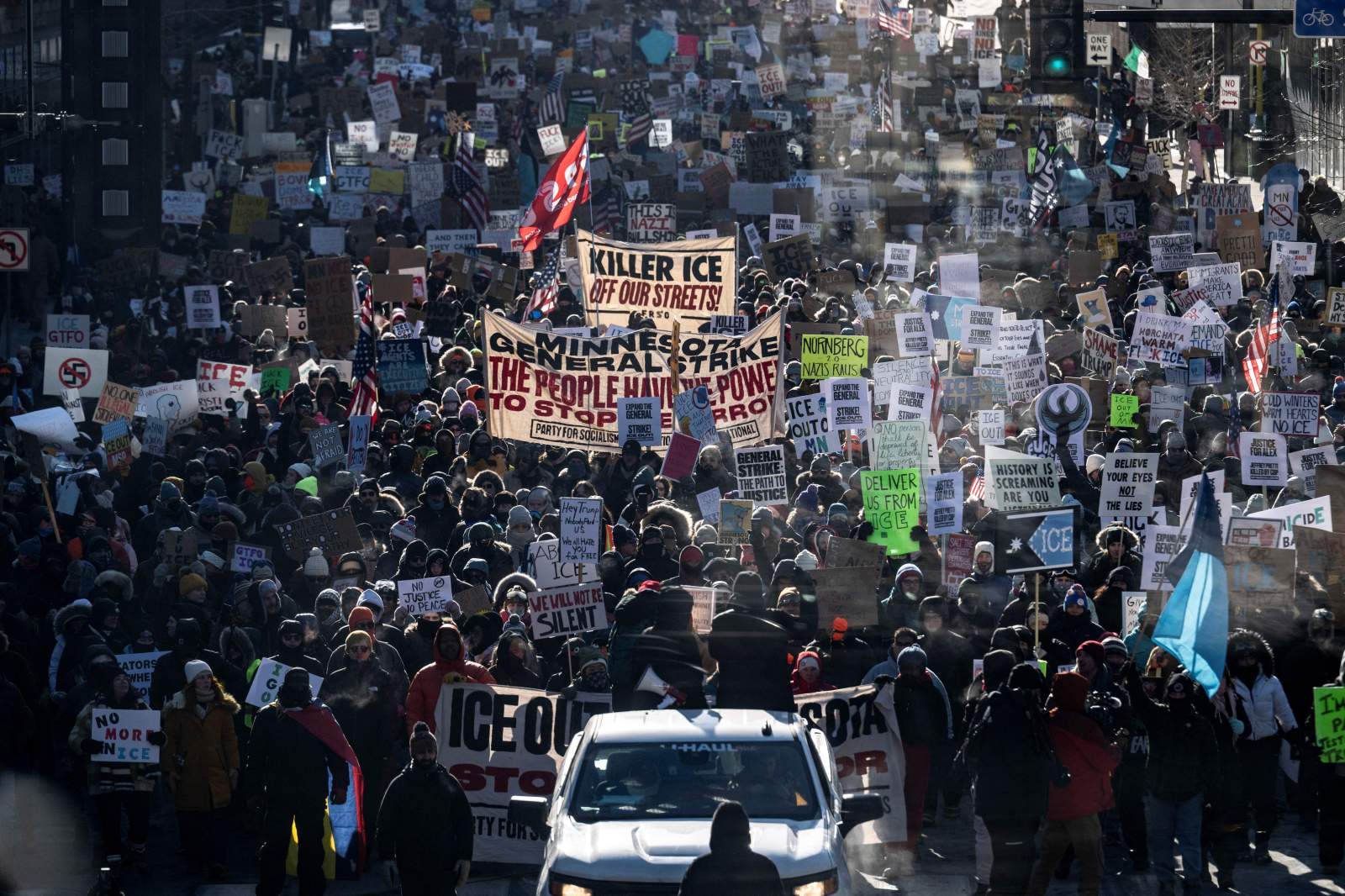 Image: NewsweekTOPSHOT – Protesters against Immigration and Customs Enforcement (ICE) march through the streets of downtown Minneapolis, Minnesota, on January 25, 2026. On January 24, federal agents shot dead US citizen Alex Pretti, a 37-year-old ICU nurse, while scuffling with him on an icy roadway, less than three weeks after an immigration officer shot and killed Renee Good, also 37, in her car. His killing sparked new protests and impassioned demands by local leaders for the Trump administration to end its operation in the city. (Photo by ROBERTO SCHMIDT / AFP via Getty Images) Source Full size
-
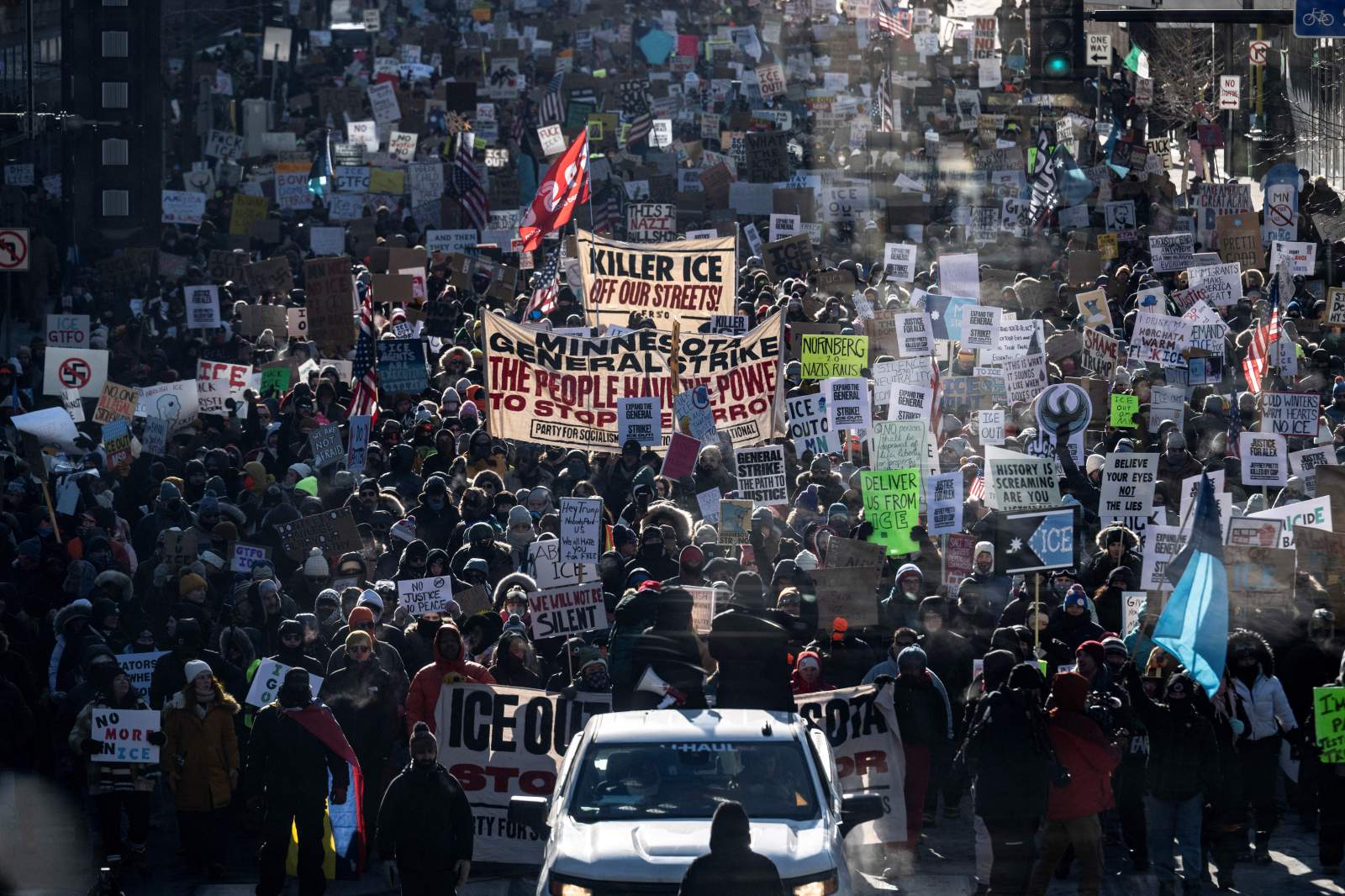 Image: NewsweekTOPSHOT – Protesters against Immigration and Customs Enforcement (ICE) march through the streets of downtown Minneapolis, Minnesota, on January 25, 2026. On January 24, federal agents shot dead US citizen Alex Pretti, a 37-year-old ICU nurse, while scuffling with him on an icy roadway, less than three weeks after an immigration officer shot and killed Renee Good, also 37, in her car. His killing sparked new protests and impassioned demands by local leaders for the Trump administration to end its operation in the city. (Photo by ROBERTO SCHMIDT / AFP via Getty Images) Source Full size
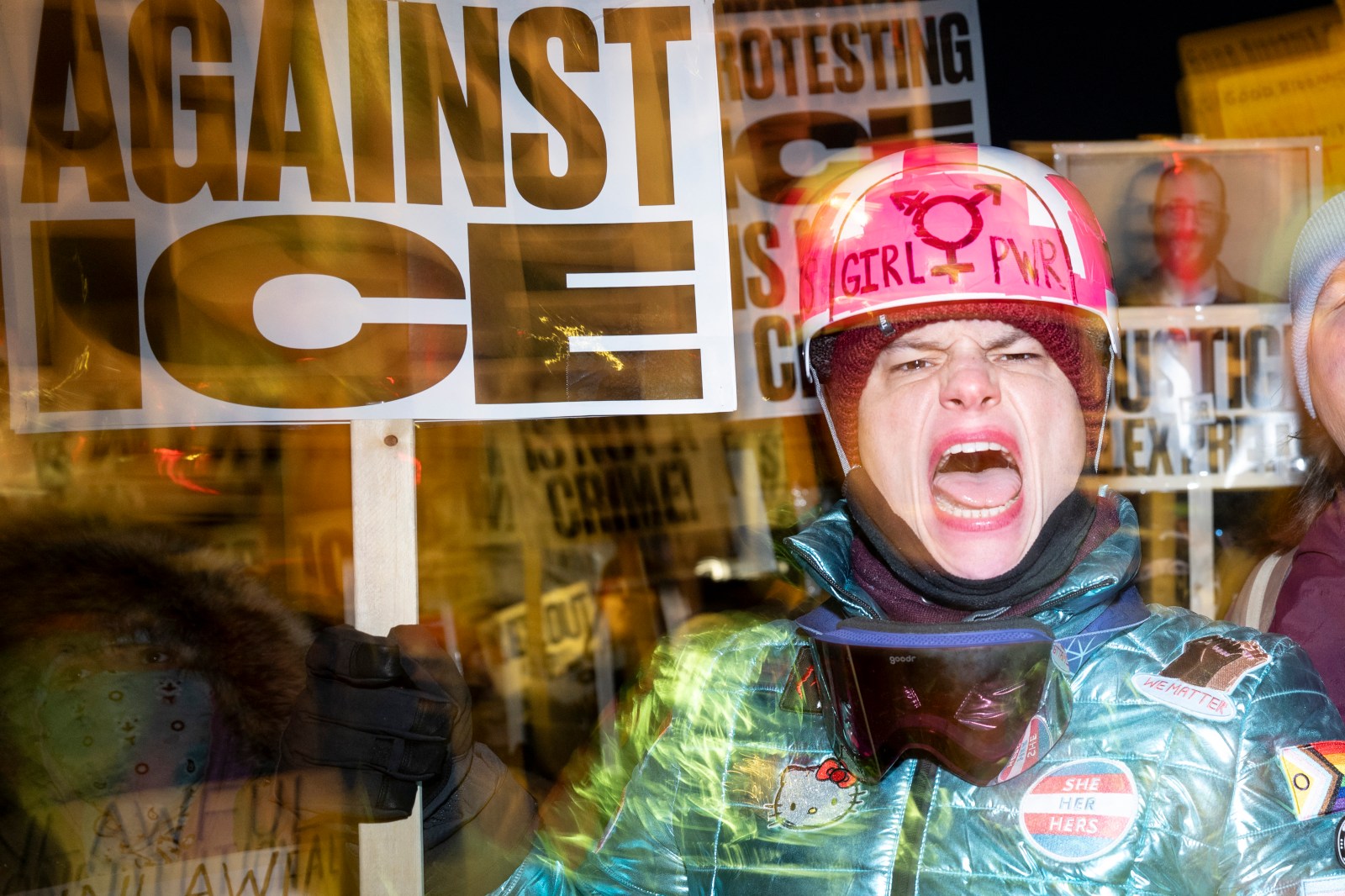
Minneapolis Shootings Ignite National Outcry Over ICE On Jan 27, ICE agents shot and killed Alex Pretti, a 37‑year‑old nurse, in Minneapolis, following the earlier fatal shooting of Renée Good during a separate enforcement operation. The two incidents sparked protests across the city and prompted Democratic leaders, including Illinois Gov. J.B. Pritzker, to call for the agency’s abolition. Both CNN and Newsweek report that the killings have intensified scrutiny of ICE’s interior tactics and accelerated calls for sweeping reforms [1][3][4].
Polls Reveal Historic Decline in Public Confidence in ICE Nationwide surveys released in late January show roughly 60 % of Americans view ICE as “too far” or “too tough,” while 55 % express very little confidence in the agency. Independent voters are especially skeptical, with 67 % reporting low confidence, up from 49 % weeks earlier. Over half of respondents (51 %) now favor cutting ICE’s budget, a higher share than for any other major federal spending category [1][4].
White House and Congress Begin Formal Reform Negotiations Following the Pretti shooting, the White House and congressional leaders launched earnest talks on ICE reforms, focusing on limiting mask usage, curbing interior deployments, and ending unrealistic removal quotas. Democrats are pressing to ban agents from wearing masks to protect identities, while the Trump administration argues masks are needed to prevent doxxing. The negotiations also address the agency’s use of Border Patrol personnel in interior cities, a practice former ICE director Darius Reeves called “disastrous” [1][3].
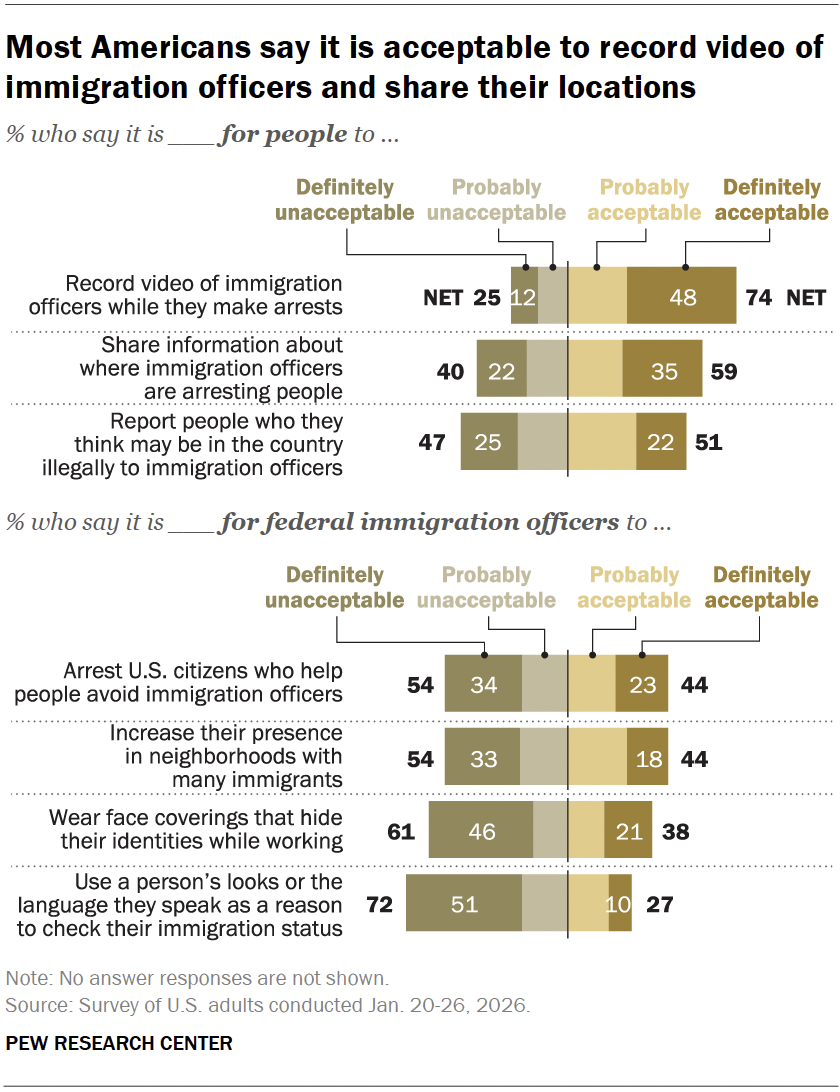
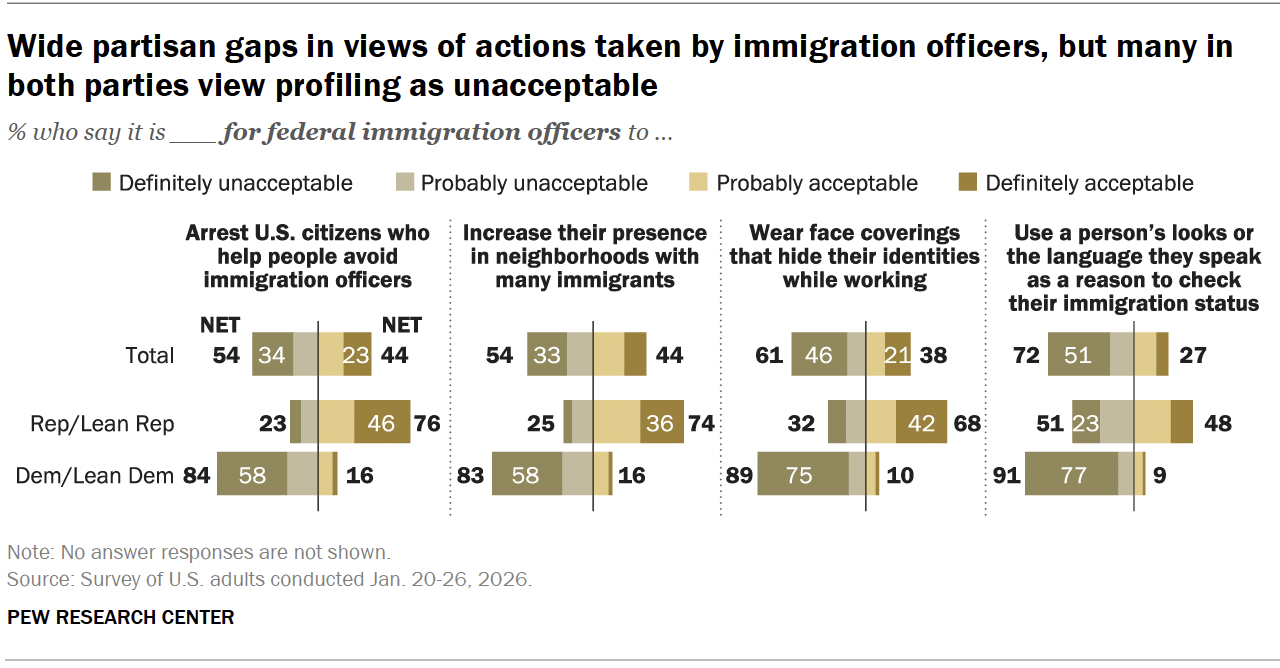
Mask Policy Emerges as Central Point of Contention Pew Research data show 72 % of Americans find profiling by looks or language unacceptable, and 61 % oppose agents wearing face coverings. Democrats in Congress have introduced legislation to prohibit mask‑wearing during enforcement actions, citing transparency concerns. The Trump administration counters that masks protect agents from doxxing and potential violence, making the issue a flashpoint in the reform talks [1].
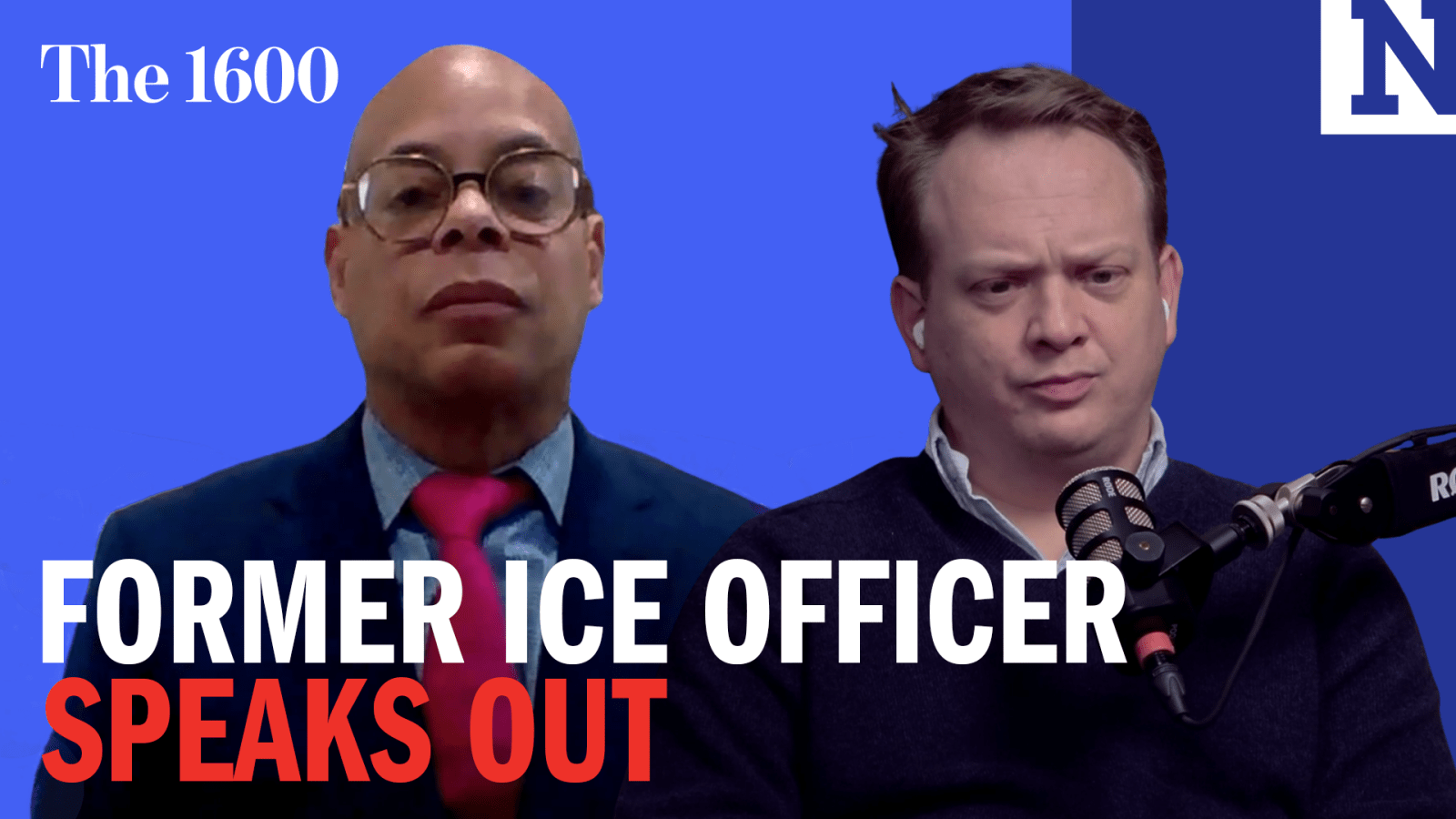
Former ICE Official Predicts Agency May Not Survive Retired senior ICE field director Darius Reeves warned that the agency “has no coming back from this” after the Minneapolis shootings and mounting political pressure. Reeves argued that quotas targeting up to one million removals annually are unrealistic given detention capacity, transport logistics, and diplomatic constraints. He predicts ICE will need to “rebuild brick by brick” if it remains operational, underscoring the uncertainty of its future [3].
Sources
-
1.
CNN: Americans’ Views on ICE Amid Reform Talks: Highlights post‑Pretti reform negotiations, public disapproval rates, independent voter opposition to mandatory local cooperation, and the mask‑wearing debate .
-
2.
Newsweek: Trump’s ICE Debate Amid Claims of Record‑Low Crime: Focuses on the Pretti killing’s impact on abolition calls, CAP’s reform blueprint, Trump’s safety claims, and expert warnings about low clearance rates .
-
3.
Newsweek: ICE’s Future in Jeopardy After Minneapolis Shootings: Features retired director Darius Reeves’ warning that ICE may collapse, critiques of interior Border Patrol deployments, and unrealistic deportation quota concerns .
-
4.
Newsweek: Civil Liberties Overtake Immigration as Top Voter Concern in Early 2026: Reports civil‑rights issues surpassing immigration in voter priority, plummeting confidence in ICE, growing support for budget cuts, and the broader political fallout from the Minneapolis shootings .
Primary Data (1)
Videos (1)
Timeline
2024 – The FBI reports that only 15.9 % of property crimes and less than half of violent offenses lead to an arrest, while murder‑case clearance falls to 61 % from 72 % in 1980, highlighting persistent gaps in law‑enforcement effectiveness[2].
2025 – The Council on Criminal Justice documents a 21 % drop in homicides across major cities and declines in robberies, gun assaults and carjackings, which the Trump administration cites to claim the nation enjoys its safest period in a century[2].
Jan 2026 (early) – ICE agents shoot and kill Renee Good in Minneapolis during an interior‑city operation, sparking nationwide protests and intensifying scrutiny of federal immigration enforcement tactics[3][4].
Jan 2026 (mid) – Alex Pretti, a 37‑year‑old nurse, is fatally shot by ICE officers in Minneapolis, prompting Illinois Governor JB Pritzker and Democratic leaders to call for ICE’s abolition and fueling a surge in public backlash against the agency[2][3].
Late Jan 2026 – A YouGov/Economist poll shows civil liberties overtaking immigration as the top voter concern for the first time, with confidence in ICE plunging to historic lows (55 % very low confidence) and 51 % of respondents favoring budget cuts to the bureau[3].
Jan 28, 2026 – Retired ICE field director Darius Reeves warns that ICE “has no coming back from this” after the Minneapolis shootings, calling the agency’s current trajectory a potential collapse and urging a “brick‑by‑brick” rebuild[4].
Jan 28, 2026 – President Trump’s net approval slides from +2 to ‑18 as voters react to policy turbulence and the ICE controversy, reflecting broader dissatisfaction with the administration’s direction[3].
Jan 29, 2026 – The Center for American Progress releases a policing‑reform blueprint that rejects “abolish” or “defund” language, instead urging more local detectives, higher case‑clearance rates and federal support for crime labs while condemning ICE agents who hide their identities[2].
Jan 29, 2026 – The White House touts record‑low crime, asserting America is safer than at any time in the past century and pointing to the 2025 homicide decline as evidence of its success[2].
Jan 29, 2026 – Democratic lawmakers label ICE a “rogue, violent agency,” with Rep. Ayanna Pressley pushing legislation to strip ICE agents of qualified‑immunity protections and Rep. Rashida Tlaib urging the bureau’s removal from neighborhoods[2].
Jan 29, 2026 – Criminologists warn that falling arrest rates may conceal unresolved violence, noting that while overall crime numbers drop, clearance rates remain low and many cases stay unsolved[2].
Jan 30, 2026 – The White House and Congress launch earnest negotiations on ICE reforms following Alex Pretti’s killing, focusing on issues such as mask‑wearing, local‑government cooperation and agency accountability[1].
Jan 30, 2026 – A Fox News poll finds 64 % of independent voters oppose mandatory local cooperation with ICE, while overall public sentiment shows roughly 60 % disapprove of the agency, reflecting a broad erosion of support[1].
Jan 30, 2026 – Democrats press to ban ICE agents from wearing masks, arguing the practice erodes public trust, while the Trump administration defends mask use as protection against doxxing, making the issue a central flashpoint in reform talks[1].
2026 (anticipated) – Legislative proposals to strip ICE agents of qualified‑immunity protections move forward in Congress, aiming to increase agency accountability and address public demands for reform[2].
2026 (anticipated) – Negotiators consider a ban on mask‑wearing by ICE personnel as part of the reform package, signaling a potential policy shift toward greater transparency in enforcement operations[1].
2026 (future) – Darius Reeves predicts ICE will need to “rebuild brick by brick, layer by layer” after the Minneapolis shootings, foreseeing a prolonged period of restructuring and reduced operational capacity[4].
External resources (9 links)
- https://www.youtube.com/watch?v=Gs0TF_D9hK0 (cited 2 times)
- https://www.pewresearch.org/politics/2026/01/29/how-americans-see-immigration-officers-behaviors-and-civilian-actions/ (cited 1 times)
- https://www.pewresearch.org/race-and-ethnicity/2025/03/26/americans-views-of-deportations/ (cited 1 times)
- https://www.axios.com/local/twin-cities/2026/01/29/minneapolis-police-helping-ice-trump-frey-staffing (cited 1 times)
- https://www.foxnews.com/politics/fox-news-poll-59-voters-say-ice-too-aggressive-up-10-points-since-july (cited 1 times)
- https://www.nytimes.com/interactive/2025/12/04/us/ice-arrests-criminal-records-data.html (cited 1 times)
- https://deportationdata.org/analysis/immigration-enforcement-first-nine-months-trump.html (cited 1 times)
- https://link.newsweek.com/join/79a/the-1600 (cited 1 times)
- https://www.americanprogress.org/article/fact-sheet-delivering-accountability-a-plan-to-stop-crime-in-our-communities/ (cited 1 times)