Trump Mulls Limited Strikes as Iran Nears Draft Nuclear Deal, Carrier Group Arrives
Updated (2 articles)
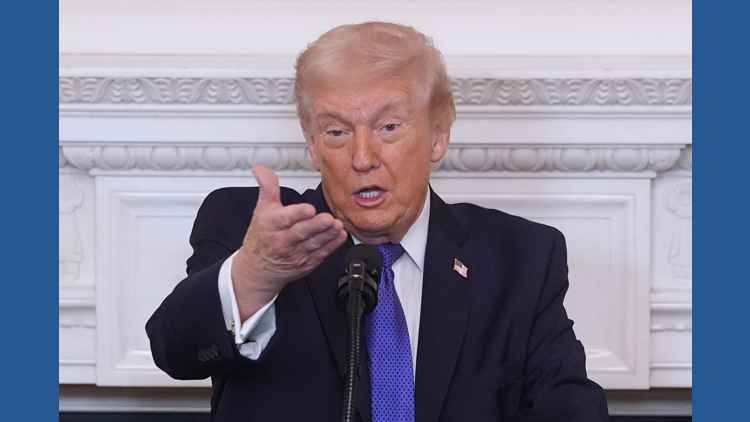
Trump Signals Possible Limited Strikes on Iran President Donald Trump told reporters on Feb. 20 he is “considering” limited military action against Iran and warned the U.S. could act if negotiations stall [1][2]. He added that Iran must “negotiate a fair deal” and cited a 10‑15‑day window for a settlement based on recent Geneva talks [1][2]. Democratic Sen. Tim Kaine filed a resolution demanding congressional authorization before any strike, reflecting bipartisan war‑powers concerns [1][2].
Iranian Foreign Minister Promises Draft Deal Within Days Foreign Minister Abbas Araghchi announced on “Morning Joe” that Tehran expects a draft nuclear agreement in the next two to three days and hopes to begin “real, serious negotiations” within a week [1][2]. He emphasized Iran’s willingness to pursue diplomacy while also preparing for the possibility of war [1][2]. The statement came amid stalled indirect talks that have been deadlocked since the 2018 U.S. withdrawal from the JCPOA [1][2].
U.S. Deploys USS Gerald R. Ford Carrier Group to Mediterranean The carrier strike group led by USS Gerald R. Ford moved from the Caribbean, passed through the Strait of Gibraltar, and entered the Mediterranean on Feb. 20, marking the largest U.S. Middle‑East deployment in decades [1][2]. Additional warships and aircraft are en route, bolstering U.S. presence as diplomatic pressure intensifies [1][2]. The deployment underscores Washington’s readiness to project power while negotiations proceed [1][2].
Both Parties Claim War Readiness, Warn of Escalation Araghchi warned Iran is prepared for diplomacy, negotiation, and war, signaling a dual‑track approach [1][2]. International Crisis Group expert Ali Vaez cautioned that any U.S. kinetic action would be viewed by Tehran as an existential threat and likely trigger retaliation [1][2]. Trump’s 10‑15‑day estimate for a deal reflects confidence that diplomacy can succeed before military options become unavoidable [1][2].
Sources
-
1.
King5: Trump warns limited strikes as Iran eyes imminent nuclear deal: King5 reports Trump’s consideration of limited strikes, Iran’s draft‑deal timeline, the carrier group’s Mediterranean move, and Kaine’s war‑powers resolution, emphasizing the administration’s unilateral posture.
-
2.
AP: Trump Signals Possible Limited Strikes on Iran as Tehran Nears Draft Deal: AP mirrors King5’s facts, adds expert Ali Vaez’s warning about an existential threat, and highlights the same diplomatic timeline and congressional pushback.
Related Tickers
Timeline
2015 – The Joint Comprehensive Plan of Action (JCPOA) nuclear accord is signed, limiting Iran’s nuclear activities and establishing a framework for international monitoring [1].
2018 – President Donald Trump withdraws the United States from the JCPOA, causing diplomatic deadlock and heightening regional tensions [1].
Feb 20, 2026 – The USS Gerald R. Ford carrier strike group leaves the Caribbean, transits the Strait of Gibraltar, and enters the Mediterranean, creating the largest U.S. Middle‑East deployment in decades [1][2].
Feb 20, 2026 – President Donald Trump tells reporters he is “considering” limited military strikes on Iran, stressing that such action remains on the table while negotiations continue [1][2].
Feb 20, 2026 – Iranian Foreign Minister Abbas Araghchi announces on “Morning Joe” that Tehran will finalize a draft nuclear agreement within two to three days and hopes serious negotiations start within a week [1][2].
Feb 20, 2026 – Trump estimates that ten to fifteen days should be enough for Iran to reach a deal, despite talks being stalled since the 2018 JCPOA withdrawal [1][2].
Feb 20, 2026 – Both sides signal readiness for war: Araghchi says Iran is prepared for diplomacy, negotiation, and war, while International Crisis Group expert Ali Vaez warns any U.S. kinetic action would be viewed by Tehran as an existential threat [1][2].
Feb 20, 2026 – Democratic Senator Tim Kaine files a war‑powers resolution demanding congressional approval before any U.S. strike on Iran, reflecting bipartisan concern over unilateral military moves [1][2].
Early March 2026 (≈10‑15 days after Feb 20) – Trump expects Iran could reach a nuclear deal by early March if negotiations proceed, indicating a possible diplomatic resolution before any limited strikes are carried out [1][2].