U.S. Official Accuses China of 2020 Nuclear Test, Calls for American Testing Resumption
Updated (5 articles)
Seismic Signal Links 2020 Lop Nur Blast to Nuclear Explosion magnitude‑2.75 seismic event was recorded on 22 June 2020 near Lop Nur, the historic Chinese test site. Assistant Secretary of State Christopher Yeaw told a Hudson Institute briefing that the International Monitoring System station in Makanchi, Kazakhstan captured a waveform he said matches a nuclear explosion rather than mining or an earthquake. Both Newsweek and The Hindu cite the same data point, linking the signal to the alleged underground test [1][2].
U.S. Senior Official Demands Equal‑Basis Nuclear Testing Yeaw warned that the United States cannot afford an “intolerable disadvantage” if China’s covert test succeeded. President Donald Trump has instructed the Pentagon to consider resuming underground tests on an “equal basis” before his scheduled meeting with Xi Jinping. The United States last conducted an underground test in 1992, while China’s last official test was in 1996 [1][2].
Comprehensive Test Ban Treaty Remains Unratified Amid Rising Tensions The United States, China and Russia signed the Comprehensive Nuclear‑Test‑Ban Treaty in 1996 but have never ratified it, keeping a voluntary moratorium on testing. After the New START treaty expired on 5 February 2026, Trump is pushing for a new three‑way arms‑control pact that would replace it. China’s embassy dismissed the U.S. allegation as political manipulation, insisting it remains committed to the test‑ban regime [1][2].
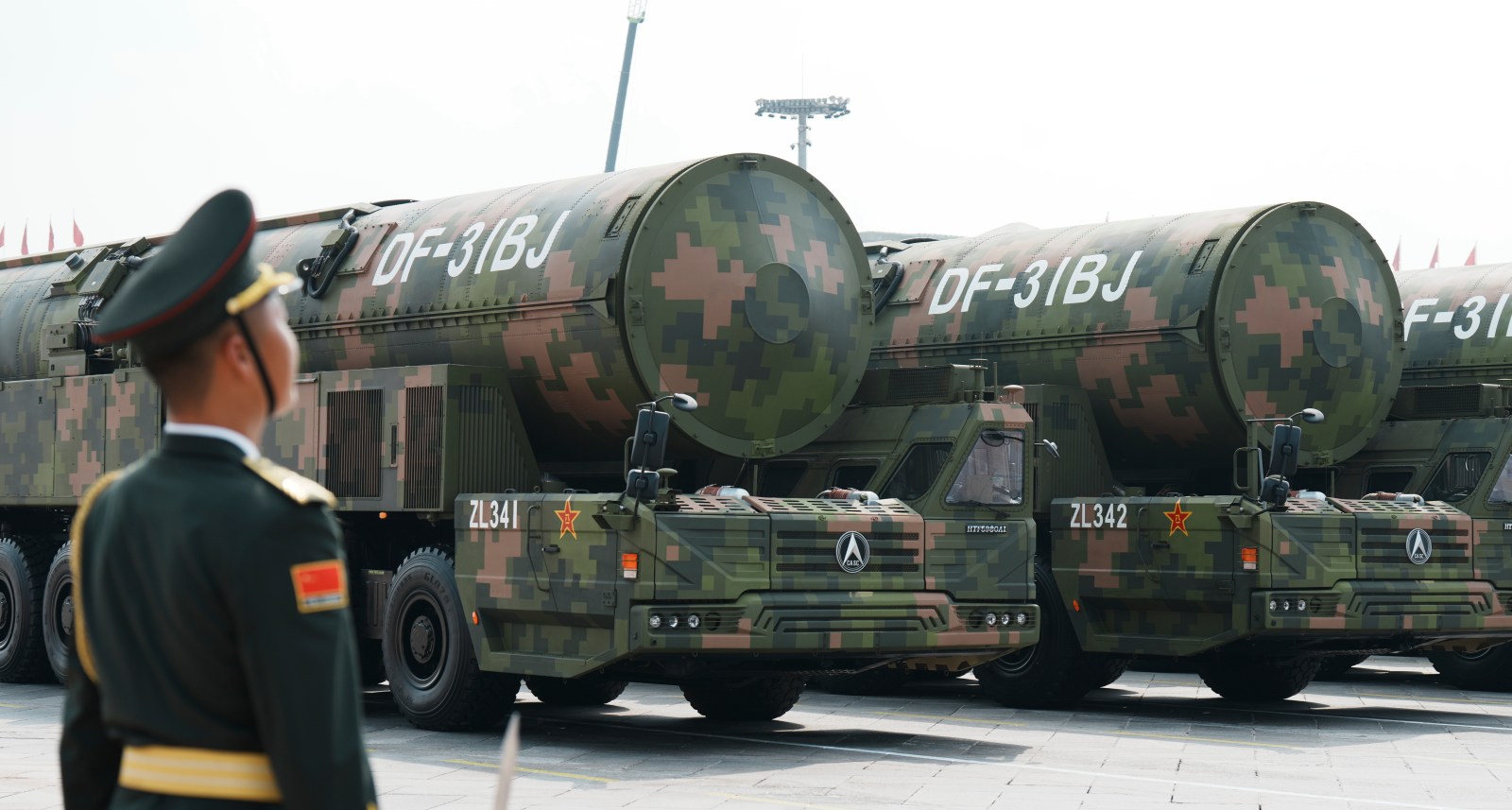
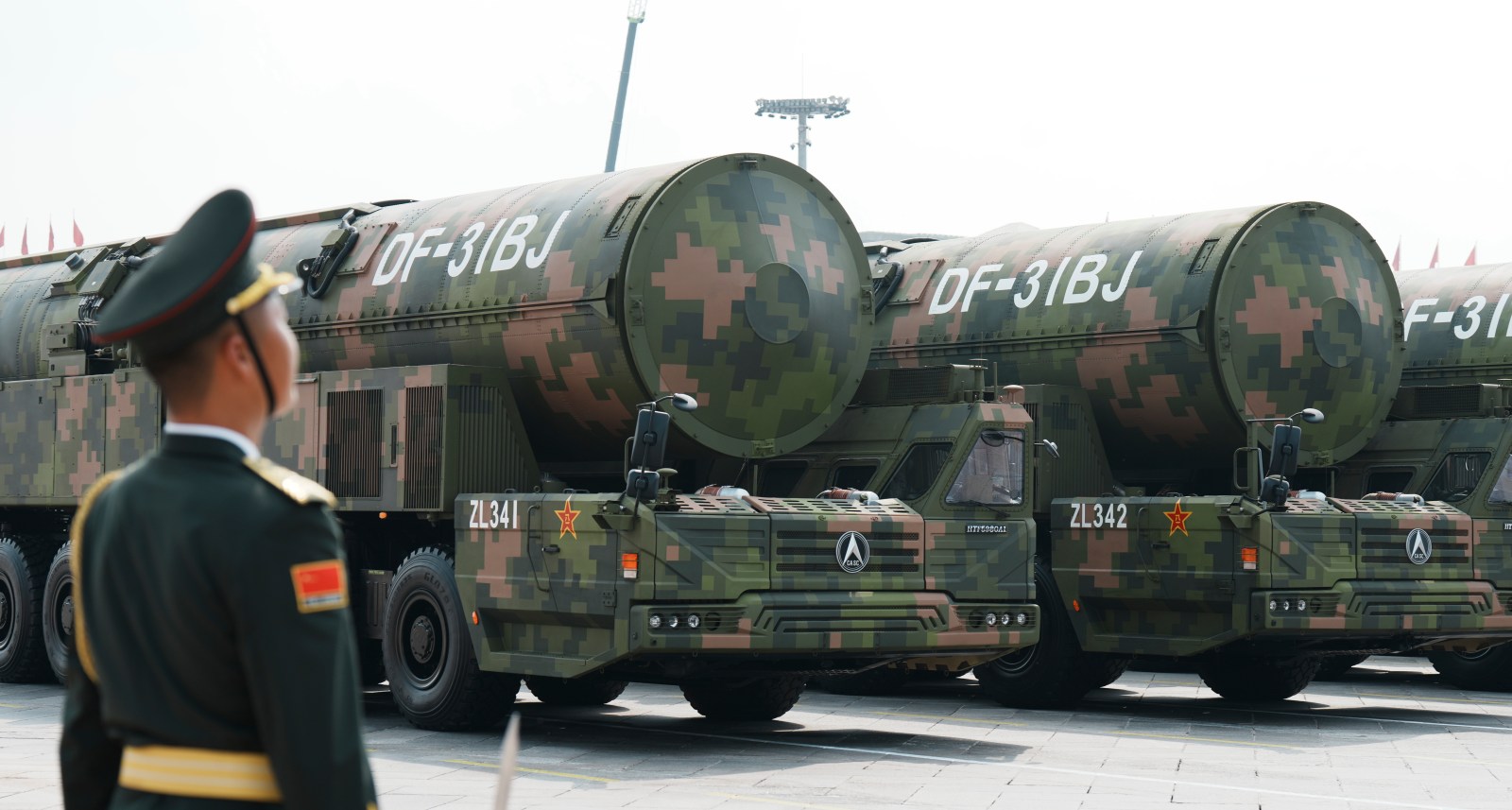
Pentagon Projects Rapid Growth of China’s Warhead Stockpile Pentagon analysts estimate China now possesses more than 600 nuclear warheads. Their projections show the arsenal could exceed 1,000 warheads by 2030. The United States relies on computer simulations for warhead reliability, highlighting a strategic gap [1][2].
Experts Disagree on Seismic Data’s Conclusiveness The CTBTO’s Executive Secretary Robert Floyd noted that the two tiny events captured by station PS23 were far below the 551‑ton TNT detection threshold, making definitive attribution impossible. Yeaw countered that the waveform’s shape is “entirely not consistent with an earthquake,” asserting a nuclear signature. This disagreement underscores the difficulty of confirming covert tests with low‑yield seismic signals [2][1].
Sources
-
1.
Newsweek: US Official Details Alleged 2020 Chinese Nuclear Test and Calls for U.S. Testing Resumption: reports Yeaw’s disclosure of a 2.75‑magnitude event, describes “decoupling” techniques, cites Pentagon warhead estimates, and notes Trump’s push for equal‑basis testing .
-
2.
The Hindu: U.S. Official Claims China Conducted 2020 Underground Nuclear Test: emphasizes Yeaw’s testimony, includes CTBTO’s caution about signal size, highlights Chinese embassy’s denial, and mentions the expired New START and Trump’s arms‑control agenda .
Related Tickers
Videos (1)
Timeline
July 16, 1945 – The Trinity test in New Mexico produces the world’s first nuclear explosion, establishing the baseline for all subsequent testing records and the current eight‑year‑plus hiatus [1].
1996 – China, the United States and Russia sign the Comprehensive Nuclear‑Test‑Ban Treaty but never ratify it, leaving the nuclear‑testing moratorium voluntary and vulnerable [2].
1998 – 2006 – The previous longest testing gap runs from Pakistan’s last test in 1998 to North Korea’s first test in 2006, a benchmark the present hiatus now surpasses [1].
September 3, 2017 – North Korea conducts its most recent nuclear test, the last known nuclear explosion worldwide before the current lull [1].
June 22, 2020 – A magnitude‑2.75 seismic event recorded by a Kazakhstan IMS station 720 km from Lop Nur matches the waveform of a nuclear blast; Assistant Secretary of State Christopher Yeaw says it is “entirely not consistent with an earthquake,” suggesting a covert Chinese test [2][5].
2023 – Russia revokes its ratification of the CTBT, arguing the treaty is imbalanced with the United States, thereby weakening the global testing‑ban regime [4].
October 31, 2025 – President Donald Trump posts on Truth Social that the Department of War will begin nuclear weapons testing “immediately,” citing rival programs as justification and signaling a shift toward active testing [4].
November 10, 2025 – At a Vienna CTBT meeting, U.S. Chargé d’Affaires Howard Solomon declares the United States will resume nuclear testing “on an equal basis” with other powers, arguing low‑yield “supercritical” tests evade detection and that Russia and China have violated the moratorium [3].
December 2, 2025 – Russian President Vladimir Putin tells the UN Security Council that any U.S. or CTBT‑signatory nuclear test will trigger reciprocal Russian testing, reinforcing a tit‑for‑tat stance amid rising tensions [4].
December 18, 2025 – Solomon reiterates the U.S. testing rationale, citing alleged Russian and Chinese activities, Russia’s large non‑strategic warhead stockpile, and the imminent expiration of New START on February 5, 2026, as reasons to abandon the testing moratorium [3].
January 15, 2026 – The world reaches an eight‑year, four‑month, and 11‑day nuclear‑test hiatus—the longest since the 1945 Trinity test—highlighting a record‑setting period of no nuclear explosions worldwide [1].
February 5, 2026 – The New START treaty between the United States and Russia expires, removing the last major bilateral limit on strategic nuclear arsenals and raising the risk of rapid warhead deployment [3].
February 17, 2026 – At a Hudson Institute event, Christopher Yeaw repeats that the 2020 Lop Nur seismic signal matches a nuclear blast, arguing the United States may need to test “on an equal basis” to counter China’s “hundreds‑of‑tons” yield capability [5].
February 18, 2026 – A senior U.S. official publicly details the alleged 2020 Chinese underground test, describing China’s use of “decoupling” to mask a yield of several hundred tons and warning that the United States “cannot afford to forgo testing” or face an “intolerable disadvantage” against peer rivals [2].
February 18, 2026 – The United States pushes for a new three‑way arms‑control pact with China and Russia after New START’s expiry, seeking to replace the lapsed treaty and to constrain future testing while China and Russia deny any 2020 test [5].
All related articles (5 articles)
-
Newsweek: US Official Details Alleged 2020 Chinese Nuclear Test and Calls for U.S. Testing Resumption
-
The Hindu: U.S. Official Claims China Conducted 2020 Underground Nuclear Test
-
CNN: World marks record-long lull in nuclear tests as renewed testing threats loom
-
AP: U.S. Official Defends Trump’s Nuclear‑Testing Stance Amid Rising Global Concerns
-
AP: US and Russia Threaten to Resume Nuclear Testing
External resources (5 links)
- https://www.youtube.com/watch?v=LHEdJ5e539I&t=26s (cited 1 times)
- https://outrider.org/ (cited 2 times)
- https://www.carnegie.org/ (cited 2 times)
- https://blog.ucs.org/dylan-spaulding/the-nuclear-testing-moratorium-passes-a-milestone/ (cited 1 times)
- https://www.csis.org/analysis/satellite-imagery-analysis-chinas-alleged-2020-nuclear-test-lop-nur (cited 1 times)