India’s FY 2026‑27 Budget Emphasizes Record Capex While Labour Gains Remain Stagnant
Updated (8 articles)
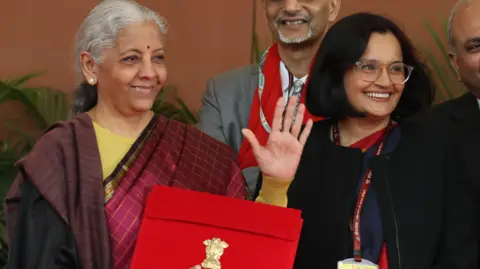
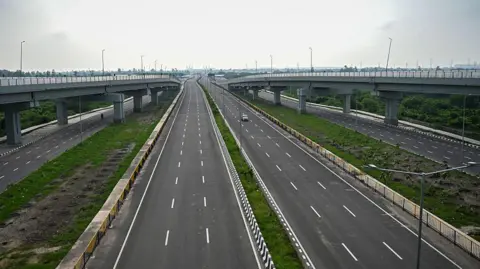
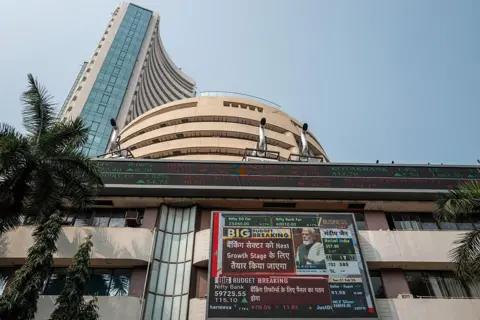
Budget Presentation Sets Capex and Deficit Targets Finance Minister Nirmala Sitharaman delivered the Union Budget on Feb 1, 2026, pledging a fiscal deficit of 4.3 % of GDP, gross borrowing of ₹17.2 trillion and net borrowing of ₹11.7 trillion while raising the centre‑run capital‑expenditure ceiling to ₹12.2 lakh crore for FY 27[5][4].
Fiscal Framework Shifts to Debt‑to‑GDP Ratio The budget replaces the FRBM deficit target with a debt‑to‑GDP goal of about 50 % by 2031, allowing a higher ceiling than the previous 40 % limit and projecting a modest primary‑deficit fall to 0.7 % of GDP in FY 27[3][8].
Labour Market Shows Dual‑Economy Signals Public capex now accounts for over 22 % of total outlays, more than double since 2020‑21, yet construction’s employment elasticity dropped to 0.42 while agriculture’s rose to 1.51, and the NEET rate for 15‑29‑year‑olds stalled around 23‑25 %[1].
Rural Employment Scheme Faces Funding and Transition Gaps The budget combines ₹95,692 crore for the new VB‑GRAMG programme with ₹30,000 crore for MGNREGS, but activists highlight opaque allocation, missing timelines for MGNREGS wind‑down, and a shortfall that would fund only about 52 days of the promised 125‑day guarantee[2].
Sectoral Incentives Expand While E‑Mobility Funding Shrinks Incentives target seven strategic manufacturing sectors, a ₹40,000 crore electronics‑component scheme, a second semiconductor mission, rare‑earth corridors and a zero‑tax holiday for foreign cloud providers until 2047, whereas major e‑mobility schemes such as PM E‑DRIVE and PM‑eBus Sewa see cuts of ₹2,700 crore and ₹1,010 crore respectively due to under‑utilisation[4][7].
Sources
-
1.
The Hindu:India’s Capex‑Heavy Budget Raises Growth Prospects but Leaves Labour Behind:**Analyzes the record ₹12.2 lakh crore capex target, 4.3 % deficit, and the widening gap between capital‑intensive growth and stagnant labour creation, citing falling construction elasticity and rising agricultural elasticity.
-
2.
The Hindu:Activists Criticise Budget’s Rural Job Scheme Funding and Transition Clarity:**Details the ₹95,692 crore VB‑GRAMG and ₹30,000 crore MGNREGS allocations, activist Nikhil Dey’s concerns over opaque funding, missing transition timelines, and the infeasibility of the 125‑day work guarantee.
-
3.
The Hindu:India’s New Fiscal Rule Shifts Focus to Debt Ratio, Cuts Rural Spending:**Explains the shift to a 50 % debt‑to‑GDP target by 2031, modest deficit reduction, and sharp cuts to rural development spending, highlighting the fiscal consolidation path.
-
4.
The Hindu:Union Budget 2026‑27 pushes capital spending, manufacturing and cloud incentives:**Reports the ₹12.2 lakh crore capex lift, manufacturing incentives across seven sectors, cloud tax holiday, and opposition criticism of the budget’s people‑focus.
-
5.
The Hindu:Union Budget 2026‑27: Key Highlights and Policy Direction:**Summarises Sitharaman’s presentation, emphasis on global integration, infrastructure projects in poll‑bound states, customs duty cuts, and energy‑transition measures.
-
6.
The Hindu:Union Budget 2026 Sets Record Capital Spend and Launches Rare‑Earth Corridors:**Highlights the record capex target, three “kartavyas,” rare‑earth corridors, and major infrastructure projects like new waterways and freight corridors.
-
7.
The Hindu:Union Budget 2026 Cuts Funding for Electric Mobility Schemes:**Documents cuts of over ₹3,700 crore to e‑mobility programmes, citing under‑utilisation of PM E‑DRIVE and PM‑eBus Sewa as reasons for reduced allocations.
-
8.
BBC:India’s 2026‑27 Budget Targets Infrastructure, Manufacturing and Debt Ratio Amid Global Tensions:**Provides an international view, noting the 7.4 % growth forecast, increased defence outlays, debt‑to‑GDP target shift, and the impact of US tariffs on future growth.
Timeline
2020‑21 – India’s capital expenditure rises from about 12 % to over 22 % of total fiscal outlays, establishing capex as the core of fiscal policy and setting the stage for the 2026‑27 budget’s infrastructure push[5].
2022 – The government follows a consolidation path begun in FY 22, keeping primary deficits modest while allowing a slower reduction in overall fiscal deficit, a trend that continues into the 2026‑27 plan[3].
Sept 2024 – The Centre launches the PM E‑DRIVE programme to spur electric‑vehicle innovation, allocating ₹4,000 crore for its first two years before later cuts are imposed[4].
2024‑25 – Pandemic‑era crisis‑management spending recedes, and the budget shifts from emergency stimulus to a borrowing‑heavy, capex‑driven growth model under the “Viksit Bharat” vision[5].
2025 – India signs a free‑trade agreement with the European Union, prompting the budget to propose mega‑textiles parks to boost exports under the new trade framework[1].
2025 – U.S. President Donald Trump announces 50 % tariffs on Indian exports, a factor the Economic Survey cites as likely to slow growth after FY 2026‑27[1].
Feb 1, 2026 – Finance Minister Nirmala Sitharaman presents the Union Budget 2026‑27, framing it around three “kartavyas” – accelerating growth, fulfilling citizens’ aspirations, and ensuring inclusive access[2].
Feb 1, 2026 – The budget lifts the capital‑expenditure ceiling to ₹12.2 lakh crore for FY 27, up from ₹11.2 lakh crore, and earmarks ₹17.2 trn gross borrowing to fund the plan[6].
Feb 1, 2026 – A new semiconductor mission 2.0 receives an additional $436 m, while a tax‑holiday for foreign cloud providers is announced to run until 2047, aiming to attract data‑centre investment[1].
Feb 1, 2026 – Rare‑earth corridors are unveiled in Odisha, Kerala, Andhra Pradesh and Tamil Nadu, with a ₹73 bn scheme to create supply chains for strategic minerals[2].
Feb 1, 2026 – Customs duties on marine, leather and textile products are trimmed to boost exports, but the budget makes no major cuts to personal or corporate income‑tax rates[7].
Feb 1, 2026 – The fiscal rule pivots from a deficit‑to‑GDP target to a debt‑to‑GDP ceiling of about 50 % by 2030‑31, allowing a higher debt ceiling while aiming for a 55.6 % ratio in FY 27[3].
Feb 1, 2026 – Primary fiscal deficit is projected to fall to 0.7 % of GDP and overall deficit to 4.3 % of GDP in FY 27, reflecting a modest tightening of fiscal stance[3].
Feb 1, 2026 – Development spending, especially rural and agricultural outlays, drops to 1.2 % of GDP, raising concerns about the distributional impact of consolidation[3].
Feb 1, 2026 – Disinvestment revenue falls far short of the ₹47,000 crore target, achieving only ₹8,768 crore, which threatens the budget’s financing assumptions[6].
Feb 1, 2026 – Opposition leaders Mallikarjun Kharge and Rahul Gandhi label the budget “anti‑people” and criticize its lack of a clear growth strategy[6].
Feb 2, 2026 – Activist Nikhil Dey warns that the ₹30,000 crore allocation for MGNREGS lacks transparency on liability clearance, programme wind‑down, and state‑wise cost‑sharing, leaving states “in the dark” about VB‑GRAMG implementation[8].
Feb 2, 2026 – The NREGA Sangarsh Morcha points out that the budget documents omit any timeline or normative allocations for the transition to VB‑GRAMG, questioning the feasibility of the promised 125‑day work guarantee[8].
Feb 2026 onward – The government rolls out a ₹10,000 crore container‑manufacturing scheme and a matching ₹10,000 crore SME Growth Fund to strengthen logistics and bridge equity gaps for scalable enterprises[6].
Feb 2026 onward – State‑level infrastructure projects are announced for poll‑bound regions such as Tamil Nadu, Odisha, West Bengal and Andhra Pradesh, tying capital spending to upcoming elections[7].
2026‑27 – The Economic Survey forecasts a 7.4 % GDP expansion for FY 26‑27, before a slowdown is expected as U.S. tariffs take effect[1].
2030‑31 – India aims to bring its debt‑to‑GDP ratio down to 50 % (±1 %) by the end of the fiscal year 2030‑31, a long‑term fiscal anchor embedded in the new rule[3].
2047 – The zero‑tax concession for foreign cloud providers remains in force until 2047, providing a multi‑decade incentive for data‑centre development[1].
External resources (4 links)
- https://www.youtube.com/@bbcnewsindia/featured (cited 1 times)
- https://www.facebook.com/bbcindia/ (cited 1 times)
- https://www.instagram.com/bbcnewsindia/ (cited 1 times)
- https://x.com/BBCIndia (cited 1 times)