French Navy Seizes 4.25 Tonnes Cocaine Near Polynesia, No Charges Filed
Updated (2 articles)
-
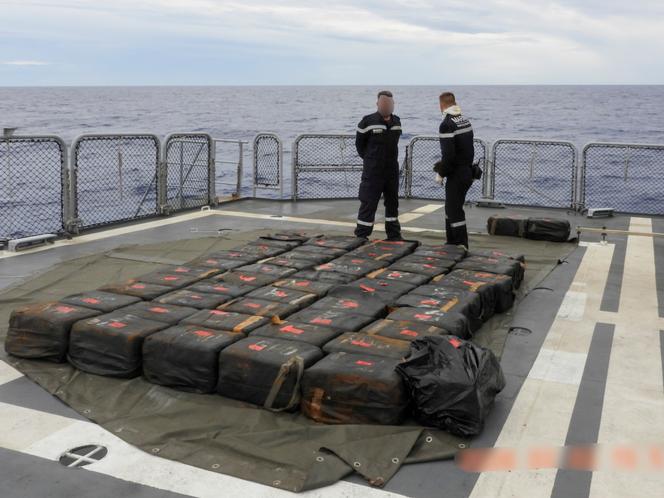 Image: Le MondeUne image, mise à disposition par le haut-commissariat de la République en Polynésie française le 4 février 2026, montre une saisie de ballots de cocaïne effectuée sur un navire, le 2 février 2026.HAUT-COMMISSARIAT DE LA RÉPUBLIQUE EN POLYNÉSIE FRANÇAISE/FACEBOOK (HAUT-COMMISSARIAT DE LA RÉPUBLIQUE EN POLYNÉSIE FRANÇAISE/FACEBOOK) Source Full size
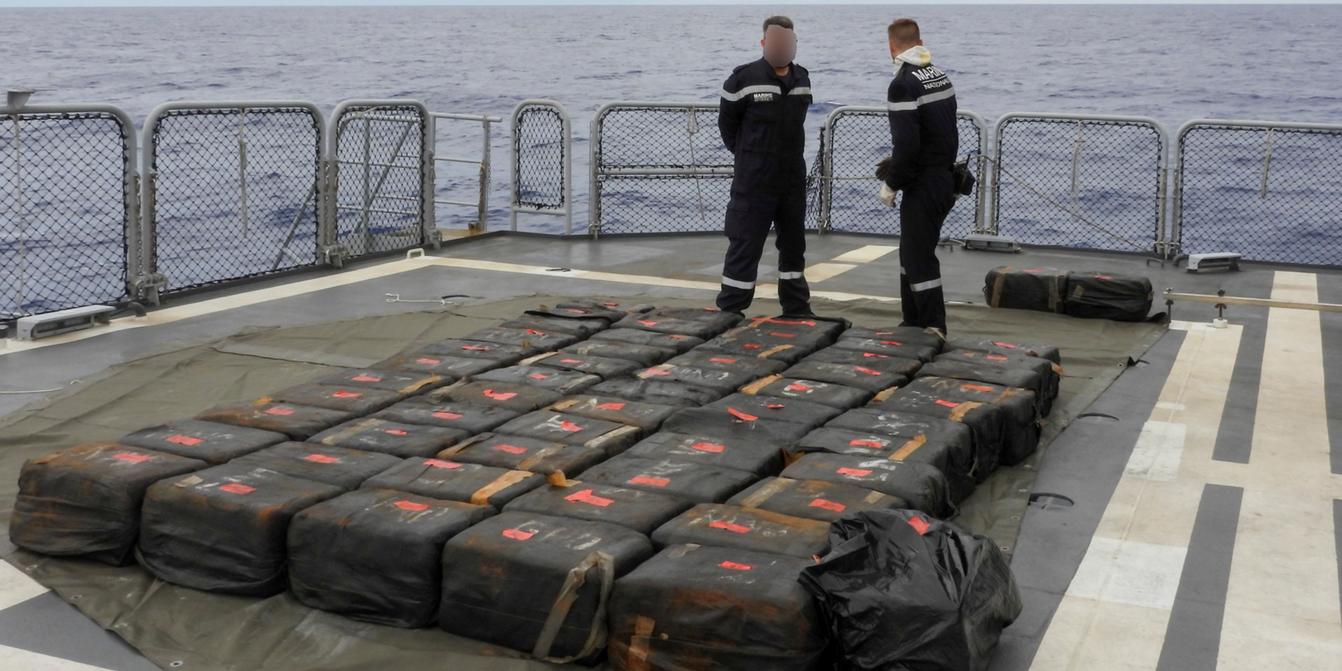
February 2 Interception Captures 4.249 Tonnes of Cocaine The French Navy boarded a cargo ship on 2 February 2026 while it sailed from Central America toward South Africa, discovering 174 bales containing 4.249 tonnes of cocaine [1]. The haul was seized and the narcotics were destroyed at sea outside French Polynesia’s exclusive economic zone and a protected marine area [1]. The vessel was allowed to continue its voyage after the operation, in accordance with international law [1].
Prosecutors Opt Against Filing Charges Against Crew Papeete prosecutors announced they would not press criminal charges against the ship’s crew, citing a need to allocate judicial resources to cases directly affecting French territory [1]. Officials noted the shipment was not intended for the Polynesian market, reducing its relevance to local law‑enforcement priorities [1]. The crew and vessel were released to resume navigation without detention [1].
Earlier January Seizure Highlights Ongoing Maritime Surveillance similar operation in late January intercepted 4.87 tonnes of cocaine on a different vessel now undergoing repairs in the Cook Islands [1]. The French authorities monitor suspect ships 24 hours a day using satellite tracking and cooperate with regional police and customs agencies [1]. The earlier case demonstrates a pattern of large‑scale drug movements through Pacific routes [1].
Regional Efforts Target Latin American Narcotics Flow to Australia French Polynesia sits on a maritime corridor that channels cocaine from Latin America toward consumer markets such as Australia, prompting coordinated anti‑drug initiatives among Pacific nations [1]. Despite a notable local methamphetamine problem, the territory’s 280,000‑person population limits demand for massive cocaine shipments [1]. Ongoing surveillance and joint operations aim to disrupt these trans‑Pacific trafficking networks [1].
Timeline
Jan 2025 – French navy intercepts a merchant vessel in the Atlantic bound for Europe, seizing 9 tonnes of cocaine; the haul underscores the scale of trans‑Atlantic trafficking and prompts heightened naval patrols in the region. [1]
June 2025 – U.S. Coast Guard operation recovers 17,450 lb (≈7.9 t) of cocaine and 2,585 lb (≈1.2 t) of marijuana in the Caribbean, valued at roughly $132 million, highlighting parallel U.S. interdiction efforts alongside French actions. [1]
July 2025 – A second U.S. Coast Guard sweep captures 2,220 lb (≈1.0 t) of cocaine and 3,320 lb (≈1.5 t) of marijuana, adding $20 million in seized drug value and reinforcing the seasonal surge in trafficking attempts. [1]
Oct 2025 – French naval units board an unflagged fishing vessel in Atlantic waters, confiscating 7 tonnes of cocaine; the operation demonstrates the expanding scope of French maritime surveillance beyond traditional fishing routes. [1]
Dec 2025 – French navy intercepts an unflagged boat in the Caribbean, seizing approximately 2.3 tonnes (2,360 kg) of cocaine; the seizure lifts the Antilles‑Guyana zone’s 2025 total to over 31 tonnes and the crew are transferred to local authorities for judicial processing. [1]
Dec 2025 – French Foreign Minister Jean‑Noël Barrot unveils a multipronged plan targeting cross‑border organized drug crime across Latin America, the Caribbean, and Europe, proposing an EU sanctions regime against trafficking networks. [1]
Jan 2026 – French authorities in the Pacific intercept a vessel carrying 4.87 tonnes of cocaine; the ship is placed under 24‑hour monitoring and later sent to the Cook Islands for repairs, illustrating sustained interdiction in the Indo‑Pacific corridor. [2]
Feb 2, 2026 – French navy seizes 4.249 tonnes of cocaine from a vessel sailing from Central America toward South Africa near French Polynesia’s EEZ; the drugs are destroyed at sea within a protected marine area to prevent environmental contamination. [2]
Feb 5, 2026 – Prosecutors in Papeete decline to press charges against the crew of the February seizure, citing limited impact on the Polynesian market and a strategic decision to allocate judicial resources to cases directly affecting French territory; the crew and vessel are released to continue navigation under international law. [2]
2025‑2026 – Ongoing coordination between French naval forces, NATO’s Maritime Analysis and Operations Centre‑Narcotics, and regional police and customs agencies intensifies surveillance of drug routes from Latin America to markets such as Australia, reinforcing a multinational framework for maritime counter‑narcotics. [1][2]