Russia Launches Massive Missile‑Drone Barrage on Ukraine Ahead of Abu Dhabi Talks
Updated (14 articles)
-
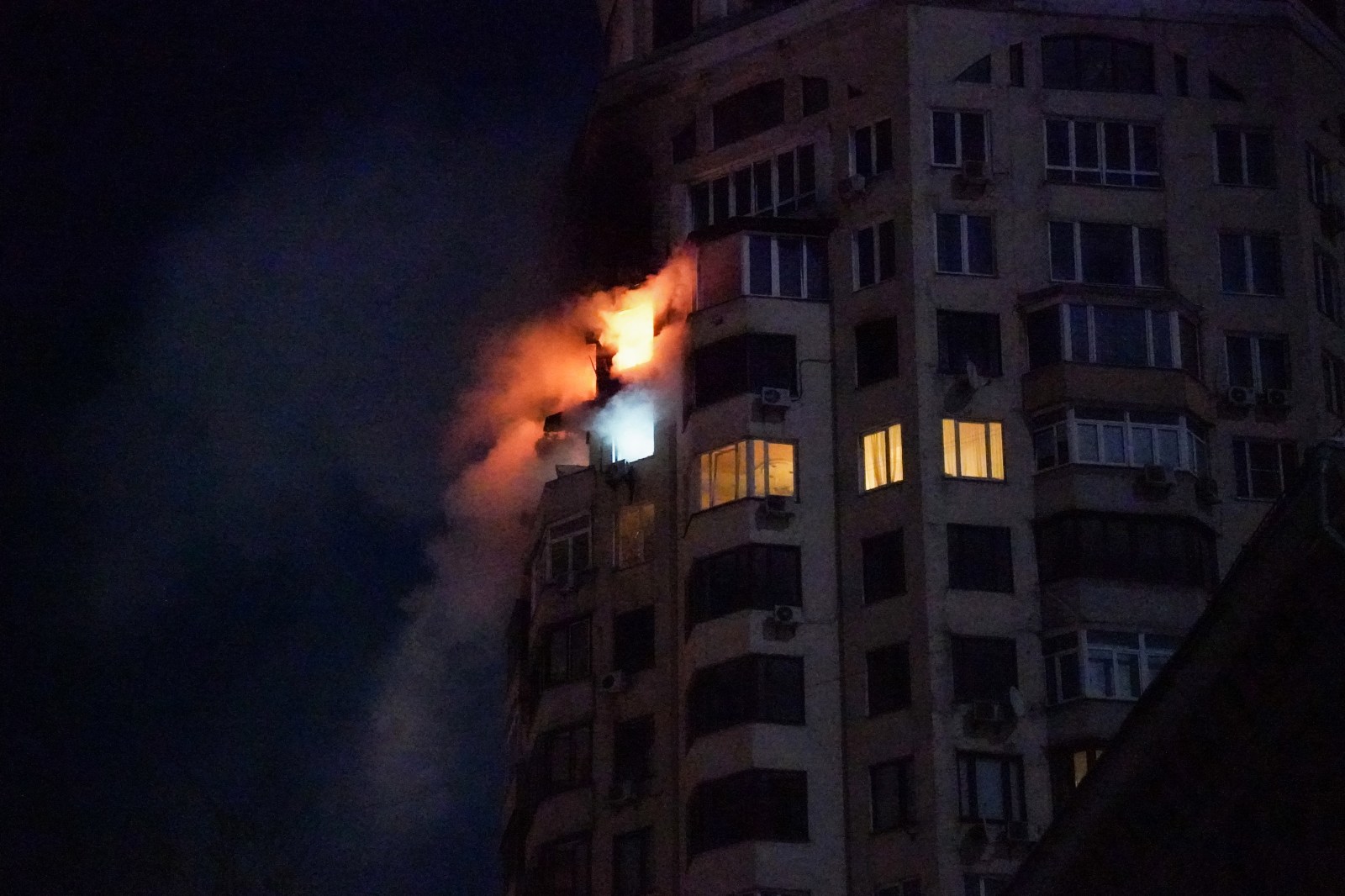 Image: NewsweekTOPSHOT – This photo shows fire coming from an apartment building following a Russian air attack in Kyiv early on February 3, 2026, amid the Russian invasion of Ukraine. Russia resumed strikes on Kyiv on February 3, Ukrainian officials said, as a week-long truce announced by US President Donald Trump gave way to renewed attacks in freezing conditions. (Photo by Serhii Okunev / AFP via Getty Images) Source Full size
-
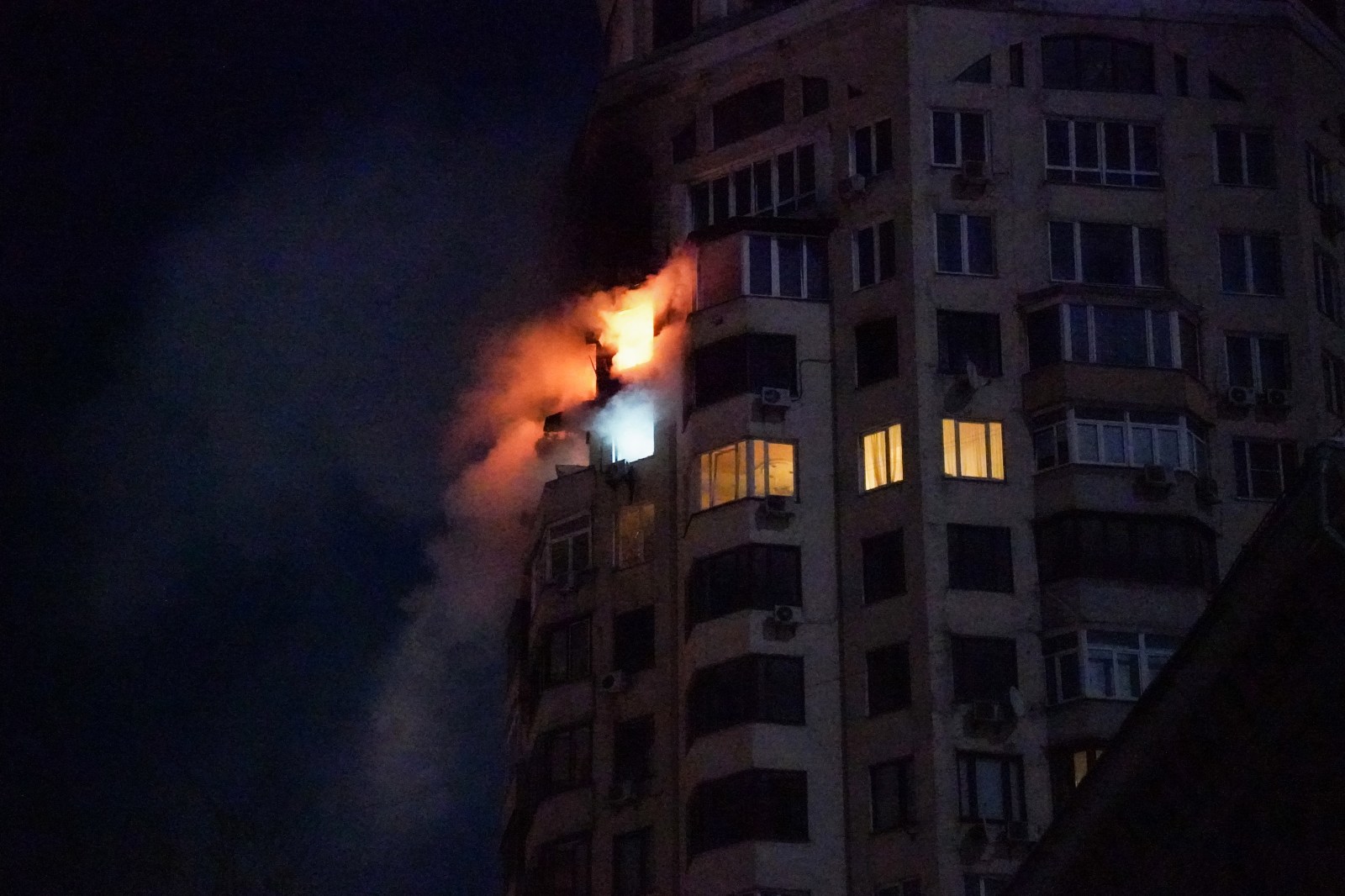 Image: NewsweekTOPSHOT – This photo shows fire coming from an apartment building following a Russian air attack in Kyiv early on February 3, 2026, amid the Russian invasion of Ukraine. Russia resumed strikes on Kyiv on February 3, Ukrainian officials said, as a week-long truce announced by US President Donald Trump gave way to renewed attacks in freezing conditions. (Photo by Serhii Okunev / AFP via Getty Images) Source Full size

Coordinated missile and drone strike hits power grid across Ukraine On the night of Feb 2‑3, Russia launched more than 70 ballistic and cruise missiles together with roughly 450 long‑range drones, striking energy facilities in Kyiv, Kharkiv, Odesa and other regions [1][2]. The assault targeted both heating‑only plants and major thermal stations, delivering what DTEK described as the ninth major strike since October [2]. Ukrainian officials reported damage to DTEK‑operated thermal plants and a Kharkiv power station, crippling electricity supply to large parts of the capital [1][2].
Severe cold snap deepens civilian hardship Temperatures fell to –20 °C, leaving thousands of residents without heat as damaged plants could not supply heating to over 1,000 tower blocks in Kyiv [1][2]. Civilians sought refuge in metro stations and relied on soup kitchens for hot meals, while injuries were reported in five regions [1]. The combination of freezing weather and power outages intensified the humanitarian crisis during the attack [2].
Ukrainian air defenses down most threats but gaps persist Ukraine’s air force intercepted 38 missiles and 412 drones, yet at least 27 missiles and 31 drones penetrated defenses, striking 27 locations and injuring at least 10 civilians [1]. The shortfall highlights chronic shortages of air‑defence munitions, including Patriot systems, prompting calls for additional NATO supplies [2]. Despite the interceptions, the barrage succeeded in disabling critical infrastructure and causing civilian casualties [1][2].
Diplomatic leaders converge as Abu Dhabi talks begin NATO Secretary‑General Mark Rutte arrived in Kyiv, met President Volodymyr Zelensky and pledged unwavering alliance support just before the three‑way negotiations in Abu Dhabi [1]. U.S. Special Envoy Steve Witkoff and former President’s son‑in‑law Jared Kushner are slated to join the Abu Dhabi talks, underscoring heightened diplomatic activity amid the attacks [1]. NATO urged rapid delivery of additional air‑defence missiles, while Dutch Prime Minister Rutte pledged “hard‑power” assistance [2].
Sources
-
1.
Newsweek: Russia Resumes Massive Missile and Drone Assault on Ukraine Ahead of Abu Dhabi Peace Talks – Details the resumed strike after a brief pause, the scale of the missile‑drone barrage, civilian injuries, DTEK plant damage, Poland’s air‑space response, and the presence of NATO chief Mark Rutte and U.S. envoys at upcoming talks .
-
2.
BBC: Russia launches record missile barrage on Ukraine’s energy grid – Emphasizes the unprecedented number of missiles and drones, the impact of the –20 °C cold snap on heating, Zelensky’s figures on launches and interceptions, NATO’s call for more missiles, DTEK’s assessment of the attack’s severity, and civilian coping measures .
Timeline
Dec 5, 2025 – Russia launches 653 drones and 51 missiles overnight, striking the Fastiv railway hub outside Kyiv and temporarily cutting external power at the Zaporizhzhia nuclear plant (the 11th such loss since the invasion began); Ukrainian air defenses intercept most weapons; US envoy Steve Witkoff says talks with Ukraine’s security council are constructive, while Foreign Minister Andrii Sybiha warns that “no decisions to strengthen Ukraine can be delayed under the pretext of a peace process” [3]; President Vladimir Putin warns Ukrainian troops to withdraw from Donbas within the week [3].
Dec 6, 2025 – Russia conducts a massive overnight assault with over 650 drones and 50 missiles, Ukraine shoots down about 585 drones and 30 missiles, hitting energy infrastructure in 29 locations, causing Zaporizhzhia to briefly lose off‑site power and cutting heat and water to thousands in Odesa; a railway hub near Kyiv is hit; Russia’s defence ministry claims shooting down over a hundred Ukrainian drones; President Zelensky discusses the attack with US envoy Steve Witkoff and Jared Kushner and plans a meeting with UK Prime Minister Keir Starmer in London [8][13][14].
Dec 12‑13, 2025 – More than 1 million Ukrainian households lose electricity after Russia deploys over 450 drones, 30 missiles and hypersonic Kinzhal missiles, damaging substations in five regions and briefly cutting off‑site power at Zaporizhzhia before restoring it; President Zelensky reports the scale of the assault and US envoy Steve Witkoff prepares to meet him in Berlin to discuss a US‑backed peace plan [2]; the EU freezes €210 billion of Russian assets and debates loaning the funds to Ukraine [2].
Dec 14, 2025 – Russia bombards the Ukrainian power grid with over 450 drones and 30 missiles, leaving more than a million people without electricity amid freezing temperatures; Ukraine retaliates with a drone strike on Russia’s Saratov region, killing two civilians; Berlin is set to host high‑level peace meetings with US envoys Steve Witkoff and Jared Kushner; Kremlin adviser Yuri Ushakov says a cease‑fire will only follow Ukrainian withdrawals from parts of Donetsk [12].
Dec 23, 2025 – Russia launches 635 drones and 38 missiles in the ninth large‑scale attack on Ukraine’s energy system this year, killing three civilians including a 4‑year‑old and causing outages across 13 regions; DTEK calls it the seventh major strike on its plants since October, noting over 220 attacks on its facilities since the invasion began; Zelensky frames the strike as a clear signal of Russian priorities amid ongoing negotiations [11].
Jan 5, 2026 – A Russian Shahed‑type drone hits a Kyiv hospital, killing at least one patient and injuring others; President Zelensky confirms 165 drones were launched overnight, including 100 Shahed drones, and orders evacuation of the affected inpatient unit; Russia accuses Ukraine of targeting civilians while diplomatic talks continue with disagreements over territory and Zaporizhzhia plant control [7].
Jan 8, 2026 – Russian drone strikes knock out power across the entire Zaporizhzhia region and leave more than 600,000 households in Dnipropetrovsk without electricity; President Zelensky condemns the attacks as having “no military rationale,” warns of a possible new massive Russian strike, and urges citizens to heed air alerts [10]; the strikes occur amid U.S.-led diplomatic efforts nearly four years after the full‑scale invasion began [10].
Jan 9, 2026 – Russia fires more than 30 missiles and 339 drones overnight, cutting electricity to over 300,000 Kyiv homes and depriving more than a million people of water while targeting facilities in several regions; energy workers like veteran Oleksandr Adamov monitor control panels from protective steel capsules as sub‑zero temperatures persist; Ukraine’s Ministry of Energy reports 612 attacks on energy infrastructure in 2025, including 11 hydroelectric, 45 heat and power plants and 151 substations hit [4].
Jan 18, 2026 – Ukrainian drone strikes damage energy networks in Russian‑occupied southern Ukraine, leaving over 200,000 households without power in the occupied part of Zaporizhzhia and nearly 400 settlements cut off; a Ukrainian delegation arrives in the United States to advance a U.S.-led peace push, with officials indicating a possible signing of post‑war security and reconstruction documents at Davos the following week; under an IAEA‑brokered ceasefire, crews begin repairs on the backup 330‑kV line supplying the Zaporizhzhia nuclear plant [9].
Jan 24, 2026 – Energy workers such as Oleksandr Adamov operate inside steel, sandbag‑lined capsules to monitor and repair power plants while missiles and drones approach, reflecting “dozens of Russian attacks” on facilities in recent months; Ukraine’s Ministry of Energy confirms 612 attacks in 2025 and notes 11 hydroelectric, 45 heat and power plants and 151 substations were hit, underscoring the relentless “weaponizing winter” campaign [4].
Feb 3, 2026 – Russia launches a record‑high missile and drone barrage, firing over 70 ballistic and cruise missiles and 450 drones at energy sites in Kyiv, Kharkiv, Odesa and other cities; Ukraine intercepts 38 missiles, while NATO urges allies to “dig deep in their stockpiles” and Dutch Prime Minister Mark Rutte pledges “hard power” support; DTEK calls the strike the ninth major attack since October and warns it may breach Geneva Convention protections for civilian infrastructure [1].
Feb 3, 2026 – After a brief cease‑fire prompted by a Trump appeal, Russia resumes a massive assault with about 450 long‑range drones and 70 missiles, hitting power‑grid locations in –20 °C weather and injuring civilians in five regions; NATO Secretary‑General Mark Rutte arrives in Kyiv, pledging unwavering alliance assistance as three‑way negotiations begin in Abu Dhabi; US envoy Steve Witkoff and former President’s son‑in‑law Jared Kushner are slated to join the Abu Dhabi talks, while Ukraine denounces the attacks as genocidal [6].
Feb 2026 onward (future) – The Abu Dhabi peace negotiations, involving Ukraine, Russia, the United States and other partners, continue throughout February, with expectations that a post‑war security framework could be finalized and possibly signed at the upcoming Davos summit the following week, as indicated by Ukrainian officials [9][6].
Dive deeper (13 sub-stories)
-
Newsweek: Russia Resumes Massive Missile and Drone Assault on Ukraine Ahead of Abu Dhabi Peace Talks
-
BBC: Russia launches record missile barrage on Ukraine’s energy grid
-
CNN: Ukrainian Energy Workers Brace for Russian Strikes Amid Harsh Winter
-
AP: Ukrainian drone strikes cut power to hundreds of thousands in Russia-occupied southern Ukraine as diplomacy moves forward
-
AP: Russian drone strikes knock out power across Zaporizhzhia, cut electricity for 600,000 in Dnipropetrovsk
-
Newsweek: Drone strike hits Kyiv hospital, killing at least one and injuring others
-
AP: Russian drone and missile attack on Ukraine kills at least 3 and cuts power
-
AP: Russia‑Ukraine strikes intensify as Berlin peace talks approach
-
CNN: Ukraine endures massive power outage as Russian drone and missile barrage hits energy grid
-
BBC: Over 1 Million Ukrainian Households Lose Power After Russian Night‑Time Strikes
-
Russia Unleashes 653 Drones and 51 Missiles as U.S. Talks Proceed
(2 articles)
-
Newsweek: Russia Launches Large Overnight Attack on Ukraine Amid Peace Talks
-
BBC: Russia Launches Drone and Missile Attack on Ukraine; US Negotiations Continue
All related articles (14 articles)
-
Newsweek: Russia Resumes Massive Missile and Drone Assault on Ukraine Ahead of Abu Dhabi Peace Talks
-
BBC: Russia launches record missile barrage on Ukraine’s energy grid
-
CNN: Ukrainian Energy Workers Brace for Russian Strikes Amid Harsh Winter
-
AP: Ukrainian drone strikes cut power to hundreds of thousands in Russia-occupied southern Ukraine as diplomacy moves forward
-
AP: Russian drone strikes knock out power across Zaporizhzhia, cut electricity for 600,000 in Dnipropetrovsk
-
Newsweek: Drone strike hits Kyiv hospital, killing at least one and injuring others
-
AP: Russian drone and missile attack on Ukraine kills at least 3 and cuts power
-
AP: Russia‑Ukraine strikes intensify as Berlin peace talks approach
-
CNN: Ukraine endures massive power outage as Russian drone and missile barrage hits energy grid
-
BBC: Over 1 Million Ukrainian Households Lose Power After Russian Night‑Time Strikes
-
AP: Russia Launches Massive Drone and Missile Attack on Ukraine Amid Ongoing Diplomatic Talks
-
King5 (Seattle, WA): Russia launches massive drone and missile attack on Ukraine as talks continue
-
Newsweek: Russia Launches Large Overnight Attack on Ukraine Amid Peace Talks
-
BBC: Russia Launches Drone and Missile Attack on Ukraine; US Negotiations Continue
External resources (2 links)
- https://x.com/DowOperSZ/status/2018517543145582867 (cited 1 times)