Taiwan Deploys U.S. HIMARS on Penghu and Dongyin Islands Near China
Updated (5 articles)
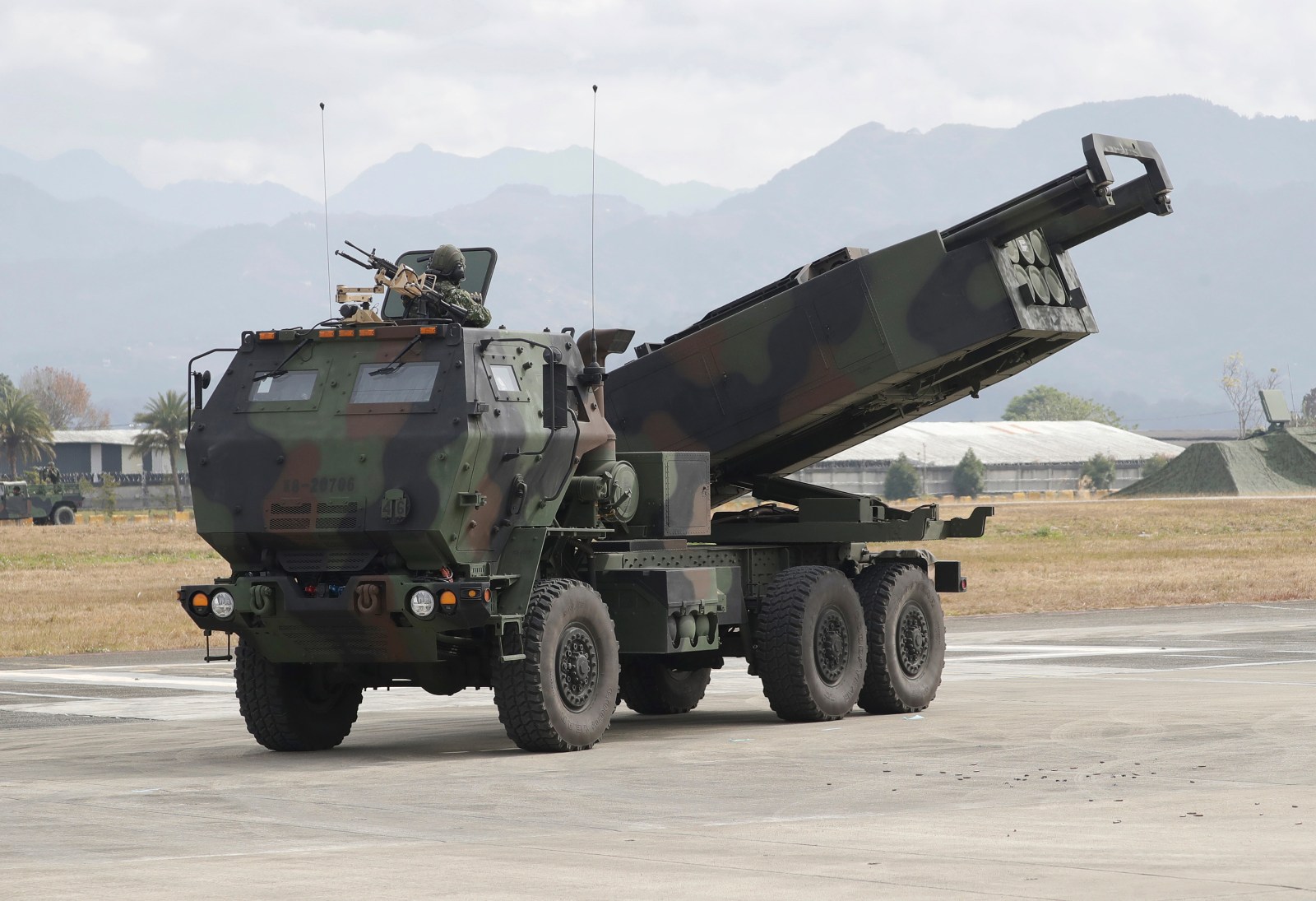
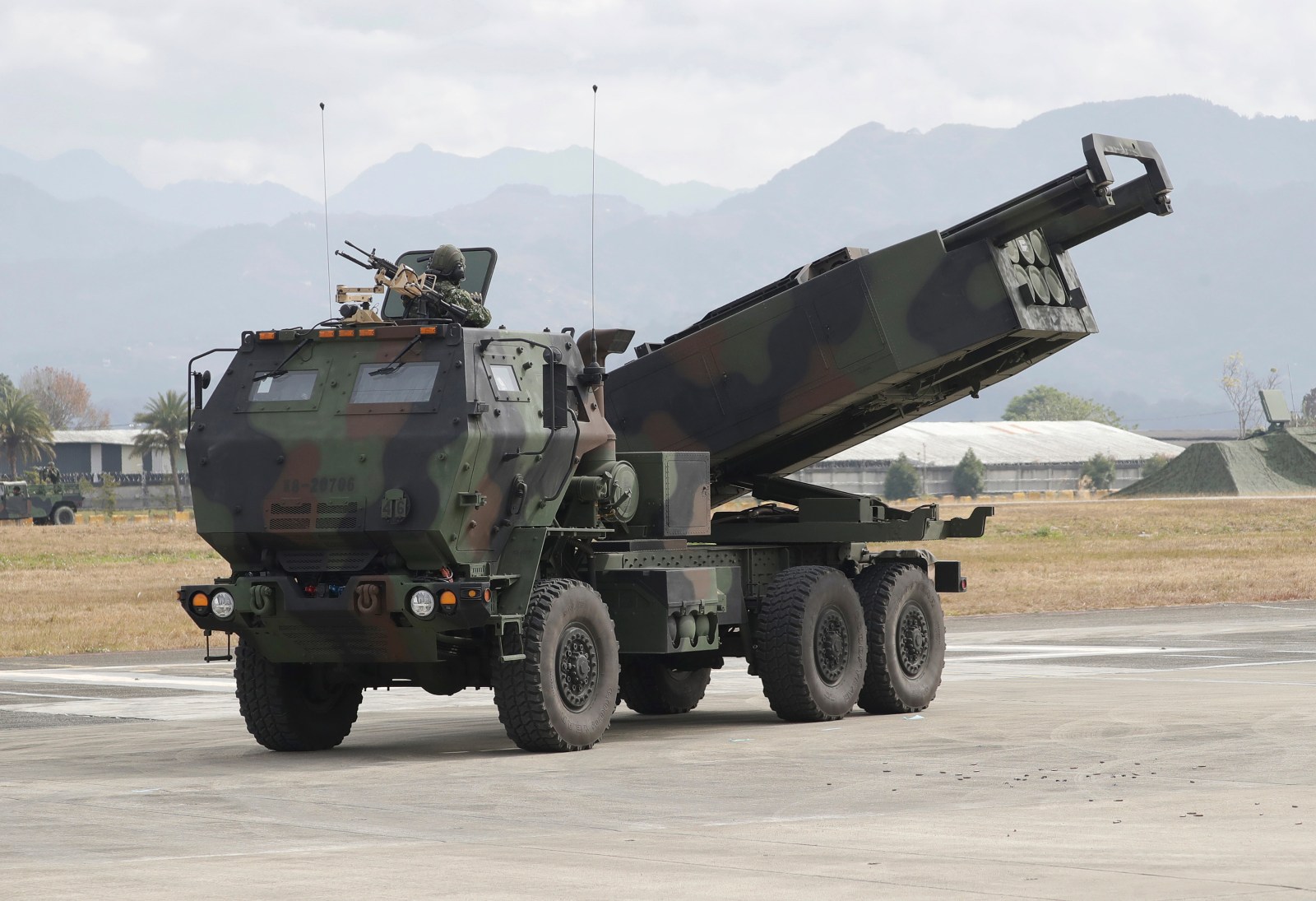
Forward‑Deployment Targets Strategic Strait Islands Taiwan will station U.S.-made HIMARS launchers on Penghu County and Dongyin Island, the latter less than 30 miles from China’s east coast, as part of a broader effort to reinforce island defenses against a possible invasion [1]. The move places the rocket systems within striking distance of PLA staging areas across the Taiwan Strait [1]. Government sources reported to the Liberty Times that the deployment aims to provide a rapid‑response strike capability [1].
HIMARS Capable of Launching ATATMS Into Fujian The High Mobility Artillery Rocket System can fire ATACMS missiles with an approximate 186‑mile range, reaching Chinese ports, command centers, and infrastructure in Fujian and parts of Guangdong provinces [1]. It also supports shorter‑range GMLRS rockets for localized targets, giving Taiwan precision‑strike options in the opening phase of any conflict [1]. These capabilities are intended to threaten PLA logistics and command nodes early on [1].
U.S. Arms Sale Provides 82 Launchers and Missiles In December, the United States approved an $11 billion package—the largest ever for Taiwan—covering 82 HIMARS launchers and 420 missiles [1]. Taiwan received the first 11 launchers last year from an initial order of 29, reflecting Washington’s policy of supplying defensive weapons under the Taiwan Relations Act while maintaining strategic ambiguity [1]. The sale underscores U.S. support for Taiwan’s self‑defense amid rising regional tensions [1].
China Condemns Deployment While Analysts Stress Protection China’s Ministry of Defense labeled the forward‑deployment “provocative,” accusing Taiwan of “shaking trees” with U.S. weapons [1]. Senior U.S. officials warned that President Xi has ordered the PLA to be ready for action against Taiwan by 2027, though a specific invasion timeline remains uncertain [1]. RAND analysts emphasize the need for hardened bunkers, multiple firing positions, “shoot‑and‑scoot” tactics, and robust air‑defense cover to preserve the HIMARS assets in early war stages [1].
Timeline
Oct 2025 – President Lai Ching‑te announces a dome‑like air‑defence system to shield Taiwan from hostile threats, signalling a major upgrade to the island’s layered missile‑defence architecture [1].
2020s (Trump era) – Former President Donald Trump approves $18.3 billion in arms sales to Taiwan during his first term, far exceeding the $8.38 billion sold under the Biden administration and illustrating a long‑term U.S. trend toward larger Taiwan packages [1].
Dec 17, 2025 – The U.S. State Department unveils an $11.15 billion arms package for Taiwan, the largest ever, comprising 82 HIMARS launchers, 420 ATACMS missiles, 60 self‑propelled howitzers, drones, Javelin/TOW missiles, helicopter parts and Harpoon refurbishment kits [4].
Dec 18, 2025 – The Defense Security Cooperation Agency details that the $11 billion sale includes HIMARS and self‑propelled howitzers each valued at roughly $4 billion, and Taiwan’s defence ministry says the deal will rapidly build deterrence capabilities [1].
Dec 18, 2025 – Taiwan plans to raise defence spending to 3.3 % of GDP in 2026 and 5 % by 2030, and earmarks a special $40 billion budget for 2026‑2033 projects such as the “Taiwan Dome” air‑defence system [4].
Dec 26, 2025 – Beijing imposes sanctions on 20 U.S. defence firms and 10 senior executives over the Taiwan arms package, calling the move a symbolic but firm response to violations of the One‑China principle [5].
Dec 30, 2025 – China conducts two days of military drills around Taiwan, with Foreign Minister Wang Yi condemning the $11 billion U.S. sale as a provocation that threatens China’s sovereignty and security [3].
Jan 30, 2026 – Taiwan announces it will forward‑deploy U.S.–made HIMARS launchers on Penghu and Dongyin islands, positioning the systems within 30 miles of China’s east coast and enabling ATACMS strikes up to 186 miles into Fujian and Guangdong [2].
Jan 30, 2026 – The United States clears the $11 billion sale of 82 HIMARS launchers and 420 missiles; Taiwan has already received the first 11 launchers from an initial order of 29, reflecting Washington’s commitment under the Taiwan Relations Act while preserving strategic ambiguity [2].
Jan 30, 2026 – RAND analyst Raymond Kuo warns Taiwan must protect its HIMARS in the early war stage by building hardened bunkers, dispersing firing positions and employing “shoot‑and‑scoot” tactics, given the limited missile stockpile [2].
Jan 30, 2026 – China’s Ministry of Defence spokesperson Jiang Bin denounces Taiwan’s forward deployment as “shaking trees,” accusing the United States of provoking war and reiterating Beijing’s opposition to the island’s use of U.S. weapons [2].
Jan 30, 2026 – Senior U.S. defence and intelligence officials assess that President Xi Jinping has ordered the People’s Liberation Army to be ready for action against Taiwan by 2027, though a precise invasion timeline remains uncertain, underscoring the strategic urgency behind Taiwan’s accelerated weapons acquisitions [2].
All related articles (5 articles)
-
Newsweek: Taiwan Plans to Deploy U.S. HIMARS Launchers Near China
-
AP: China condemns U.S. arms sale to Taiwan as military drills around the island continue
-
The Hindu: China sanctions 20 U.S. defence firms over Trump’s Taiwan arms sales
-
AP: U.S. Announces $11 Billion Arms Package for Taiwan
-
BBC: US announces $11bn arms sale to Taiwan including HIMARS and self-propelled howitzers