Zelensky Warns Russia‑Trained North Korean Troops Gaining Hybrid‑Warfare Expertise
Updated (5 articles)
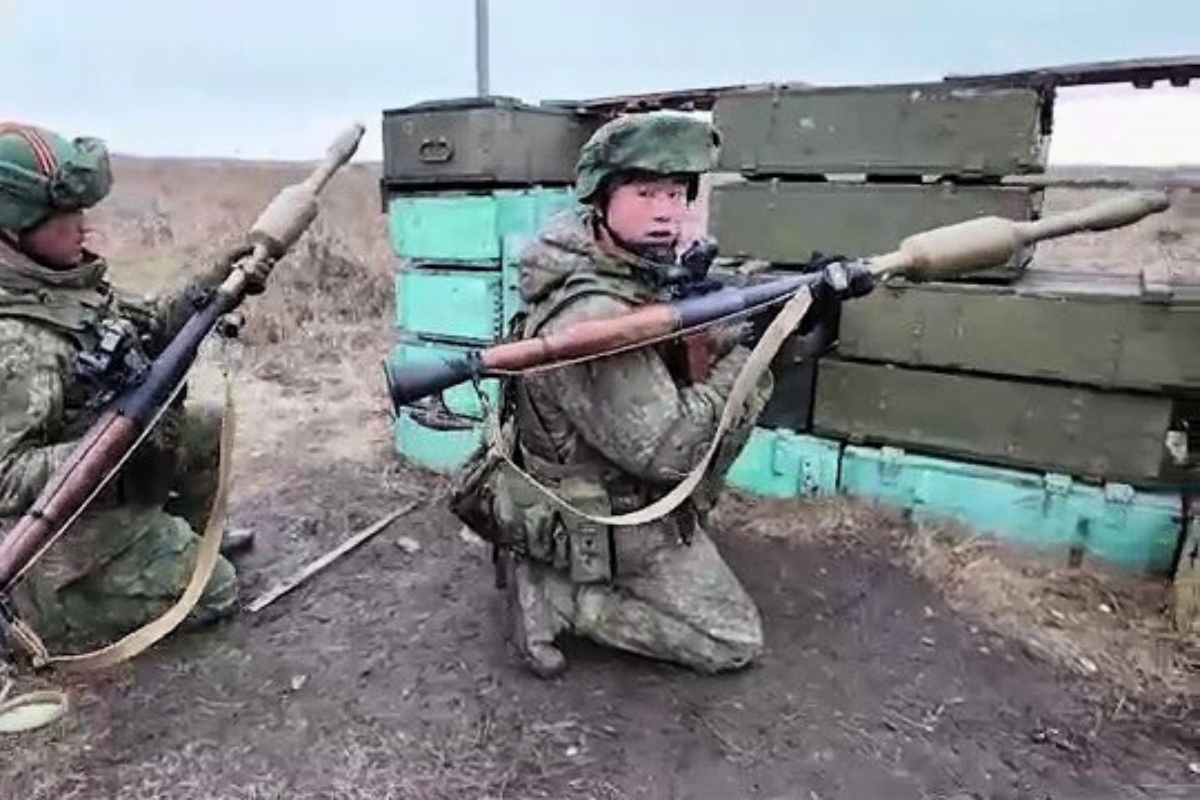
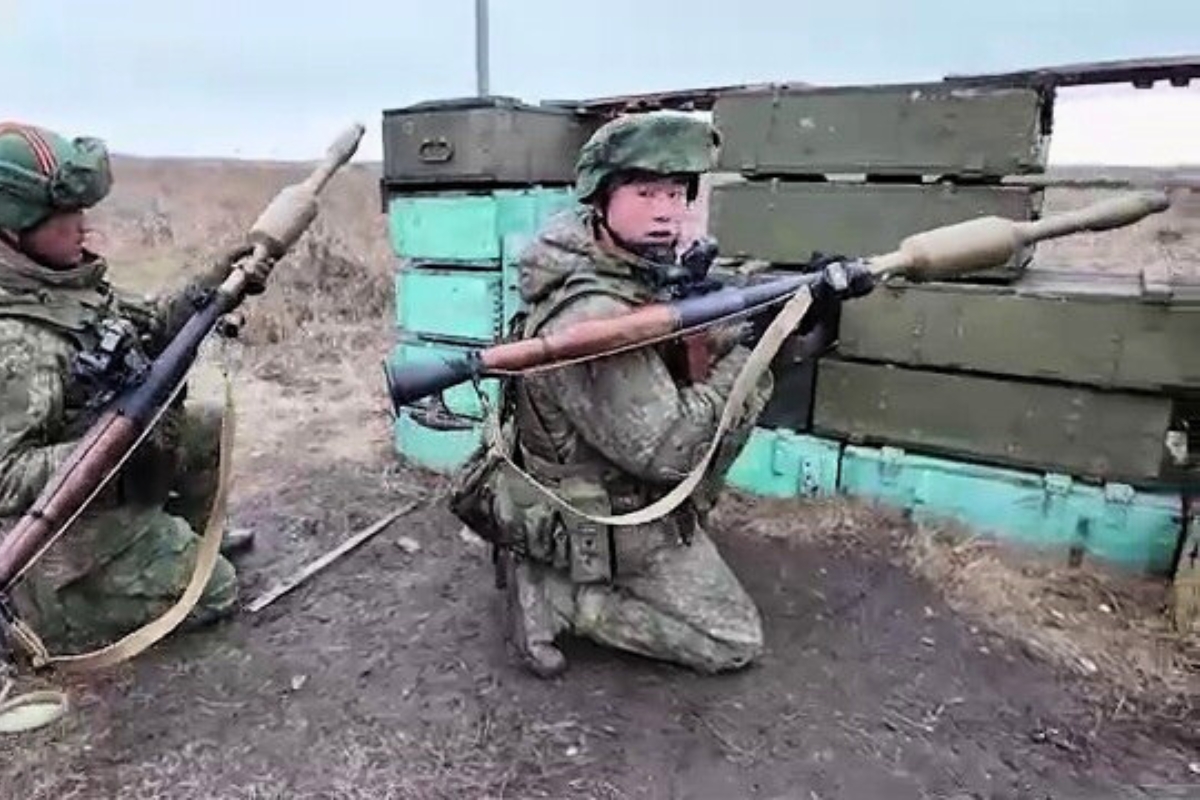
Zelensky’s public warning on February 20, 2026 Ukrainian President Volodymyr Zelensky told Japan’s Kyodo News that roughly 10,000 North Korean soldiers deployed in Russia are being taught modern hybrid‑warfare techniques, including missile‑defence and drone operations, which Pyongyang could later apply against its own adversaries [1].
North Korean combat participation since June 2024 After the mutual‑defence pact signed in June 2024, DPRK forces entered Russian territory and engaged Ukrainian units, marking the first known instance of North Korean troops fighting on Russian soil [1].
Russia‑DPRK equipment swap detailed by intelligence reports U.S. and South Korean agencies say Moscow supplied a Pantsir air‑defence system and electronic‑warfare gear to the DPRK in exchange for North Korean battlefield assistance and collaborative ballistic‑missile research [1].
Economic gains estimated at over $20 billion The Korean Institute for Defense Analyses (KIDA) calculated that North Korea has earned more than $20 billion from the Russian aid package, linking the revenue to Pyongyang’s support for Russia’s war in Ukraine [1].
Kim Jong Un unveils massive KN‑25 rocket launchers In a separate showcase, Kim presented 50 new KN‑25 600 mm launchers, described as the world’s largest artillery rockets with ranges surpassing U.S. HIMARS and potential to carry tactical nuclear warheads [1].
Related Tickers
Timeline
June 2024 – North Korea and Russia sign a mutual‑defence treaty, establishing a framework that lets Pyongyang send troops to support Moscow and receive security guarantees; the pact later underpins North Korean combat deployments after a June 2024 Ukrainian cross‑border raid triggers joint action [2][3].
Oct 2024 – North Korea dispatches more than 11,000 combat personnel to Russia’s Kursk region under the June treaty, marking the start of a sustained military contribution to the Ukraine war [3].
Early August 2025 – The 528th Regiment of Engineers, part of roughly 1,000 engineer troops, departs Pyongyang for Kursk to conduct mine‑clearance and combat engineering tasks alongside Russian forces [4][5].
Sept 1 2025 – KCNA releases footage confirming the presence of North Korean troops in the Kursk area, providing visual evidence of the ongoing deployment [3].
Dec 12‑13 2025 – Kim Jong Un welcomes the returning 528th Regiment in Pyongyang, awarding the Order of Freedom and Independence and posthumously naming nine fallen soldiers “Heroes of the DPRK,” calling their work a “miracle” that turned a vast danger zone into a safe area and declaring that “Western forces cannot match this revolutionary army’s unfathomable spiritual depth” [1][4][5].
January 2026 – Ukrainian intelligence reports that North Korean units continue artillery and reconnaissance operations in Kursk, while roughly 3,000 trained fighters have already returned home, bringing battlefield experience back to the DPRK [3].
Feb 5 2026 – Analysts confirm that North Korean troops remain active in the Kursk region, regularly rotating under the bilateral pact and sustaining attacks on Ukrainian border provinces with barrel artillery, MLRS, and aerial reconnaissance [3].
Feb 20 2026 – President Volodymyr Zelensky warns that “10,000 North Korean troops in Russia are acquiring knowledge on missile defence and drone tactics,” which could be applied in Pyongyang; he notes Russia supplied a Pantsir air‑defence system and electronic‑warfare gear, that North Korea earned over $20 billion from the aid, and that Kim unveiled 50 new KN‑25 rocket launchers capable of carrying tactical nuclear warheads [2].
All related articles (5 articles)
-
Newsweek: Zelensky Says North Korea Gaining Hybrid‑Warfare Skills from Russia
-
Yonhap: North Korean Troops Remain Active in Russia’s Kursk Region, Targeting Ukraine
-
CNN: Kim Jong Un Welcomes Returning North Korean Engineers from Russia
-
Yonhap: N. Korea welcomes engineer troops' return from Russia's Kursk region
-
Yonhap: N. Korea welcomes engineer troops' return from Russia's Kursk region