Buffalo Snow‑Squall Warning Affects Over One Million Residents and Major Highway
Updated (7 articles)
-
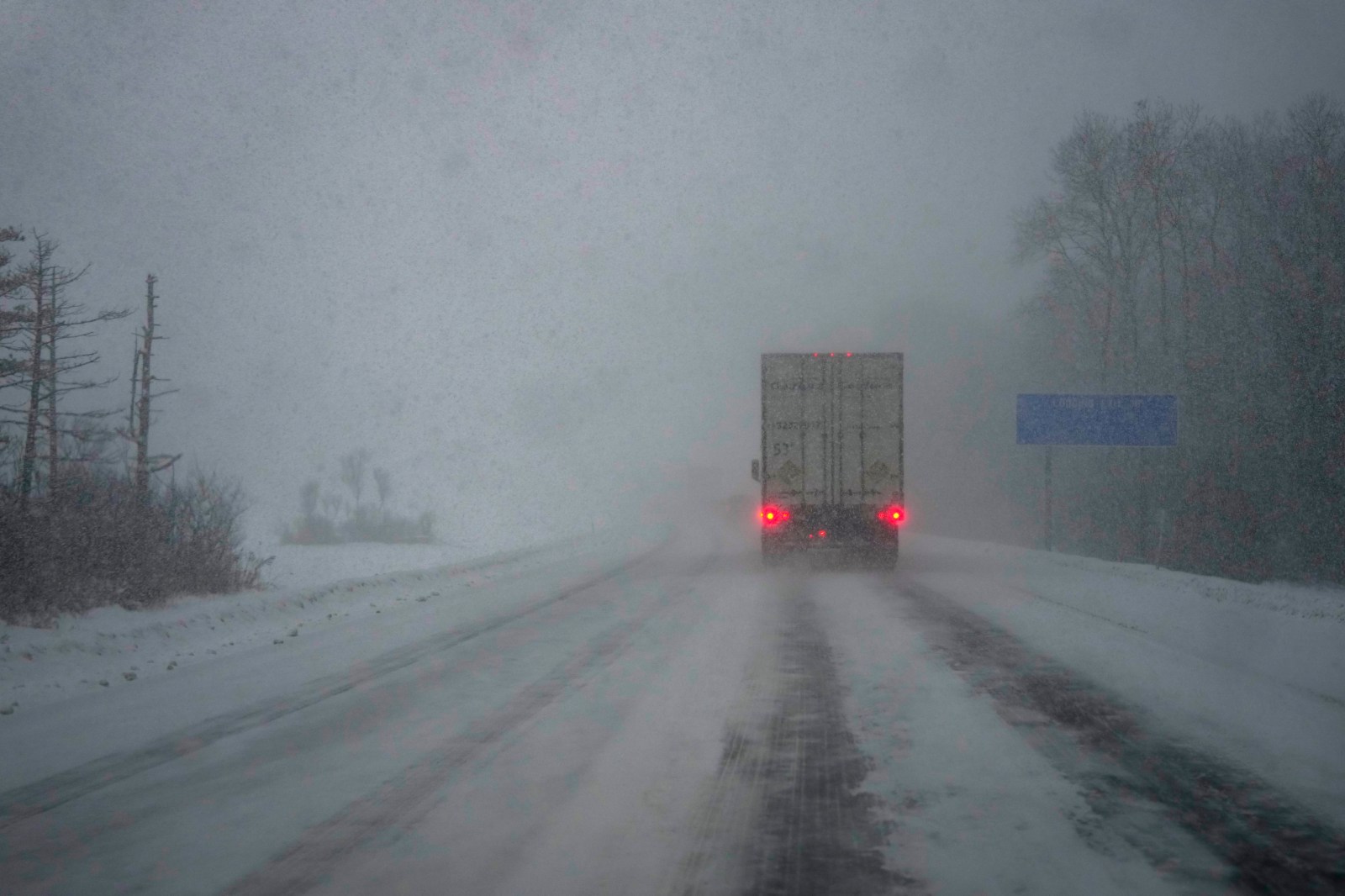 Image: NewsweekWATERTOWN, NEW YORK – DECEMBER 5: A semi-truck with hazard lights on navigates through the snow squall on I-81 on December 5, 2024 in Watertown, New York. This region in New York is experiencing the second snowstorm of the week and has been under a Winter Storm Warning for two days. (Photo by Kayla Bartkowski/Getty Images) Source Full size
-
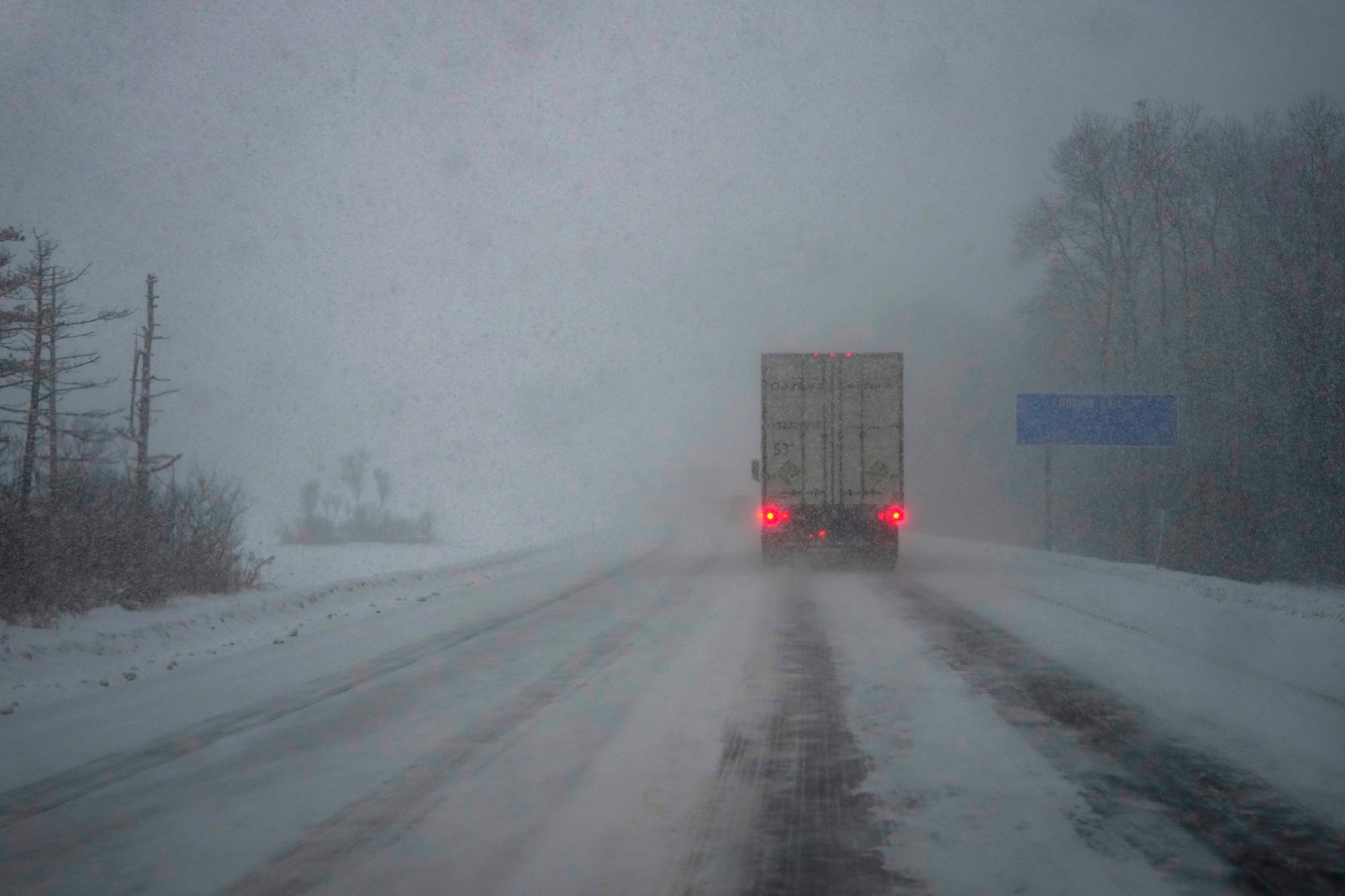 Image: NewsweekWATERTOWN, NEW YORK – DECEMBER 5: A semi-truck with hazard lights on navigates through the snow squall on I-81 on December 5, 2024 in Watertown, New York. This region in New York is experiencing the second snowstorm of the week and has been under a Winter Storm Warning for two days. (Photo by Kayla Bartkowski/Getty Images) Source Full size
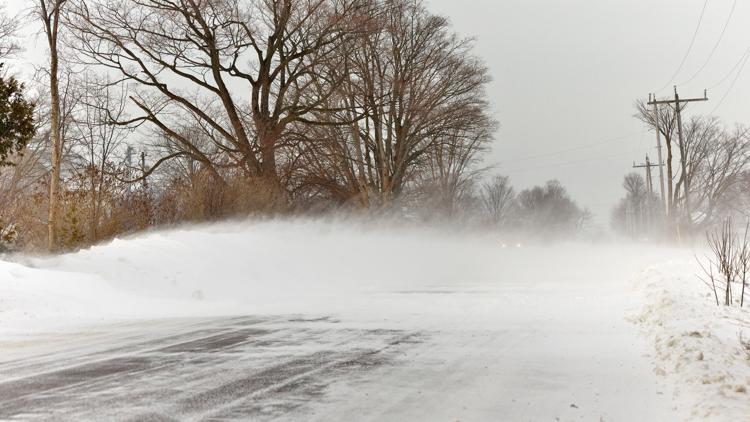
NWS Buffalo Issues Immediate Warning for Six Counties The National Weather Service office in Buffalo released a sudden snow‑squall warning at 2:45 p.m. ET on Feb 3, covering Erie, Niagara, Orleans, Genesee, Monroe and Wyoming counties, home to more than 1.1 million people [1]. The squall centered near Point Breeze, about 11 mi northwest of Angola on Lake Erie, and was moving east at roughly 30 mph [1]. Meteorologist Phillip Pandolfo reported visibility dropping to a quarter mile or less with wind gusts near 20 mph [1].
I‑90 Segment and Urban Roads Face Slick Conditions The warning highlighted Interstate 90 between exits 48 and 57 as a primary impact zone, where heavy snow and blowing drift created hazardous driving conditions [1]. Quarter‑mile visibility and slick road surfaces prompted officials to urge motorists to reduce speed and expect sudden whiteouts [1]. The alert remains in effect until 4:30 p.m. ET, with NWS advisories stressing caution for commuters and freight traffic [1].
Snow Squalls Defined as Brief, Intense Bursts The National Weather Service characterizes snow squalls as short‑lived events—typically under an hour—that can produce whiteout conditions and a rapid temperature drop [2][3]. Accumulation usually stays at an inch or less, distinguishing squalls from longer‑lasting snowstorms that bring greater snowfall over broader areas [2][3]. These rapid changes can freeze road surfaces within minutes, creating immediate traction loss for drivers [2][3].
Safety Guidance Prioritizes Reduced Speed and Visibility Measures NOAA advises drivers already on the road to slow down, turn on headlights and hazard lights, increase following distance, and avoid sudden braking to maintain control [2][3]. The agencies also recommend postponing travel when possible and checking the latest alerts on weather.gov before departure [2][3]. These precautions aim to mitigate the sudden loss of visibility and icy conditions typical of snow squalls [2][3].
Sources
-
1.
Newsweek: Sudden Snow‑Squall Warning Hits Over 1 Million New Yorkers: Summarizes the Feb 3 NWS Buffalo alert, detailing the squall’s location, speed, affected counties, and immediate traffic impacts.
-
2.
WBNS: Snow Squall Alerts: What Drivers Need to Know: Explains the meteorological definition, typical duration, minimal snowfall, and emphasizes driver safety measures during squalls.
-
3.
King5: Understanding Snow Squall Alerts and Safety Measures: Provides similar definition and safety guidance, highlighting the need to check weather.gov and the distinction from larger snowstorms.
Timeline
Dec 31, 2025 – The National Weather Service Weather Prediction Center issues a New Year’s Eve travel warning, noting that an Arctic cold front will sweep across the Great Lakes and trigger snow squalls that could hit during celebrations, with lake‑effect snow adding several inches of accumulation; officials advise drivers to delay travel, reduce speed, and use hazard lights [4].
Jan 16, 2026 – The Weather Prediction Center warns of dangerous snow squalls moving across the Plains and upper Midwest through Friday night, forecasting heavy snow rates, damaging winds over 70 mph, and near‑zero visibility that could rapidly impair travel [3].
Jan 16, 2026 – A fast‑moving squall sweeps northeastern Illinois and northwestern Indiana during the morning commute, grounding flights at O’Hare and Midway and prompting FAA records of cancellations [7].
Jan 16, 2026 – Indiana State Police attribute a 30‑vehicle pileup in northern Indiana to a snow squall, illustrating the immediate danger on interstates [7].
Jan 16, 2026 – NWS officials state, “Snow squalls are one of the most dangerous winter weather phenomena,” emphasizing that low accumulations do not lessen the hazard of gusts and rapid visibility loss [7].
Jan 19, 2026 – The National Weather Service issues a snow‑squall warning for over 1 million Pennsylvanians, urging travelers to delay or exit highways as visibility can drop to whiteout within minutes; the advisory notes, “There is no safe place on a highway when a snow squall hits” [2].
Jan 19, 2026 – The Pennsylvania warning covers major interstates I‑70, I‑80, I‑79, I‑376 and the Turnpike, and forecasters expect the squalls to expire within the hour, though further alerts may follow if conditions evolve [2].
Feb 3, 2026 – The NWS Buffalo office issues a sudden snow‑squall warning for six counties covering over 1.1 million residents, with the squall centered near Point Breeze on Lake Erie moving east at 30 mph; the alert remains in effect until 4:30 p.m. ET [1].
Feb 3, 2026 – NWS meteorologist Phillip Pandolfo warns, “Visibility drops to a quarter mile or less, wind gusts reach 20 mph, and road surfaces become slick,” urging motorists on I‑90 between exits 48‑57 to slow down and stay alert [1].
Feb 3, 2026 – Officials advise drivers on the affected stretch of I‑90 to reduce speed, keep headlights on, and be prepared for sudden whiteout conditions as the warning persists [1].
All related articles (7 articles)
-
Newsweek: Sudden Snow‑Squall Warning Hits Over 1 Million New Yorkers
-
WBNS (Columbus, OH): Snow Squall Alerts: What Drivers Need to Know
-
King5 (Seattle, WA): Understanding Snow Squall Alerts and Safety Measures
-
Newsweek: Snow squalls trigger travel alert for more than 1 million Pennsylvanians
-
King5 (Seattle, WA): Snow squalls threaten Plains and upper Midwest with warnings and travel disruptions
-
Newsweek: Snow squalls threaten Plains and Midwest travel, forecasters warn
-
Newsweek: New Year's Eve Travel Warning Issued for Several States Amid Snow Squalls
External resources (8 links)
- https://www.noaa.gov/stories/4-tips-to-keep-you-safe-during-snow-squall (cited 2 times)
- https://www.weather.gov/safety/winter-snow-squall (cited 2 times)
- https://www.weather.gov/ctp/snowsquall (cited 1 times)
- https://www.weather.gov/safety/winter-lake-effect-snow (cited 1 times)
- https://www.wpc.ncep.noaa.gov/key_messages/LatestKeyMessage_1.png (cited 1 times)
- https://www.facebook.com/ISPBremen/posts/1180892397534817?ref=embed_post (cited 2 times)
- https://x.com/NWSWPC/status/2006096080119718295 (cited 1 times)
- https://x.com/NWSWPC/status/2006096082757964100 (cited 1 times)