Delcy Rodríguez Navigates US Oil Deal and Internal Power After Maduro’s Ouster
Updated (89 articles)
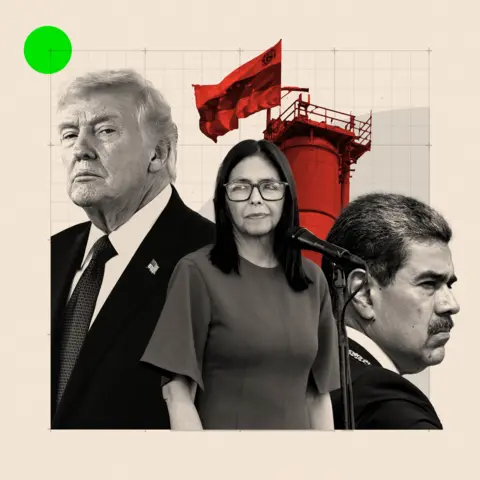

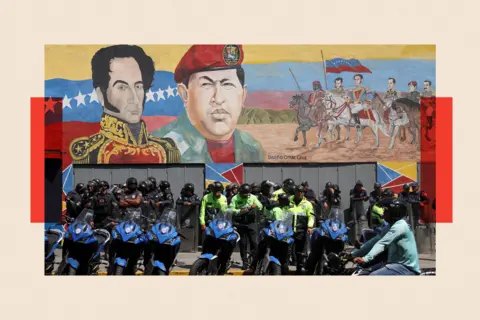
US Forces Oust Maduro and Flores on Jan 3 US forces removed deposed president Nicolás Maduro and his wife Cilia Flores from Venezuela on 3 January, sending them to a Brooklyn detention center awaiting trial for alleged drug trafficking, which they deny [1]. Their removal followed months of U.S. sanctions and diplomatic pressure aimed at ending Maduro’s rule [1]. The operation marked the first direct U.S. military action inside Venezuela since the 2019 failed incursion [1]. International observers noted the move could destabilize the already fragile political landscape [1].
Rodríguez Juggles Socialist Rhetoric and US Oil Deal Acting president Delcy Rodríguez, a longtime Maduro loyalist, continued to employ anti‑imperialist language while overseeing a Trump‑announced agreement to ship up to 50 million barrels of Venezuelan oil to the United States [1]. The deal is presented as a lifeline for Venezuela’s collapsing economy but critics argue it primarily benefits U.S. energy firms [1]. Rodríguez framed the oil export as a sovereign decision that will generate revenue for social programs, despite hyperinflation eroding purchasing power [1]. She simultaneously warned against foreign interference, maintaining her Chavista credentials to placate the party base [1].
CIA Director Ratcliffe Meets Rodríguez, Trump Calls Her “Wonderful” Rodríguez met CIA Director John Ratcliffe in Caracas on 16 January, the first high‑level U.S. intelligence visit since the January 3 operation [1]. President Trump later praised Rodríguez as “a wonderful person” during a telephone call, signaling a pragmatic shift in U.S. engagement [1]. The contacts have been interpreted as a signal that Washington may support a negotiated political transition rather than further military action [1]. Nonetheless, U.S. Secretary of State Marco Rubio continues to press for early, internationally monitored elections [1].
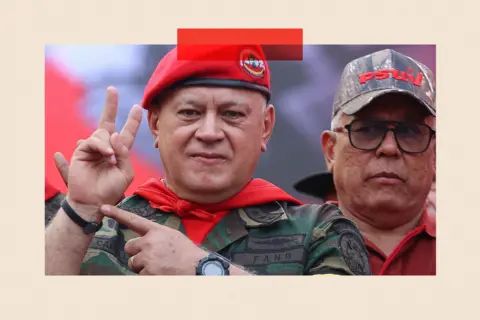
Cabello Controls Militia, Holds Bounty, Influences Rodríguez Interior Minister Diosdado Cabello, who commands the military, paramilitary colectivos and a network of militia, remains Rodríguez’s key security ally [1]. Cabello is subject to a U.S. bounty for drug‑trafficking allegations, highlighting the paradox of his cooperation with the acting president [1]. His control over armed groups gives him leverage over Rodríguez’s policy choices, especially regarding the oil deal and political reforms [1]. Analysts warn that any move to sideline Cabello could trigger internal unrest or a coup attempt [1].
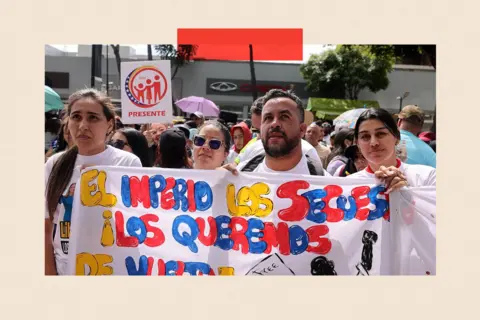
Inflation Peaks, Poverty Rises, Oil Deal Hoped to Relieve Crisis Venezuela’s inflation reached the world’s highest level in 2024, and 86 % of the population lived in poverty in 2024, with a basic food basket costing $527 in 2025 [1]. Rodríguez hopes the U.S. oil investment will generate foreign currency, stabilize the bolívar and fund subsidies for essential goods [1]. However, economists caution that oil revenues alone may not reach the poorest households without structural reforms [1]. Opposition groups argue that the government is using the oil deal to postpone elections and consolidate power [1].
Related Tickers
Timeline
2024 – The presidential election is widely deemed rigged, prompting the opposition and U.S. officials to demand early, credible elections [1].
2025 – Venezuela endures the world’s highest inflation, 86 % poverty and a basic food basket costing $527, deepening the humanitarian crisis [1].
Dec 9, 2025 – The White House drafts “day‑after” contingency plans for Venezuela, ranging from negotiated departure to forced removal of Maduro, while the CIA receives authorization for covert operations against drug and migrant networks [25].
Jan 3, 2026 (overnight) – U.S. forces launch a 150‑aircraft, ~200‑person raid on Caracas, capture President Nicolás Maduro and First Lady Cilia Flores, and transport them to New York to face narco‑terrorism charges [20][23][24][26][27][28][29][30].
Jan 3, 2026 – President Donald Trump declares the United States will “run” Venezuela temporarily, tap its oil reserves for sale, and deploy U.S. troops if needed [20][21][23][24][26][27][28][29][30].
Jan 3, 2026 – The Justice Department files a superseding indictment charging Maduro and Flores with narco‑terrorism and weapons offenses [20][23][24][27][29][30].
Jan 3, 2026 – Secretary of State Marco Rubio outlines U.S. conditions for any engagement: dismantle drug networks, expel Hezbollah/Iranian actors, and rebuild the oil sector with outside investment, while maintaining the naval oil quarantine [17].
Jan 4, 2026 – Venezuela’s Supreme Court orders Vice‑President Delcy Rodríguez to assume the interim presidency with full powers, noting the constitution requires elections within 30 days but stops short of declaring Maduro permanently absent [18][19].
Jan 4, 2026 – The U.S. states it will not govern day‑to‑day but will enforce the existing oil quarantine as its primary leverage over Caracas [15][16].
Jan 5, 2026 – Delcy Rodríguez is sworn in as interim president, calling Maduro’s removal a “kidnapping” and pledging to guarantee peace while inviting U.S. collaboration on development within international law [5][14][11][12].
Jan 5, 2026 – The U.S. publicly backs Rodríguez as Venezuela’s interim leader, emphasizing stability over immediate regime change and outlining a three‑stage plan (stabilisation, reconciliation, transition) [2].
Jan 6, 2026 – Gunfire erupts near Miraflores Palace; Rodríguez’s inauguration proceeds amid claims of “illegal kidnapping” and Trump’s assertion that the U.S. is “in charge” [10].
Jan 6, 2026 – International‑law scholars debate the legality of the U.S. raid, arguing that sovereignty violations generally require UN or OAS authorization [8].
Jan 6, 2026 – The government stresses its independence from U.S. control and notes the constitutional 30‑day election deadline, while Rodríguez’s interim mandate could be extended up to six months by the National Assembly [9].
Jan 7, 2026 – Rodríguez dismisses General Javier Marcano Tábata, head of the presidential honor guard, and appoints former SEBIN chief Gustavo González López as his successor, signaling a consolidation of loyal security forces [3].
Jan 7, 2026 – Dozens are killed in the U.S. operation, including 32 Cuban security personnel and 23 Venezuelan military members, fueling regional alarm [4][3].
Jan 8, 2026 – The Trump administration formally recognizes Rodríguez as interim president, framing the move as a pragmatic choice for stability rather than backing opposition leader María Corina Machado [2].
Jan 10, 2026 – Opposition figures, led by María Corina Machado, intensify calls for new elections, criticizing the transition and seeking international support [7].
Jan 16, 2026 – Rodríguez meets CIA Director John Ratcliffe in Caracas, indicating a tentative diplomatic channel despite her earlier denunciations of the U.S. raid [1].
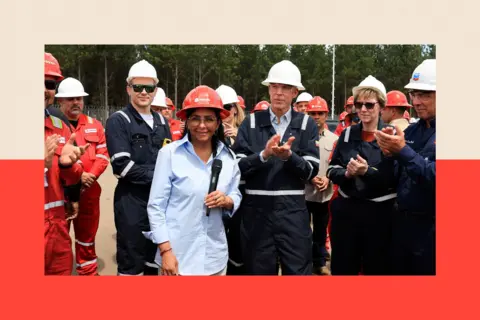
Jan 27, 2026 – Speaking to oil workers in Puerto La Cruz, Rodríguez declares she has “enough” of U.S. orders, demanding that Venezuela’s internal politics be resolved without external interference [6].
Feb 18, 2026 – Rodríguez balances anti‑imperialist rhetoric with a Trump‑announced oil deal to deliver up to 50 million barrels of Venezuelan crude, positioning herself between Chavista loyalists and U.S. demands for oil cooperation [1].
2026 onward (planned) – Rubio’s three‑stage roadmap envisions a transition from stabilisation to democratic elections, while the U.S. signals possible reopening of its embassy in Caracas once a pliant interim government is secured [9][2].
Dive deeper (58 sub-stories)
-
BBC: Venezuela’s Acting President Delcy Rodríguez Juggles US Pressure and Chavista Base
-
CNN: Venezuela’s Acting President Pushes Back on U.S. Pressure
-
AP: Trump’s midterm turmoil widens with foreign moves, immigration raids and Fed probe
-
CNN: Venezuelan officials return to X in apparent end to Maduro-era ban on platform
-
Newsweek: US labels Venezuela's Delcy Rodríguez 'so-called Acting President' in court papers
-
Newsweek: Trump posts image claiming to be acting president of Venezuela
-
CNN: US operation removes Maduro; Venezuela’s government persists as opposition seeks elections
-
The Hindu: Rodriguez takes interim Venezuela role with U.S. backing amid economic crisis
-
Newsweek: U.S. raid captures Nicolás Maduro, undercuts China’s influence in Venezuela
-
BBC: US backs Delcy Rodríguez as Venezuela's interim leader, prioritising stability over immediate regime change
-
CNN: Video shows Interior Minister Diosdado Cabello armed in Caracas after Maduro captured and US indictment names him second
-
CNN: US raid seized Nicolás Maduro but Washington still struggles to 'run' Venezuela
-
Newsweek: U.S. raid captures Nicolás Maduro as Washington moves to control Venezuelan oil and counter China
-
BBC: Interim president Delcy Rodríguez sacks head of presidential honour guard after US seizure of Maduro
-
U.S. Seizes Maduro, Installs Rodríguez as Interim Leader Amid Global Tension
(6 articles)
-
CNN: US captures Nicolás Maduro as Venezuela reels; White House pursues Venezuelan oil and weighs taking Greenland
-
Newsweek: Venezuelan opposition backs U.S.-led transition despite Trump questioning Machado
-
AP: Trump’s vague assertion that the U.S. will “run” Venezuela fuels questions about post-Maduro planning
-
CNN: Trump’s administration dispatched Delta Force to seize Nicolás Maduro and signals U.S. control over Venezuela’s resources
-
Maduro Pleads Not Guilty as Caracas Erupts in Gunfire and U.S. Plans Oil Revival
(2 articles)
-
Delcy Rodriguez Assumes Interim Presidency After U.S. Capture of Nicolás Maduro
(2 articles)
-
King5 (Seattle, WA): U.S. removal of Maduro sparks international law debate
-
AP: Venezuela’s government moves to show independence after U.S. seizure of Nicolás Maduro
-
Newsweek: Trump says he will personally oversee U.S. involvement in Venezuela after Maduro's capture
-
CNN: Trump threatens other countries as Maduro makes US court appearance
-
Delcy Rodríguez Assumes Interim Presidency After Maduro Capture, Signals US Cooperation
(3 articles)
-
Trump Declares U.S. Control After Detaining Maduro, Rodriguez Named Interim President
(2 articles)
-
BBC: Trump warns Rodríguez as Maduro faces New York court
-
Interim Venezuelan Leader Invites Trump, U.S. Maintains Oil Quarantine Amid Indictments
(2 articles)
-
Newsweek: Maduro captured in U.S. raid; Rodríguez named acting president as U.S. plans to run Venezuela's oil
-
CNN: US aims to run Venezuela via pliant interim government after Maduro's capture
-
CNN: Trump outlines plans for Venezuela as Maduro faces court appearance
-
U.S. Captures Maduro, Sends Him to New York; Rubio Sets Conditions for Venezuela Transition
(2 articles)
-
AP: Maduro deposed and captured in U.S. operation; Caracas braces for what comes next
-
AP: Rubio says US won’t govern Venezuela but will press changes through oil blockade
-
U.S. Declares Temporary Control of Venezuela Following Maduro’s Ouster, Emphasizes Oil Quarantine
(2 articles)
-
AP: Trump's Venezuela intervention tests GOP cohesion in election year
-
BBC: Trump's Maduro raid could set precedent for authoritarian powers worldwide
-
U.S. Captures Maduro, Announces Temporary Governance and Oil Extraction Plans
(12 articles)
-
Maduro Captured in New York, Trump Announces U.S. Control of Venezuela’s Oil
(4 articles)
-
The Hindu: Supreme Court names Delcy Rodriguez interim president after Maduro's seizure
-
WBNS (Columbus, OH): Maduro removed from power in U.S. operation; Ohio professor outlines fallout
-
CNN: Trump ousts Maduro in Venezuela, triggering war-power debate and regime-change questions
-
Newsweek: Venezuela's vice president may be in Russia after Maduro capture, Reuters reports
-
AP: Maduro captured by U.S. forces; Trump vows temporary rule and oil taps
-
Newsweek: Trump pledges U.S. involvement in Venezuela oil after Maduro's capture
-
BBC: Trump captures Maduro in Venezuela, pledges to run the country and rebuild
-
King5 (Seattle, WA): Trump pledges to run Venezuela after Maduro ouster following U.S. operation
-
U.S. Captures Maduro, Announces Temporary Governance of Venezuela After Overnight Strike
(5 articles)
-
CNN: Trump says US will run Venezuela after Maduro capture as oil embargo remains in place
-
AP: Maduro captured; Trump touts successful Venezuela operation as U.S. weighs next steps
-
AP: Maduro captured in Caracas during U.S. forces attack
-
The Hindu: U.S. strikes Venezuela as Maduro capture claim surfaces
-
The Hindu: White House orders focus on quarantine of Venezuelan oil
-
The Hindu: Trump says it would be smart for Maduro to leave power
-
Newsweek: Maduro denounces Trump’s threats as warmongering, vows resistance
-
CNN: Maduro says Trump’s “oil, land” claim exposes U.S. agenda
-
CNN: Trump Administration Prepares Day‑After Plans for Venezuela if Maduro Ousted
All related articles (89 articles)
-
BBC: Venezuela’s Acting President Delcy Rodríguez Juggles US Pressure and Chavista Base
-
CNN: Venezuela’s Acting President Pushes Back on U.S. Pressure
-
AP: Trump’s midterm turmoil widens with foreign moves, immigration raids and Fed probe
-
CNN: Venezuelan officials return to X in apparent end to Maduro-era ban on platform
-
Newsweek: US labels Venezuela's Delcy Rodríguez 'so-called Acting President' in court papers
-
Newsweek: Trump posts image claiming to be acting president of Venezuela
-
CNN: US operation removes Maduro; Venezuela’s government persists as opposition seeks elections
-
The Hindu: Rodriguez takes interim Venezuela role with U.S. backing amid economic crisis
-
Newsweek: U.S. raid captures Nicolás Maduro, undercuts China’s influence in Venezuela
-
BBC: US backs Delcy Rodríguez as Venezuela's interim leader, prioritising stability over immediate regime change
-
CNN: Video shows Interior Minister Diosdado Cabello armed in Caracas after Maduro captured and US indictment names him second
-
CNN: US raid seized Nicolás Maduro but Washington still struggles to 'run' Venezuela
-
Newsweek: U.S. raid captures Nicolás Maduro as Washington moves to control Venezuelan oil and counter China
-
BBC: Interim president Delcy Rodríguez sacks head of presidential honour guard after US seizure of Maduro
-
AP: U.S. seizes Nicolás Maduro; vice president Delcy Rodríguez installed as leader while opposition remains exiled or jailed
-
BBC: Venezuelans confront uncertainty after US seizure of Nicolás Maduro
-
CNN: US captures Nicolás Maduro as Venezuela reels; White House pursues Venezuelan oil and weighs taking Greenland
-
Newsweek: Venezuelan opposition backs U.S.-led transition despite Trump questioning Machado
-
AP: Trump’s vague assertion that the U.S. will “run” Venezuela fuels questions about post-Maduro planning
-
CNN: Trump’s administration dispatched Delta Force to seize Nicolás Maduro and signals U.S. control over Venezuela’s resources
-
CNN: After US capture of Nicolás Maduro, he and his wife plead not guilty in New York as Caracas sees gunfire and Washington grapples with next steps
-
The Hindu: Delcy Rodriguez sworn in as interim president after U.S. forces seize Nicolas Maduro
-
King5 (Seattle, WA): U.S. removal of Maduro sparks international law debate
-
AP: Venezuela’s government moves to show independence after U.S. seizure of Nicolás Maduro
-
CNN: Gunfire near Miraflores palace as Maduro faces court after US capture
-
Newsweek: Trump says he will personally oversee U.S. involvement in Venezuela after Maduro's capture
-
BBC: Delcy Rodríguez sworn interim president after US arrests Nicolás Maduro, who is arraigned in New York
-
CNN: Trump threatens other countries as Maduro makes US court appearance
-
CNN: Maduro's capture prompts Rodríguez interim leadership in Venezuela
-
CNN: Trump asserts US control of Venezuela after Maduro detention
-
BBC: Trump warns Rodríguez as Maduro faces New York court
-
CNN: Trump’s plan to run Venezuela via regime remnants carries high risks
-
WBNS (Columbus, OH): Interim Venezuelan leader invites Trump to collaborate, seeks respectful relations
-
King5 (Seattle, WA): Interim Venezuelan leader invites Trump to collaborate, seeks respectful relations
-
Newsweek: Maduro captured in U.S. raid; Rodríguez named acting president as U.S. plans to run Venezuela's oil
-
CNN: US aims to run Venezuela via pliant interim government after Maduro's capture
-
CNN: Trump outlines plans for Venezuela as Maduro faces court appearance
-
King5 (Seattle, WA): Delcy Rodríguez named interim president of Venezuela after Maduro's ouster
-
AP: Rubio says US won’t govern Venezuela but will press for changes through oil quarantine
-
AP: Maduro deposed and captured in U.S. operation; Caracas braces for what comes next
-
The Hindu: Maduro captured by U.S. forces; Rodríguez named interim president as Venezuela crisis triggers global reaction and oil questions
-
AP: Rubio says US won’t govern Venezuela but will press changes through oil blockade
-
AP: Delcy Rodríguez named interim president of Venezuela after Maduro's capture
-
WBNS (Columbus, OH): U.S. to run Venezuela temporarily after Maduro removal, using oil quarantine as leverage
-
King5 (Seattle, WA): Trump says U.S. will run Venezuela after Maduro's ouster
-
AP: Trump's Venezuela intervention tests GOP cohesion in election year
-
Newsweek: Rubio lays out U.S. conditions for engaging Venezuela's new leadership after Maduro capture
-
BBC: Trump's Maduro raid could set precedent for authoritarian powers worldwide
-
WBNS (Columbus, OH): U.S. to run Venezuela and tap its oil after Maduro's removal
-
CNN: Maduro captured on US soil as Trump vows to run Venezuela and seize oil
-
The Hindu: Supreme Court names Delcy Rodriguez interim president after Maduro's seizure
-
AP: U.S. capture of Maduro sparks leadership crisis as Rodríguez named interim president
-
The Hindu: Maduro detained; Delcy Rodríguez named acting president as world reacts to U.S. strikes on Venezuela
-
AP: US plans to run Venezuela and tap its oil reserves after Maduro's capture
-
WBNS (Columbus, OH): Maduro removed from power in U.S. operation; Ohio professor outlines fallout
-
Newsweek: Delcy Rodríguez named acting president after Maduro detention
-
CNN: Maduro captured in US operation; Trump vows to run Venezuela and seize oil reserves
-
King5 (Seattle, WA): U.S. plans to run Venezuela and tap its oil reserves after Maduro's capture
-
King5 (Seattle, WA): Trump vows U.S. to run Venezuela and tap its oil after Maduro's capture
-
AP: Maduro captured in overnight U.S. operation; Trump says U.S. will run Venezuela and tap its oil reserves
-
CNN: Trump ousts Maduro in Venezuela, triggering war-power debate and regime-change questions
-
Newsweek: Venezuela's vice president may be in Russia after Maduro capture, Reuters reports
-
AP: Maduro captured by U.S. forces; Trump says the U.S. will run Venezuela
-
AP: U.S. captures Maduro, vows to run Venezuela and tap its oil reserves
-
AP: Maduro captured by U.S. forces; Trump vows temporary rule and oil taps
-
Newsweek: Trump pledges U.S. involvement in Venezuela oil after Maduro's capture
-
BBC: Trump captures Maduro in Venezuela, pledges to run the country and rebuild
-
CNN: Trump vows to run Venezuela indefinitely after Maduro capture
-
CNN: Trump says US will run Venezuela after Maduro capture as indictment and regional reactions unfold
-
AP: Trump says US will run Venezuela temporarily after Maduro capture, tapping oil reserves
-
King5 (Seattle, WA): Trump says U.S. will run Venezuela and tap its oil after Maduro capture
-
King5 (Seattle, WA): US plans to run Venezuela and tap its oil after Maduro's capture
-
King5 (Seattle, WA): Trump pledges to run Venezuela after Maduro ouster following U.S. operation
-
AP: Trump says US will run Venezuela; no immediate signs of control after Maduro capture
-
AP: Maduro captured and flown out as Trump says U.S. will run Venezuela temporarily
-
The Hindu: Trump vows to run Venezuela after Maduro capture, signaling transition and oil aims
-
AP: Trump Captures Maduro, vows U.S. to run Venezuela temporarily
-
AP: Trump captures Maduro, vows to run Venezuela as international tensions rise
-
CNN: Trump says US will run Venezuela after Maduro capture as oil embargo remains in place
-
AP: Trump says US will run Venezuela after Maduro capture; no immediate signs of control
-
AP: Maduro captured; Trump touts successful Venezuela operation as U.S. weighs next steps
-
AP: Maduro captured in Caracas during U.S. forces attack
-
The Hindu: U.S. strikes Venezuela as Maduro capture claim surfaces
-
WBNS (Columbus, OH): US plans to 'run' Venezuela and tap its oil reserves, Trump says, after operation to oust Maduro
-
The Hindu: White House orders focus on quarantine of Venezuelan oil
-
The Hindu: Trump says it would be smart for Maduro to leave power
-
Newsweek: Maduro denounces Trump’s threats as warmongering, vows resistance
-
CNN: Maduro says Trump’s “oil, land” claim exposes U.S. agenda
-
CNN: Trump Administration Prepares Day‑After Plans for Venezuela if Maduro Ousted
External resources (84 links)
- https://www.justice.gov/opa/media/1422326/dl (cited 6 times)
- https://history.state.gov/historicaldocuments/frus1917/d881 (cited 2 times)
- https://home.treasury.gov/news/press-releases/sm719 (cited 2 times)
- https://www.cdc.gov/nchs/nvss/vsrr/drug-overdose-data.htm (cited 2 times)
- https://www.eia.gov/international/analysis/country/VEN (cited 2 times)
- https://www.justice.gov/archives/opa/pr/nicol-s-maduro-moros-and-14-current-and-former-venezuelan-officials-charged-narco-terrorism (cited 2 times)
- https://www.justice.gov/file/151131/dl?inline= (cited 2 times)
- https://www.justice.gov/usao-sdny/pr/former-venezuelan-general-sentenced-260-months-prison-providing-material-support-farc (cited 2 times)
- https://2001-2009.state.gov/r/pa/ho/time/ip/108629.htm (cited 1 times)
- https://2001-2009.state.gov/r/pa/ho/time/wwi/108649.htm (cited 1 times)
- https://history.state.gov/milestones/1914-1920/haiti (cited 1 times)
- https://home.treasury.gov/news/press-releases/sm0389 (cited 1 times)
- https://www.state.gov/diosdado-cabello-rondon (cited 1 times)
- https://www.state.gov/releases/office-of-the-spokesperson/2026/01/secretary-of-state-marco-rubio-with-kristen-welker-of-nbcs-meet-the-press (cited 1 times)
- https://www.state.gov/secretary-rubios-call-with-the-rightful-president-of-venezuela-gonzalez-urrutia-and-venezuelan-democratic-opposition-leader-machado (cited 1 times)
- https://www.state.gov/wanted-narcotics-reward-program-venezuelan-targets (cited 1 times)
- https://storage.courtlistener.com/recap/gov.uscourts.nysd.376123/gov.uscourts.nysd.376123.11.0.pdf (cited 2 times)
- https://storage.courtlistener.com/recap/gov.uscourts.nysd.376124/gov.uscourts.nysd.376124.2.0.pdf (cited 2 times)
- https://storage.courtlistener.com/recap/gov.uscourts.nysd.534996/gov.uscourts.nysd.534996.150.0.pdf (cited 2 times)
- https://en.wikipedia.org/wiki/Donald_Trump (cited 1 times)
- https://en.wikipedia.org/wiki/Venezuela (cited 1 times)
- https://nsarchive2.gwu.edu/NSAEBB/NSAEBB4/ (cited 1 times)
- https://cnnespanol.cnn.com/eeuu/live-news/noticias-maduro-capturado-venezuela-trump-orix (cited 6 times)
- https://www.globaltimes.cn/page/202601/1352205.shtml (cited 3 times)
- https://cnnespanol.cnn.com/venezuela/live-news/explosiones-caracas-venezuela-en-vivo-orix?t=1767453910168 (cited 2 times)
- https://cnnespanol.cnn.com/venezuela/live-news/noticias-maduro-detenido-venezuela-hoy-orix (cited 2 times)
- https://us.cnn.com/world/live-news/venezuela-maduro-court-trump-01-05-26 (cited 2 times)
- https://us.cnn.com/world/live-news/venezuela-trump-maduro-01-04-26?post-id=cmjzsiojv00003b6qwe6142ce (cited 2 times)
- https://www.politico.com/news/2026/01/03/trump-venezuela-oil-us-companies-return-00709782 (cited 2 times)
- https://www.theatlantic.com/national-security/archive/2025/09/fentanyl-trump-venezuela-caribbean-boats/684373/ (cited 2 times)
- https://apnorc.org/ (cited 1 times)
- https://cnnespanol.cnn.com/2026/01/07/venezuela/diosdado-cabello-poder-gobierno-perfil-orix (cited 1 times)
- https://cnnespanol.cnn.com/2026/01/10/venezuela/analisis-claves-semana-critica-maduro-orix (cited 1 times)
- https://thehill.com/people/nicolas-maduro/ (cited 1 times)
- https://www.nytimes.com/2026/01/09/world/americas/trump-venezuela-machado-nobel-prize.html (cited 1 times)
- https://www.theatlantic.com/national-security/2026/01/trump-venezuela-maduro-delcy-rodriguez/685497/ (cited 1 times)
- https://x.com/MariaCorinaYA/status/2007473689583829046?s=20 (cited 4 times)
- https://x.com/AGPamBondi/status/2007880312345202859 (cited 3 times)
- https://x.com/CancilleriaCol/status/2007850172991381728/photo/1 (cited 3 times)
- https://x.com/elonmusk/status/2007680660446892528 (cited 3 times)
- https://x.com/evanhill/status/2007540323770118226 (cited 3 times)
- https://x.com/petrogustavo/status/2007387712454562220 (cited 3 times)
- https://www.facebook.com/share/p/17rq4h6d5f/ (cited 2 times)
- https://x.com/ChicagosMayor/status/2007533827107795267?s=20 (cited 2 times)
- https://x.com/Claudiashein/status/2007424768845185274?s=20 (cited 2 times)
- https://x.com/DanielNoboaOk/status/2007421352719069620?s=20 (cited 2 times)
- https://x.com/DiazCanelB/status/2007359344829141372?s=20 (cited 2 times)
- https://x.com/GabrielBoric/status/2007408703922696253?s=20 (cited 2 times)
- https://x.com/GovKathyHochul/status/2007487851819086176 (cited 2 times)
- https://x.com/GregAbbott_TX/status/2007497900453245038 (cited 2 times)
- https://x.com/MariaCorinaYA/status/2008194629200498801?s=20 (cited 2 times)
- https://x.com/ORIGINBJJ/status/2007668255322976695 (cited 2 times)
- https://x.com/RapidResponse47/status/2007631142200189289 (cited 2 times)
- https://x.com/RepMTG/status/2007485346913607836 (cited 2 times)
- https://x.com/SpeakerJohnson/status/2007468765718384961?s=20 (cited 2 times)
- https://x.com/mfa_china/status/2007460580089868702?s=46&t=-6Dgd1yrgnFc1NBOzYEtyA (cited 2 times)
- https://x.com/petrogustavo/status/2007356950514729388?s=20 (cited 2 times)
- https://x.com/repdonbacon/status/2007462335242289166?s=46&t=0kSbRS3cR7LAmIrwwezTmQ (cited 2 times)
- https://t.co/nHDqtsqRFh (cited 1 times)
- https://www.instagram.com/p/DTC85kVikzH/?hl=en (cited 1 times)
- https://x.com/NicolasMaduro/status/2011232368145637422?s=20 (cited 1 times)
- https://x.com/dcabellor/status/2011150562499444966 (cited 1 times)
- https://x.com/delcyrodriguezv/status/2011243016011592041?s=20 (cited 1 times)
- https://x.com/jorgerpsuv/status/2011261197803557033?s=20 (cited 1 times)
- http://flightradar24.com/ (cited 10 times)
- https://youtu.be/oNCn9oeQwfc?si=MWpc5TyVknYsfm0F&t=781 (cited 4 times)
- https://www.ukrinform.net/rubric-polytics/4076473-zelensky-on-venezuela-us-knows-what-to-do-with-dictators.html (cited 3 times)
- https://arkivalieronline.rigsarkivet.dk/da/billedviser?epid=20072706#51739154118464 (cited 2 times)
- https://news.delta.com/delta-restarts-caribbean-service (cited 2 times)
- https://news.un.org/en/story/2025/12/1166565 (cited 2 times)
- https://observatoriodeviolencia.org.ve/ (cited 2 times)
- https://www.asambleanacional.gob.ve/diputado/maduro-guerranicolas-ernesto (cited 2 times)
- https://www.bloomberg.com/news/articles/2026-01-05/us-to-meet-with-oil-executives-this-week-on-venezuela-revival?embedded-checkout=true (cited 2 times)
- https://www.chevron.com/worldwide/venezuela (cited 2 times)
- https://www.icpr.org.uk/people/helen-fair (cited 2 times)
- https://www.unrefugees.org/news/venezuela-crisis-explained/ (cited 2 times)
- https://resultadosconvzla.com/ (cited 1 times)
- https://www.amnesty.org/ar/wp-content/uploads/2021/05/AMR5313982015ENGLISH.pdf (cited 1 times)
- https://www.amnesty.org/en/wp-content/uploads/2025/07/AMR5300832025ENGLISH.pdf (cited 1 times)
- https://www.belfercenter.org/publication/lessons-libya-how-not-intervene (cited 1 times)
- https://www.google.com/search?q=newsweek+china+peru&oq=newsweek+china+peru&gs_lcrp=EgRlZGdlKgYIABBFGDkyBggAEEUYOTIHCAEQABjvBTIKCAIQABiABBiiBDIHCAMQABjvBTIKCAQQABiABBiiBNIBCDQyNDVqMGo0qAIAsAIB&sourceid=chrome&ie=UTF-8 (cited 1 times)
- https://www3.nhk.or.jp/nhkworld/en/news/20260107_N02/#:~:text=It%20says%20the%20dead%20were,the%20US%20attack%2C%20including%20civilians. (cited 1 times)
- https://xn--venezuelan%20leader%20nicols%20maduro-dbd/ (cited 1 times)