Hassett Demands Discipline for NY Fed Tariff Study as Warsh Nominated Amid Supreme Court Decision
Updated (2 articles)
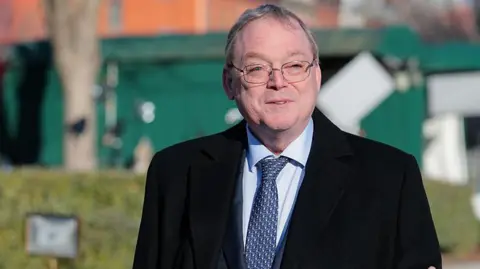
Tariff Study Claims Majority Burden Falls on U.S. Firms and Shoppers The New York Federal Reserve report calculated that roughly 90 % of the 2025 tariff costs were borne by American companies and consumers, a figure echoed by independent analyses from the Kiel Institute and the NBER that found near‑complete pass‑through to import prices [1][2]. Hassett highlighted the study’s implication that tariffs raised real wages by about $1,400 on average last year, arguing consumers benefited despite higher duties [1]. The Supreme Court is slated to issue a ruling on a legal challenge to the tariffs as early as Friday, intensifying scrutiny of the trade policy [1].
Hassett Labels Study ‘Worst Paper’ and Calls for Discipline Kevin Hassett, director of the National Economic Council, told CNBC the NY Fed paper was “the worst paper I’ve ever seen in the history of the Federal Reserve system” and urged that its authors be disciplined for partisan conclusions [1][2]. He criticized the study for focusing solely on price effects and allegedly ignoring import‑volume changes, though the report’s methodology does incorporate volume through a duty‑rate formula [2]. Both the New York Fed and the Federal Reserve Board declined to comment on Hassett’s remarks, maintaining standard non‑comment policy [2].
Warsh Nomination Signals Political Assault on Fed Independence President Donald Trump announced former Fed Governor Kevin Warsh, a known critic of the central bank, as his nominee to replace Jerome Powell, whose term ends in May [2]. The nomination arrives amid a criminal inquiry into Powell over a headquarters renovation and an effort to remove Governor Lisa Cook on alleged mortgage‑fraud charges, underscoring heightened political pressure on the Fed [2]. Warsh’s selection shifts the succession away from Hassett’s preferred candidate and deepens concerns about politicizing monetary policy [2].
Fed Holds Rates Steady While Inflation Cools The Federal Open Market Committee voted to keep interest rates unchanged in its January meeting, citing a slowdown in inflation reported by the Labor Department [1]. Officials noted the cooling price environment while debating the timing of any future rate cuts, a discussion complicated by the contentious tariff study and broader political attacks on the central bank [1]. The rate decision reflects the Fed’s cautious stance amid mixed signals from trade policy and economic data [1].
Sources
-
1.
BBC: Trump Adviser Calls for Discipline of Fed Economists Over Tariff Study – Highlights Hassett’s demand for discipline, the NY Fed’s 90 % burden finding, independent confirmation of near‑full pass‑through, the Supreme Court’s pending ruling, and the Fed’s steady‑rate decision .
-
2.
CNN: Hassett Calls New York Fed Tariff Study ‘Worst Paper,’ Warsh Nominated Amid Fed Scrutiny – Emphasizes Hassett’s harsh critique, his methodological objections, the Fed’s silence, and the political context of Kevin Warsh’s nomination, plus related investigations into Powell and Cook .
Related Tickers
Timeline
2025 – President Donald Trump imposes a sweeping set of tariffs on imported goods, prompting immediate analysis of their economic impact and sparking a legal challenge that will later reach the Supreme Court [1][2].
2025 – The New York Federal Reserve publishes a study concluding that roughly 90 % of the tariff burden falls on U.S. businesses and consumers, based on average duty rates and supply‑chain adjustments [1][2].
2025 – Independent research by the Kiel Institute for the World Economy and the National Bureau of Economic Research confirms a “near‑complete” (almost 100 %) pass‑through of the tariffs to U.S. import prices, echoing the Fed’s findings [1].
2025 – Kevin Hassett claims the tariffs boosted average real wages by $1,400, arguing that lower prices and eased inflation made consumers “better off” despite the tariff costs [1].
Jan 2026 – Federal Reserve officials vote to keep the policy interest rate unchanged, citing a slowdown in inflation reported by the Labor Department and fueling debate over possible future rate cuts [1].
Feb 18, 2026 – NEC director Kevin Hassett tells CNBC the New York Fed paper is “the worst paper I’ve ever seen in the history of the Federal Reserve system” and urges that its authors be “disciplined” for partisan conclusions [2].
Feb 18, 2026 – President Trump announces the nomination of former Fed Governor Kevin Warsh to succeed Jerome Powell, shifting the succession away from Hassett amid a broader campaign targeting Fed independence [2].
Feb 2026 (as early as Friday) – The U.S. Supreme Court prepares to issue a ruling on the legal challenge to the 2025 tariffs, a decision that could reshape the trade strategy and its economic fallout [1].
May 2026 – Jerome Powell’s term as Fed chair ends, triggering the transition to the Senate‑confirmed successor nominated in February [2].