Democrats’ Favorability Drops to Historic Low in Early 2026 Polls
Updated (3 articles)
Sharp Decline in Party Favorability Since 2024 Election The AP‑NORC poll of 1,156 adults shows only 70 % of Democrats view their party positively, down from 85 % in September 2024 and 67 % in October 2025, marking a steep slide [1]. Gallup’s long‑running favorability metric records a 12‑point drop over the past year, the steepest decline since its 2001 baseline [1]. Both surveys indicate the 2024 election loss continues to erode party enthusiasm.
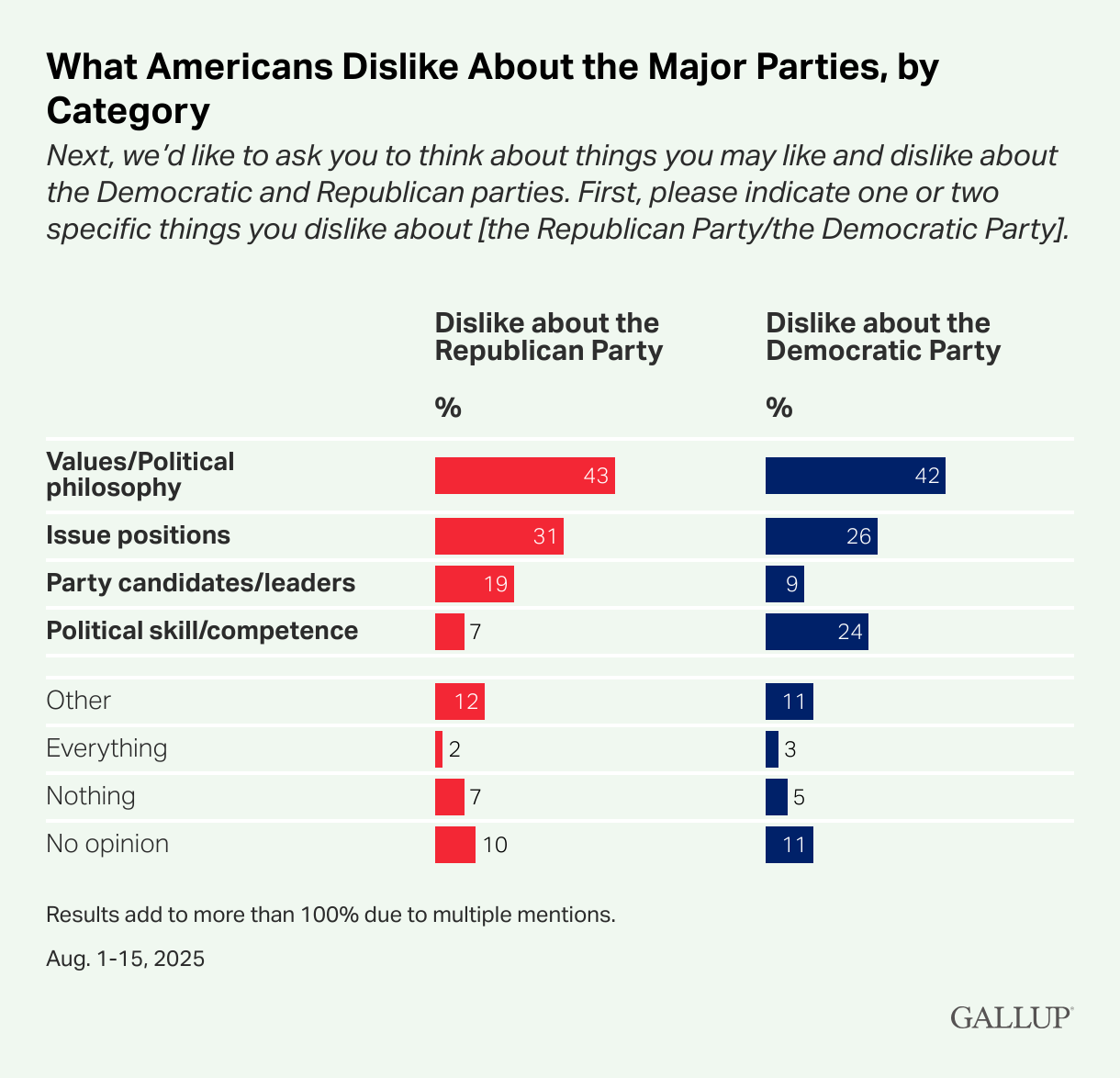
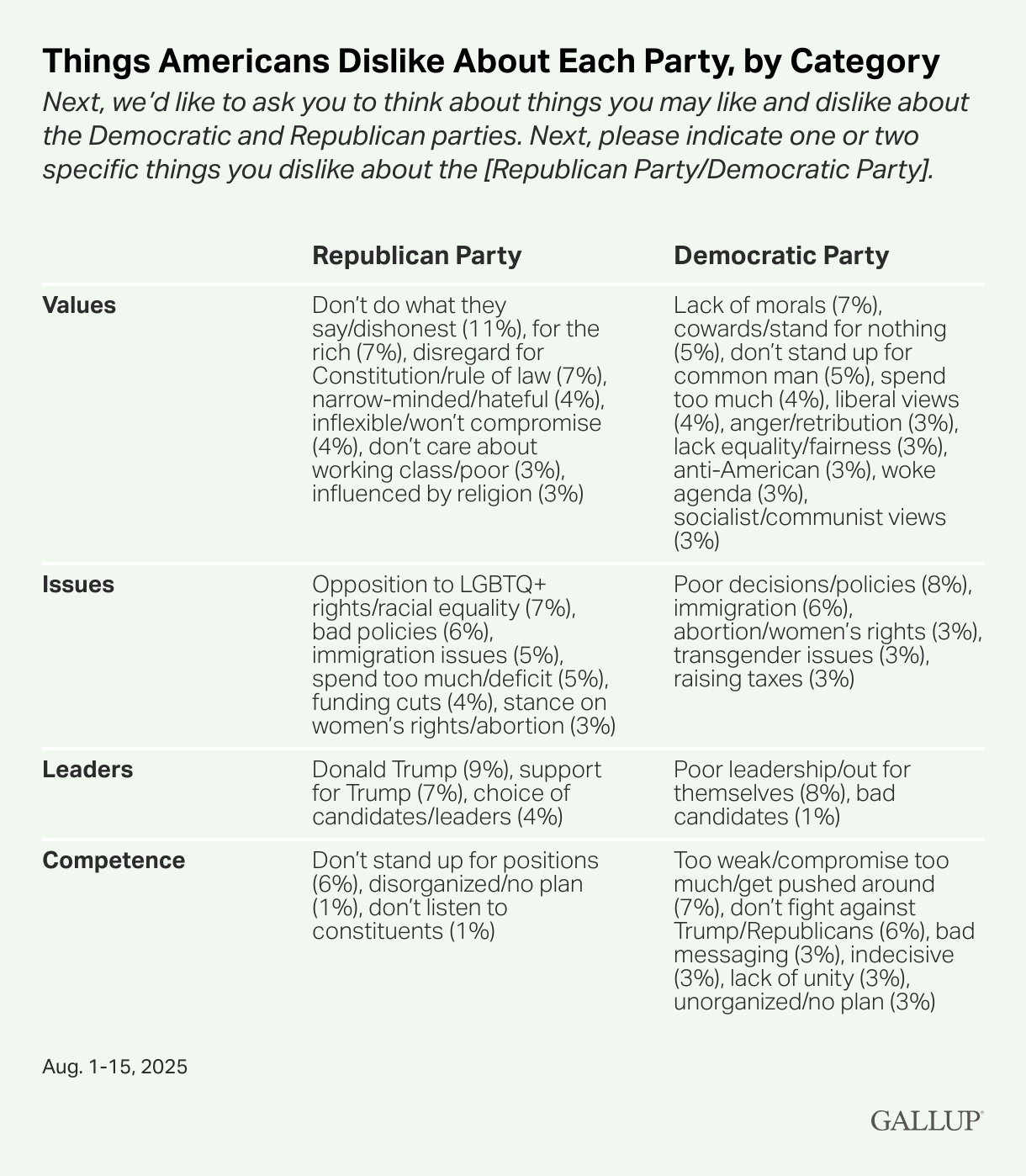
Widespread Frustration Among Democratic Base Pew Research Center survey from fall 2025 reveals roughly two‑thirds (66 %) of Democrats feel “frustrated” with their party [1]. Among them, 40 % blame insufficient effort against former President Trump, while 10 % cite weak leadership or a disjointed agenda [1]. This internal discontent compounds the external favorability decline.
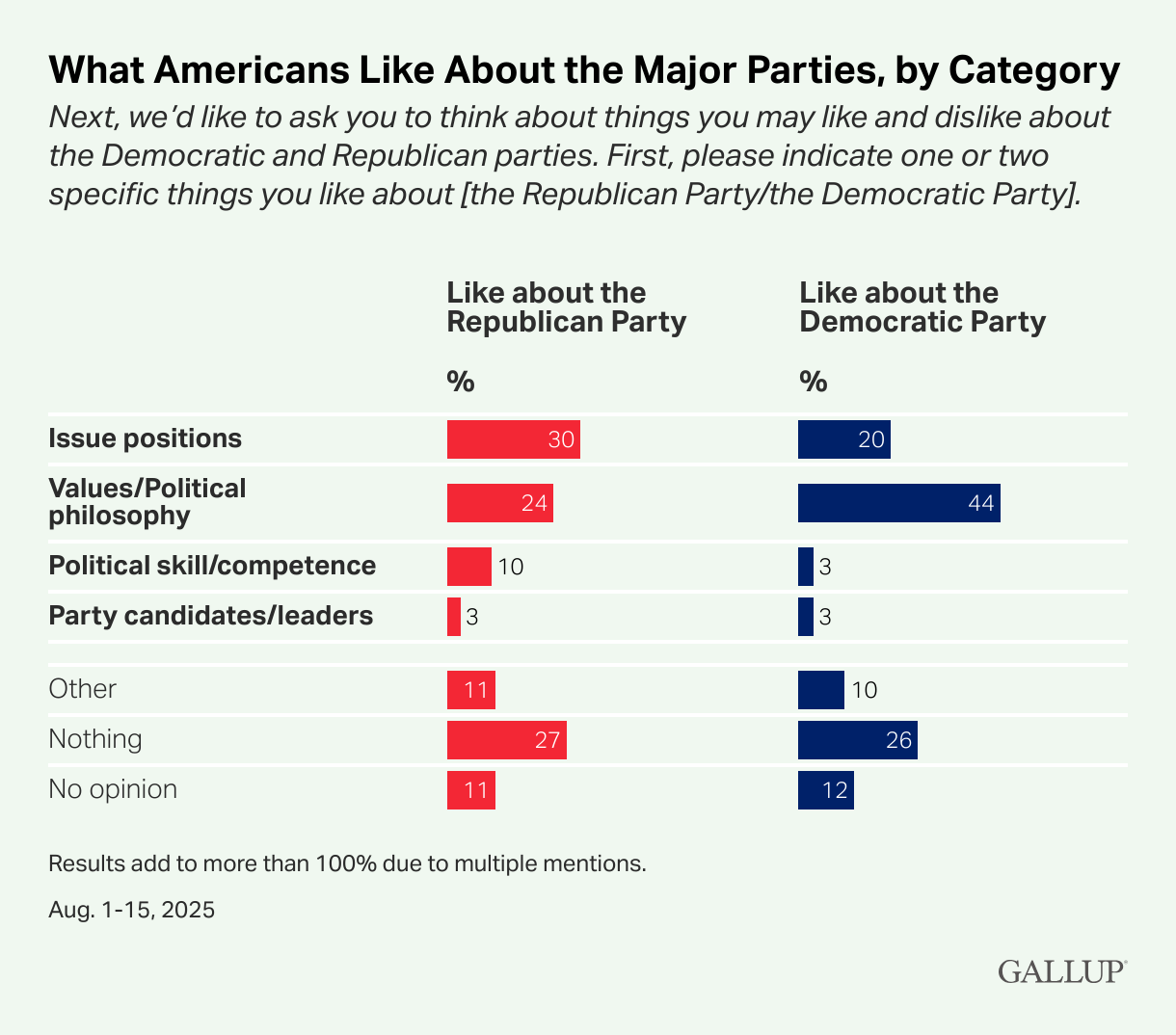
Public Holds Negative Views of Both Major Parties The same AP‑NORC data indicates about 25 % of all Americans view both Democrats and Republicans unfavorably, a sentiment strongest among independents and voters under 45 [1]. Conversely, only roughly 10 % express positive opinions of both parties, underscoring broad partisan disenchantment [1].
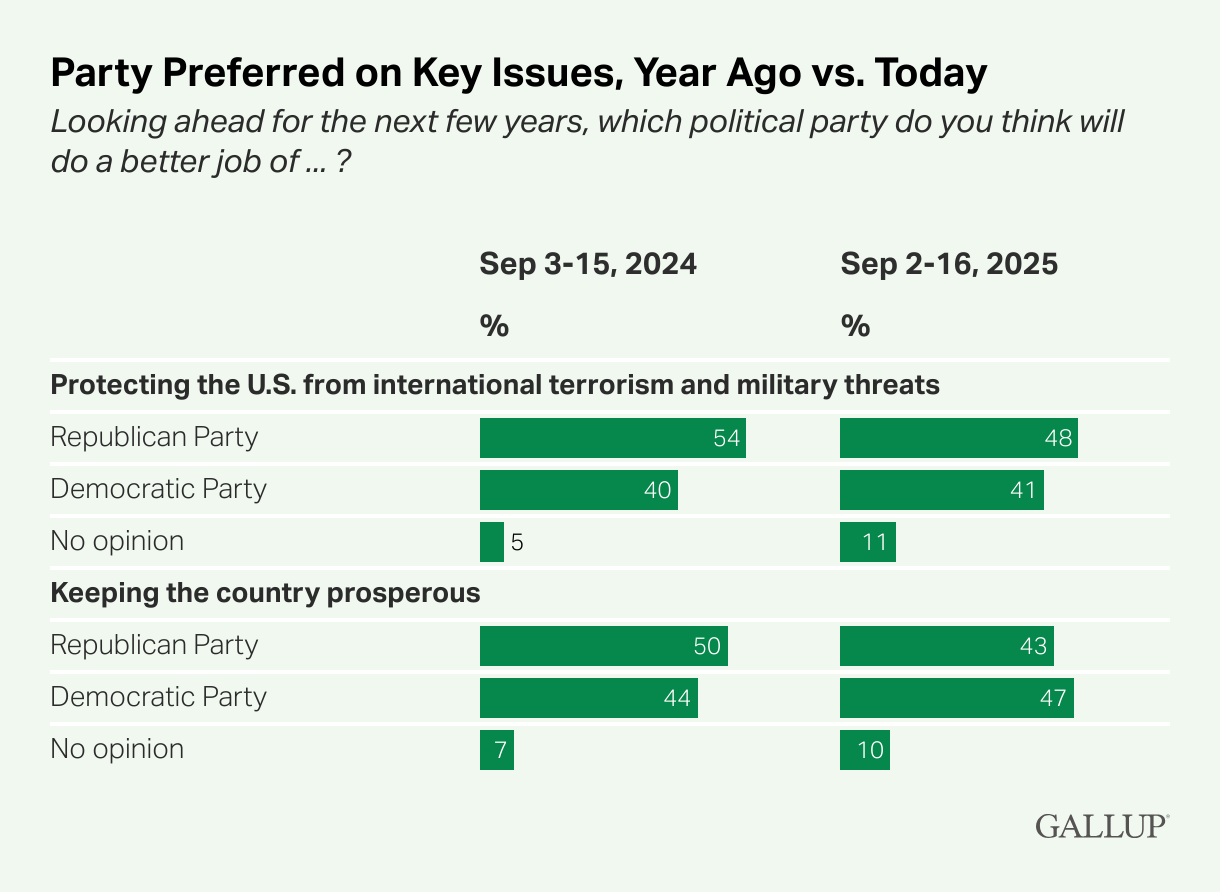
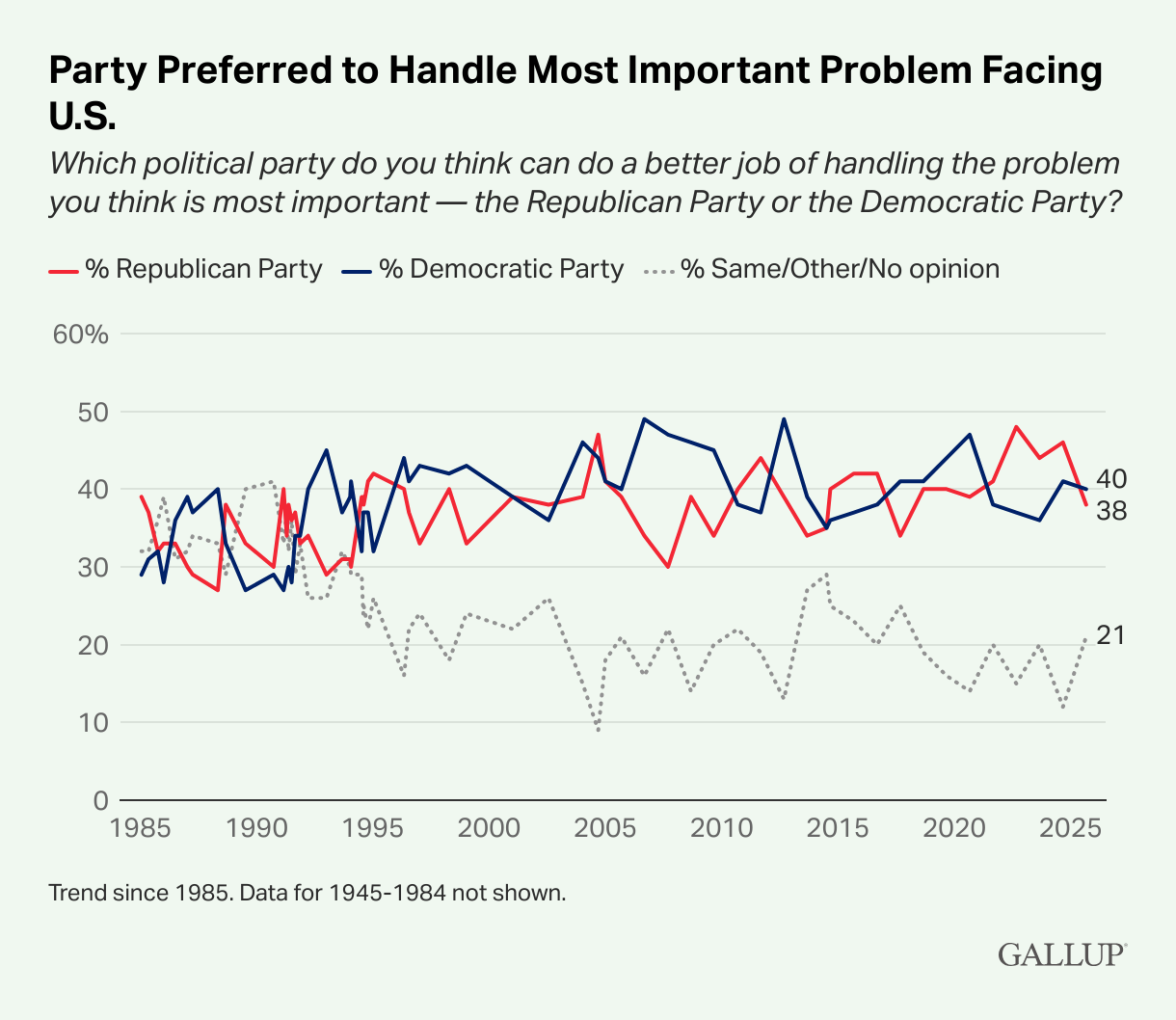
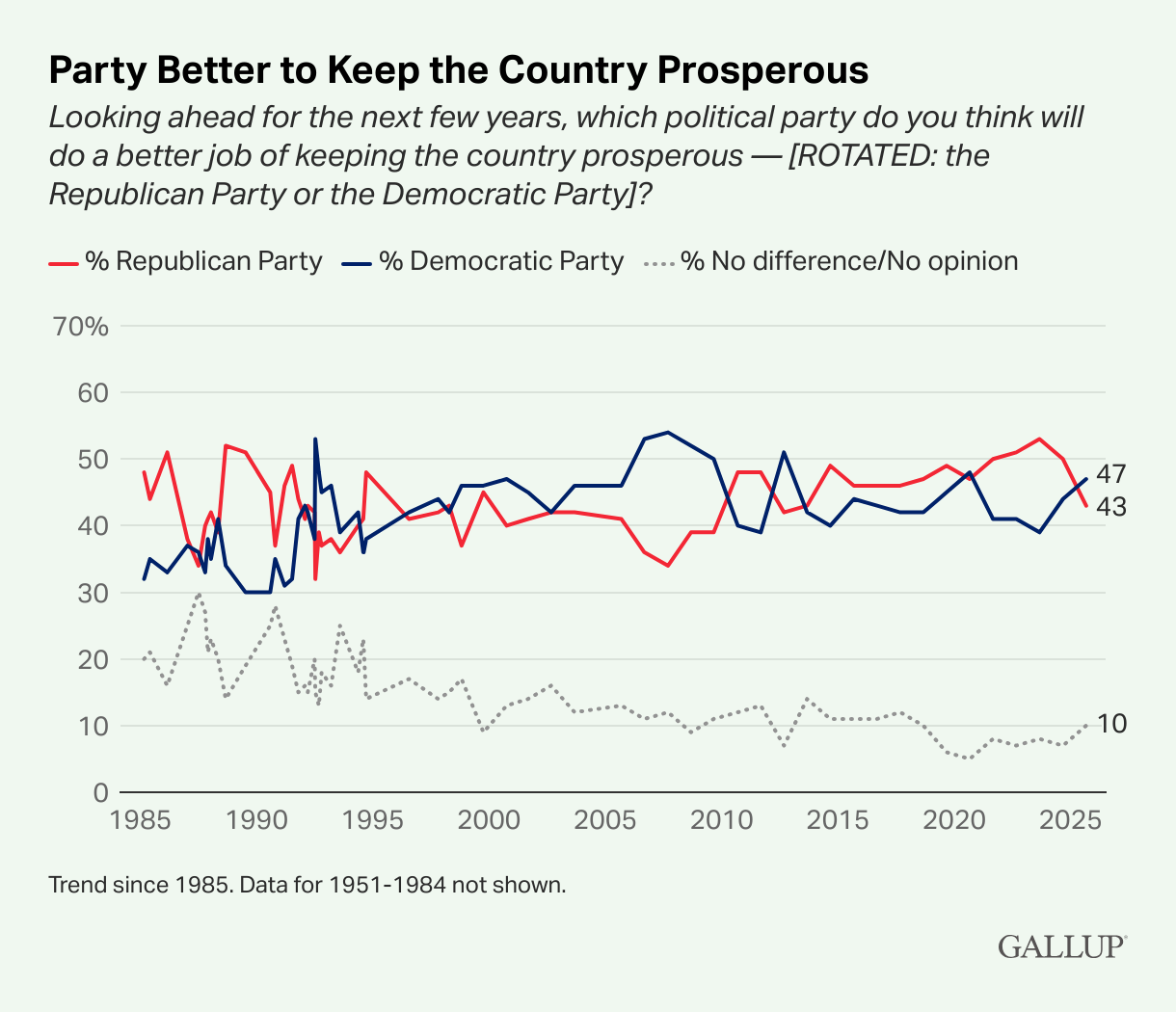
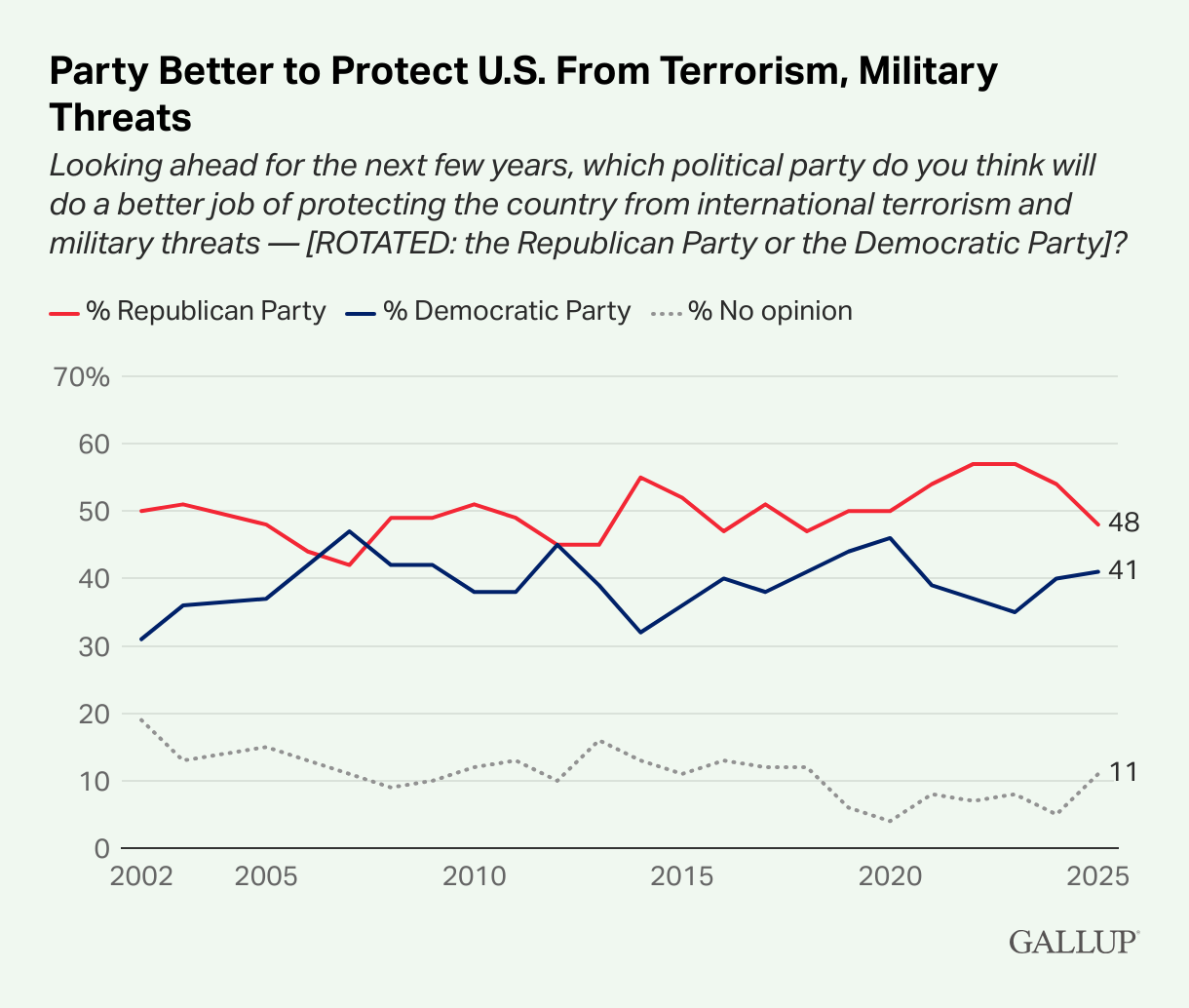
Issue‑Specific Trust Shows Modest Democratic Edge When asked which party would handle health‑care better, 35 % of U.S. adults trust Democrats versus 23 % for Republicans, giving Democrats a modest advantage on this top‑priority issue [1]. Republicans also slipped on economy trust (31 %) and immigration (about one‑third), while Democrats failed to improve their standing on those topics [1].
Related Tickers
Primary Data (2)
Gallup: Republican, Democratic Party Favorability Identical at 44%
Published (0 tables/charts)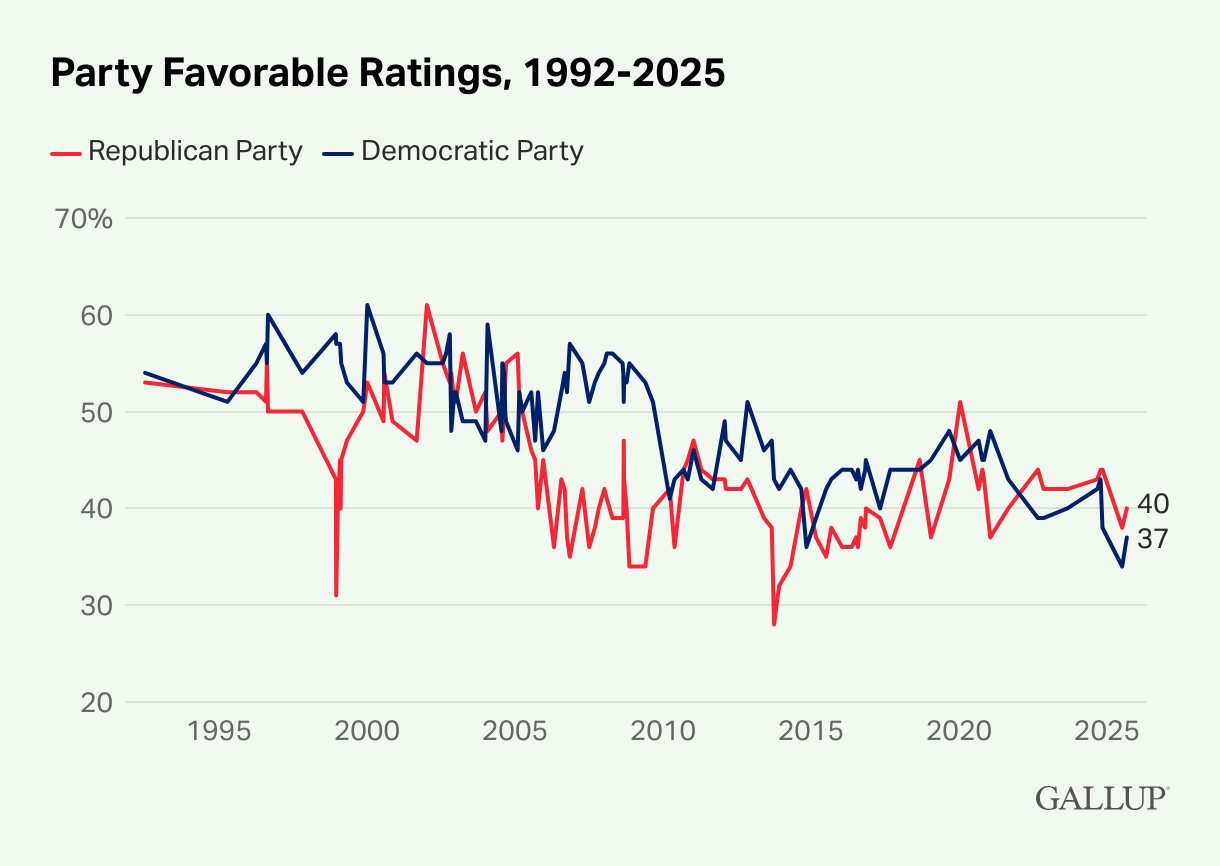
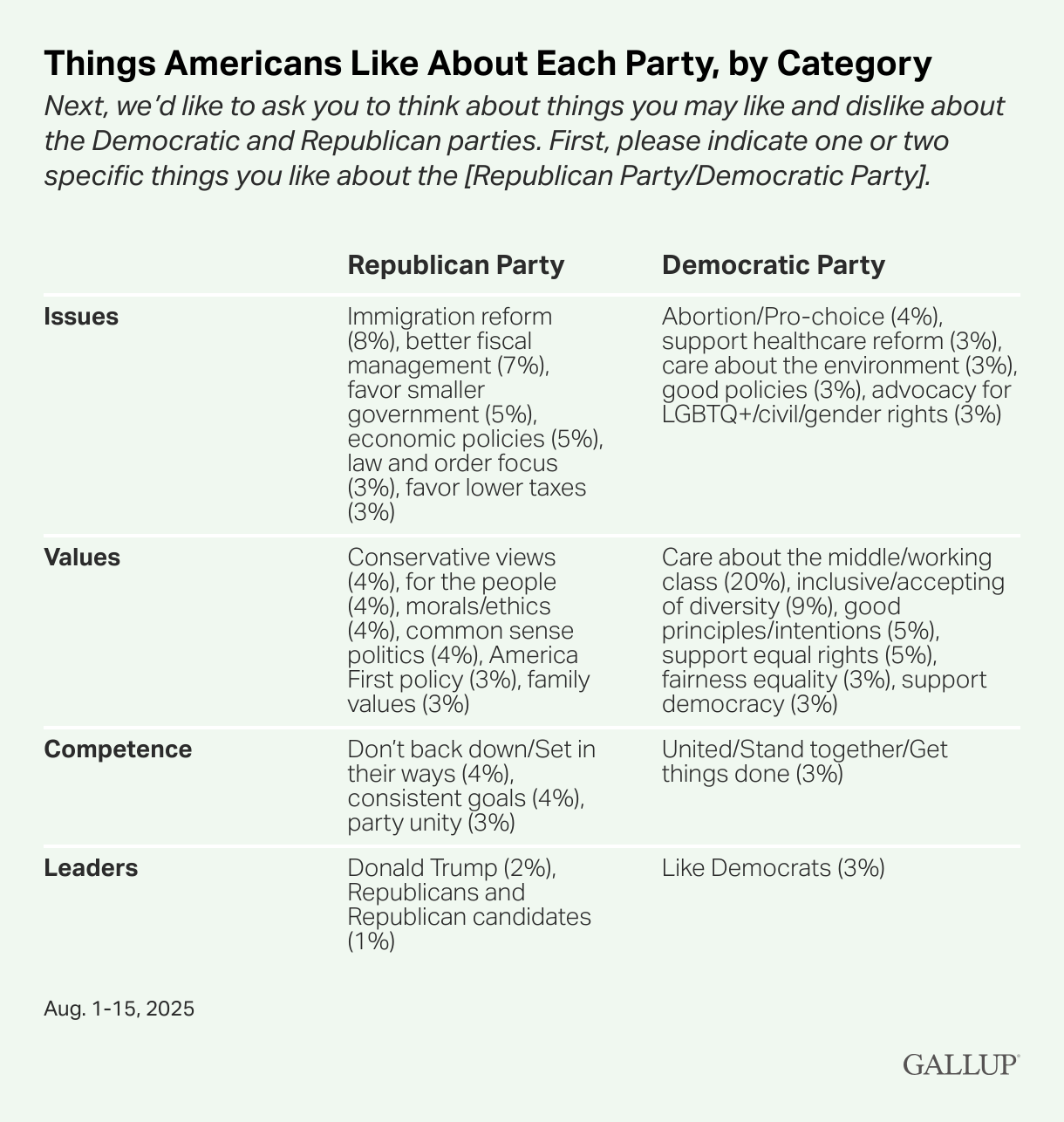
Timeline
Sep 2024 – An AP‑NORC poll records that 85 % of Democrats view their party favorably, establishing a high baseline for later declines [3].
Jan 2025 – Donald Trump begins his second presidential term; by the end of the first year, only 29 % of independents approve his performance, reflecting persistent skepticism [1].
Oct 2025 – The same AP‑NORC survey shows Democratic favorability falling to 67 %, a sharp drop from the 85 % level a year earlier [3].
Fall 2025 – A Pew Research Center survey finds 66 % of Democrats feel “frustrated,” with 40 % saying the party isn’t fighting Trump hard enough and 10 % citing weak leadership or a disjointed agenda [3].
Dec 22, 2025 – Gallup reports Trump’s approval at 36 % versus 24 % for Democrats in Congress, creating a 12‑point gap; Republican congressional approval sits at 29 % [2].
Dec 2025 – Trump posts on Truth Social that Democrats’ congressional approval numbers are “the worst ever,” while Columbia professor Robert Y. Shapiro links policy issues to the public’s perception [2].
Jan 18, 2026 – A CNN poll finds Democrats lead the generic congressional ballot by 5 points, expanding to 16 points among deeply motivated voters; Democratic leaders hold 28 % approval compared with 35 % for Republican leaders [1].
Jan 2026 – The same CNN poll reveals 71 % of Democrats and Democratic‑leaning independents say Congress has been ineffective at opposing Trump, up 20 points since Jan 2025, fueling potential primary challenges [1].
Jan 2026 – CNN contextualizes the current edge by recalling that in 2018 Democrats reclaimed the House with a similar five‑point lead, while Republicans won a narrow majority in 2022 [1].
Feb 18, 2026 – An AP‑NORC poll shows only 70 % of Democrats view their party positively, the lowest level since 2001 per Gallup’s 12‑point historic drop; simultaneously, 25 % of the public hold negative views of both parties [3].
Feb 2026 – The AP‑NORC data indicates 35 % of adults trust Democrats on health‑care versus 23 % for Republicans, while Republican trust on the economy slips to 31 % and on immigration to roughly one‑third of adults [3].
Nov 2026 (future) – The upcoming midterm elections will test whether the deep motivation among Democratic voters translates into electoral gains [1].
All related articles (3 articles)
External resources (5 links)
- https://news.gallup.com/poll/143213/republican-democratic-party-favorability-identical.aspx (cited 1 times)
- https://news.gallup.com/poll/696635/neither-party-dominates-favorability-trust.aspx (cited 1 times)
- https://www.pewresearch.org/wp-content/uploads/sites/20/2025/10/PP_2025.10.30_views-of-political-parties_report.pdf (cited 1 times)
- https://apnorc.org/ (cited 1 times)