Integration Deal and ISIS Resurgence Redefine Syria’s Northeast Landscape
Updated (14 articles)
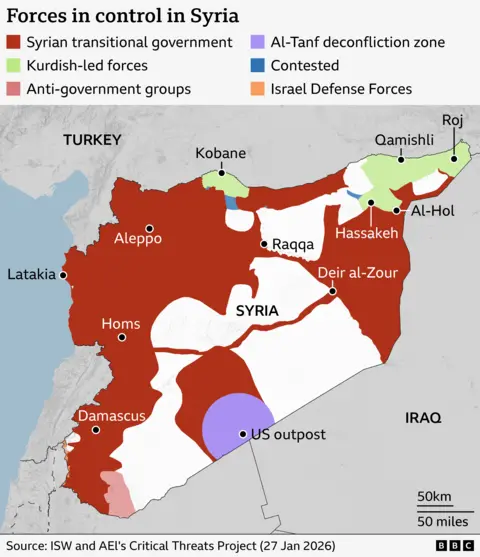
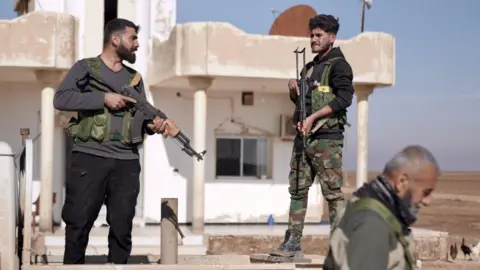
Integration Deal Formalizes SDF Merger Into Syrian Army The Syrian government and the Kurdish‑led Syrian Democratic Forces signed a comprehensive agreement on 30 January 2026 that creates three SDF‑origin brigades within the national army, appoints a Kurdish‑chosen governor for Hasakah, and merges local DAANES administrations while preserving civil staff [1][2]. The pact follows a 14‑point framework and promises civil and educational rights for Kurds, including recognition of Kurdish as a national language [2]. Both sides presented the deal as a step toward national reconciliation, though implementation details remain under negotiation [1].
Ceasefire and Strategic Asset Transfer Shift Power in Northeast ceasefire declared on 18 January 2026 allowed Syrian troops to seize the Omar oil field and the Tabqa dam, consolidating control over the country’s largest energy and water assets [2][3]. Despite the truce, sporadic clashes persisted, and the SDF’s withdrawal from these sites set the stage for the integration talks that culminated in the January 30 agreement [2]. The United Nations warned that conditions in the al‑Hol refugee camp remained “tense and volatile” after the SDF’s exit [2].
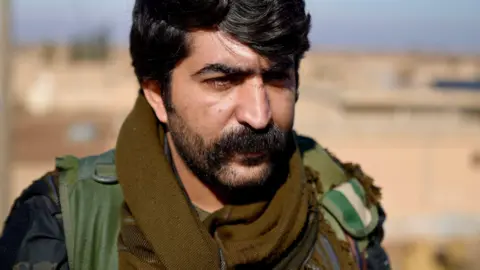
US Policy Pivot Fuels Kurdish Retreat and Tensions The White House shifted its backing to interim President Ahmed al‑Sharaa, a former al‑Qaeda affiliate, prompting Kurdish commanders to label the move a betrayal and accelerating SDF losses in resource‑rich territories, including the Omar field [3][2]. The fragile ceasefire is set to expire on 7 February 2026, raising fears of renewed full‑scale fighting [3]. U.S. Central Command confirmed the death of Bilal Hasan al‑Jasim in a recent attack, underscoring the volatile security environment [3].
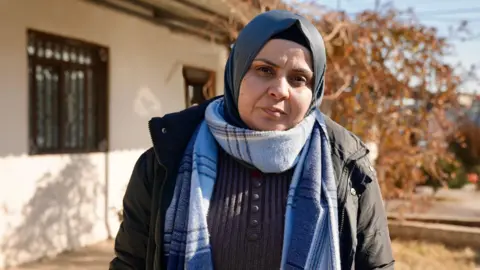
ISIS Cells Resurge Amid Prisoner Releases and Security Gaps Afrin, a Kurdish political leader, reported that Islamic State is regaining strength as the Syrian Interim Government released roughly 2,000 IS prisoners after a raid in Shaddadi and similar incidents at al‑Hol [1]. Active IS cells now operate across Syria, including in Damascus, exploiting the security vacuum created by the interim government’s missteps [1]. Since 2014, anti‑ISIS campaigns have cost the SDF, YPG and YPJ more than 12,000 fighters killed and 25,000 injured, highlighting the enduring threat [1].
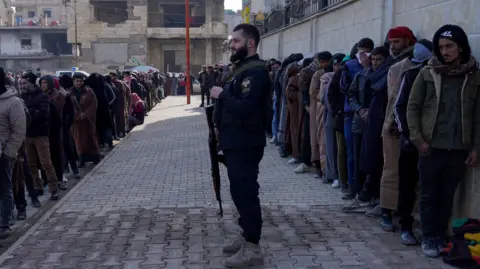
Humanitarian Situation Remains Volatile in al‑Hol and Other Camps The al‑Hol camp, housing about 8,000 suspected IS fighters and 34,000 family members, remains under Syrian government control with reports of heightened tension and threats from Kurdish detainees [3]. The Roj camp, still run by Kurdish forces, shelters over 2,000 foreign women and children, while UN officials describe conditions in al‑Hol as “tense and volatile” [2]. These camps are focal points of humanitarian concern amid the broader power shift in the northeast [2][3].
Sources
-
1.
The Hindu:ISIS Resurges as Syrian Kurdish Forces Grapple with Renewed Fighting: details ISIS’s revival, the Jan 30 ceasefire’s integration provisions, attacks on women‑led governance, and cumulative anti‑ISIS casualties .
-
2.
BBC:Syrian Government and Kurdish SDF Seal Integration Deal After Ceasefire: outlines the Jan 30 integration agreement, the Jan 18 ceasefire, U.S. envoy praise, Kurdish rights guarantees, transfer of Omar oil field and Tabqa dam, and UN warnings on al‑Hol .
-
3.
BBC:Kurds Retreat as U.S. Shifts Support to Syria’s New Interim President: focuses on Kurdish territorial losses, U.S. backing of President Sharaa, the looming Feb 7 ceasefire expiry, camp tensions, and commander Azad’s condemnation of U.S. policy .
Related Tickers
Timeline
Oct 2025 – Hard‑line factions on both sides block the planned March integration talks, deepening the divide between Damascus’s centralized vision (citing Law 107) and the SDF’s push for a decentralized federal model, which stalls any immediate settlement [14].
Dec 11, 2025 – The United States pivots to cooperate with interim President Ahmad al‑Sharaa, shifting from a Kurdish‑centric strategy to a dual‑track approach that seeks security cooperation with Damascus while still addressing counter‑ISIS needs [8].
Dec 22, 2025 – Syrian army and Kurdish‑led SDF clash in Aleppo, killing at least three and wounding 31, just eight days before the March 10 integration deadline, underscoring the volatility ahead of the planned ceasefire [6].
Dec 23, 2025 – A Turkish delegation led by Foreign Minister Hakan Fidan arrives in Damascus; intense fighting erupts in Aleppo as both sides blame each other, and Fidan urges “the SDF to cease to be an obstacle to stability, unity and prosperity” while pushing the integration agenda [13].
Jan 6, 2026 – Coordinated assaults by Syrian Interim Government forces, Turkey‑backed brigades, HTS and ISIS force the SDF to withdraw from Tabqa, Raqqa and Deir ez‑Zor, prompting a strategic pull‑back to protect civilians in Kurdish‑majority towns [12].
Jan 18, 2026 – Damascus and the SDF announce a ceasefire that obliges the SDF to hand over Deir ez‑Zor and Raqqa, with commander Mazloum Abdi confirming the withdrawal terms and pledging to explain them to his fighters [11].
Jan 19, 2026 – Despite the ceasefire, fresh clashes erupt in the northeast as SDF units and Syrian troops contest control of prisons and border posts, while the agreement calls for the SDF’s dissolution and individual integration into the defence and interior ministries [5].
Jan 20, 2026 – Syria seals a new ceasefire after the SDF withdraws from al‑Hol camp; the presidency promises a four‑day consultation window on integrating tens of thousands of fighters and transferring key infrastructure, while the U.S. envoy Tom Barrack calls the moment “a pathway to full integration into a unified Syrian state” [4].
Jan 21, 2026 – The SDF publicly seeks urgent U.S. and international aid as Damascus advances, with Ilham Ahmed stating “the mission is over but we need guarantees for Kurdish protections, language rights and citizenship” [7]; the same day, U.S. envoy Tom Barrack declares the SDF’s anti‑ISIS role “largely expired,” signaling a further policy shift [10].
Jan 22, 2026 – Interim President Ahmed al‑Sharaa’s forces launch a rapid offensive that seizes the Kurdish‑held northeast, prompting the SDF to sign a 14‑point framework that reverses earlier concessions and envisions individual SDF members joining the Syrian army [3].
Jan 23, 2026 – Turkish President Erdogan congratulates the Syrian government on crushing the SDF, reiterating Turkey’s refusal to tolerate any separatist structures near its border and highlighting Ankara’s coordination with Damascus during the offensive [9].
Jan 29, 2026 – The United States backs former jihadi interim president al‑Sharaa, prompting Kurdish commander Azad to denounce the move as “a slap in the face” and warning of continued resistance; negotiators note the fragile cease‑fire will lapse on Feb 7 unless extended [2].
Jan 30, 2026 – The Syrian government and Kurdish SDF sign a historic integration deal that creates a three‑brigade military division, transfers the Omar oil field and Tabqa dam to Damascus, and grants Kurdish cultural and civil rights, with U.S. envoy Tom Barrack describing it as “a profound and historic milestone in Syria’s journey toward national reconciliation” [1].
Feb 2, 2026 – ISIS resurges as the interim government’s security gaps allow the release of roughly 2,000 prisoners and renewed attacks; Afrin warns that the recent offensives target the gender‑equal autonomous model of DAANES and calls for an international political solution to prevent further extremist growth [12].
Feb 7, 2026 – The January 18 cease‑fire reaches its expiration date, prompting renewed diplomatic pressure to either formalize a permanent truce or risk a full‑scale renewal of hostilities [2].
Mar 10, 2026 – The originally agreed integration deadline approaches, with the Syrian army expected to absorb SDF fighters and assume control of all northeastern civil and military institutions, while observers watch for compliance or a possible breakdown of the settlement [6].
Dive deeper (13 sub-stories)
-
The Hindu: ISIS resurges as Syrian Kurdish forces grapple with renewed fighting
-
BBC: Syrian Government and Kurdish SDF Seal Integration Deal After Ceasefire
-
BBC: Kurds Retreat as U.S. Shifts Support to Syria’s New Interim President
-
AP: Jan 23: Turkey hails Syrian government gains as Kurdish-led SDF collapses
-
BBC: Sharaa's government seizes Kurdish-held northeast in rapid Syria realignment
-
AP: Kurdish-led SDF loses power in Syria as US shifts support to Damascus government
-
Newsweek: US policy shift leaves SDF seeking aid as Damascus advances in Syria
-
BBC: Syria seals ceasefire as Kurdish-led forces withdraw from al-Hol camp
-
Ceasefire Signed Jan 18 Triggers SDF Withdrawal but Sparks New Clashes
(2 articles)
-
ISW: Syrian Government Offensive Compels SDF Ceasefire and Integration
-
The Hindu: Clashes flare as Turkish officials visit Syria ahead of Kurdish integration deadline
-
CNN: Deadly clashes erupt between Syrian army and Kurdish-led SDF in Aleppo amid integration talks
-
Newsweek: US troops in Syria pivot to new partnership with interim president
All related articles (14 articles)
-
The Hindu: ISIS resurges as Syrian Kurdish forces grapple with renewed fighting
-
BBC: Syrian Government and Kurdish SDF Seal Integration Deal After Ceasefire
-
BBC: Kurds Retreat as U.S. Shifts Support to Syria’s New Interim President
-
AP: Jan 23: Turkey hails Syrian government gains as Kurdish-led SDF collapses
-
BBC: Sharaa's government seizes Kurdish-held northeast in rapid Syria realignment
-
AP: Kurdish-led SDF loses power in Syria as US shifts support to Damascus government
-
Newsweek: US policy shift leaves SDF seeking aid as Damascus advances in Syria
-
BBC: Syria seals ceasefire as Kurdish-led forces withdraw from al-Hol camp
-
BBC: Clashes persist after Syria-SDF ceasefire deal
-
ISW: Syrian Government Offensive Compels SDF Ceasefire and Integration
-
AP: Syrian government and SDF sign ceasefire with SDF to withdraw from Raqqa and Deir el-Zour
-
The Hindu: Clashes flare as Turkish officials visit Syria ahead of Kurdish integration deadline
-
CNN: Deadly clashes erupt between Syrian army and Kurdish-led SDF in Aleppo amid integration talks
-
Newsweek: US troops in Syria pivot to new partnership with interim president
External resources (36 links)
- https://mei.edu/publication/how-damascus-and-the-sdf-came-to-blows-in-aleppo-and-what-might-come-next/ (cited 3 times)
- https://mei.edu/publication/how-damascus-and-the-sdf-came-to-blows-in-aleppo-and-what-might-come-next (cited 1 times)
- https://abcnews.go.com/International/wireStory/displaced-aleppo-residents-return-home-after-days-intense-129138016 (cited 1 times)
- https://www.reuters.com/world/middle-east/how-syrias-sharaa-captured-kurdish-held-areas-while-keeping-us-onside-2026-01-21/ (cited 1 times)
- https://www.reuters.com/world/middle-east/sectarian-violence-risks-dividing-syria-despite-sharaas-diplomacy-2025-09-15 (cited 1 times)
- https://www.reuters.com/world/middle-east/syria-kurdish-forces-race-save-integration-deal-ahead-deadline-2025-12-18 (cited 1 times)
- https://t.me/AlekhbariahSY/193126 (cited 7 times)
- https://t.me/AlekhbariahSY/193127 (cited 7 times)
- https://t.me/AlekhbariahSY/192424 (cited 1 times)
- https://www.linkedin.com/pulse/turkey-draws-line-between-sdf-pkk-major-policy-shift-wjyye/ (cited 1 times)
- https://x.com/AlekhbariahSY/status/2010999229217472959 (cited 1 times)
- https://x.com/DeirEzzore/status/2008263749912985629 (cited 1 times)
- https://x.com/QalaatAlMudiq/status/2008222366724485434 (cited 1 times)
- https://x.com/hxhassan/status/2011518202044358727 (cited 1 times)
- https://x.com/hxhassan/status/2011557424168370627 (cited 1 times)
- https://x.com/zakorahmed0/status/2010038964539818384 (cited 1 times)
- (cited 3 times)
- https://carnegieendowment.org/sada/2017/03/syrias-decentralization-roadmap?lang=en (cited 3 times)
- https://www.washingtoninstitute.org/policy-analysis/sdfs-approach-integration-talks-syria-and-risk-expanded-conflict (cited 3 times)
- https://sana.sy/en/syria/2291194/ (cited 2 times)
- https://www.france24.com/en/middle-east/20260115-syria-sunni-clans-hold-key-to-stability-ending-sectarian-strife-sharaa (cited 2 times)
- https://en.majalla.com/node/325228/opinion/syrias-8th-brigade-disbands-blueprint-military-consolidation (cited 1 times)
- https://shafaq.com/en/World/Syrian-Defense-Ministry-signals-potential-military-action-against-SDF (cited 1 times)
- https://urbanlex.unhabitat.org/laws/syria/the-local-administration-law-73544 (cited 1 times)
- https://www.al-monitor.com/originals/2026/01/top-syrian-kurdish-official-foza-yusuf-says-war-damascus-lose-lose-all (cited 1 times)
- https://www.alhadath.net/syria/2025/11/13/قوات-الشمال-الديمقراطي-نريد-الاندماج-ضمن-الوية-الجيش-السوري- (cited 1 times)
- https://www.criticalthreats.org/analysis/ending-the-us-presence-in-syria-could-cause-a-rapid-isis-reconstitution-and-threaten-core-us-national-security-interests (cited 1 times)
- https://www.ecchr.eu/en/case/crimes-in-syria-the-neglected-atrocities-of-afrin/ (cited 1 times)
- https://www.economist.com/middle-east-and-africa/2025/02/03/an-interview-with-ahmed-al-sharaa-syrias-president (cited 1 times)
- https://www.enabbaladi.net/770912/%d8%a7%d9%84%d8%a5%d8%af%d8%a7%d8%b1%d8%a9-%d8%a7%d9%84%d8%b0%d8%a7%d8%aa%d9%8a%d8%a9-%d8%aa%d8%b1%d9%81%d8%b6-%d8%a7%d9%84%d8%a7%d9%86%d8%aa%d8%ae%d8%a7%d8%a8%d8%a7%d8%aa-%d8%a7%d9%84%d8%a8%d8%b1/ (cited 1 times)
- https://www.enabbaladi.net/774514/%d8%a7%d9%84%d8%b4%d8%b1%d8%b9-%d9%84%d8%a7-%d9%8a%d8%ab%d9%82-%d8%a8%d8%a5%d8%b3%d8%b1%d8%a7%d8%a6%d9%8a%d9%84-%d9%88%d9%84%d8%a7-%d9%8a%d8%b3%d8%aa%d8%a8%d8%b9%d8%af-%d8%aa%d8%ad%d8%b1%d9%83-%d8%aa/ (cited 1 times)
- https://www.milliyet.com.tr/gundem/kasim-ayi-sonrasinda-sdgye-harekat-imasi-7448561 (cited 1 times)
- https://www.newarab.com/news/sharaa-says-turkey-may-attack-sdf-if-they-dont-join-syrian-govt (cited 1 times)
- https://www.rudawarabia.net/arabic/middleeast/syria/150120263 (cited 1 times)
- https://www.syria.tv/تأكيداً-لما-نشره-تلفزيون-سوريا-الرئيس-الشرع-يلتقي-شيخ-مشايخ-قبيلة-شمر (cited 1 times)
- https://www.syriaweekly.com/p/special-reviewing-a-dramatic-expansion (cited 1 times)