Closing Ceremony Extinguishes Flame, USA Wins Hockey Gold, France Secures 2030 Host
Updated (10 articles)
Flame Extinguished and Flag Handed Over in Verona The Olympic flame was doused during the Verona closing ceremony on Feb. 23, 2026, after speeches by IOC member Kirsty Coventry and Organising Committee chief Giovanni Malagò, officially ending the Games [1]. French representatives received the Olympic flag, confirming France as the 2030 Winter Games host [1][5]. The ceremony also featured cultural performances and fireworks, underscoring the event’s artistic finale [2].
USA Captures Men’s Ice Hockey Gold in Overtime The United States defeated Canada 2‑1 in overtime on Feb. 23, with Jack Hughes scoring the winner, delivering the nation its first men’s hockey gold since 1980 [1][2][3][4][5]. Goalkeeper Connor Hellebuyck made a crucial block, and the victory sparked celebrations among players such as Tage Thompson [1][3]. The match, held at the Milano Santagiulia Ice Hockey Arena, concluded the highly anticipated USA‑Canada showdown that dominated the final day schedule [4][5].
Eileen Gu Defends Halfpipe Crown and Adds Two Silvers China’s Eileen Gu won gold in the women’s freestyle ski halfpipe on Feb. 22, repeating her 2022 triumph and also securing two silver medals in other freestyle events [1][2][3][4]. The final, delayed by weather, featured a strong field including Britain’s Zoe Atkin, who led qualifying scores [4]. Gu’s performance cemented her status as the sport’s dominant athlete across three consecutive Games [1][3].
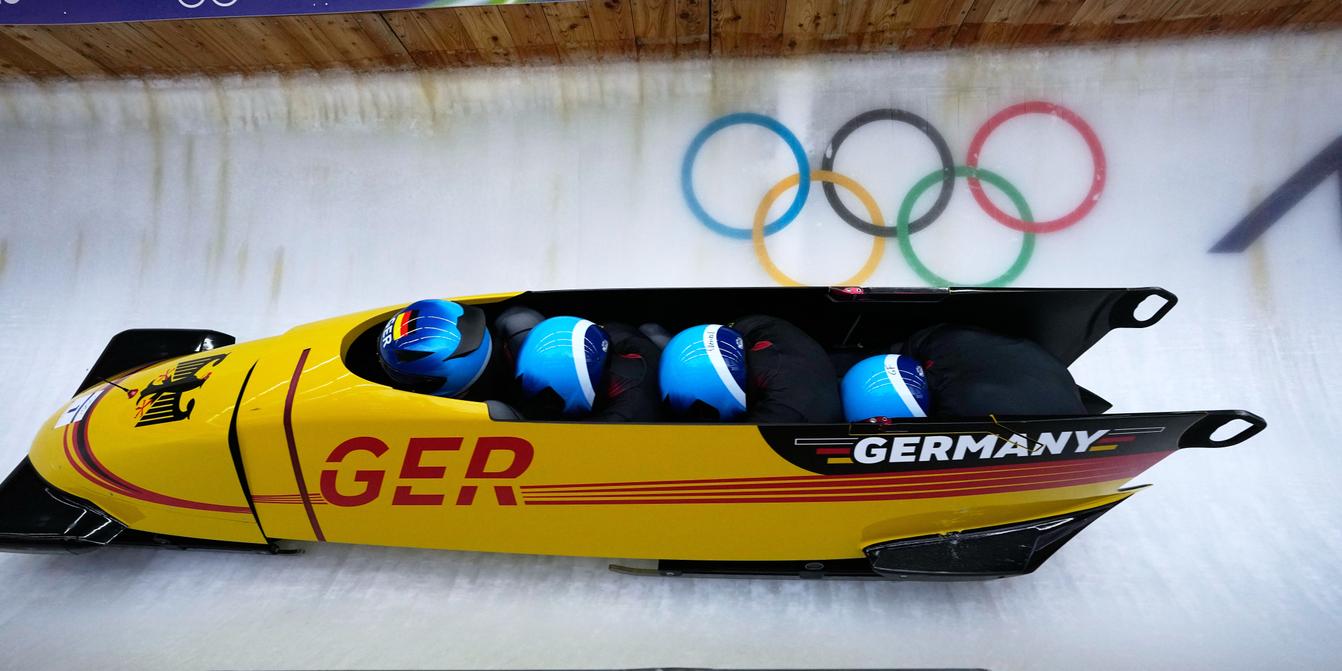
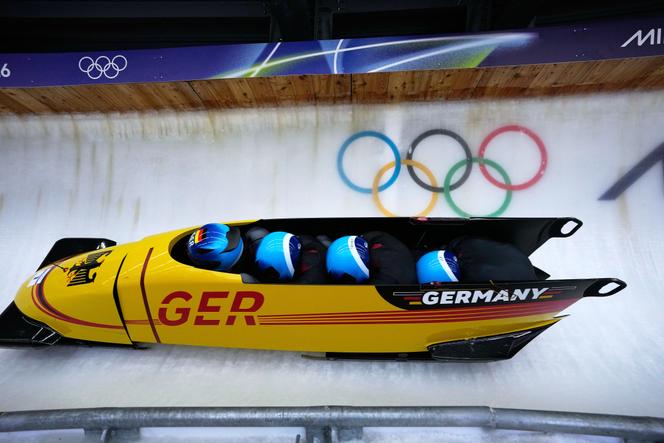
Sweden and Germany Dominate Final Medal Events Sweden captured gold in women’s curling and in the 50 km cross‑country classic, where Ebba Andersson topped the field [1][3]. Germany swept the four‑man bobsleigh with a 1‑2 finish, the quartet of Johannes Lochner, Thorsten Margis, Jorn Wenzel and Georg Fleischauer celebrating on the podium [1][3]. These results extended both nations’ winter‑sport strengths as the Games concluded [1][3].
Sources
-
1.
CNN: Milan‑Cortina 2026 Winter Olympics close with flame out, medals and handover: Details the closing ceremony flame extinguishment, USA men’s hockey overtime gold, Eileen Gu halfpipe victory, flag handover to France, and Sweden/Germany medal sweeps .
-
2.
BBC: BBC Sport Gallery Showcases Highlights from Milan‑Cortina 2026 Winter Olympics: Provides photo‑rich coverage of the closing ceremony flame, USA hockey win, Norway’s sixth gold, and diverse medal moments across nations .
-
3.
AP: Day 16 of the Milan‑Cortina 2026 Winter Games: Photo Highlights: Offers images of Eileen Gu’s halfpipe gold, Sweden’s 50 km win, German bobsleigh triumph, and the USA‑Canada hockey overtime victory .
-
4.
Le Monde: Final Day Schedule of the 2026 Milan‑Cortina Winter Olympics: Lists the women’s 50 km cross‑country race, halfpipe final delay, USA‑Canada hockey final, and closing ceremony flag handover to France .
-
5.
BBC: Day 15 Highlights of the 2026 Milan‑Cortina Winter Olympics: Notes 3,000 athletes from 90 nations, the upcoming USA‑Canada hockey showdown, and the Verona closing ceremony flag handover .
-
6.
AP: Top Photos Capture Day 14 Highlights of the Milan Cortina 2026 Winter Olympics: Shows German bobsleigh legend Friedrich’s bid, USA‑Canada hockey semifinal drama, and diverse medal celebrations .
-
7.
AP: Day 13 Highlights of the Milan Cortina 2026 Winter Olympics Photo Gallery: Highlights USA women’s hockey gold, Chinese speedskating gold, and Great Britain men’s curling semifinal win .
-
8.
AP: Day 12 of the Milan‑Cortina 2026 Winter Games: Photo Highlights: Features Sweden’s team sprint gold, Canadian short‑track gold, and biathlon relay action .
-
9.
AP: AP Photo Gallery Highlights Day 11 of Milan Cortina 2026 Winter Olympics: Covers biathlon relay, Nordic combined, curling round‑robin, and bobsled champions .
Related Tickers
Timeline
Feb 5, 2026 – Mixed doubles curling round‑robin and women’s ice‑hockey preliminaries begin a day before the opening ceremony, while downhill skiers such as Italy’s Dominik Paris and Canada’s James Crawford launch official runs in Bormio, and ski‑jumpers Liu Qi (China) and Lisa Eder (Austria) practice normal‑hill jumps in Predazzo, marking the start of competition across venues [9].
Feb 17, 2026 – Day 11 sees the men’s 4×7.5 km biathlon relay in Anterselva, the Nordic combined individual Gundersen race in Tesero, and the men’s team‑pursuit speed‑skating finals award gold to Italy (men) and Canada (women); German bobsled crews capture gold, illustrating the breadth of medal action midway through the Games [8].
Feb 18, 2026 – Sweden wins the women’s cross‑country team sprint in Tesero, Canada’s Steven Dubois takes gold in the 500 m short‑track in Milan, and the ice‑hockey quarterfinals produce dramatic moments including a helmet loss for USA’s Jake Sanderson; France’s Julia Simon secures biathlon relay gold, highlighting strong performances across disciplines [7].
Feb 19, 2026 – The United States clinches women’s ice‑hockey gold in overtime as Megan Keller scores the winner over Canada, China’s Ning Zhongyan wins men’s 1500 m speed‑skating gold with U.S. Jordan Stolz taking silver, and Great Britain’s men’s curling team defeats Switzerland in the semifinals to advance toward a historic gold‑medal match, the first possible British men’s curling gold since 1924 [6].
Feb 20, 2026 – Women’s ski‑cross finals in Livigno feature Swiss and French athletes battling for podium spots, while curling semifinals pit the United States against Switzerland and Sweden against Canada; China’s Wang Xindi wins men’s aerials gold in Livigno, and Norway’s Johannes Dale‑Skjevdal captures the men’s 15 km biathlon mass‑start in Anterselva, underscoring the day’s diverse medal distribution [5].
Feb 21, 2026 – On day 15, Great Britain’s men’s curling rink led by skip Bruce Mouat meets Canada for the gold‑medal game, offering the first British men’s curling gold opportunity since the sport’s debut in 1924; Zoe Atkin leads the women’s halfpipe final against China’s Eileen Gu, and German bobsleigh legend Francesco Friedrich seeks a fifth Olympic gold, while the closing ceremony is scheduled for 19:00 in Verona’s Arena with the Olympic flag set to pass to the French Alps for the 2030 Games [2].
Feb 22, 2026 – Eileen Gu repeats as women’s halfpipe champion, adding two silvers to her medal haul; Sweden’s Ebba Andersson wins the women’s 50 km cross‑country mass‑start, Germany’s quartet (Lochner, Margis, Wenzel, Fleischauer) secures four‑man bobsleigh gold, the United States defeats Canada 2‑1 in overtime to claim men’s ice‑hockey gold, and Sweden’s Anna Hasselborg rink captures women’s curling gold, concluding the final day of competition [4].
Feb 23, 2026 – The closing ceremony in Verona extinguishes the Olympic flame after speeches by IOC member Kirsty Coventry and Organizing Committee head Giovanni Malagò, officially ending the Games; the IOC flag is handed to French representatives, confirming France as the 2030 Winter Games host, and 89‑year‑old Mario Gargiulo, who also volunteered at the 1956 Cortina Games, celebrates the multigenerational legacy of the Olympics [3].
2030 (future) – France prepares to host the next Winter Olympics in the French Alps, following the formal flag handover at the 2026 closing ceremony, setting the stage for the next chapter of the Olympic movement [2][3].
All related articles (10 articles)
-
CNN: Milan‑Cortina 2026 Winter Olympics close with flame out, medals and handover
-
BBC: BBC Sport Gallery Showcases Highlights from Milan‑Cortina 2026 Winter Olympics
-
AP: Day 16 of the Milan‑Cortina 2026 Winter Games: Photo Highlights
-
Le Monde: Final Day Schedule of the 2026 Milan‑Cortina Winter Olympics
-
BBC: Day 15 Highlights of the 2026 Milan‑Cortina Winter Olympics
-
AP: Top Photos Capture Day 14 Highlights of the Milan Cortina 2026 Winter Olympics
-
AP: Day 13 Highlights of the Milan Cortina 2026 Winter Olympics Photo Gallery
-
AP: Day 12 of the Milan‑Cortina 2026 Winter Games: Photo Highlights
-
AP: AP Photo Gallery Highlights Day 11 of Milan Cortina 2026 Winter Olympics
-
AP: Milan‑Cortina Winter Olympics Begin with Training and Early Competition