Trump Shifts to Section 122, Imposes 10% Global Tariff After Court Blocks IEEPA Levies
Updated (2 articles)
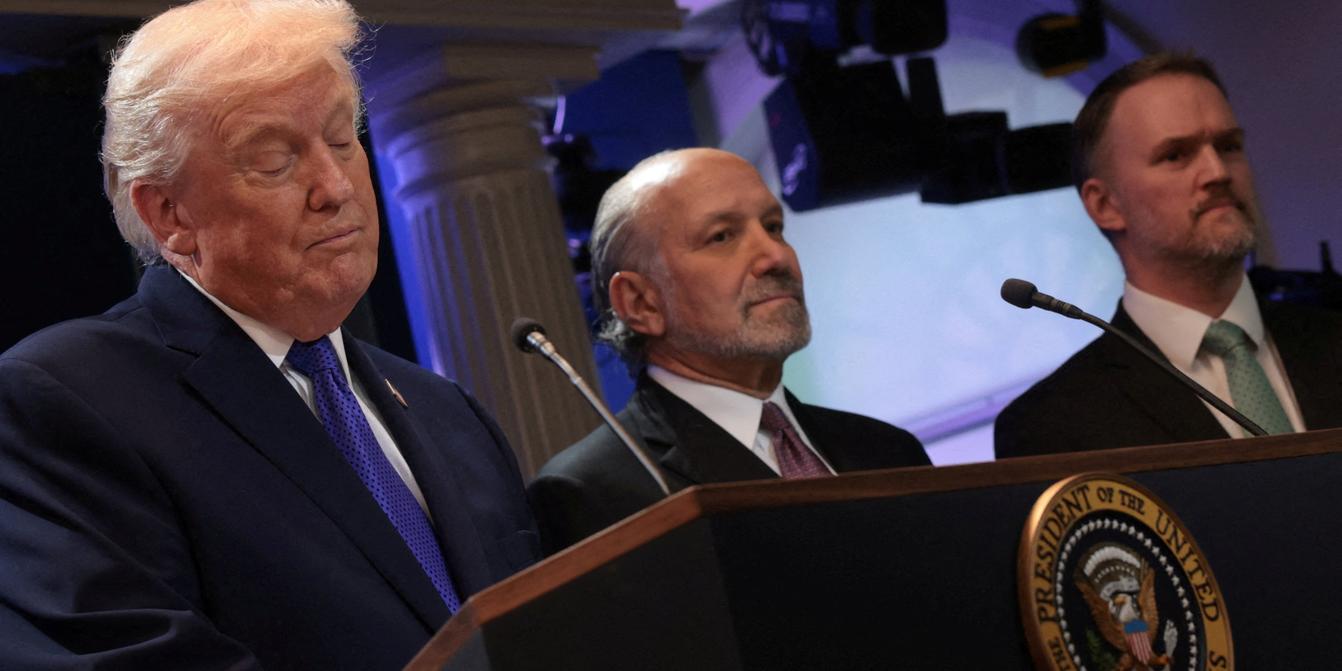
Supreme Court blocks IEEPA tariffs, ruling on Feb 20, 2026 The nine‑member court issued a 6‑3 decision that the president lacks authority to use the 1977 International Emergency Economic Powers Act to impose taxes on imports from virtually every country [1][2]. The ruling nullified the “reciprocal” tariffs that had generated roughly $130 billion in revenue since 2024. Over 1,000 companies have already filed for refunds, and Treasury Secretary Scott Bessent warned that litigation could delay repayments for years [1].
Trump signs Section 122 proclamation, sets 10% duty Hours after the decision, President Trump signed a proclamation invoking the unused Section 122 of the 1974 Trade Act, announcing a 10% tariff on almost all imports [1][2]. He posted on Truth Social that the measure would take effect “almost immediately,” with an implementation date of Feb 24, 2026 [2]. Trump later hinted the rate could rise to 15% if he chooses, citing the law’s allowance for higher duties [1].
Legal basis shifts, 150‑day limit and congressional renewal The new tariff relies on Trade Act authority, not IEEPA, because judges ruled IEEPA powers reside with Congress [2]. Section 122 permits tariffs up to 15% for a maximum of 150 days, after which Congress must act to extend them [1][2]. Analysts note Trump could let the tariff lapse and declare a new emergency to restart it, effectively bypassing legislative oversight [1].
Revenue outlook steady, political backlash intensifies Treasury officials say the mix of Section 122, existing Section 232 steel/aluminium duties, and potential Section 301 actions should keep 2026 tariff revenue “virtually unchanged” despite refunds [1]. Illinois Governor JB Pritzker called for a $1,700 rebate check per household, while Trump has floated similar rebates without a concrete plan [1]. Business groups continue to press for refunds, and the administration’s trade‑war narrative persists despite the court’s rebuke [2].
Sources
-
1.
BBC: Supreme Court blocks Trump’s global IEEPA tariffs, new 10‑15% levy announced: Details the court’s 6‑3 decision, Trump’s Section 122 proclamation, the 10%‑15% tariff range, revenue expectations, and political pressure for rebates .
-
2.
Le Monde: Trump Enacts 10% Global Tariff After Supreme Court Ruling: Highlights the Feb 20 court reversal, the Feb 20‑21 decree invoking Section 122, the 150‑day limit, and Trump’s insistence on continuing his “commercial war” .
Related Tickers
Timeline
2025 – Trump imposes global tariffs using the International Emergency Economic Powers Act, collecting an estimated $130 billion in duties from imports of nearly every country, a revenue base later challenged in court [1].
Feb 20, 2026 – The Supreme Court issues a 6‑3 decision that the president exceeded authority under IEEPA, nullifying the “reciprocal” tariffs and opening the door to potential refunds for the $130 billion collected [1][2].
Feb 20, 2026 (evening) – Trump signs a proclamation invoking Section 122 of the 1974 Trade Act to levy a 10% tariff on almost all imports and posts on Truth Social that it is “a great honor” to sign the decree, noting it will take effect “almost immediately” [2].
Feb 24, 2026 – The new 10% global tariff becomes effective, replacing the invalidated IEEPA duties and adding to existing Section 232 and Section 301 levies on steel, aluminium, lumber, and automobiles [2].
Feb 20‑21, 2026 – Treasury Secretary Scott Bessent warns that refunds for the struck‑down IEEPA tariffs may be tied up in litigation for years, but the mix of Section 122, 232 and 301 tariffs should keep 2026 tariff revenue “virtually unchanged” [1].
Feb 21, 2026 – Illinois Governor JB Pritzker calls for a $1,700 rebate check for every household, while Trump hints at issuing rebate checks without outlining a concrete plan [1].
Feb 20, 2026 onward – Section 122 permits tariffs up to 15% for 150 days; analysts note Trump could let the tariff lapse and declare a new emergency to restart it, making congressional action necessary for any extension [1].
2026‑2027 – More than 1,000 firms apply for refunds on the invalidated IEEPA duties, and applications are expected to rise as litigation proceeds [1].
July 2026 (approx.) – The 150‑day limit on the Section 122 tariff expires, prompting a potential congressional vote to renew the duty or a new emergency declaration by the president [1].