Trump Reiterates Call for Federal Takeover of Voting, Press Secretary Misstates Intent
Updated (6 articles)
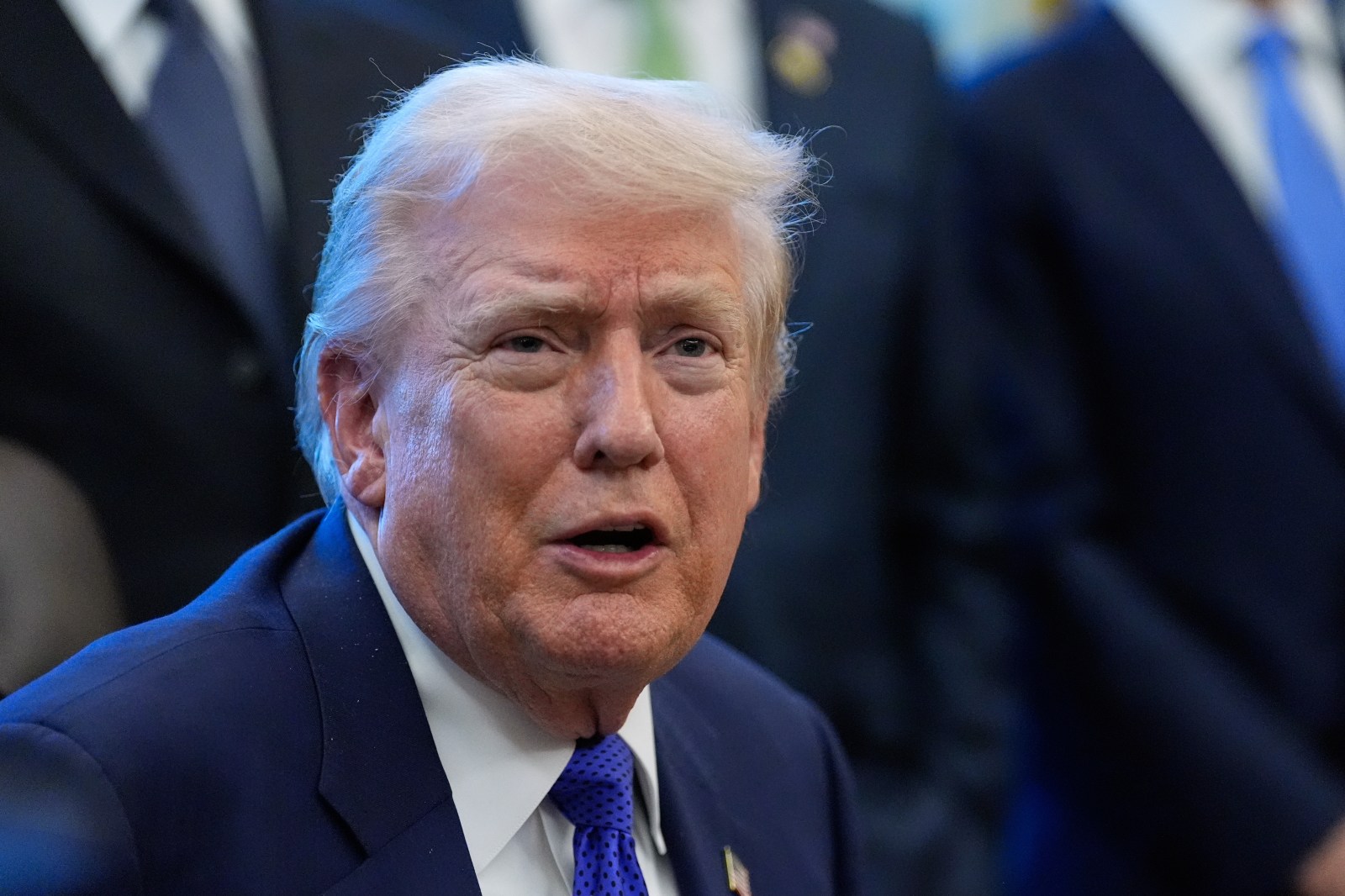
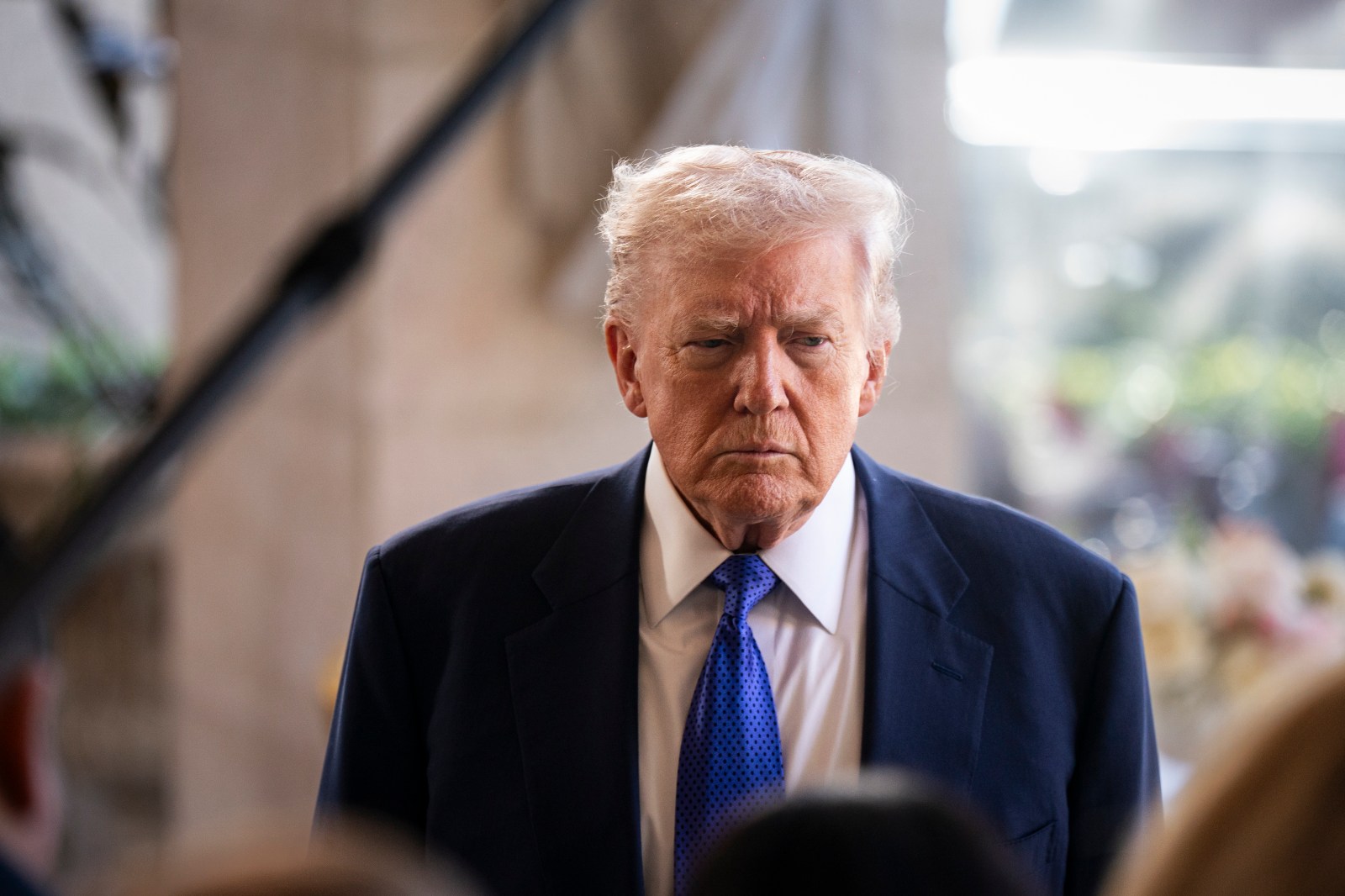
Trump Calls for Federal Takeover in Fifteen Jurisdictions In a February 5 interview with Dan Bongino, former president Donald Trump urged Republicans to “nationalize” voting in at least 15 locations, naming Detroit, Philadelphia and Atlanta as examples of corrupt election administration [1][2][3][4][5][6]. He framed the proposal as a response to alleged “horrible corruption” and suggested the federal government should intervene when states “cannot count votes honestly.” The same demand appeared in earlier interviews on February 3‑4, indicating a coordinated push ahead of the 2026 midterms.
Press Secretary Links Remarks to SAVE Act White House press secretary Karoline Leavitt repeatedly asserted that Trump’s comments were tied to the Safeguard American Voter Eligibility (SAVE) Act, a pending voter‑ID bill requiring documentary proof of citizenship at registration [1][3][4][5]. Leavitt described the act as a “national voter ID requirement,” distancing the president’s remarks from a direct federal takeover of elections. Critics note the SAVE Act would apply nationwide, contradicting Trump’s limited “15‑place” language.
Constitutional Scholars Declare Proposal Unlawful Election law experts cite the Elections Clause (Article I, §4) which grants state legislatures primary authority over election administration, leaving no presidential power to dictate procedures [2][5][6]. Attorneys such as Bradley P. Moss and former judge John E. Jones III labeled the plan “blatantly unconstitutional,” while Senate Minority Leader Chuck Schumer called it “outlandishly illegal.” The consensus is that only Congress can modify election rules through legislation, not a unilateral executive directive.
Recent FBI Raid Fuels Trump’s Fraud Narrative On January 30, federal agents executed a court‑authorized search of the Fulton County election hub in Atlanta as part of a Justice Department probe into 2020‑election records [3][4][5][6]. Trump seized on the raid to accuse Atlanta of “horrible corruption” and to reinforce his broader fraud claims, despite multiple investigations finding no evidence of widespread illegal voting. The raid has become a focal point for both Trump’s rhetoric and Democratic criticism of his allegations.
Legal and Political Pushback Intensifies Courts have largely blocked Trump’s earlier executive order tightening voting requirements, and related lawsuits seeking voter rolls from Democratic states have been dismissed [2][5]. Republican lawmakers such as Rep. Don Bacon and Rep. Justin Amash publicly rejected the nationalization idea, citing constitutional duties, while Democratic leaders, including Schumer, warned of dictatorial overreach [6]. Senator Lindsey Graham expressed distrust of Trump’s own staff for mischaracterizing his remarks, highlighting internal inconsistencies within the administration [1].
Sources
-
1.
CNN: Trump Reiterates Call to “Nationalize” Voting, Undermining Press Secretary’s Explanation: Details Trump’s Feb 5 interview, Leavitt’s SAVE‑Act framing, and Graham’s skepticism of staff consistency .
-
2.
CNN: Trump Calls for “Nationalized” Elections Amid Constitutional Pushback: Highlights constitutional scholars’ objections, timing after Georgia FBI raid, and prior legal defeats .
-
3.
CNN: Trump Calls for Federal Takeover of State‑Run Elections: Reports Trump’s Oval Office remarks, Atlanta focus after Fulton County raid, and SAVE‑Act connection .
-
4.
BBC: Trump urges GOP to “nationalise” voting and repeats 2020 fraud claims: Emphasizes fraud narrative, linkage to deportation, and DNI Tulsi Gabbard’s involvement in the raid call .
-
5.
Newsweek: Trump’s Call to “Nationalize” Voting Meets Constitutional Pushback: Provides lawyer analyses, SAVE‑Act details, and midterm election backdrop .
-
6.
Newsweek: Trump urges Republicans to “nationalize” voting, sparking constitutional backlash: Focuses on Democratic condemnation, former judge’s legal view, and Republican dissenters .
Timeline
2020 – Trump repeatedly claims he won the 2020 presidential election “in a landslide” and alleges widespread illegal voting, despite courts rejecting the fraud allegations and studies showing voter fraud is extremely rare[1].
Jan 2026 – Federal agents execute a court‑authorized search of the Fulton County, Georgia election hub, seizing 2020 election records as part of a DOJ voter‑fraud probe; local officials decry the raid as “an assault on your vote”[1].
Feb 2, 2026 – On The Dan Bongino Show, Trump urges Republicans to “take over” voting in at least 15 jurisdictions, arguing state‑run elections are corrupt and should be “nationalized”[6].
Feb 3, 2026 – Trump tells Dan Bongino the GOP must “nationalise” elections in at least 15 places and repeats unsubstantiated 2020 fraud claims, linking the idea to deporting undocumented immigrants[1].
Feb 3, 2026 – White House press secretary Karoline Leavitt frames Trump’s remarks as support for the Safeguard American Voter Eligibility (SAVE) Act, a bill that would require documentary proof of citizenship at registration[1].
Feb 3, 2026 – DNI Tulsi Gabbard confirms she was present at the Fulton County raid and facilitated a brief phone call in which Trump thanked agents without asking questions[1].
Feb 4, 2026 – In an Oval Office signing ceremony, Trump declares that “a state is an agent for the federal government in elections” and argues the federal government should intervene when states cannot run elections honestly, singling out Atlanta after the FBI raid[4].
Feb 4, 2026 – Constitutional scholars cite the Elections Clause (Article I, §4) to warn that a federal takeover of voting is barred by the Constitution, which assigns election administration to state legislatures[3].
Feb 4, 2026 – The administration pushes a rare mid‑decade redistricting campaign aimed at gaining additional House seats ahead of the 2026 midterms[4].
Feb 5, 2026 – Trump reiterates his call to “nationalize” voting in an interview with CNN’s Kaitlan Collins, naming Detroit, Philadelphia and Atlanta as examples of corrupt local election management[2].
Feb 5, 2026 – Press secretary Leavitt mischaracterizes Trump’s comments as referring to the SAVE Act, which would apply nationwide rather than to the limited federal takeover Trump described[2].
Feb 5, 2026 – Senator Lindsey Graham tells the Washington Post he does not trust Trump’s staff to accurately convey his positions, highlighting internal credibility concerns[2].
2026 midterms (Nov 2026 – future) – The GOP seeks to protect its slim congressional majorities; White House Chief of Staff Susie Wiles indicates Trump will hit the campaign trail, while the SAVE Act remains pending legislation that could reshape voter‑ID requirements[5].
2026 future legislative outlook – Lawmakers and legal experts anticipate congressional debate over the SAVE Act and potential lawsuits challenging any federal attempt to assume election administration, given the constitutional limits identified by scholars and former judges[3][6].
External resources (8 links)
- https://cha.house.gov/press-releases?id=460DC098-9C01-4F60-8BA5-E795D1501893 (cited 1 times)
- https://constitution.congress.gov/browse/article-1/section-4/ (cited 1 times)
- https://constitution.congress.gov/browse/article-1/section-4/clause-1/ (cited 1 times)
- https://www.nytimes.com/2026/01/11/us/trump-voting-machines-2020-election.html (cited 1 times)
- https://www.politico.com/news/2019/11/13/trump-troops-syria-oil-pentagon-070567 (cited 1 times)
- https://www.washingtonpost.com/news/monkey-cage/wp/2017/08/18/trump-says-theres-no-white-house-chaos-heres-why-john-kelly-will-have-trouble-making-that-so/ (cited 1 times)