EU Parliament Delays Turnberry Trade Deal as US Court Strikes Down Tariffs
Updated (15 articles)
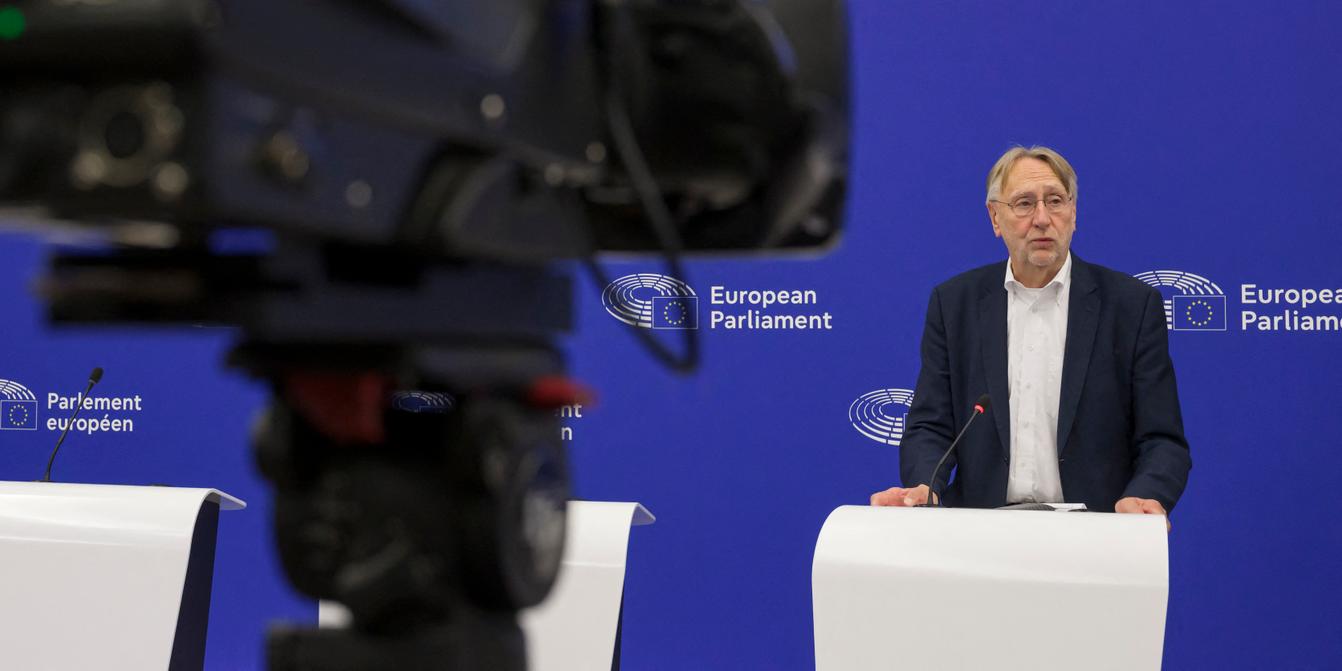

Parliament votes to postpone ratification after Supreme Court decision On 23 February 2026 the European Parliament voted to defer ratifying the EU‑US Turnberry agreement, citing the US Supreme Court’s 20 February ruling that invalidated recent Trump‑era tariffs and created legal uncertainty for European exporters [1]. The postponement reflects concerns that the deal’s 15 % import‑tax ceiling may become unenforceable without a stable US tariff regime [1]. Lawmakers described the vote as a necessary safeguard for EU trade interests [1].
Supreme Court nullifies new US duties, prompting fresh levy The US Supreme Court on 20 February declared a series of additional tariffs unlawful, overturning measures introduced by the Trump administration [1]. In response, the United States announced a new levy on EU imports, further complicating the bilateral trade framework [1]. The court’s action reopened questions about the overall cost of EU goods entering the US market [1].
EU Commission seeks clarification while Trump announces 15% global tariff On 22 February the European Commission formally requested “full clarity” from Washington regarding the Supreme Court’s decision and urged adherence to the 15 % ceiling set in the 2025 agreement [2]. President Trump responded by declaring a 15 % global tariff, raising the rate he had floated a day earlier from 10 % [2]. Trade negotiator Jamieson Greer insisted the United States would honor existing agreements despite the tariff push [2].
Import‑tax ceiling at risk; EU threatens anti‑coercion measures Trade committee chair Bernd Lange warned that without a clear US tariff policy, EU export duties could exceed the 15 % limit, undermining the Turnberry deal’s economic rationale [1][2]. The EU indicated it could activate its Anti‑Coercion Instrument, potentially restricting US firms’ access to the bloc’s 450‑million‑consumer market [2]. Such measures aim to pressure Washington into honoring the joint statement on tariff ceilings [2].
Sources
-
1.
Le Monde: EU Parliament Halts Ratification of US Trade Deal Amid New Tariff Uncertainty: Details the 23 Feb parliamentary vote, the 20 Feb Supreme Court ruling, potential duties above 15 %, and political backlash over the Turnberry negotiation .
-
2.
AP: EU Seeks US Clarification After Court Blocks Trump Tariffs: Covers the EU Commission’s request for clarity, Trump’s 15 % global tariff announcement, Lange’s “pure tariff chaos” warning, and the bloc’s anti‑coercion threat .
Related Tickers
Timeline
Jul 27 2025 – The EU and U.S. sign the “Turnberry” trade pact at President Trump’s golf resort, capping U.S. tariffs on EU imports at 15 % and granting U.S. firms access to European markets; “The agreement sets a clear ceiling for tariffs and opens new investment opportunities,” the EU‑U.S. Joint Statement notes[1][7].
Jun 2025 – The United Kingdom negotiates the lowest‑rate U.S. tariff under Turnberry at 10 %, with a carve‑out for the first 100,000 UK vehicles exported each year, while a planned 0 % tariff on UK steel is put on hold[3].
Aug 2025 – A U.S. appeals court rules most of President Trump’s tariffs illegal but leaves them in effect pending a Supreme Court decision, keeping the trade pressure alive while “arguments were heard in November 2025, with a ruling expected soon”[3].
Nov 2025 – The U.S. Supreme Court hears oral arguments on the legality of the Trump‑era tariffs, a pivotal step that will determine whether the disputed duties remain in force[3].
Dec 31 2025 – Analysts note that several high‑profile tariff promises—such as a 200 % levy on European whiskey and a 100 % duty on foreign films—never materialise, underscoring a pattern of “unrealised tariff threats” that shape expectations of U.S. trade policy[13].
Jan 13 2026 – The United States announces a 25 % tariff on countries that continue trading with Iran, linking trade penalties to geopolitical events and “raising the pressure on targeted states”[3].
Jan 17 2026 – President Trump declares a 10 % tariff on eight European nations that oppose his Greenland plan, warning the duty will rise to 25 % if “no deal is reached” and will stay in place until a settlement is achieved[3].
Jan 18 2026 – Trump officially imposes 10 % tariffs on Denmark, Finland, France, Germany, the Netherlands, Norway, Sweden and the United Kingdom, with a clause to increase to 25 % on June 1; “We will not implement new tariffs on eight NATO members,” he posts on social media[5][12].
Jan 18 2026 – The EU signals readiness to deploy its Anti‑Coercion Instrument (“a nuclear option”) as a counter‑measure, with French officials urging its use against the Greenland‑related tariffs[9].
Jan 18 2026 – Market analysts warn that the new tariffs could trigger “pure tariff chaos,” prompting a potential €107 bn retaliation package and a softer opening for U.S. stocks on Feb 1[8][5].
Jan 19 2026 – The European Parliament suspends its ratification of the Turnberry deal, with Trade Committee chair Bernd Lange stating, “There will be no compromise until Trump ends threats,” and warns the EU may re‑impose about €93 bn in tariffs on U.S. goods on Feb 7 unless the pause is extended[1][1].
Jan 19 2026 – EU leaders convene an emergency meeting, condemning the 10 % tariffs as “economic coercion” and confirming that the bloc has tools—including the Anti‑Coercion Instrument—ready to respond if the duties are enforced[12].
Jan 21 2026 – A bloc of European Parliament members blocks a vote to ratify the U.S.–EU trade pact, citing Trump’s Greenland threats and the risk of “up to a 35 % tariff” on dissenting countries; “We will not impose tariffs scheduled to begin February 1,” Trump later tweets after a meeting with NATO’s secretary‑general, signalling a de‑escalation[4][4].
Jan 21 2026 – EU‑U.S. trade talks stall as the Parliament’s pause triggers a warning from Lange that the EU may activate its anti‑coercion instrument, a “trade bazooka” that could block U.S. firms from the 450‑million‑consumer EU market[7][2].
Jan 22 2026 – Following a Davos meeting with NATO Secretary‑General Mark Rutte, Trump withdraws the Greenland‑related tariffs, declaring a “framework for a future deal” and noting that “reversals now happen in hours, not weeks,” a shift that fuels market rallies around the term “TACO trade”[6][6].
Feb 1 2026 – (Projected) The 10 % tariffs on the eight European allies are set to take effect, with a scheduled increase to 25 % on June 1 if no Greenland agreement materialises, a timeline that underpins ongoing diplomatic negotiations[5][8].
Feb 7 2026 – (Projected) The EU’s suspension of the Turnberry deal could expire, at which point the bloc may re‑impose the previously paused €93 bn of retaliatory tariffs on U.S. goods unless a new agreement is reached[1][2].
Feb 20 2026 – The U.S. Supreme Court strikes down several of Trump’s recently imposed duties, prompting President Trump to announce a new “global 15 % tariff” and the EU to demand “full clarity” on U.S. commitments, while Trade Committee chair Lange warns of “pure tariff chaos” and calls for a pause in ratification[10][10].
Feb 23 2026 – The European Parliament votes to postpone ratifying the Turnberry agreement, citing the Supreme Court’s February 20 decision and the resulting legal uncertainty for European imports under the 15 % ceiling[15].
Feb 24 2026 – EU leaders label the delayed Turnberry pact a “collective humiliation,” emphasizing political pressure to reassess the deal after the Supreme Court’s ruling and the EU’s concern that “import taxes could exceed the 15 % threshold” without a clear U.S. tariff regime[15].
Dive deeper (13 sub-stories)
-
Le Monde: EU Parliament Halts Ratification of US Trade Deal Amid New Tariff Uncertainty
-
AP: EU Seeks US Clarification After Court Blocks Trump Tariffs
-
AP: Allies Accelerate Trade Diversification Amid Trump’s Tariff Threats
-
Newsweek: Trump withdraws Greenland tariffs after Davos meeting, signaling faster reversals
-
BBC: EU suspends approval of US trade deal amid Greenland tensions
-
CNN: EU blocks vote on US-EU trade deal as Trump backs down on Greenland tariffs
-
Newsweek: EU-US trade deal on hold as Greenland tariff threats escalate
-
Newsweek: US stocks set to open lower as Greenland tariff threats loom
-
EU Considers Anti‑Coercion Bazooka as Trump’s Greenland Tariffs Loom
(2 articles)
-
Trump Threatens 10% Tariffs on Eight EU Nations Over Greenland, EU Prepares Countermeasures
(2 articles)
-
King5 (Seattle, WA): Trump tariffs on Europe threaten Washington state exports as Greenland move looms
-
BBC: Trump threatens 10% tariffs on eight allies over Greenland dispute as court case looms
-
AP: Trump’s unrealized tariff threats in 2025
All related articles (15 articles)
-
Le Monde: EU Parliament Halts Ratification of US Trade Deal Amid New Tariff Uncertainty
-
AP: EU Seeks US Clarification After Court Blocks Trump Tariffs
-
AP: Allies Accelerate Trade Diversification Amid Trump’s Tariff Threats
-
Newsweek: Trump withdraws Greenland tariffs after Davos meeting, signaling faster reversals
-
BBC: EU suspends approval of US trade deal amid Greenland tensions
-
CNN: EU blocks vote on US-EU trade deal as Trump backs down on Greenland tariffs
-
Newsweek: EU-US trade deal on hold as Greenland tariff threats escalate
-
Newsweek: US stocks set to open lower as Greenland tariff threats loom
-
Newsweek: EU bazooka could be deployed against Trump over Greenland tariffs
-
AP: Trump threatens 10% tariffs on eight EU nations over Greenland, triggering European diplomacy
-
BBC: Europe weighs response to Trump's Greenland tariffs threat
-
CNN: Trump's Greenland tariffs trigger EU countermeasures and market uncertainty
-
King5 (Seattle, WA): Trump tariffs on Europe threaten Washington state exports as Greenland move looms
-
BBC: Trump threatens 10% tariffs on eight allies over Greenland dispute as court case looms
-
AP: Trump’s unrealized tariff threats in 2025
External resources (6 links)
- https://assets.publishing.service.gov.uk/media/67b6f8efbd116e3d7b1cf310/united-states-trade-and-investment-factsheet-2025-02-21.pdf (cited 1 times)
- https://www.cnbc.com/2025/08/05/trump-says-pharma-tariffs-could-eventually-reach-up-to-250percent.html (cited 1 times)
- https://www.reuters.com/business/eu-suspend-us-tariff-countermeasures-6-months-2025-08-04/ (cited 1 times)
- https://www.reuters.com/markets/us/ (cited 1 times)