Trump’s Approval Map Shows Deep Partisan Split After 13 Months in Office
Updated (3 articles)
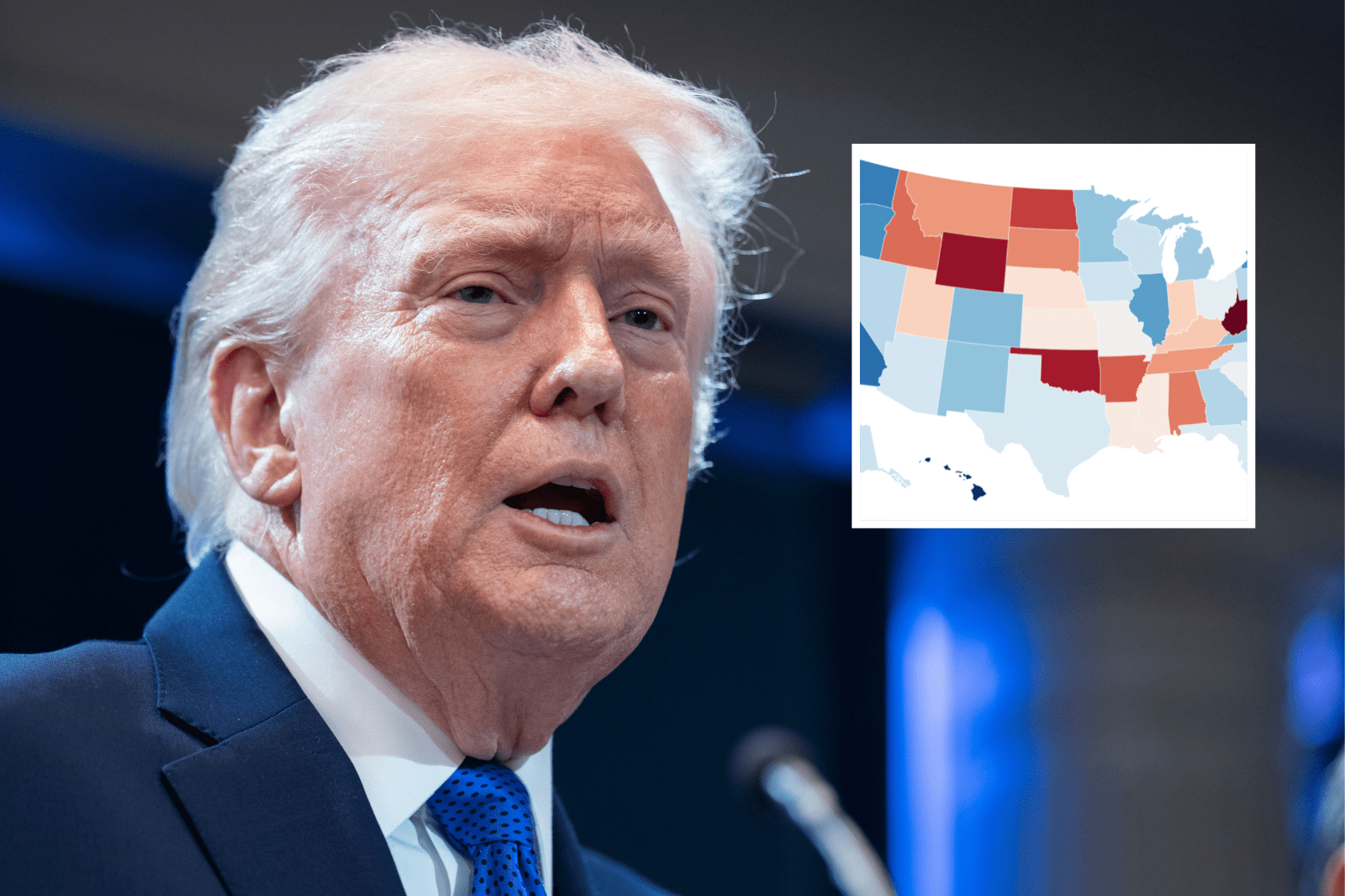
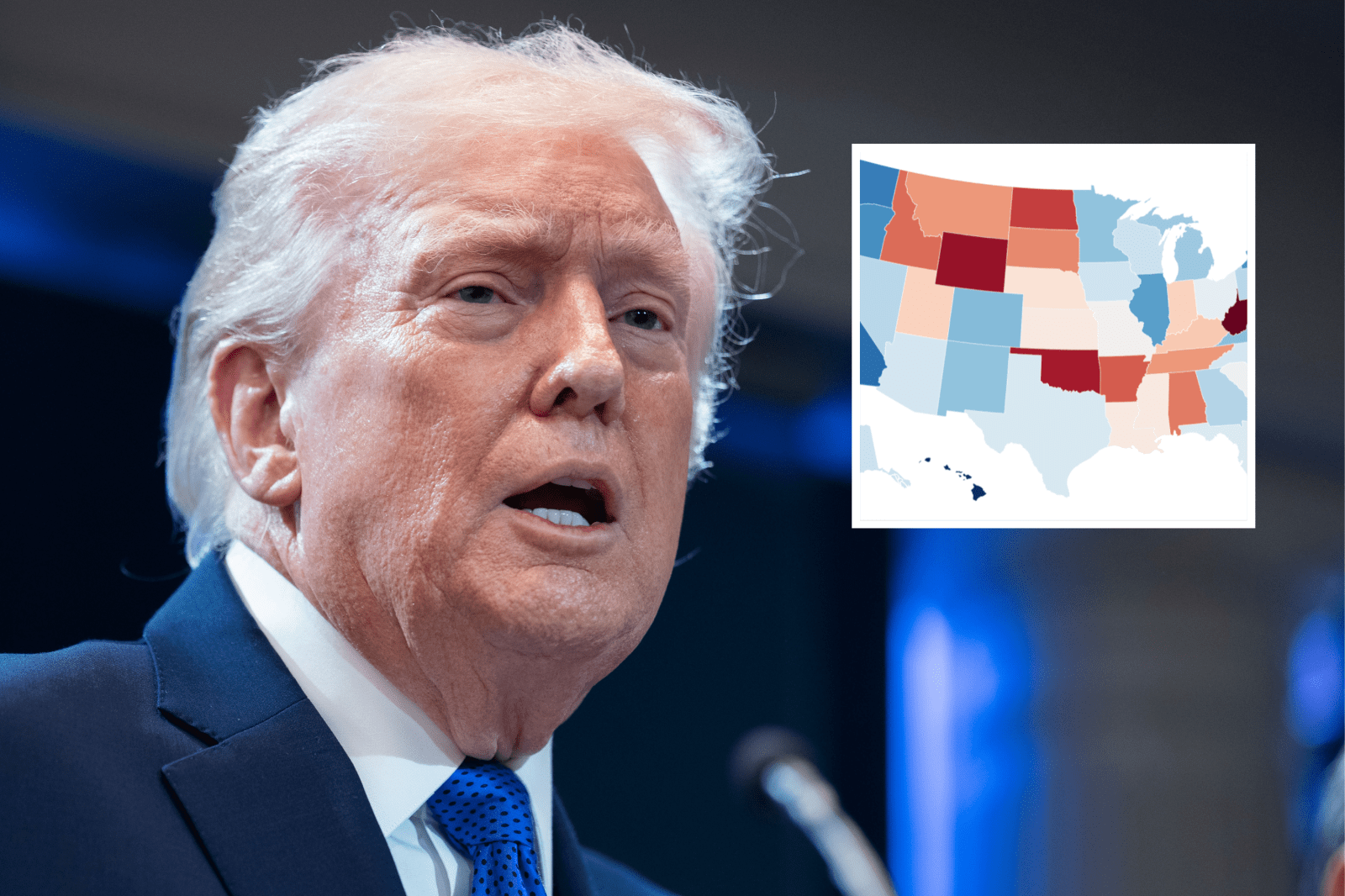
Nationwide Approval Trends Remain Polarized The Civiqs poll covering Jan 20 2025 – Feb 19 2026 reveals a nation split along party lines, with solid red strongholds and deep blue opposition and only modest shifts over the past year [1]. Undecided voters comprise merely 3‑6 % in almost every state, indicating most adults have formed firm opinions [1]. The overall pattern suggests an electorate entrenched rather than moving dramatically [1].
Republican Strongholds Deliver Double‑Digit Net Gains West Virginia tops the chart with a +23‑point net rating (58 % approve, 35 % disapprove) [1]. Other red states—Oklahoma, Wyoming, North Dakota, Arkansas, Alabama, Idaho, Montana, South Dakota, and Tennessee—show majority or near‑majority support, often with double‑digit net advantages [1]. These states maintain consistent pro‑Trump sentiment throughout the 13‑month period [1].
Democratic‑Leaning States Record Deep Disapproval Hawaii posts the worst net rating at –58 (77 % disapprove, 19 % approve) [1]. Vermont follows with –53, while California, Washington, Oregon, Massachusetts, Maryland, New York, Rhode Island, Connecticut, and New Jersey hover around two‑thirds disapproval and 20‑30 % approval [1]. The West Coast and Northeast therefore remain firmly anti‑Trump according to the latest data [1].
Traditional Battlegrounds Remain Narrowly Against Trump In Pennsylvania, Trump trails by –16 net points (40 % approve, 55 % disapprove) [1]; Michigan shows –21, Wisconsin –12 [1]. Arizona, Georgia, North Carolina, Nevada, Florida, and Texas each sit near 44 % approval versus 52 % disapproval, leaving room for turnout‑driven swings [1]. These margins, while negative, are modest enough to keep the states competitive in future elections [1].
Undecided Voters Form Tiny Minority Nationwide Across almost all states, respondents who neither approve nor disapprove range only 3‑6 % [1]. Though small, this group could influence outcomes in tightly contested battlegrounds where net gaps are single‑digit [1]. Analysts note that any shift among these voters may tip the balance in upcoming electoral cycles [1].
Timeline
Jan 20, 2025 – Trump is inaugurated as president, establishing the baseline for the Civiqs approval surveys that later track his support across states [3].
Dec 2025 – Civiqs data show national approval steady at ~40 % approve, 56 % disapprove, and 4 % neutral, indicating a polarized baseline one year into Trump’s term; Wyoming leads with 66 % approval while Vermont, Hawaii and other deep‑blue states register net disapproval exceeding –30 points, and swing states such as Arizona and Michigan show disapproval margins of 11‑15 points [3].
Jan 24, 2026 – A mass shooting by Alex Pretti occurs, prompting a Civiqs poll that compares approval before and after the event, providing a natural experiment for shifts in public sentiment [2].
Jan 20‑Feb 3, 2026 – Civiqs surveys 83,700 adults before and after the Jan 24 shooting, revealing modest declines in Republican strongholds (e.g., Wyoming falls from 65 % to 56 % approval) and widening disapproval in deep‑blue states, while battleground states drift modestly away from Trump [2].
Feb 4, 2026 – Trump posts on Truth Social that he has “the highest poll numbers ever,” and White House spokesperson Kush Desai emphasizes “cooling inflation, accelerating GDP growth, and a ‘sealed’ border” as evidence of his administration’s success, despite the modest approval dip shown in the survey [2].
Feb 21, 2026 – A Civiqs state‑by‑state map covering Jan 20 2025‑Feb 19 2026 shows a deep partisan split after 13 months, with West Virginia at a +23‑point net approval (58 % approve, 35 % disapprove) and Hawaii at –58; battleground states exhibit narrow deficits (e.g., Pennsylvania ‑16), and undecided voters remain a small 3‑6 % minority, indicating an entrenched but stable electorate [1].