Four Killed in Colorado Pileup as Ranger Road Fire Swells to 145,000 Acres
Updated (6 articles)
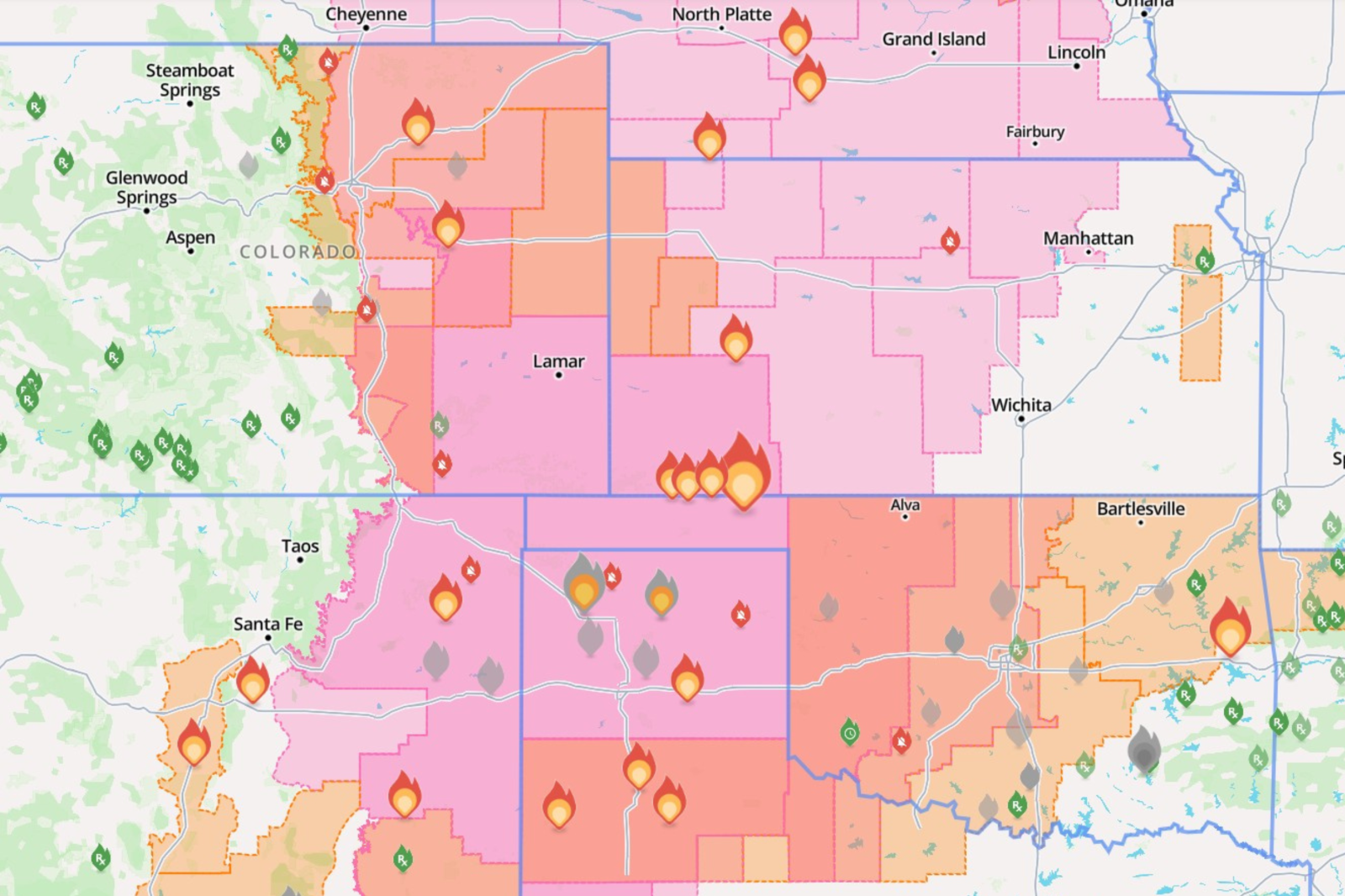
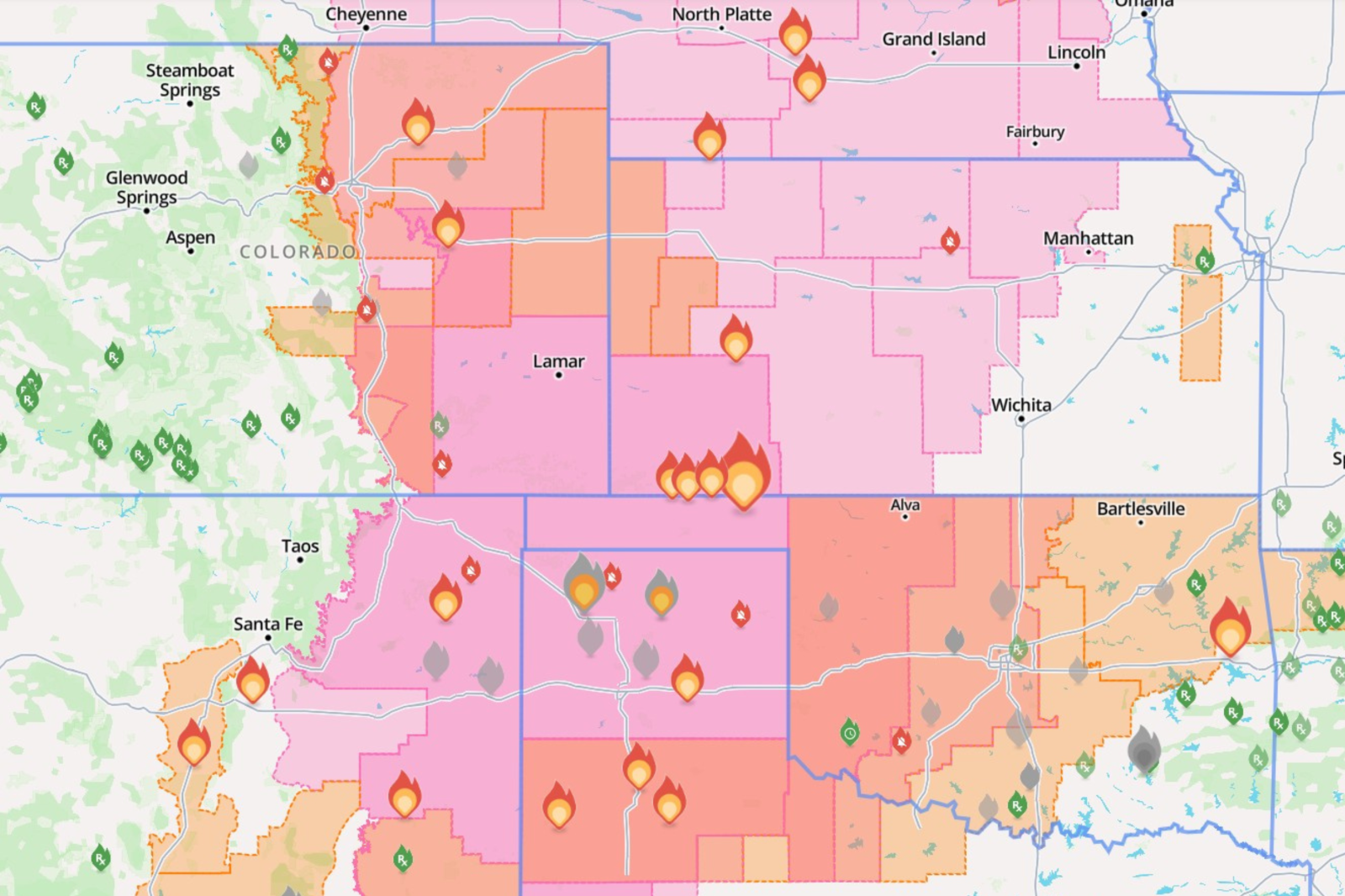
Deadly I‑25 Crash Linked to Wind‑Created Brown‑Out On February 18, 2026, a 30‑vehicle pileup south of Pueblo, Colorado, killed four motorists and injured at least 29, as wind gusts up to 61 mph generated dust‑filled “brown‑out” conditions that reduced visibility to near zero, according to Colorado State Police Maj. Brian Lyons [1]. Emergency crews transported the injured to nearby hospitals, while police opened the highway for several hours to clear wreckage. The crash occurred concurrently with a regional red‑flag warning that heightened fire‑weather risks.
Red‑Flag Alert Triggers Extreme Fire‑Weather Outlook The National Weather Service issued a Level 3 “Particularly Dangerous Situation” red‑flag warning covering five Plains states, citing sustained winds of 70 mph, very low humidity, and abundant dry vegetation [1]. The NOAA Storm Prediction Center added an “Extremely Critical Risk” fire‑weather outlook for the central and southern Plains, warning of rapid fire growth and limited suppression options [2]. These alerts prompted statewide alerts and power shutoffs to protect infrastructure.
Ranger Road Fire Explodes to 145,000 Acres Ignited in Beaver County, Oklahoma, the Ranger Road Fire expanded from roughly 15,000 acres to an estimated 145,000 acres within eight hours, driven by gusts exceeding 60 mph that pushed flames across highways and into southwest Kansas [1][2]. The blaze crossed the Oklahoma‑Kansas border, burning 65 mi of terrain and prompting evacuations in Englewood, Ashland, and Tyrone. Fire crews faced grounding of aerial drops due to unsafe flying conditions.
Mass Evacuations and Shelter Operations Across Two States Kansas officials ordered residents of Englewood and Ashland to evacuate, while Oklahoma’s Woodward expanded its evacuation zone south of Oklahoma Ave and west of 13th St, closing the Northwestern Oklahoma State University Woodward campus [1][2]. The Seward County Activity Center served as a shelter for displaced families, and nursing homes and schools were relocated to safety. Over 11,000 people sought refuge in shelters as authorities restricted travel on I‑70 and U.S. 50.
State Leaders Mobilize Resources Amid Aerial Restrictions Oklahoma Governor Kevin Stitt coordinated the response, requesting Texas air assets but acknowledging that high winds prevented aerial drops, and he directed ground crews, fire hoses, and bulldozers to the front lines [1]. The Oklahoma Department of Emergency Management activated its emergency operations center and posted warnings on X, while Xcel Energy cut power to about 15,000 customers in the Texas Panhandle as a public safety measure [2]. Officials urged residents to obey evacuation orders and remain alert as the fire‑weather situation persisted.
Sources
-
1.
CNN: Four dead in Colorado pileup as winds spark massive Plains wildfires – Details the 30‑vehicle crash with four fatalities, the brown‑out caused by 61 mph winds, the red‑flag fire‑weather alert, the Ranger Road Fire’s spread into Kansas, and Governor Stitt’s coordination of ground response .
-
2.
Newsweek: Grassfires Force Evacuations Across Oklahoma and Kansas as Winds Exceed 60 mph – Focuses on rapid fire expansion to 145,000 acres, the “Extremely Critical Risk” outlook, extensive evacuations and shelter openings, power shutoffs affecting 15,000 customers, and the grounding of aircraft due to wind .
Timeline
Dec 17, 2025 – Xcel Energy initiates a public‑safety power shutoff at 10 a.m. across Boulder, Clear Creek, Jefferson, Larimer and Weld counties, cutting electricity to roughly 50,000 customers to reduce wildfire risk as forecasted winds could reach 90 mph and humidity drop to 12 %; the utility warns outages may last several days and temperatures will fall to 28 °F, prompting local officials to issue emergency‑kit guidance [5].
Dec 19, 2025 – The National Weather Service issues the first‑ever Particularly Dangerous Situation (PDS) red‑flag warning for Colorado foothills and Wyoming’s Laramie County, flagging winds of 45‑55 mph with gusts up to 100 mph, extremely low humidity and near‑record warmth, and urges residents to prepare evacuation kits because safe evacuation may be impossible in some cases [2].
Dec 19, 2025 – A rare “particularly dangerous situation” fire‑weather warning is released for the Colorado Front Range as forecasters predict gusts of 80‑100 mph in Boulder County, prompting Xcel Energy to conduct additional public‑safety power shutoffs that leave tens of thousands without heat or hot water for more than 24 hours [6].
Dec 19, 2025 – A wildfire in northeastern Colorado expands to about 40,000 acres, driven by 50‑60 mph winds and dry winter conditions that have left the region with minimal snowpack, while nine separate fires burn across Yuma County, prompting officials to call on farmers to use tractors and disks to cut fire lines [4].
Dec 19, 2025 – Oregon flood warnings are issued as heavy rain threatens Clackamas County, leading to evacuations of hundreds of homes and the opening of an emergency shelter at Clackamas Community College; simultaneously, forecasters anticipate a Pineapple Express moisture plume arriving around Christmas Eve, potentially bringing rain to California’s coast and snow to the Sierra Nevada [6].
Feb 17, 2026 – Strong winds exceeding 60 mph generate “brown‑out” conditions on I‑25 south of Pueblo, Colorado, causing a 30‑vehicle pileup that kills four people and injures dozens; Colorado State Police Maj. Brian Lyons says “visibility was next to nothing,” highlighting how the gusts created near‑zero sightlines [1].
Feb 17, 2026 – The NOAA Storm Prediction Center issues an “Extremely Critical” fire‑weather outlook for the central and southern Plains, warning that sustained winds over 60 mph will drive rapid fire growth, limit suppression options and could ground aircraft, prompting state officials to activate emergency operations centers and issue Red Flag Warnings across western Oklahoma and southwest Kansas [3].
Feb 17, 2026 – The Ranger Road fire in Clark County, Kansas erupts from roughly 15,000 to 145,000 acres within eight hours as winds over 60 mph push flames across highways, forcing evacuations of more than 11,000 residents in Englewood, Ashland and Tyrone and prompting road closures on I‑70 and U.S. 50 [3][1].
Feb 17, 2026 – Oklahoma Governor Kevin Stitt coordinates the response to the Ranger Road fire, requesting Texas air assets but noting that high winds prevent aerial drops, and directs forestry crews, fire hoses and bulldozers to the scene while urging residents to obey evacuation orders via X [1].
Feb 17, 2026 – Woodward, Oklahoma experiences a rapidly spreading wildfire that forces evacuation orders for 3,000‑4,000 people in the city’s southwest quadrant; Northwestern Oklahoma State University’s Woodward campus closes, and the evacuation zone expands south of Oklahoma Ave and west of 13th St as smoke and dust reduce visibility on nearby highways [1][3].
Feb 17, 2026 – Xcel Energy cuts power to about 15,000 customers in the Texas Panhandle under a public‑safety power shutoff as high winds and red‑flag conditions threaten the grid, mirroring earlier Colorado shutoffs and highlighting regional utility pre‑emptive actions during extreme fire weather [3].
Feb 17, 2026 – Forecasts indicate that the extreme fire‑weather pattern, with gusts up to 70 mph and low humidity, will persist through the weekend across the Plains, suggesting continued evacuation orders, limited aerial firefighting, and potential further power shutoffs in affected states [1][3].
All related articles (6 articles)
-
CNN: Four dead in Colorado pileup as winds spark massive Plains wildfires
-
Newsweek: Grassfires Force Evacuations Across Oklahoma and Kansas as Winds Exceed 60 mph
-
CNN: Forecasters warn of dangerous fire weather in Colorado and Wyoming with gusts up to 100 mph
-
AP: Rare Colorado fire weather warning amid strong winds; Oregon floods and California storm prospects noted
-
Newsweek: Colorado wildfires spread to 40,000 acres amid extreme winds and red flag warnings
-
Newsweek: Colorado Power Shutoffs Target 50,000 Residents Amid High‑Wind Fire Risk
External resources (9 links)
- https://www.spc.noaa.gov/products/fire_wx/ (cited 1 times)
- https://www.facebook.com/OklahomaForestry/posts/pfbid0pdXv2RrQb4BzDhNeG6eYXkrneP4MPkmhLwsTeWV5FYKLFCshA6x3dcLwrAAr6d3Hl?rdid=k0RbBx8st9ufRSwh# (cited 1 times)
- https://www.facebook.com/woodwardpolicedepartment/posts/pfbid0M8X8ATwykWa9fd9ZjoXX1Hw9tDGnwTtRUNf2fMB4dwi8gsJaiMhrGvBq9gDE9BHRl?rdid=6wq41JgvItAm2GNX# (cited 1 times)
- https://x.com/GovStitt/status/2023892194688422078 (cited 1 times)
- https://x.com/NWOSU/status/2023894249289187444?s=20 (cited 1 times)
- https://co.my.xcelenergy.com/s/outage-safety/outage-map (cited 1 times)
- https://co.my.xcelenergy.com/s/outage-safety/wildfires/power-shutoffs/event-update (cited 1 times)
- https://poweroutage.us/area/state/colorado (cited 1 times)
- https://www.kake.com/home/live-updates-ashland-being-evacuated-as-large-wildfire-crosses-into-kansas/article_143ef2c7-bd1e-4001-8f8e-272c138785c0.html (cited 1 times)