Trump Sends Two Carriers, Dozens of Warships and Hundreds of Aircraft to Iran‑Facing Region
Updated (3 articles)
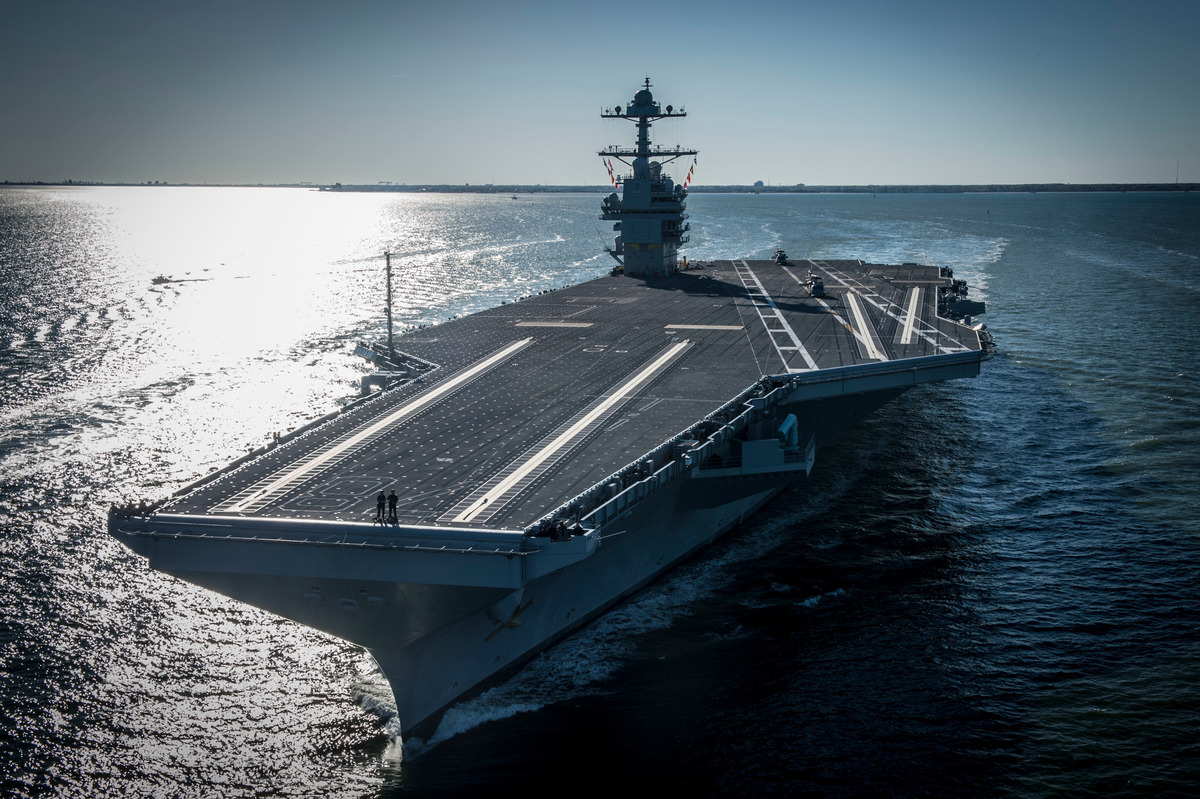
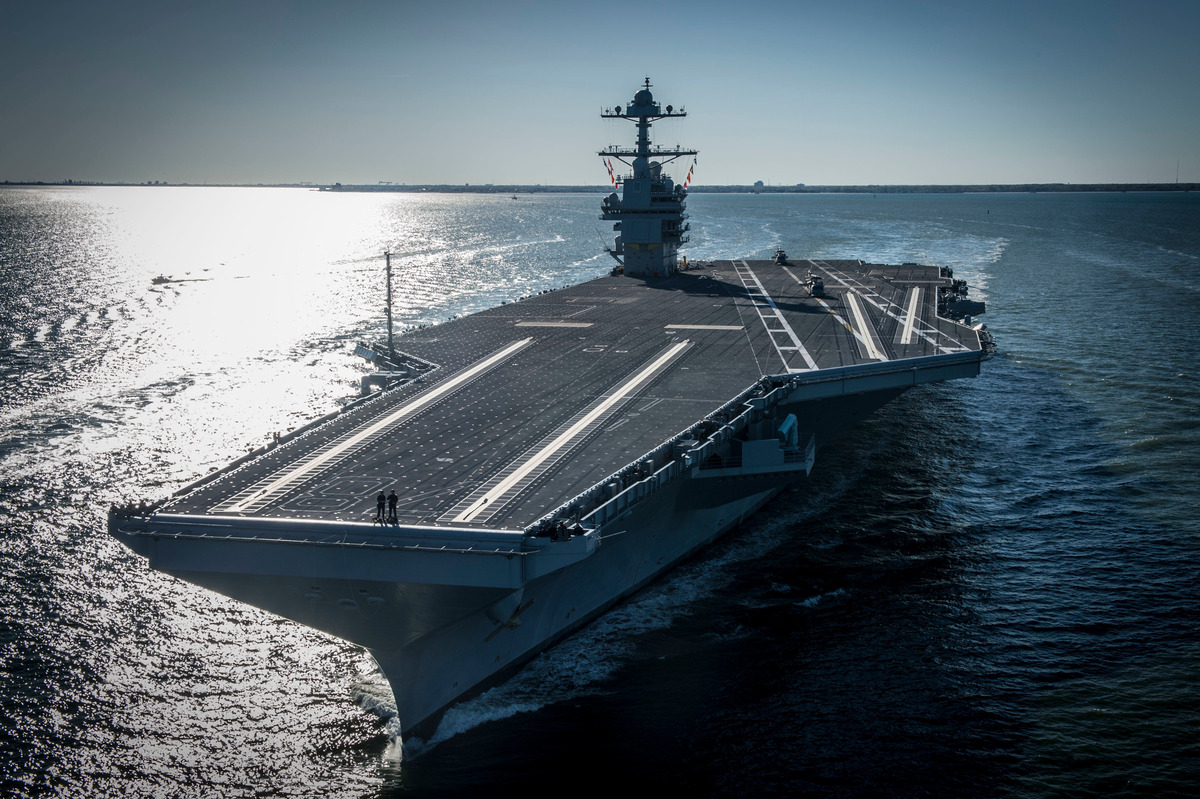
Dual Carrier Strike Groups Arrive in West Asia The world’s largest carrier, USS Gerald R. Ford, moved from the Caribbean toward the Strait of Gibraltar and is joining USS Abraham Lincoln, creating the first simultaneous two‑carrier presence in the region since the Cold War [1][2]. Together with at least nine destroyers, three littoral combat ships and additional vessels, the U.S. now fields 13 warships in West Asian waters [2]. The carrier groups are supported by guided‑missile destroyers such as USS McFaul and USS Mitscher, a refueling ship, a cargo ship and a nuclear submarine [1].
Air Superiority Bolstered by Fifth‑Generation Fighters and Refuelers Roughly 100 aircraft operate from Qatar’s Al Udeid base, and an extra 50 fifth‑generation fighters—including F‑22 Raptors from Virginia and F‑35As redirected to Jordan—have been added [1][2]. Open‑source flight‑tracker data on Feb 18 showed F‑22, F‑15, F‑16, KC‑135 tankers, E‑3 Sentry AWACS and cargo planes conducting missions over the theater [2]. Patriot and THAAD missile‑defense systems are also being shipped to protect U.S. forces against ballistic and cruise threats [1].
Ground Forces and Missile Defenses Expand Amid Heightened Risk Tens of thousands of U.S. troops are stationed across regional bases, creating a vulnerable but essential ground component to the naval and air buildup [2]. The deployment includes advanced air‑defense interceptors and additional missile assets, reinforcing the U.S. posture against potential Iranian retaliation [1]. Iran’s leadership has warned that even the “strongest military” could be struck hard, signaling a willingness to target these forward positions [1].
Trump’s Threats and Iran’s Retaliatory Warnings Shape Diplomacy President Trump has repeatedly warned Tehran of imminent military action if nuclear negotiations stall, citing the newly positioned forces as “help is on the way” [2]. Vice‑President J.D. Vance noted that Iran has not yet accepted all U.S. red‑line conditions despite a Geneva “guiding principles” agreement reached on Feb 17 [2]. Supreme Leader Ayatollah Ali Khamenei countered that any attack would be met with overwhelming retaliation, putting U.S. bases and personnel in Iran’s crosshairs [1].
Sources
-
1.
Newsweek: Trump Expands U.S. Military Build‑Up Near Iran – Details the addition of carriers, destroyers, submarines, 150 aircraft, Patriot/THAAD shipments, and Trump’s explicit strike warnings, while highlighting Iran’s retaliatory threats
-
2.
The Hindu: U.S. Deploys Two Aircraft Carriers and Dozens of Warplanes to West Asia Amid Iran Tensions – Emphasizes the simultaneous carrier deployment, open‑source flight data on fighter and support aircraft, the Geneva talks’ “guiding principles,” and Vice‑President Vance’s red‑line concerns
Related Tickers
Timeline
Nov 2025 – USS Abraham Lincoln begins a Pacific deployment that will later be redirected toward the Middle East, marking its latest long‑range mission since last November [2].
Jan 20, 2026 – Abraham Lincoln departs the western Pacific, sailing from the South China Sea through the Strait of Malacca into the Indian Ocean as part of a strike group with destroyers Spruance, Michael Murphy and Frank E. Petersen Jr., signaling a shift of carrier assets toward Iran‑related tensions [2].
Jan 20, 2026 – With Lincoln’s exit, USS George Washington becomes the sole carrier remaining in the western Pacific and enters maintenance, while amphibious assault ship USS Tripoli in Japan readies to supplement carrier capability if needed [2].
Jan 20, 2026 – U.S. and Iranian officials exchange stark warnings amid the carrier redeployment, underscoring heightened strategic posturing on both sides [2].
Feb 17, 2026 – Geneva talks produce “guiding principles” aimed at averting conflict, yet Vice‑President J.D. Vance notes Tehran has not yet accepted all U.S. red‑line demands [3].
Feb 18, 2026 – The United States stations 13 warships—including carrier USS Abraham Lincoln, nine destroyers and three littoral combat ships—in West Asia, creating a force capable of a sustained campaign against Iran [3].
Feb 18, 2026 – USS Gerald R. Ford transits from the Atlantic to West Asia with three destroyers, marking a rare simultaneous presence of two U.S. carriers in the region [3].
Feb 18, 2026 – Advanced fighter jets (F‑22, F‑15, F‑16) and support aircraft (KC‑135 tankers, E‑3 Sentry AWACS, cargo planes) operate over West Asia, bolstering air‑power projection [3].
Feb 18, 2026 – President Trump repeatedly threatens Iran, urging Iranians to seize state institutions and declaring “help is on the way,” while warning of imminent military action if nuclear talks stall [3].
Feb 19, 2026 – Trump expands the U.S. military build‑up near Iran, adding warships, jets, missiles and troops and indicating a possible strike could occur as early as the weekend [1].
Feb 19, 2026 – A carrier strike group led by USS Gerald R. Ford and USS Abraham Lincoln joins the region, accompanied by guided‑missile destroyers, a refueling ship, a cargo ship, a nuclear submarine and additional destroyers USS McFaul and USS Mitscher [1].
Feb 19, 2026 – Air power surges to roughly 100 aircraft at Qatar’s Al Udeid base plus 50 extra fifth‑generation fighters, with F‑22s departing Virginia, F‑35As moving to Jordan, and several aircraft transiting the U.K. and Europe for onward deployment [1].
Feb 19, 2026 – Patriot and THAAD air‑defense systems ship to the Middle East to protect regional forces against ballistic and cruise missile threats [1].
Feb 19, 2026 – White House Press Secretary Karoline Leavitt states the president still prefers a diplomatic deal while acknowledging there are “many reasons… for a strike” [1].
Feb 19, 2026 – Trump posts that if Iran refuses a deal the U.S. may need to use Diego Garcia airfield and RAF Fairford to strike the regime [1].
Feb 19, 2026 – Supreme Leader Ayatollah Ali Khamenei warns that even the world’s “strongest military” could be hit so hard it cannot recover and vows U.S. bases in the region would be in Iran’s crosshairs if attacked [1].
Feb 19, 2026 (anticipated) – A U.S. strike on Iran could be launched as early as the weekend following the announcement, reflecting the heightened risk of direct conflict [1].