South Korea Sentences Former President Yoon to Life for 2024 Martial‑Law Coup
Updated (10 articles)
-
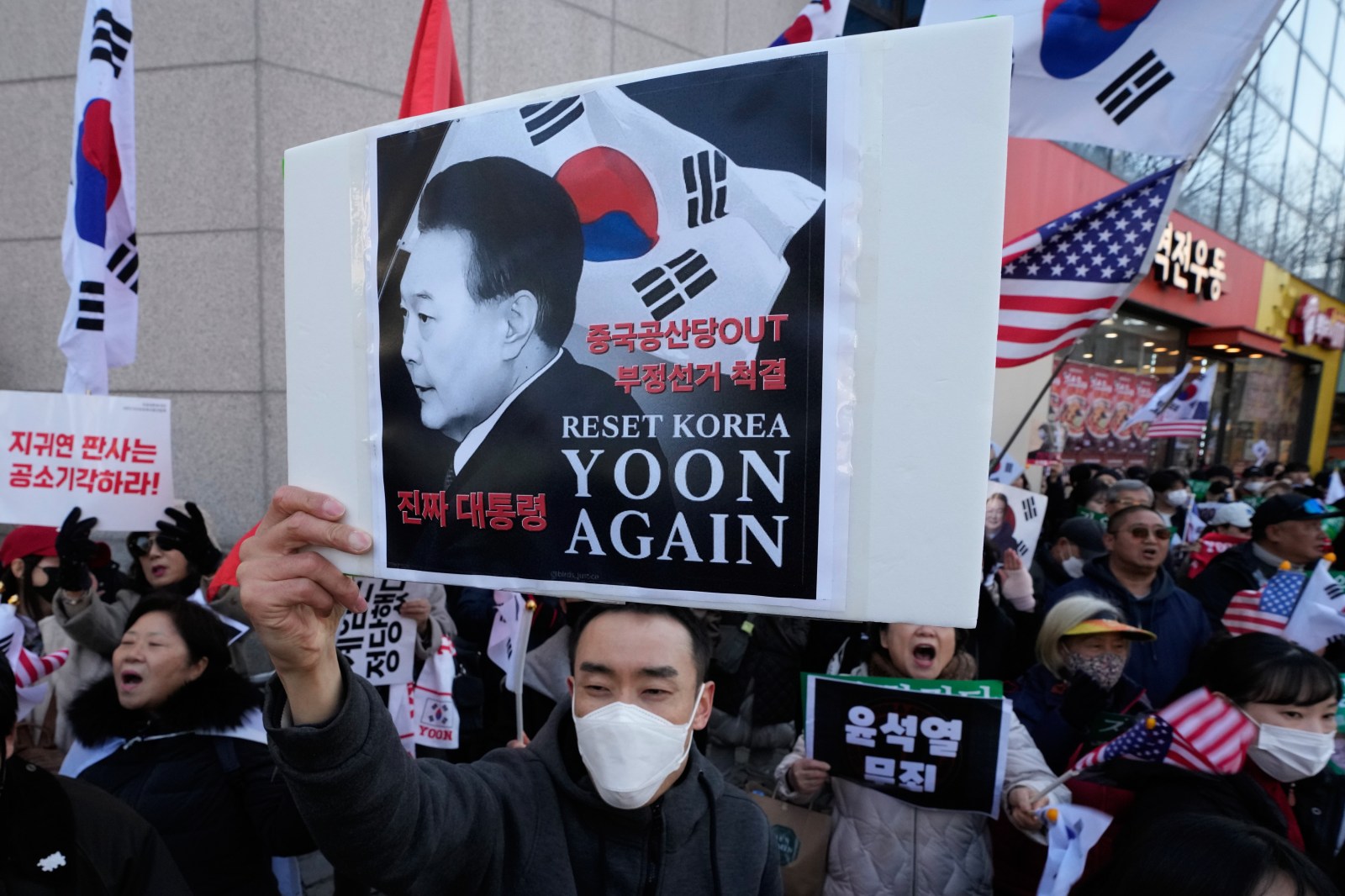
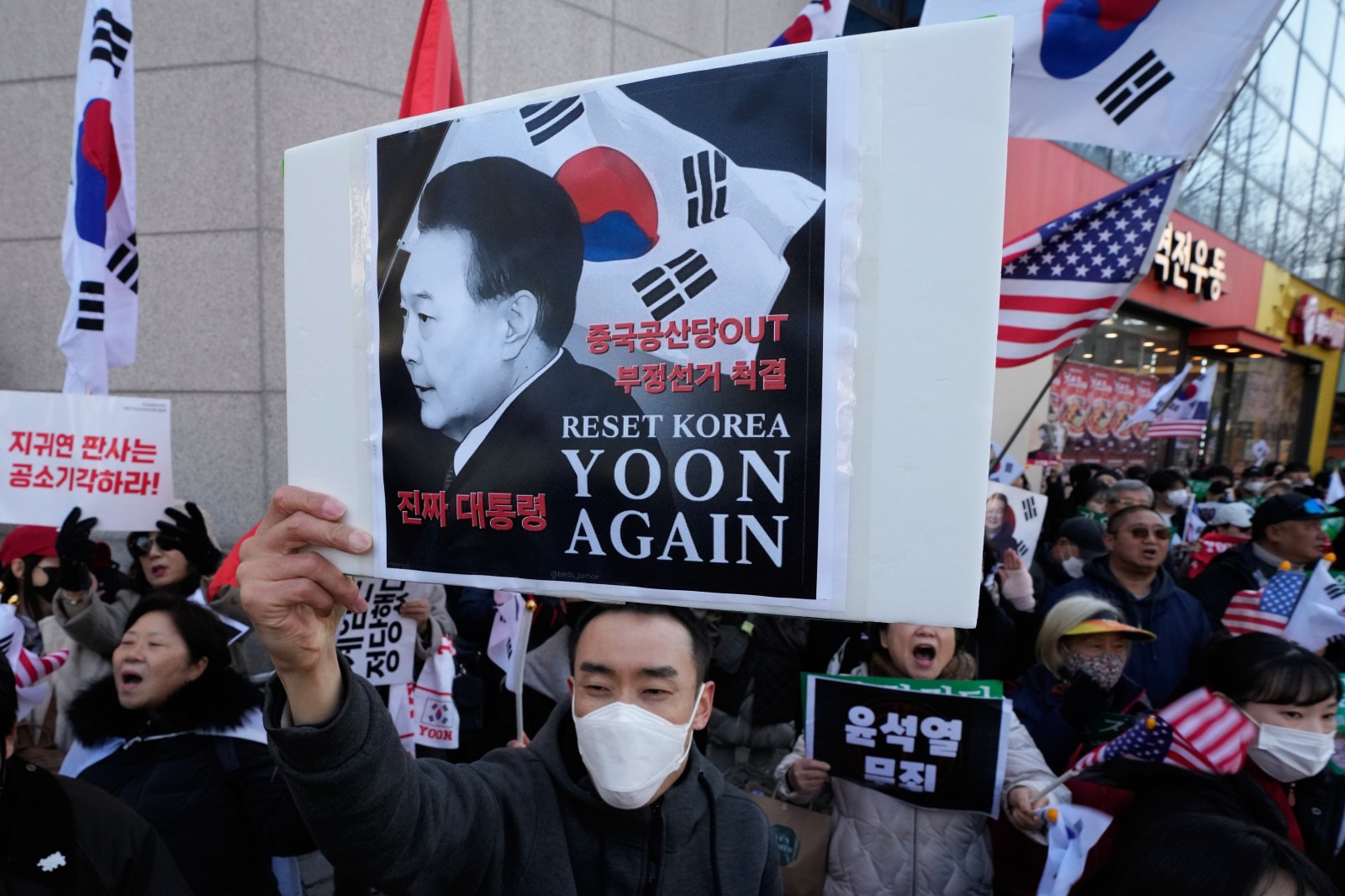
 Image: YonhapSupporters of former President Yoon Suk Yeol stage a rally near the Seoul Central District Court in the capital on Feb. 19, 2026, to proclaim his innocence as Yoon is set to receive the first verdict at the court the same day on whether his 2024 imposition of martial law constituted an insurrection following special prosecutors' recommendation of the death penalty. (Yonhap) Source Full size



Life Sentence Delivered for 2024 Martial‑Law Insurrection The Seoul Central District Court handed former President Yoon Suk‑yeol a life‑imprisonment term on 19 February 2026 after finding him guilty of leading an insurrection tied to his six‑hour martial‑law decree on 3 December 2024 [2][4][6]. The court classified the deployment of troops to the National Assembly as a riotous, unconstitutional act, marking the first life sentence ever imposed on a South Korean civilian head of state [4]. Yoon had been impeached on 14 December 2024 and formally removed by the Constitutional Court in April 2025, remaining in custody throughout the trial [6].
Six‑Hour Martial Law Decree Sparked Parliamentary Crisis In a televised address on 3 December 2024, Yoon announced martial law, accusing opposition lawmakers of colluding with “North Korean communists” and ordered soldiers to descend on the parliament by helicopter [4][3]. Lawmakers broke the military blockade after roughly six hours, voting unanimously to lift the decree and restore legislative activity [3][5]. The brief emergency suspended political activities, media, and permitted warrantless arrests before being overturned by the Assembly [6].
Senior Officials Receive Decades‑Long Prison Terms Former Defense Minister Kim Yong‑hyun was sentenced to 30 years for planning and deploying troops, while former intelligence commander Noh Sang‑won received 18 years, former police chief Cho Ji‑ho 12 years, and former Seoul police chief Kim Bong‑sik 10 years for enforcing the illegal order [2][7]. Former Prime Minister Han Duck‑soo was handed a 23‑year term for falsifying cabinet records to legitimize the decree [6][4]. The breadth of convictions underscores a sweeping judicial crackdown on the entire chain of command [2].
Court Rejects Death Penalty, Cites Limited Violence Special prosecutors asked for capital punishment, arguing the coup threatened democracy, but the bench opted for life imprisonment, citing the absence of a meticulously pre‑planned scheme, minimal actual violence, Yoon’s age (65), and the limited force used [2][3][8]. South Korea’s de facto moratorium on executions—no death carried out since 1997—made a death sentence unlikely [8][6]. Judges emphasized that the insurrection’s intent to paralyze a constitutional body, rather than mass casualties, guided the sentencing decision [2].
Political Fallout and Historical Comparisons Highlight Verdict Impact Yoon’s legal team denounced the ruling as a “predetermined verdict,” alleging procedural flaws, while opposition parties called for party reforms and expressed disappointment that the death penalty was not imposed [2][4]. The sentencing mirrors the 1996 death sentence of former dictator Chun Doo‑hwan, later commuted to life, marking a rare instance of severe punishment for a civilian leader [1][6]. Supporters gathered outside the historic courtroom, echoing past political turmoil, as analysts warned the verdict would leave both major parties in disarray [3][5].
Sources
-
1.
CNN: South Korean ex‑president Yoon Suk Yeol sentenced to life after brief martial‑law crisis: Details Yoon’s six‑hour decree, impeachment timeline, secret drone allegations, and broader crackdown on senior officials .
-
2.
Yonhap: Seoul Court Sentences Ex‑President Yoon to Life for Martial‑Law Insurrection: Highlights court’s rejection of Yoon’s defenses, extensive sentencing of co‑defendants, and judges’ remarks on democratic damage .
-
3.
Newsweek: Former South Korean President Yoon Suk Yeol Sentenced to Life for 2024 Coup Attempt: Emphasizes televised accusations against opposition, death‑penalty request blocked by moratorium, and analysts’ views on regional implications .
-
4.
CNN: Former South Korean President Yoon Suk Yeol Sentenced to Life for Insurrection: Focuses on Yoon’s claim of “anti‑state forces,” judge’s finding of intent to paralyze parliament, and Yoon’s rejection of the verdict .
-
5.
Yonhap: Former South Korean President Yoon Sentenced to Life for 2024 Martial‑Law Attempt: Notes judge’s distinction between martial law and insurrection, Yoon’s existing five‑year term, and supporters rallying outside the historic courtroom .
-
6.
AP: Former South Korean President Yoon Suk Yeol Sentenced to Life for 2024 Martial‑Law Rebellion: Reports on rebellion charge, Yoon’s removal and detention timeline, and comparison to Chun Doo‑hwan’s sentencing .
-
7.
Yonhap: Former South Korean President Yoon Sentenced to Life for 2024 Martial‑Law Attempt: Provides judge’s reasoning on intent to cripple the Assembly and lists co‑defendants’ sentences .
-
8.
The Hindu: Former South Korean President Yoon Sentenced to Life for 2024 Martial Law Coup: Highlights death‑penalty demand, senior officials’ jail terms, and the ongoing death‑penalty moratorium .
-
9.
Yonhap: Former President Yoon Suk Yeol Sentenced to Life for 2024 Martial Law Attempt: Summarizes life imprisonment, court’s view of insurrection, and live‑broadcast nature of the trial .
Related Tickers
Timeline
1980 – Chun Doo‑hwan imposes martial law, later receives a death sentence in 1996 that is reduced to life and pardoned in 1997, establishing a precedent for severe punishment of leaders who seize power [1][4].
Dec 3, 2024 – Yoon Suk‑yeol announces a six‑hour martial‑law decree in a televised address, accusing opposition lawmakers of colluding with “North Korean communists” and orders troops to descend on the National Assembly, sparking South Korea’s first martial‑law episode in 44 years [3][4].
Dec 14, 2024 – Lawmakers storm the National Assembly, seize a soldier’s rifle, and unanimously vote to lift the decree, triggering an impeachment vote within 11 days of the crisis and marking a swift constitutional response [1][4].
Jan 2025 – Police detain Yoon after a weeks‑long standoff at his home, beginning his criminal custody while investigators pursue multiple charges, including obstruction of authorities and alleged secret drone flights toward North Korea [2].
Apr 2025 – The Constitutional Court formally removes Yoon from office, confirming his impeachment and cementing his removal from the presidency [4].
Jul 2025 – Yoon remains in detention as investigations expand, with prosecutors alleging he ordered covert drone missions to provoke North Korea and linking him to broader corruption scandals involving his wife, Kim Keon Hee, who serves a 1 yr 8 mo bribery sentence [2][4].
Jan 16, 2026 – A Seoul court hands Yoon a five‑year prison term for defying detainment and fabricating the martial‑law proclamation, while a special prosecutor requests the death penalty on the rebellion charge, highlighting the case’s severity [5].
Feb 19, 2026 – The Seoul Central District Court sentences Yoon to life imprisonment for insurrection, with Judge Jee Kui‑youn stating Yoon “intended to paralyze the National Assembly”; co‑defendants receive 30‑year (Kim Yong‑hyun) and 23‑year (Han Duck‑soo) terms; prosecutors had sought capital punishment but the court cites the non‑violent nature of the act and South Korea’s moratorium on executions since 1997 [2][7][8][9][10].
Feb 19, 2026 – Yoon’s lawyers call the verdict a “formality” and announce plans to appeal, while special counsel Cho Eun‑suk’s team deems the ruling “meaningful” yet signals its own appeal, indicating ongoing legal battles [8].
2026‑2027 (future) – Analysts predict that appeals and possible Supreme Court review will extend the legal saga, and South Korea’s de facto death‑penalty moratorium will continue to shape any future sentencing outcomes [6][7].
All related articles (10 articles)
-
CNN: South Korean ex‑president Yoon Suk Yeol sentenced to life after brief martial‑law crisis
-
Yonhap: Seoul Court Sentences Ex‑President Yoon to Life for Martial‑Law Insurrection
-
Newsweek: Former South Korean President Yoon Suk Yeol Sentenced to Life for 2024 Coup Attempt
-
CNN: Former South Korean President Yoon Suk Yeol Sentenced to Life for Insurrection
-
Yonhap: Former South Korean President Yoon Sentenced to Life for 2024 Martial‑Law Attempt
-
AP: Former South Korean President Yoon Suk Yeol Sentenced to Life for 2024 Martial‑Law Rebellion
-
Yonhap: Former South Korean President Yoon Sentenced to Life for 2024 Martial‑Law Attempt
-
The Hindu: Former South Korean President Yoon Sentenced to Life for 2024 Martial Law Coup
-
Yonhap: Former President Yoon Suk Yeol Sentenced to Life for 2024 Martial Law Attempt
-
AP: South Korea ex-president Yoon Suk Yeol gets five-year prison term over martial law case