Prince Andrew Arrested on Misconduct Charges, Released After Day‑Long Detention
Updated (2 articles)
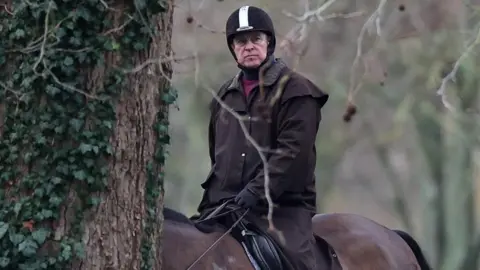

Arrest Executed at Sandringham on Prince Andrew’s Birthday Prince Andrew was detained at 08:00 GMT on Thursday, 19 February 2026, at the King’s Sandringham Estate in Norfolk, and remained in custody for roughly 11 hours before being released under investigation later that evening [1][2]. He left Aylsham police station after release and has not been charged, consistent with standard white‑collar procedure [1][2]. The detention occurred on his 66th birthday, drawing heightened media attention [1].
Allegations Center on Confidential Trade Documents Sent to Epstein Prosecutors are reviewing 2010 emails that show the former special envoy for international trade forwarded classified trade‑visit reports on Hong Kong, Vietnam, Singapore and a Helmand‑province reconstruction briefing to Jeffrey Epstein’s network [1][2]. The complaint also mentions possible sharing of a Treasury briefing and other confidential material linked to Epstein [1]. Authorities view the alleged misuse of privileged information as the basis for the misconduct in public office investigation [2].
Police Conduct Coordinated Searches of Royal Properties Thames Valley Police carried out searches at multiple royal residences in Berkshire and Norfolk, including Windsor Castle, the Royal Lodge in Windsor Great Park, and unmarked vans at Sandringham, concluding the Norfolk phase on the same day [1][2]. Officers seized documents and took a mug‑shot at Aylsham police station as part of the inquiry [2]. The searches underscore the scope of the investigation across both private and official royal sites [1].
Legal Test and Potential Penalties Outlined by CPS The Crown Prosecution Service must apply a two‑stage test—assessing the likelihood of conviction and public interest—before any charge for misconduct in public office is filed [2]. The offence is defined as a serious, willful abuse or neglect of public duties, carrying a maximum sentence of life imprisonment, though experts anticipate a shorter term if convicted [1][2]. Criminal‑defence lawyer Sean Caulfield noted the ambiguous definition of “public officer” could complicate prosecution [2].
Sources
-
1.
BBC: Andrew Mountbatten‑Windsor arrested on suspicion of misconduct in public office: Details the arrest at Sandringham, release, alleged sharing of Epstein‑related confidential files, searches at royal homes, and explains the legal test for misconduct .
-
2.
AP: Andrew Mountbatten‑Windsor arrested on suspicion of misconduct in public office: Emphasizes the 2010 email evidence linking trade reports to Epstein, outlines CPS prosecution hurdles, notes the same arrest and release timeline, and highlights the royal family’s limited comment .
Timeline
2010 – Emails reveal Andrew Mountbatten‑Windsor, then Britain’s special envoy for international trade, forwards confidential trade reports on Hong Kong, Vietnam, Singapore and a Helmand‑province reconstruction brief to Jeffrey Epstein, establishing the alleged misuse of official material that later triggers the 2026 investigation [1][2].
Feb 19, 2026 – Thames Valley Police arrest Prince Andrew at 08:00 GMT on his 66th birthday at the Sandringham Estate in Norfolk, detaining him for about 11 hours before releasing him under investigation at Aylsham police station later that evening [1][2].
Feb 19, 2026 – Police conduct coordinated searches of multiple royal residences, including unmarked vans at Sandringham, the Royal Lodge in Windsor Great Park, Windsor Castle and properties in Berkshire, seizing documents and equipment linked to the probe [1][2].
Feb 19, 2026 – King Charles III issues a public statement that “the law must take its course,” while BBC’s Daniel Sandford says the probe likely involves Epstein files and Assistant Chief Constable Oliver Wright stresses the case’s high public‑interest nature [1][2].
Feb 19, 2026 – Prosecutors outline the legal test for misconduct in public office: they must confirm the subject held a public office, acted wilfully, abused public trust and lacked a reasonable excuse before the Crown Prosecution Service can decide on charges, a process that may take weeks [1][2].
Feb 19, 2026 – Legal analysts warn that proving the offence is difficult; criminal‑defence lawyer Sean Caulfield says the public‑officer definition is unclear, and Andrew Gilmore of the CPS explains a two‑stage test of conviction prospects and public interest will guide any charging decision [2].
Feb 19, 2026 (future weeks) – Authorities indicate Prince Andrew may be re‑questioned and a charging decision could be made within weeks, meaning further legal action remains possible despite his release under investigation [1][2].