Russia Grants Decade‑Long Operating Licence to Zaporizhzhia Unit 2
Updated (2 articles)
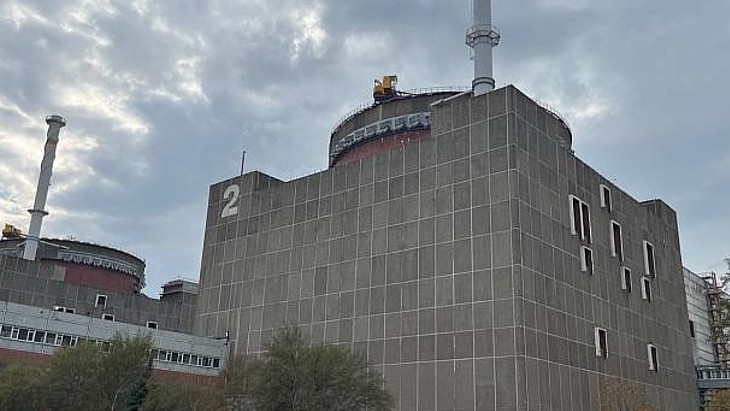
Rostekhnadzor Issues Ten‑Year Licence for Unit 2 Russia’s nuclear regulator Rostekhnadzor granted a ten‑year operating licence to Unit 2 of the Zaporizhzhia Nuclear Power Plant on 19 February 2026, confirming the reactor meets Russian safety standards despite being under Russian military control since March 2022 [1]. The decision marks the first formal licence issued for any unit at the plant since the war began. Russian authorities present the licence as evidence of compliance with their nuclear regulations.
Rosatom Declares Licence Confirms Safety Compliance Rosatom announced that the licence proves Unit 2’s equipment, safety systems and staff qualifications satisfy strict Russian nuclear energy regulations [1]. The corporation said the approval “paves the way for future development of nuclear power generation in the region.” Rosatom’s Director General Alexey Likhachev emphasized that maintenance and preventive measures are performed on schedule and at a high professional level.
Plans to License Remaining Reactors by End‑2026 An operating licence request for Unit 6 has already been submitted, and Rosatom intends to file similar applications for Units 3, 4 and 5 before the close of 2026, aiming to expand the plant’s operational scope [1]. All six VVER reactors have remained shut since the war’s onset, despite pre‑war Ukrainian licences being temporarily recognised by Russia. The licensing roadmap suggests Russia’s long‑term strategy to restart the plant under its regulatory framework.
International Monitoring Continues Amid Frontline Proximity Since September 2022, International Atomic Energy Agency (IAEA) teams have been stationed at Zaporizhzhia to monitor nuclear safety and security [1]. Ukraine insists that control of the plant should revert to its regulator, while Russia argues a restart is possible when conditions allow. The IAEA presence underscores ongoing international concern over the plant’s proximity to active frontlines.
Related Tickers
Timeline
2016 – Construction begins on Saeul‑3, a domestically designed APR1400 unit at the Saeul Nuclear Power Site in Ulsan, marking the start of South Korea’s newest nuclear project [1].
2022 – The project is renamed from Kori‑5 to Saeul‑3, reflecting a rebranding of the fifth reactor in the Kori series [1].
Mar 2022 – Russian forces seize control of the Zaporizhzhia Nuclear Power Plant in Ukraine, placing all six VVER reactors under military occupation and halting commercial operation [2].
Sep 2022 – The International Atomic Energy Agency deploys expert teams to Zaporizhzhia to monitor safety and security amid frontline proximity, underscoring international concern over the plant’s condition [2].
Dec 30, 2025 – South Korea’s Nuclear Safety and Security Commission approves Saeul‑3 for operation after a delayed decision, authorizing a six‑month pilot run with strict pre‑use inspections and confirming the reactor’s 137 cm‑thick walls designed to resist aircraft attacks and its capacity to store 60 years of spent fuel [1].
Dec 30, 2025 – The commission announces that Saeul‑3 will move to commercial launch in 2026, following successful completion of the pilot run and continued regulatory oversight [1].
Feb 19, 2026 – Russia’s nuclear regulator Rostekhnadzor grants a 10‑year operating licence to Unit 2 at Zaporizhzhia, stating the unit meets Russian safety standards and enabling “future development of nuclear power generation in the region,” according to Rosatom [2].
Feb 19, 2026 – Rosatom Director General Alexey Likhachev asserts, “All necessary work, maintenance and preventive measures are performed according to schedule and at a high professional level, with the unchanged goal of preparing all units for future generation” [2].
Feb 19, 2026 – Rosatom confirms that licence applications for Unit 6 have been submitted and that similar requests for Units 3, 4 and 5 will be filed before the end of 2026, aiming to expand the plant’s operational scope [2].
Feb 19, 2026 – Despite the new licence, all six reactors at Zaporizhzhia remain offline since the war began, and IAEA teams continue to monitor the site while Ukraine demands restoration of its regulatory authority [2].