UN Fact‑Finding Mission Declares Genocide Evidence in El‑Fasher, Calls for International Action
Updated (5 articles)
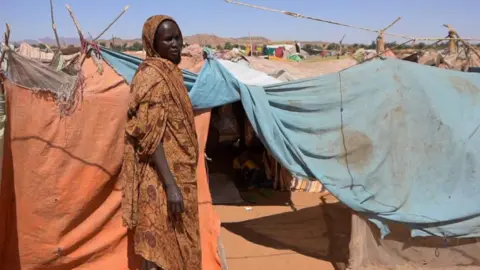
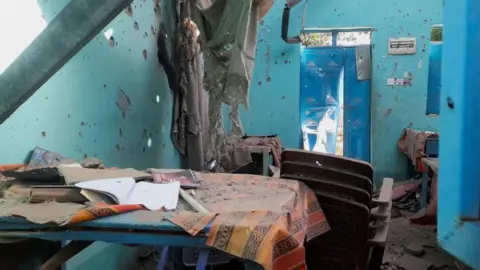
UN Report Labels RSF Assault as Genocide‑Like The independent fact‑finding team concluded that the Rapid Support Forces’ October 25‑27 offensive in El‑Fasher displayed at least three of the five legal criteria for genocide, including killing members of protected ethnic groups, causing serious bodily and mental harm, and deliberately creating life‑threatening conditions [1][2]. The report documents more than 6,000 civilian deaths in the city and at least 300 in the nearby Abu Shouk displacement camp, with only about 40 % of the pre‑attack 260,000 residents managing to flee [2]. Targeted groups were identified as the Zaghawa and Fur communities, who suffered systematic killings, sexual violence and statements urging their elimination [1][2].
Global Leaders Demand UN Security Council Intervention UK Foreign Secretary Yvette Cooper described the findings as “truly horrific,” pledged to bring the conclusions before the UN Security Council and urged immediate international criminal investigations, enforcement of an arms embargo and expanded sanctions [1]. The Biden administration has already labeled the Darfur atrocities genocide and called for accountability, echoing the mission’s call for civilian protection and prosecution of perpetrators [2]. Cooper also warned that Sudanese authorities’ refusal to cooperate with the mission constitutes “shameful and unacceptable” obstruction [1].
RSF Commanders and UAE Backing Spotlighted Amid Denials The report names Lt Gen Mohamed Hamdan Dagalo (Hemedti) and Lt Col Al‑Fatih Al‑Qurashi as senior RSF figures responsible for the campaign; Hemedti acknowledged “violations” and called the events a “catastrophe” but offered no detailed response to UN queries [1]. Investigators highlighted the role of foreign mercenaries and advanced weaponry supplied by the United Arab Emirates, urging expanded sanctions and cooperation with the International Criminal Court [1]. The UAE has rejected accusations of supporting the RSF, while the UN mission maintains that Emirati backing was integral to the atrocities [2].
Sources
-
1.
BBC: UN Fact‑Finding Mission Calls El‑Fasher Atrocities Genocide: details the mission’s genocide determination, names RSF leaders, cites UK Foreign Secretary Yvette Cooper’s call for UN action, and emphasizes UAE support and Sudanese non‑cooperation .
-
2.
AP: UN Mission Finds Sudan’s El‑Fasher Assault Shows Genocide Hallmarks: reports the same genocide criteria, provides casualty figures, notes US administration’s genocide label, and underscores UAE backing despite denial .
Related Tickers
Timeline
2023 – The Rapid Support Forces and Sudan’s regular army plunge the country into open war, spreading violence to Darfur and laying the groundwork for the later siege of el‑Fasher. [5]
April 2024 – Oct 2025 – RSF imposes an 18‑month blockade on el‑Fasher, cutting off food, water and medical aid and isolating roughly 260,000 residents. [3][5]
Oct 2025 – RSF overruns el‑Fasher, ending the army’s last foothold in western Darfur; witnesses report live‑ammunition fire, vehicles run over civilians and systematic separation of men, women and children at checkpoints. [3]
2025 (earlier) – The United States formally declares RSF’s actions in Darfur genocide, intensifying diplomatic pressure for a ceasefire and accountability. [3]
Nov 30, 2025 – The UN reports fewer than half of el‑Fasher’s pre‑attack population are accounted for, with over 130,000 missing, detained or displaced, while RSF adviser Dr Ibrahim Mukhayer denies systematic abuses. [3]
Dec 16, 2025 – Yale’s Humanitarian Research Lab analyses satellite images, identifies more than 80 burial clusters outside the city and concludes RSF buried and burned tens of thousands of bodies to conceal mass killings. [2]
Dec 31, 2025 – A UN humanitarian team enters el‑Fasher for the first time since the RSF takeover; coordinator Denise Brown calls the city a “mass crime scene,” outlines plans to map safe corridors and announces additional teams will follow. [5]
Feb 19, 2026 – A UN fact‑finding mission reports that RSF’s October offensive meets at least three of five legal criteria for genocide, documenting killings of Zaghawa and Fur groups, serious bodily harm and the creation of life‑threatening conditions. [1][4]
Feb 19, 2026 – UK Foreign Secretary Yvette Cooper describes the findings as “truly horrific,” pledges to bring the report to the UN Security Council and calls for international criminal investigations, stricter arms‑embargo enforcement and expanded sanctions on the UAE. [1]
Feb 19, 2026 – RSF leader Lt Gen Mohamed Hamdan Dagalo (Hemedti) acknowledges “violations” and labels the el‑Fasher tragedy a “catastrophe,” yet offers no detailed response to UN queries, while Sudanese authorities continue to obstruct the mission. [1]
Feb 19, 2026 – The UN report highlights UAE‑supplied advanced weapons and foreign mercenaries bolstering RSF, prompting calls for International Criminal Court cooperation and broader sanctions against the Emirate. [1]
2026 onward (planned) – The UN intends to expand humanitarian access to el‑Fasher, establish additional charity kitchens across 16 displacement centres and continue mapping safe routes for aid workers. [5]
All related articles (5 articles)
-
BBC: UN Fact‑Finding Mission Calls El‑Fasher Atrocities Genocide
-
AP: UN Mission Finds Sudan’s El‑Fasher Assault Shows Genocide Hallmarks
-
AP: U.N. finds dire conditions in el-Fasher on first visit since RSF takeover
-
BBC: Sudan’s RSF Accused of Concealing Mass Killings in el‑Fasher
-
BBC: RSF’s Capture of el‑Fasher Leaves Thousands Displaced and Unaccounted for
External resources (4 links)
- http://bbcafrica.com/ (cited 2 times)
- https://twitter.com/BBCAfrica (cited 2 times)
- https://www.facebook.com/BBCnewsafrica/ (cited 2 times)
- https://www.instagram.com/bbcafrica/ (cited 2 times)