Mexico Pushes Ahead with 2026 World Cup Amid Post‑El Mencho Violence
Updated (3 articles)
El Mencho’s Death Triggers Nationwide Violence The Mexican army killed cartel boss Nemesio “El Mencho” Oseguera on Sunday, sparking road blockades, vehicle arsons and shootouts in at least a dozen states and causing more than 70 deaths, including 25 National Guard officers in the first 24 hours [2][3]. Violence spread to over 20 states, with bus burnings and attacks on businesses reported across Jalisco and neighboring regions [1]. U.S. and Canadian travel advisories warned citizens to stay indoors or cancel flights to affected tourist hubs [3].
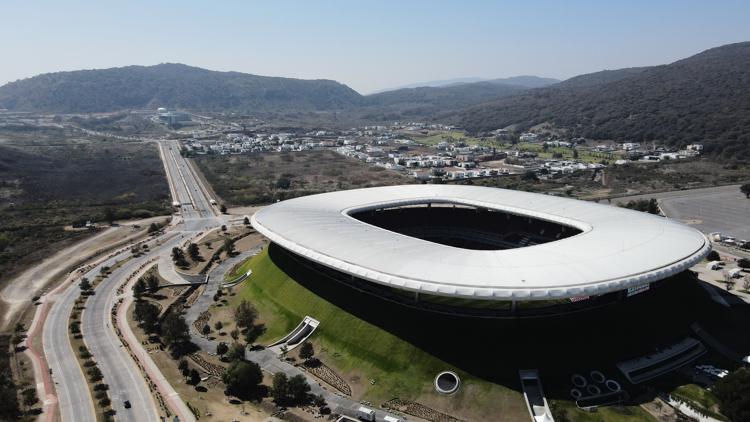
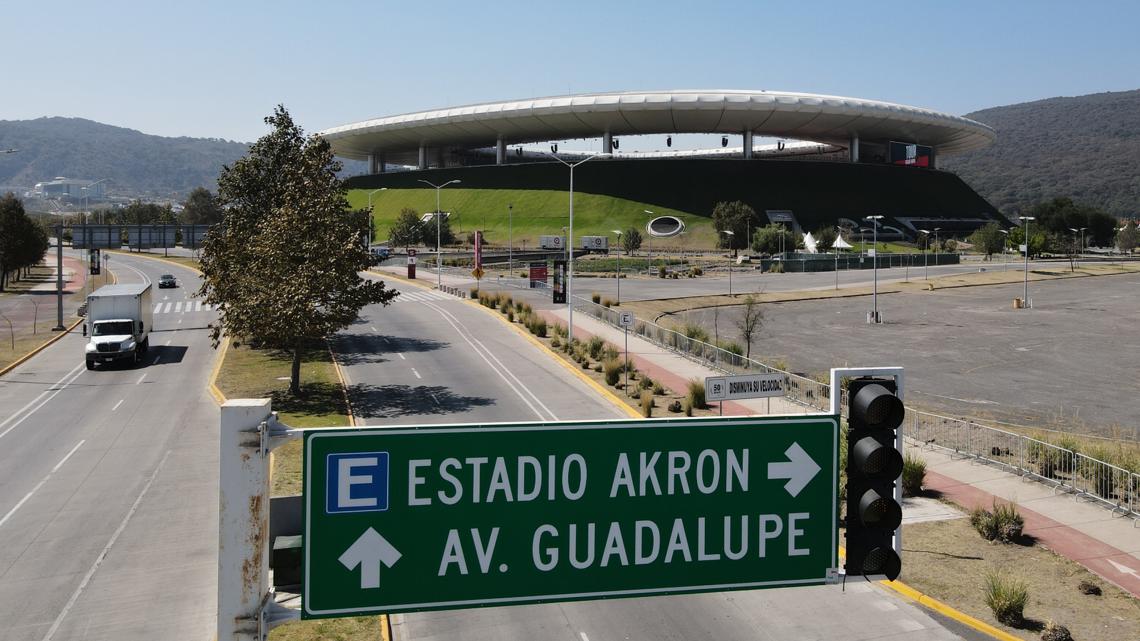
World Cup Schedule Remains Intact Mexico will host 13 of the 104 tournament matches, opening on June 11 in Mexico City against South Africa and featuring four games in Guadalajara from March 26‑31 as playoff venues [1]. Additional fixtures include five matches in Mexico City and four in Monterrey between June 11 and July 19 [2][3]. Domestic league games were temporarily postponed, but FIFA confirmed all World Cup dates will proceed as planned [2][3].
FIFA and Mexican Authorities Express Confidence Gianni Infantino told reporters he feels “very reassured” and has “complete confidence” in President Claudia Sheinbaum and Mexican security forces to protect fans [2][3]. Sheinbaum pledged “no risk” for attendees and promised full safety guarantees for Guadalajara matches [2][3]. FIFA is maintaining regular contact with Mexican officials and monitoring the situation closely [2].
Security Strategies Spark Debate Analysts debate a pacification pact with gangs versus a massive deployment of forces; Victoria Dittmar favors negotiation to de‑escalate, while Marcelo Bergman argues for extensive police and military presence, a view echoed by U.S. President Donald Trump’s pressure on Mexico [1]. Security Secretary Omar García Harfuch said his team will monitor CJNG restructuring closely [1].
Cartel Leadership Vacuum May Reshape CJNG With El Mencho dead, his son “El Menchito” remains imprisoned in the United States and his brother and stepson lack influence, leaving the Jalisco New Generation Cartel without a clear heir [1]. Experts outline three scenarios: a smooth transition, a limited factional fight, or a breakup into smaller gangs that could invite rival incursions [1]. Observers note the unprecedented scope of the violence may push the cartel to avoid further state attention [1].
Sources
-
1.
CNN: Mexico’s World Cup Plans Tested by Post‑“El Mencho” Violence – Details the army’s killing of El Mencho, the ensuing multi‑state unrest, FIFA’s schedule, and divergent security approaches, emphasizing the cartel’s leadership vacuum and potential fragmentation .
-
2.
WBNS: FIFA President Affirms Confidence in Mexico’s World Cup Hosting Amid Cartel Violence – Highlights Infantino’s confidence, the death toll and disruptions to domestic soccer, and mixed reactions from Colombian and Jamaican federations, underscoring Sheinbaum’s safety guarantees .
-
3.
BBC: FIFA president reassured as cartel violence erupts in Mexico ahead of World Cup – Reports Infantino’s reassurance, the scale of CJNG gun battles, the unchanged World Cup match lineup, expert warnings about cartel backlash, and North American travel advisories .
Related Tickers
Timeline
Feb 23, 2026 – Mexican army kills cartel leader Nemesio “El Mencho” Oseguera in Jalisco, triggering immediate nationwide unrest as the Jalisco New Generation Cartel launches gun battles, road blockades and vehicle arsons across at least a dozen states; a “code red” security alert is declared and 25 National Guard officers die in the first 24 hours [1][2][3].
Feb 24, 2026 – The United States issues a shelter‑in‑place warning for travelers in Mexico and advises Americans in Jalisco to stay indoors, while Canada cancels flights to Puerto Vallarta, reflecting heightened diplomatic concern over the escalating violence [1].
Feb 24, 2026 – FIFA President Gianni Infantino tells AFP he feels “very reassured” about the upcoming World Cup and expects “spectacular” games in Mexico despite the cartel flare‑up, emphasizing FIFA’s confidence in host security [1].
Feb 24, 2026 – Mexico City mayor Claudia Sheinbaum publicly declares “no risk” to World Cup attendees, pledges “every guarantee” for fan safety, and assures that the tournament will proceed without incident [1][3].
Feb 24, 2026 – Criminal‑law professor Javier Eskauriatza warns that suppressing cartels often triggers a backlash that could spiral out of control, while criminology lecturer Karina Garcia‑Reyes rates tourist risk as moderate but advises strict adherence to local directives [1].
Feb 24, 2026 – Four high‑level domestic league matches, including a Queretaro friendly versus Iceland, are postponed as violence spreads, marking the first direct impact of the security crisis on Mexican football [3].
Feb 25, 2026 – At a press conference in Colombia, Infantino reaffirms “complete confidence” in President Claudia Sheinbaum and Mexican authorities, stating that FIFA monitors the situation closely and expects an “incredible celebration” [3].
Feb 25, 2026 – Colombian Soccer Federation president Ramón Jesurún expresses absolute confidence in Mexico’s ability to host the World Cup, while Jamaican Soccer Federation president Michael Ricketts says the situation makes him “very nervous” and he awaits further FIFA guidance [3].
Feb 25, 2026 – Security Secretary Omar García Harfuch says his team will be “very attentive” to any reaction or restructuring within the Jalisco New Generation Cartel, monitoring several leaders as the organization faces a leadership vacuum [2].
Feb 25, 2026 – Analysts outline three possible outcomes of the cartel’s leadership void: a smooth transition, a limited factional fight, or a breakup into smaller gangs that could invite rival incursions, highlighting the uncertainty surrounding future security dynamics [2].
Feb 25, 2026 – Observatory director Cecilia Farfán‑Méndez notes that incidents are recorded in more than 20 states, describing the magnitude of the response as “unprecedented” while cautioning the cartel may try to avoid further state attention [2].
Mar 26‑31, 2026 – Mexico schedules playoff games in Guadalajara as part of the 2026 FIFA World Cup program, confirming that the matches will proceed despite the recent security turmoil [2].
Mar 28, 2026 – A friendly match is set for Mexico City, further demonstrating the host nation’s commitment to maintaining the World Cup calendar amid ongoing cartel violence [2].
June 11, 2026 – The World Cup opens in Mexico City with the inaugural match between South Africa and Mexico; Mexico will host a total of 13 matches—including four in Guadalajara and five in Mexico City—through July 19, underscoring the tournament’s continued trajectory despite earlier unrest [1][3].