U.S. Curler Korey Dropkin Defends Teammates as Double‑Touch Controversy Escalates
Updated (2 articles)
-
 Image: NewsweekCORTINA D’AMPEZZO, ITALY – FEBRUARY 10: Silver medalists Korey Dropkin and Cory Thiesse of Team United States celebrate on the podium after the Mixed Doubles Gold Medal Game on day four of the Milano Cortina 2026 Winter Olympic games at Cortina Curling Olympic Stadium on February 10, 2026 in Cortina d’Ampezzo, Italy. (Photo by Ezra Shaw/Getty Images) Source Full size
 -
 Image: NewsweekCORTINA D’AMPEZZO, ITALY – FEBRUARY 10: Silver medalists Korey Dropkin and Cory Thiesse of Team United States celebrate on the podium after the Mixed Doubles Gold Medal Game on day four of the Milano Cortina 2026 Winter Olympic games at Cortina Curling Olympic Stadium on February 10, 2026 in Cortina d’Ampezzo, Italy. (Photo by Ezra Shaw/Getty Images) Source Full size
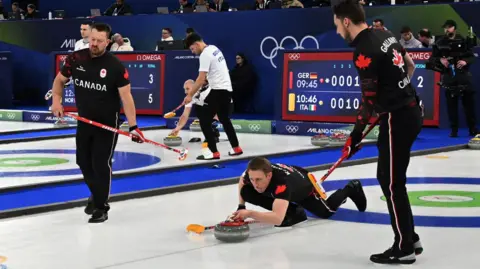
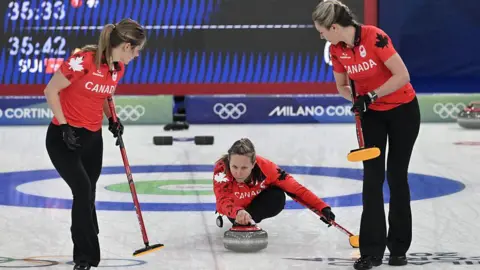
Double‑Touch Allegations Spark International Debate Swedish curler Oskar Eriksson accused Canadian Marc Kennedy of “double‑touching” a stone during the Games, and a day later Canadian women’s skip Rachel Homan faced the same charge after Canada’s 8‑7 loss to Switzerland [2]. World Curling Federation rules explicitly forbid any contact with the granite part of a stone, mandating removal of the stone if touched during forward motion [2]. Similar accusations have been lodged against Great Britain’s men’s team, where Bobby Lammie saw a stone removed for the same violation [2].
World Curling Issues Warning Without Formal Cheating Charge The federation issued a verbal warning to Kennedy for using foul language during the dispute and reiterated that touching the stone results in removal, but stopped short of labeling any athlete as a cheater [2]. Officials were dispatched to monitor stone releases, although the organization does not employ video review for such infractions [2]. The warning underscores the sport’s emphasis on sportsmanship while leaving the alleged violations technically unpunished [2].
Dropkin Calls Controversy Unnecessary and Defends Peers Speaking to CBS News on Feb. 17, U.S. curler Korey Dropkin described the double‑touch uproar as “unfortunate” and “bigger than needed,” noting that the practice has been common among Olympians for seasons without prior criticism [1]. He defended Kennedy as “one of the greatest curlers of all time,” condemned the foul language used in the exchange, and expressed empathy for veteran athletes now under intense scrutiny [1]. Dropkin’s remarks aim to shift focus from alleged cheating to the broader issue of media sensationalism [1].
Public Reaction Divides Between Disappointment and Potential Interest Canadian fans posted mixed reactions, with some lamenting a “sad day for Canadian sport” while others, like instructor Ankara Leonard, suggested the controversy could boost public interest in curling [2]. A Globe and Mail opinion warned the incidents risk tarnishing Canada’s curling reputation, urging athletes to act as “bigger men and women” [2]. The debate highlights how national pride and the sport’s global influence intersect amid rule‑enforcement scrutiny [2].
Sources
-
1.
Newsweek: U.S. Curler Korey Dropkin Defends Fellow Athletes Amid Olympic Double‑Touch Debate: Highlights Dropkin’s defense of Kennedy, claims double‑touch is longstanding, condemns foul language, and expresses empathy for scrutinized athletes .
-
2.
BBC: Canadian Curling Team Faces Cheating Allegations Amid Public Outcry: Details Eriksson’s accusation, Kennedy’s outburst, Homan’s denial, World Curling’s warning, public sentiment, and mentions other teams’ violations .
Related Tickers
Timeline
Feb 13‑14, 2026 – Swedish curler Oskar Eriksson accuses Canadian skip Marc Kennedy of “double‑touching” the stone during the Olympic competition, prompting an expletive‑filled exchange that goes viral online [1].
Feb 15, 2026 – Canadian women’s skip Rachel Homan faces a similar double‑touch allegation after Canada’s 8‑7 loss to Switzerland; she asserts a “zero percent chance” of any breach and calls the stone removal “insane” [1].
Feb 16, 2026 – The World Curling Federation issues a verbal warning to Kennedy for foul language, reiterates that any contact with the granite during forward motion is prohibited, and orders officials to monitor stone releases for the rest of the Games [1].
Feb 16, 2026 – Canadian public reaction mixes disappointment and optimism, with Tim Gray calling it a “sad day for Canadian sport” while Royal Montreal Curling Club instructor Ankara Leonard suggests the controversy could boost interest in curling [1].
Feb 16, 2026 – Great Britain’s men’s team also receives a double‑touch violation when curler Bobby Lammie has a stone removed, showing that rule enforcement extends beyond Canada [1].
Feb 17, 2026 – U.S. curler Korey Dropkin appears on CBS News, describing the double‑touch debate as “unfortunate,” noting that such touches have been common among Olympians in recent seasons, and defending Kennedy as “one of the greatest curlers of all time” [2].
Feb 17, 2026 – Dropkin condemns the foul language used in the dispute and expresses empathy for veteran athletes under scrutiny, emphasizing the pressure on those who have spent decades in the sport [2].
Feb 17‑18, 2026 – World Curling officials continue heightened monitoring of stone releases throughout the remainder of the Olympic tournament, aiming to enforce the no‑touch rule without video review [1].
External resources (2 links)
- https://www.youtube.com/olympics (cited 1 times)
- https://worldcurling.org/2026/02/statement-rules-violations/ (cited 1 times)