Yoon Suk‑yeol Appeals Life Sentence After Court Finds Him Guilty of 2024 Insurrection
Updated (12 articles)
-
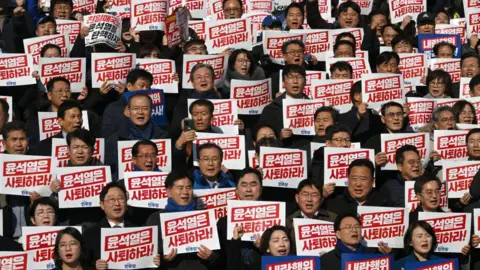
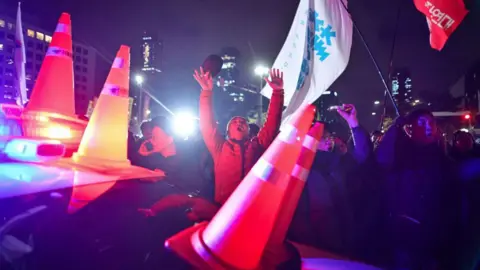
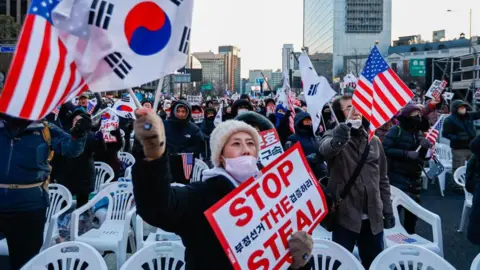
 Image: YonhapSupporters of former President Yoon Suk Yeol stage a rally near the Seoul Central District Court in the capital on Feb. 19, 2026, to proclaim his innocence as Yoon is set to receive the first verdict at the court the same day on whether his 2024 imposition of martial law constituted an insurrection following special prosecutors' recommendation of the death penalty. (Yonhap) Source Full size
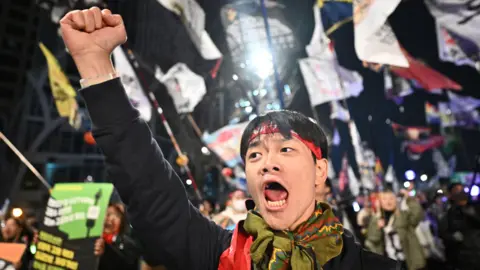
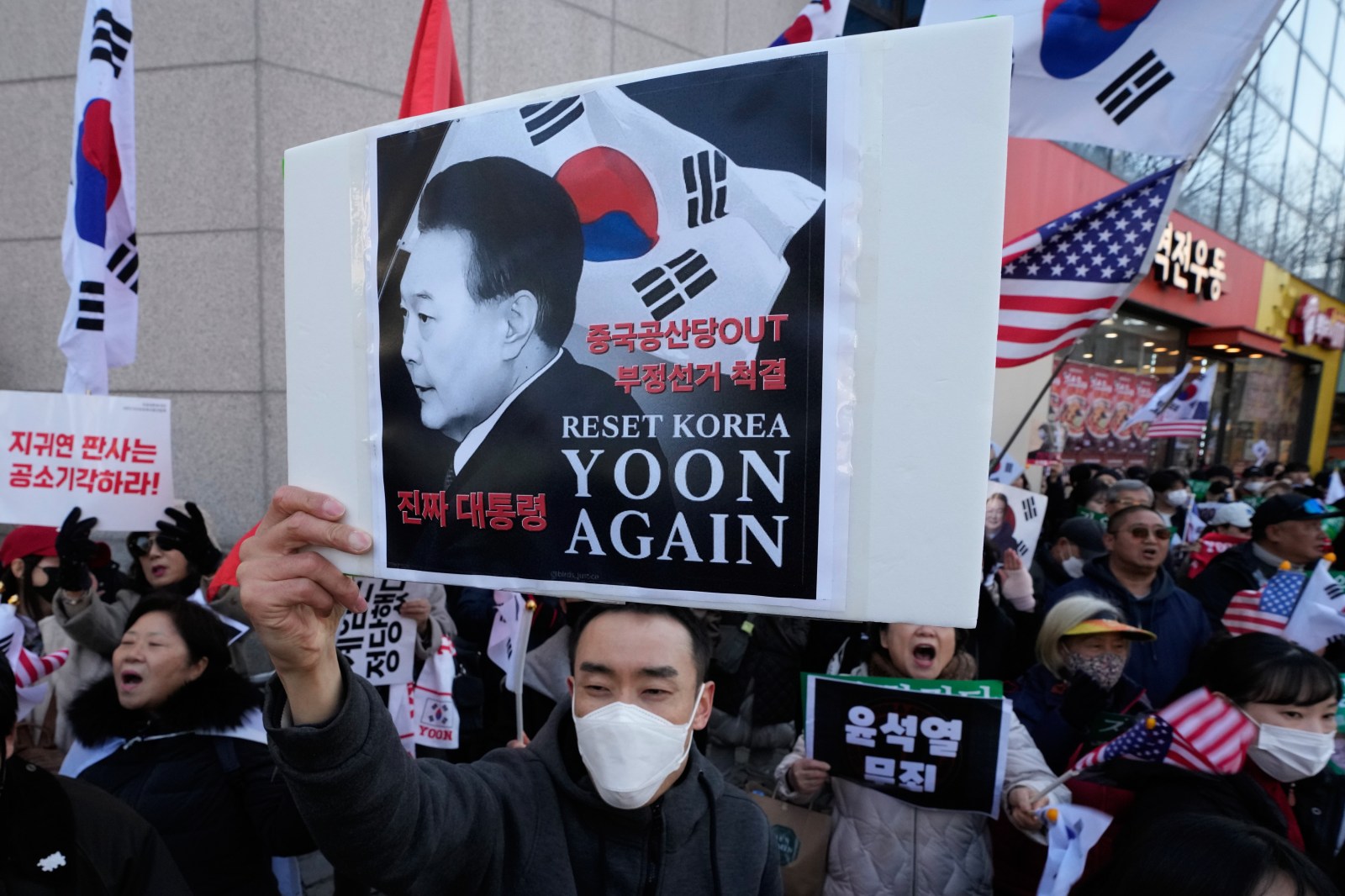


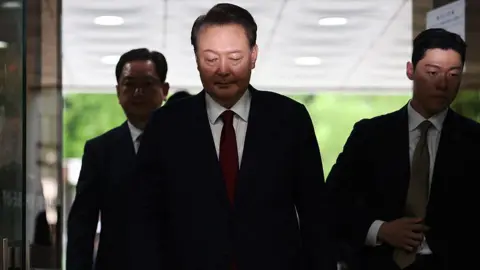
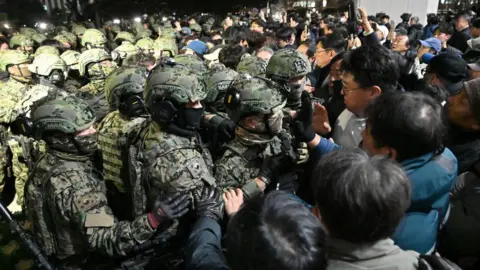


Life Sentence Delivered for 2024 Martial‑Law Insurrection On 19 February 2026 the Seoul Central District Court sentenced former President Yoon Suk‑yeol to life imprisonment, ruling that his six‑hour martial‑law decree on 3 December 2024 and the deployment of troops to seal the National Assembly met the constitutional definition of insurrection [4][7][9]. The judges emphasized that Yoon’s intent was to cripple the legislature, describing the operation as a “riot” despite the absence of lethal violence [4][11]. Yoon remains in custody, already serving a separate five‑year term for obstructing investigators in a prior case [1][9].
Co‑Defendants Receive Long Prison Terms for Supporting Coup The court handed former Defense Minister Kim Yong‑hyun a 30‑year term, former National Police Agency chief Cho Ji‑ho 12 years, and former Seoul Metropolitan Police chief Kim Bong‑sik 10 years for executing Yoon’s orders [4][7][9][1]. Intelligence commander Noh Sang‑won received 18 years, while other senior officials received sentences ranging from three to 23 years, underscoring a broad crackdown on the coup’s network [4][6][8]. Two defendants were acquitted for lack of evidence, highlighting the court’s selective attribution of responsibility [4].
Prosecutors Sought Death Penalty, Court Opted for Life Special prosecutors requested the statutory death penalty, arguing Yoon’s actions threatened the nation’s democratic foundation [4][5][10][11]. The bench rejected the request, citing the limited premeditation, minimal actual violence, Yoon’s age of 65, and South Korea’s de facto moratorium on executions since 1997 [4][5][10]. Judges instead imposed life imprisonment, noting the severe political and diplomatic damage caused by the attempted seizure of power [4][8].
Yoon Files Appeal Five Days After Sentencing On 24 February 2026 Yoon’s legal team submitted an appeal challenging the life‑sentence verdict, arguing the indictment was “overzealous” and politically motivated [1]. Lawyers pledged to document alleged procedural flaws and inconsistencies for the historical record [1]. The appeal marks the next procedural step in a case that has already drawn intense domestic and international scrutiny [1].
Sources
-
1.
Yonhap: Former South Korean President Yoon Appeals Life Sentence for Insurrection: Details Yoon’s appeal filed five days after sentencing, his lawyers’ claim of political motivation, and co‑defendants’ lengthy terms .
-
2.
BBC: South Korea Convicts Former President Yoon Suk Yeol, Demonstrating Democratic Resilience: Highlights life sentence, six‑hour martial‑law crisis, impeachment timeline, and global democratic implications .
-
3.
CNN: South Korean ex‑president Yoon Suk Yeol sentenced to life after brief martial‑law crisis: Emphasizes rapid impeachment, alleged secret drone flights, and historical parallels to Chun Doo‑wan .
-
4.
Yonhap: Seoul Court Sentences Ex‑President Yoon to Life for Martial‑Law Insurrection: Provides court’s reasoning, sentencing of officials, and judge’s remarks on societal damage .
-
5.
Newsweek: Former South Korean President Yoon Suk Yeol Sentenced to Life for 2024 Coup Attempt: Adds analyst perspectives on U.S. expectations and the death‑penalty moratorium .
-
6.
CNN: Former South Korean President Yoon Suk Yeol Sentenced to Life for Insurrection: Focuses on judge’s intent finding, broader prosecutions, and Yoon’s denial of charges .
-
7.
Yonhap: Former South Korean President Yoon Sentenced to Life for 2024 Martial‑Law Attempt: Notes judge’s view of Yoon’s aim to paralyze parliament and appeal plans .
-
8.
AP: Former South Korean President Yoon Suk Yeol Sentenced to Life for 2024 Martial‑Law Rebellion: Stresses rebellion charge, removal from office, and comparison to Chun Doo‑wan’s sentencing .
-
9.
Yonhap: Former South Korean President Yoon Sentenced to Life for 2024 Martial‑Law Attempt: Highlights legal definition of insurrection and co‑defendants’ sentences .
-
10.
The Hindu: Former South Korean President Yoon Sentenced to Life for 2024 Martial Law Coup: Discusses death‑penalty demand, senior officials’ terms, and moratorium context .
-
11.
Yonhap: Former President Yoon Suk Yeol Sentenced to Life for 2024 Martial Law Attempt: Summarizes life imprisonment, insurrection finding, and live‑broadcast trial .
Related Tickers
Timeline
Dec 3, 2024 – Yoon Suk‑yeol announces a nationwide martial‑law decree, accusing “anti‑state forces” of colluding with North Korean communists and orders troops to descend on the National Assembly; lawmakers break the military blockade, seize a rifle, and unanimously lift the decree after six hours, ending the brief emergency order[2][4].
Dec 14, 2024 – The National Assembly votes to impeach Yoon, marking a swift constitutional response to the failed coup attempt[1].
Jan 3, 2025 – After two‑and‑a‑half weeks confined in the presidential residence, Yoon is arrested by authorities, initiating criminal proceedings against the former president[1].
Apr 2025 – The Constitutional Court formally removes Yoon from office, cementing his ouster following the impeachment vote[5].
Jul 2025 – Yoon remains in custody as multiple criminal cases related to the martial‑law episode proceed, including charges of obstruction and rebellion[5].
Jan 16, 2026 – A Seoul court hands Yoon a five‑year prison term for defying detainment and fabricating the martial‑law proclamation, the first verdict among eight criminal cases tied to the 2024 crisis[6].
Feb 19, 2026 – The Seoul Central District Court convicts Yoon of insurrection and sentences him to life imprisonment, noting his intent to paralyze the National Assembly by deploying troops; co‑defendants including former Defense Minister Kim Yong‑hyun (30 years) and former police chiefs receive lengthy terms[9][10].
Feb 19, 2026 – Judge Jee Kui‑youn explains that Yoon’s decree aimed to block legislative work, describing the act as a “riot staged with the military” and emphasizing the legal definition of insurrection based on intent to subvert a constitutional body[4][11].
Feb 22, 2026 – Gi‑Wook Shin, director of Stanford’s Korea program, tells the BBC that the Yoon case “offers a rare example of democratic resilience,” highlighting the trial as a test of South Korea’s safeguards against authoritarianism[1].
Feb 24, 2026 – Yoon’s lawyers file an appeal challenging the life‑prison verdict, arguing the indictment is politically motivated and pledging to document procedural flaws for the historical record[8].
Historical context (1980s‑1990s) – The 2024 martial‑law attempt is the first since former dictator Chun Doo‑hwan’s 1980 coup, whose 1996 death sentence was later reduced to life and pardoned in 1997; South Korea has maintained a de facto moratorium on executions since 1997, influencing the court’s decision to impose life rather than death[2][5].
All related articles (12 articles)
-
Yonhap: Former South Korean President Yoon Appeals Life Sentence for Insurrection
-
BBC: South Korea Convicts Former President Yoon Suk Yeol, Demonstrating Democratic Resilience
-
CNN: South Korean ex‑president Yoon Suk Yeol sentenced to life after brief martial‑law crisis
-
Yonhap: Seoul Court Sentences Ex‑President Yoon to Life for Martial‑Law Insurrection
-
Newsweek: Former South Korean President Yoon Suk Yeol Sentenced to Life for 2024 Coup Attempt
-
CNN: Former South Korean President Yoon Suk Yeol Sentenced to Life for Insurrection
-
Yonhap: Former South Korean President Yoon Sentenced to Life for 2024 Martial‑Law Attempt
-
AP: Former South Korean President Yoon Suk Yeol Sentenced to Life for 2024 Martial‑Law Rebellion
-
Yonhap: Former South Korean President Yoon Sentenced to Life for 2024 Martial‑Law Attempt
-
The Hindu: Former South Korean President Yoon Sentenced to Life for 2024 Martial Law Coup
-
Yonhap: Former President Yoon Suk Yeol Sentenced to Life for 2024 Martial Law Attempt
-
AP: South Korea ex-president Yoon Suk Yeol gets five-year prison term over martial law case
External resources (2 links)
- https://www.ap.org/news-highlights/spotlights/2024/south-korea-lifts-presidents-martial-law-decree-after-lawmakers-reject-military-rule/ (cited 2 times)