Trump Threatens Iran Armada as Rubio Pushes Venezuela Diplomacy and Funding
Updated (4 articles)
-
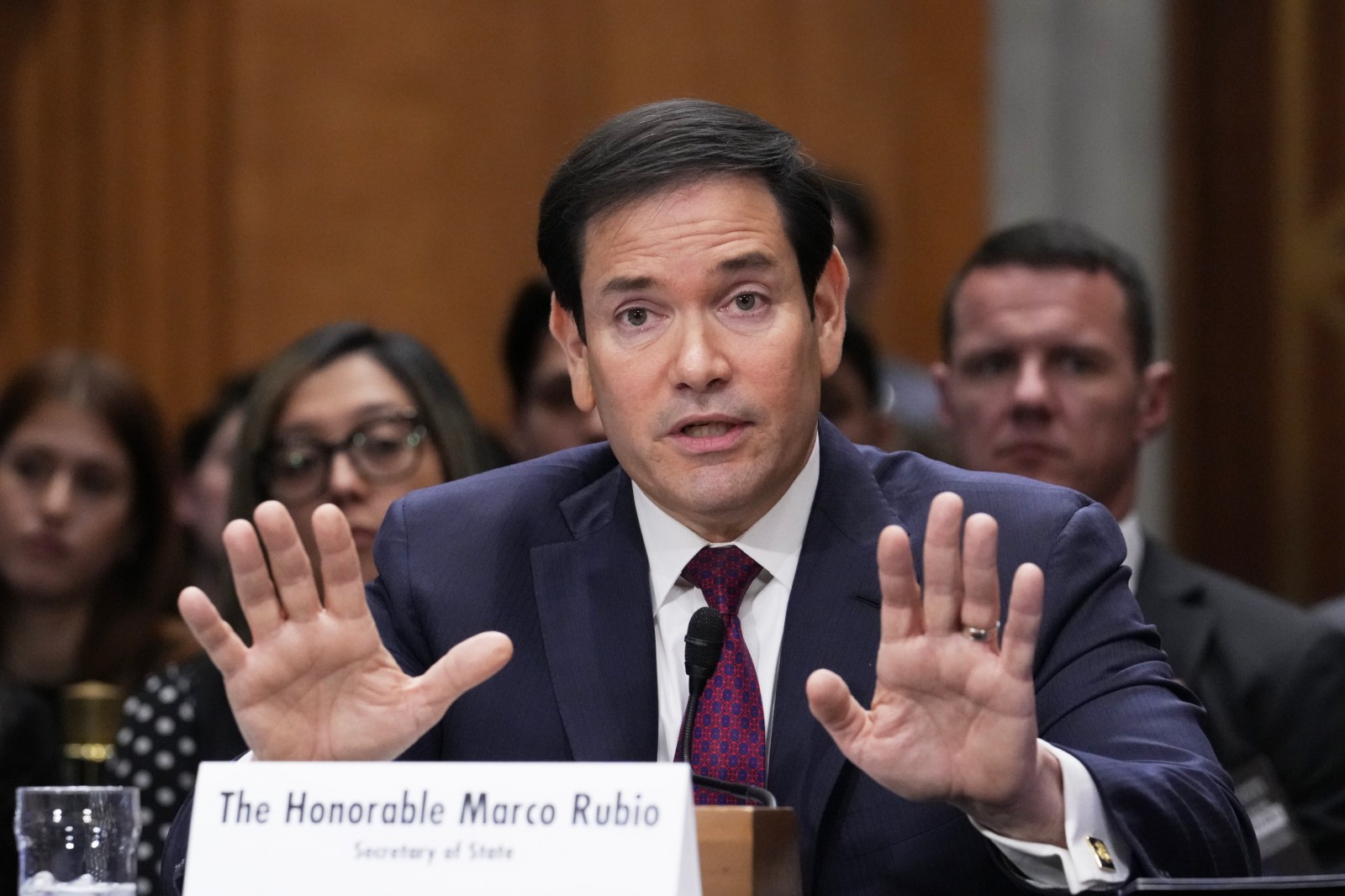 Image: NewsweekSecretary of State Marco Rubio appears before the Senate Foreign Relations Committee to explain President Donald Trump’s policy toward Venezuela following the U.S. military raid that ousted then-President Nicolas Maduro, at the Capitol in Washington, Wednesday, Jan. 28, 2026. (AP Photo/J. Scott Applewhite) Source Full size
-
Image: NewsweekSecretary of State Marco Rubio appears before the Senate Foreign Relations Committee to explain President Donald Trump’s policy toward Venezuela following the U.S. military raid that ousted then-President Nicolas Maduro, at the Capitol in Washington, Wednesday, Jan. 28, 2026. (AP Photo/J. Scott Applewhite) Source Full size
Trump Announces Massive Armada Heading Toward Iran President Donald Trump posted on Truth Social that a “massive Armada” led by the USS Abraham Lincoln is moving toward Iran and will deliver “far worse” strikes unless Tehran negotiates a nuclear deal [1][2]. The warning coincided with U.S. Central Command’s multi‑day aerial drills across the CENTCOM area and the carrier strike group’s recent entry into the Indian Ocean [1][2]. Iran’s Islamic Revolutionary Guard Corps and foreign minister responded that they are monitoring U.S. movements and stand ready to retaliate [2].
Rubio Details Rapid Diplomatic Deployment to Venezuela Secretary of State Marco Rubio told the Senate Foreign Relations Committee that the United States will quickly open a diplomatic presence in Venezuela, led by former ambassador Laura Dogu and initially operating from Bogotá before moving to Caracas [1][3]. About 70 locally employed staff are already in place, and a new financing mechanism will channel proceeds from sanctioned Venezuelan oil sold at market rates to fund policing, sanitation, health care and medicine, subject to monthly budget approvals by Washington [1][3]. The plan aims to provide real‑time intelligence and support interim authorities while maintaining strict fiscal oversight [1][3].
Rubio Warns Force May Be Used in Venezuela In the same testimony, Rubio warned that the administration is prepared to use force again if the interim Venezuelan authorities fail to cooperate with U.S. expectations, describing a “stage‑based plan” to ensure maximum cooperation [2][3]. He also emphasized that no further military action will occur without an imminent threat, positioning the Jan. 3 raid on Maduro’s compound as a completed security win [3]. The dual message balances a readiness to act with a restraint clause tied to clear danger [2][3].
Greenland Negotiations Proceed; EU Targets Iran’s IRGC Rubio reported that technical‑level talks with Greenland and Denmark are “in a good place,” with discussions beginning that day and no indication of forceful U.S. action [1][3]. Meanwhile, France announced support for adding Iran’s IRGC to the EU terrorist list, a move backed by Italy and Germany and awaiting unanimous approval from EU foreign ministers [2]. These developments show parallel diplomatic pushes in the Arctic and Europe while the United States maintains pressure on Tehran through military signaling [1][2].
Sources
-
1.
CNN: Trump Administration Pushes on Iran, Venezuela, Greenland and Historical Narrative: details Trump’s Iran armada threat, Rubio’s rapid Venezuelan diplomatic rollout and financing tool, Greenland talks, and a domestic lawsuit over a slavery exhibit .
-
2.
Newsweek: Trump Threatens Iran, Rubio Warns of Force in Venezuela Amid Rising Tensions: emphasizes Trump’s Iran warning, Rubio’s force posture in Venezuela, CENTCOM drills, IRGC retaliation, EU IRGC terrorist designation, and a missing commercial plane near the Venezuela‑Colombia border .
-
3.
AP: Rubio Defends Venezuela Raid, Addresses Greenland, NATO, and Iran: focuses on Rubio’s defense of the Jan. 3 raid, sanctioned Venezuelan oil sales under U.S. oversight, limited military action stance, easing Greenland/NATO tensions, and unchanged China‑Taiwan and Iran policies .
Timeline
2025 – President Trump issues an executive order directing the Interior Department to eliminate any content that “inappropriately disparages” American history, a move that later fuels a lawsuit over the removal of a slavery exhibit at the President’s House Site. [1]
2025 – Iran and Israel fight a 12‑day war, an episode the Iranian Revolutionary Guard Corps cites when warning of “immediate and powerful” retaliation to any U.S. aggression. [2]
Jan 3, 2026 – U.S. forces carry out a raid in Venezuela that removes Nicolás Maduro; Secretary of State Marco Rubio later describes the operation as a national‑security win that eliminates a major regional threat. [3]
Jan 6, 2026 – Rubio and senior officials brief congressional leaders on the surprise Venezuela operation, prompting a two‑hour closed‑door session that highlights a clash between the administration’s expansionist push and legislative oversight. [4]
Jan 6, 2026 – Republican lawmakers largely endorse the raid, while Democratic members demand detailed answers on objectives, costs and long‑term strategy. [4]
Jan 6, 2026 – The Senate drafts a war‑powers resolution to bar any further U.S. military action in Venezuela without explicit congressional approval, scheduling a vote for later that week. [4]
Jan 6, 2026 – House Speaker Mike Johnson tells reporters, “We don’t expect troops on the ground,” framing the operation as coercion of Venezuela’s new leadership rather than occupation. [4]
Jan 6, 2026 – Lawmakers press officials on who now governs Venezuela after Maduro’s removal, noting the interim presidency of Delcy Rodríguez and the marginalization of opposition leader María Corina Machado. [4]
Jan 27, 2026 – A Satena Airlines flight carrying 15 passengers disappears over the mountainous Venezuela‑Colombia border, triggering a large‑scale search by Colombian military and aviation authorities. [2]
Jan 28, 2026 – President Donald Trump posts on Truth Social that a “massive Armada” led by the USS Abraham Lincoln is moving toward Iran and threatens “far worse” strikes if Tehran refuses a nuclear deal. [2][1]
Jan 28, 2026 – In Senate testimony, Rubio warns the United States is prepared to use force in Venezuela again if the interim authorities stray from U.S. expectations and schedules a meeting that afternoon with opposition leader María Corina Machado. [2]
Jan 28, 2026 – U.S. Central Command launches multi‑day aerial drills across the CENTCOM area of responsibility to demonstrate resolve against a potential Iranian threat. [2]
Jan 28, 2026 – Iran’s IRGC and Foreign Minister Abbas Araghchi declare they have “fingers on the trigger” and stand ready to respond “immediately and powerfully” to any U.S. aggression, citing lessons from the 2025 Iran‑Israel war. [2]
Jan 28, 2026 – France’s foreign minister announces that EU foreign ministers will meet in Brussels to consider adding the IRGC to the EU terrorist list and to approve new sanctions on Iran. [2]
Jan 28, 2026 – Rubio tells the Senate Foreign Relations Committee that Iran’s situation is far more complex than Venezuela’s and that the administration will “very quickly” open a diplomatic presence in Venezuela, led by former ambassador Laura Dogu, first operating from Bogotá and later moving to Caracas. [1][2]
Jan 28, 2026 – Rubio unveils a short‑term financing tool that channels proceeds from sanctioned Venezuelan oil sold at market rates into a Treasury‑controlled account to fund policing, sanitation and health services, with monthly budget reviews by the United States. [1]
Jan 28, 2026 – Rubio reports that technical‑level talks with Greenland and Denmark are “in a good place” and begin “today,” aiming for a mutually beneficial outcome without the use of force. [1]
Jan 28, 2026 – Pennsylvania Governor Josh Shapiro files a brief supporting Philadelphia’s lawsuit over the National Park Service’s removal of a slavery exhibit, calling the action “whitewashing” and linking it to the 2025 executive order. [1]
Jan 28, 2026 – Rubio defends the Jan 3 raid as a security success and says the United States will work with interim Venezuelan authorities to stabilize the country. [3]
Jan 28, 2026 – Rubio announces that sales of previously sanctioned Venezuelan oil may resume under U.S. oversight, with proceeds held in a Treasury account and released only after Washington approves monthly budgets for policing and health‑care. [3]
Jan 28, 2026 – Rubio states the United States will not conduct further military action in Venezuela absent an imminent threat. [3]
Jan 28, 2026 – Rubio says tensions over Greenland within NATO are easing, that talks are underway, and that NATO “needs to be reimagined.” [3]
Jan 28, 2026 – Rubio notes that China’s goal to reunify Taiwan and the U.S. stance toward Iran remain unchanged, with recent carrier deployments intended solely as deterrence. [3]
Jan 28, 2026 – The State Department plans to send additional diplomatic and support personnel to Caracas and is considering reopening the U.S. embassy, steps toward normalizing ties with Venezuela. [3]
Early 2026 – The EU foreign ministers’ Brussels meeting is expected to decide on the IRGC terrorist designation within weeks of the Jan 28 statements. [2]
Early 2026 – The war‑powers resolution introduced on Jan 6 is slated for a Senate vote later in the week, potentially constraining further U.S. military actions in Venezuela. [4]
Early 2026 – The “very quickly” opening of the Venezuela Affairs Unit and its relocation from Bogotá to Caracas is anticipated to occur in the coming months. [1]
All related articles (4 articles)
-
CNN: Trump Administration Pushes on Iran, Venezuela, Greenland and Historical Narrative
-
Newsweek: Trump Threatens Iran, Rubio Warns of Force in Venezuela Amid Rising Tensions
-
AP: Rubio Defends Venezuela Raid, Addresses Greenland, NATO, and Iran
-
AP: Rubio and Hegseth brief Congress as lawmakers press for answers about Trump’s Venezuela operation
External resources (6 links)
- https://www.nps.gov/inde/learn/historyculture/places-presidentshousesite.htm (cited 2 times)
- https://www.whitehouse.gov/presidential-actions/2025/03/restoring-truth-and-sanity-to-american-history/ (cited 2 times)
- https://x.com/atrupar (cited 3 times)