Newcastle Pubs Ban AI‑Generated Brewery Artwork to Protect Local Artists
Updated (3 articles)
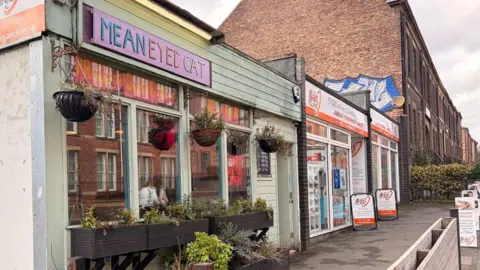
Newcastle Pubs Publicly Reject AI Designs On 21 February 2026, two Newcastle pubs announced on Instagram they will no longer display artwork they believe is produced by artificial‑intelligence tools. The Mean Eyed Cat and the Free Trade Inn said the ban applies to bottle labels and pump‑clip designs. Owner Simon Hubbard described the AI pieces as “overly polished, overly perfect” with hands that look “really weird.” [1]
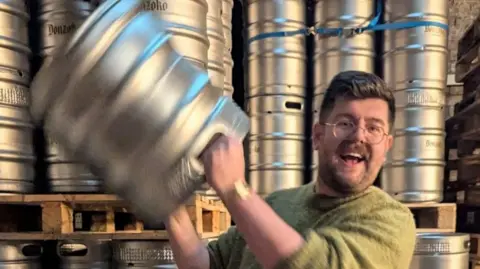
Owners Cite Economic Harm to Local Creators Hubbard and brewery owner Reece Hugill warned that adopting AI‑generated designs would shift revenue from local designers to the owners of multibillion‑dollar AI firms. They argue this diversion erodes community value and ignores regional taste preferences. Hugill specifically cited tools like ChatGPT as examples that could replace human creators. [1]
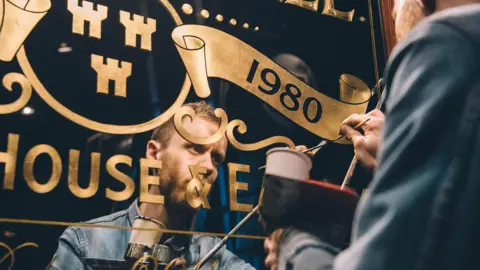
Artists Warn AI Trains on Their Work Artist Drew Millward explained that AI models are trained on millions of scraped images, effectively regurgitating and appropriating artists’ original work. He labeled the output “stolen artwork” and urged businesses to consider the ethical cost. Lettering specialist Ashley Willerton added that, despite lower‑cost AI options, pubs will continue to choose human creators for the “human touch” and customer connection. [1]
Social Media Campaign Aims Industry Shift Hubbard’s Instagram post attracted strong engagement, prompting a social‑media push that hopes to make “one or two breweries think or rethink what they’re doing.” Millward called for more establishments to declare similar stances, aiming for broader industry change. The campaign seeks to protect independent artists and preserve local cultural identity. [1]
Related Tickers
Timeline
Dec 4, 2025: Anthropic launches the Claude‑powered Interviewer, an AI‑driven 10‑15‑minute interview tool that surveys 1,250 professionals and publicly releases the full transcript dataset for research; 86% of general workers report that AI “saves time,” yet 69% experience workplace stigma and 55% feel anxious about AI’s future impact; among creatives, 97% say AI “saves time” and improves quality, but 70% manage peer judgment and fear job erosion; scientists use AI mainly for literature review and coding but 79% flag reliability concerns [3].
Dec 7, 2025: A cross‑industry survey finds that more than two‑thirds of creative‑sector workers believe AI undermines their job security, with half of novelists fearing replacement; Norwich musician Ross Stewart warns that AI‑generated music “could cost writers and musicians work,” while copywriter Niki Tibble says she now works as a “final‑checker” after AI takes smaller writing tasks, highlighting a shift toward oversight roles across art, writing, music, and video production [2].
Feb 21, 2026: The Mean Eyed Cat and the Free Trade Inn in Newcastle announce on Instagram that they will no longer display AI‑generated brewery artwork, calling the pieces “overly polished, overly perfect” with “hands always look really weird,” and brewery owner Reece Hugill warns that using AI “shifts revenue … to the hands of a multibillionaire,” while artist Drew Millward labels AI output “stolen artwork,” underscoring a local push to protect independent creators [1].
All related articles (3 articles)
External resources (28 links)
- https://www.qmul.ac.uk/centre-creative-collaboration/projects/creaatif/survey/survey-key-findings/perceptions/ (cited 1 times)
- https://www.facebook.com/BBCBedsHertsBucks/ (cited 1 times)
- https://www.facebook.com/BBCEssex/ (cited 1 times)
- https://www.facebook.com/BBCNorfolk/ (cited 1 times)
- https://www.facebook.com/BBCNorthamptonshire (cited 1 times)
- https://www.facebook.com/bbccambridgeshire/ (cited 1 times)
- https://www.facebook.com/bbcnortheast (cited 1 times)
- https://www.facebook.com/bbcsuffolk/ (cited 1 times)
- https://www.instagram.com/bbceastofengland/ (cited 1 times)
- https://www.instagram.com/bbcneandcumbria/ (cited 1 times)
- https://x.com/BBCNEandCumbria (cited 1 times)
- https://x.com/bbclookeast (cited 1 times)
- http://claude.ai/redirect/website.v1.8f3b11ed-97a4-4daa-baa3-645545f832b2 (cited 5 times)
- http://claude.ai/redirect/website.v1.8f3b11ed-97a4-4daa-baa3-645545f832b2/interviewer (cited 1 times)
- https://arxiv.org/pdf/2503.04761 (cited 1 times)
- https://bbc.in/3yyMYUI (cited 1 times)
- https://claude.ai/redirect/website.v1.8f3b11ed-97a4-4daa-baa3-645545f832b2/interviewer (cited 1 times)
- https://huggingface.co/datasets/Anthropic/AnthropicInterviewer (cited 1 times)
- https://links.email.claude.com/s/c/cGkT1SXSNgcdo1m1Jg5ubLKEl9K6sdfmpEYqg1hKZUyGgcl4dwPfeO18GyKSSqXjh6VJYoL1jUZK6AD2BWJz4p6OxoEug7KO9W2Yl7UuTqBou7dHkuDUR9lSrGIwoWBHBu-wkEktomJDbUAT2u8a6E6foGoE2H3RIurvO9epWQ7AJsKe_0FNVxLk4ygbQL3j7y1jjTEiC2qM5p0y1YCjCVAFED8I6wYqldfi9BKBYq993W-nOs45JbAMQkT6sZUFTHhEwJTV__gENvsItJqLkEOWFL9lrz48UJTC33i6n3SqYgI6stnpAsjLF66P_qtdOX888L-0h2qzKpxlrtGvrvuqEtl5pLNkPQUulHsITd7MyVL3tf-Ubi3dJVc1h9rB7v04z5j16n5-Kbp-iwCpz3RIbNot86fAZNPdfMqyBxFRDZlAUH-iEQ7h8wY1x6k8mnegW7y77GhLsqTJiZxqIi9o511wHl1Ltu-XLpeOVd80/ql5MQfX8py3XUgI4Usb8PWvj6gyGGxly/16 (cited 1 times)
- https://privacy.claude.com/en/articles/12996960-how-does-anthropic-interviewer-collect-and-use-my-data (cited 1 times)
- https://rhizome.org/events/rhizome-presents-vibe-shift/ (cited 1 times)
- https://www.aft.org/press-release/aft-launch-national-academy-ai-instruction-microsoft-openai-anthropic-and-united (cited 1 times)
- https://www.las-art.foundation/programme/pierre-huyghe (cited 1 times)
- https://www.mori.art.museum/jp/index.html (cited 1 times)
- https://www.sciencedirect.com/science/article/pii/S2451958824002021 (cited 1 times)
- https://www.sciencedirect.com/science/article/pii/S277250302300021X (cited 1 times)
- https://www.socratica.info/ (cited 1 times)
- https://www.tate.org.uk/whats-on/tate-modern/electric-dreams (cited 1 times)