Judge Upholds Operation Metro Surge as Nationwide Anti‑ICE Protests Intensify
Updated (2 articles)
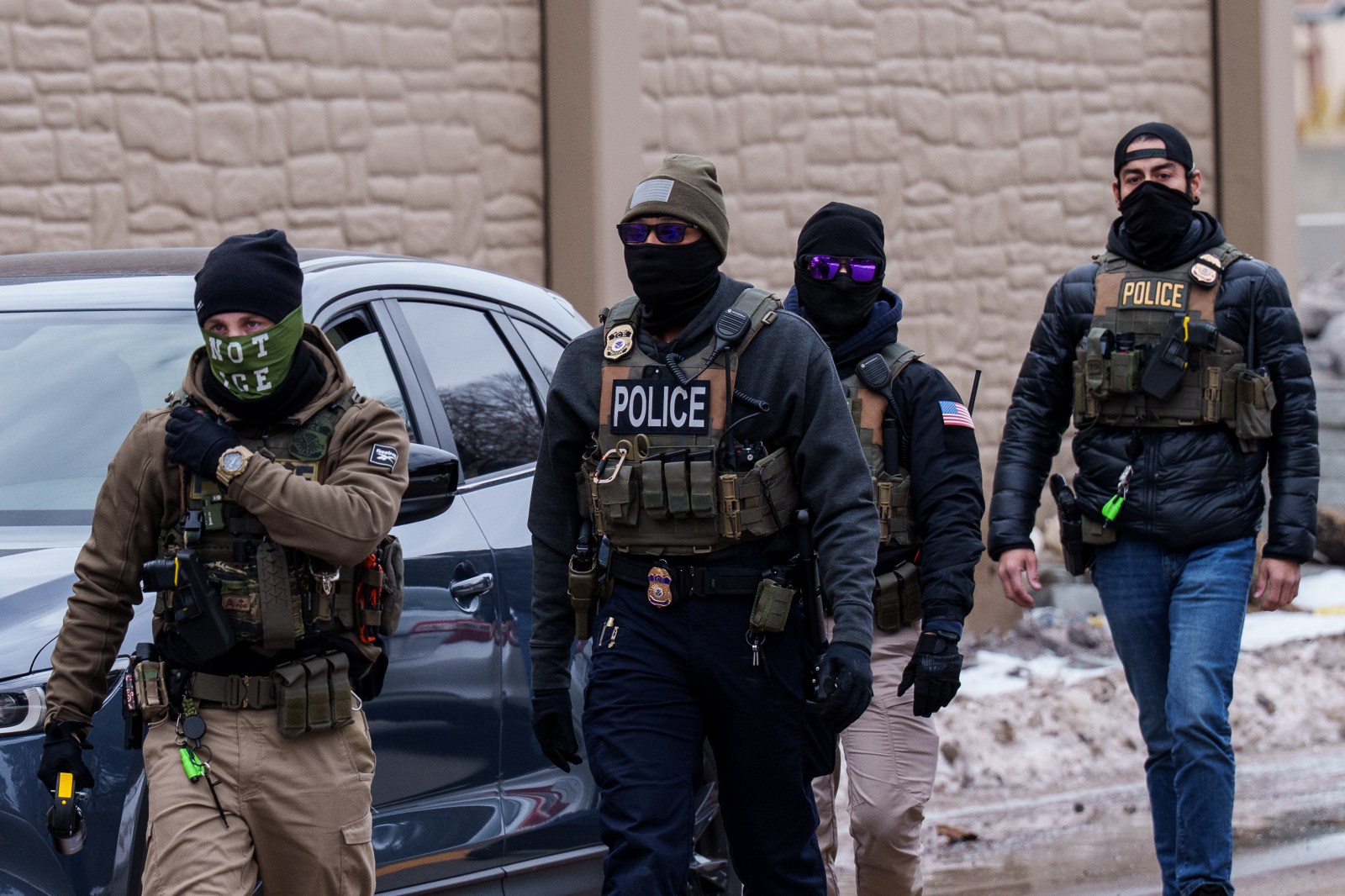
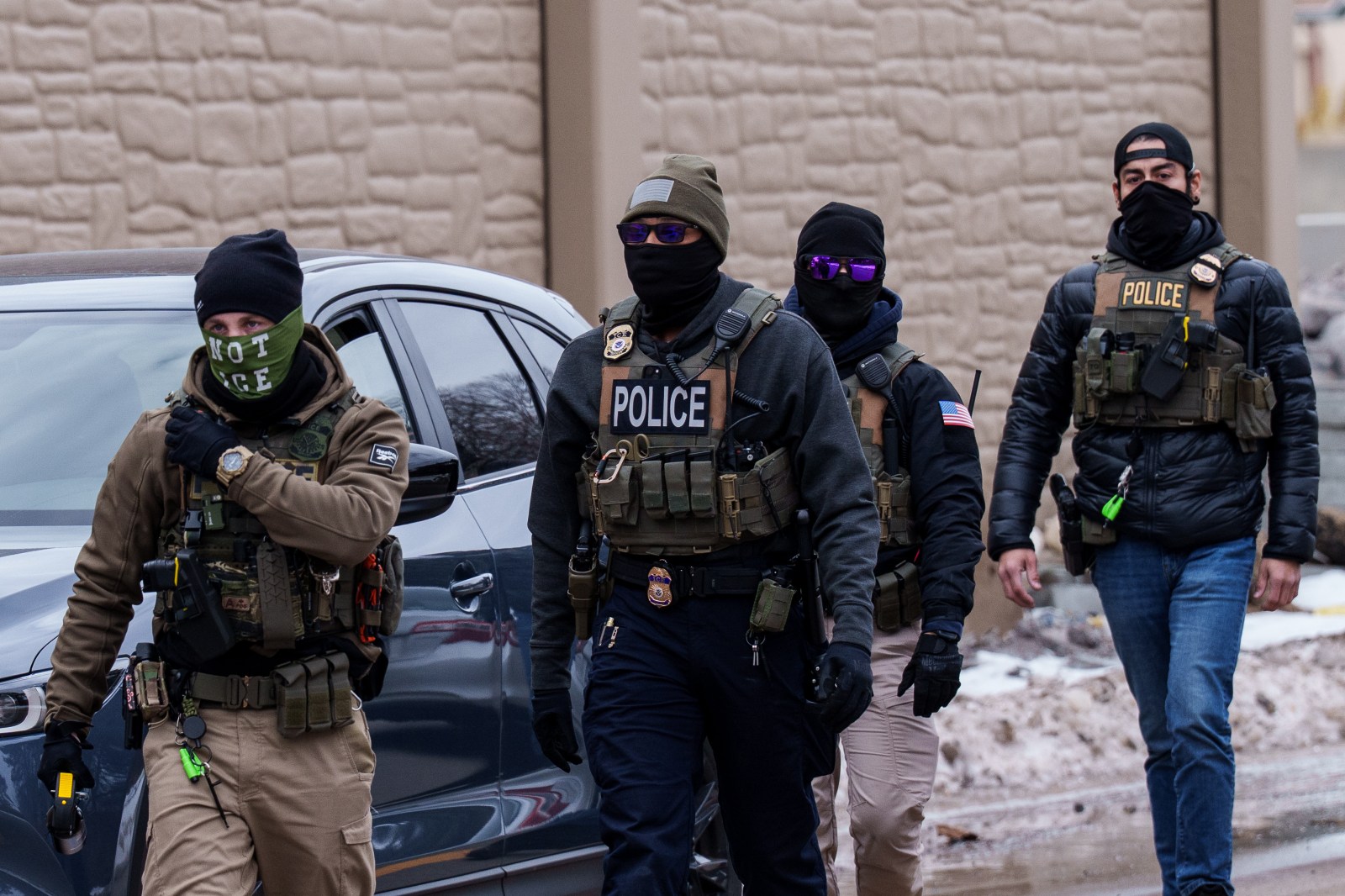
Judge Menendez Refuses Preliminary Injunction Amid State Lawsuit The U.S. District Court in Minneapolis, presided over by Judge Katherine Menendez, denied Minnesota’s request for a temporary restraining order to stop ICE’s Operation Metro Surge, stating the plaintiffs had not met the evidentiary burden and that the court was not ruling on the merits of the constitutional claims [1][2]. Her opinion listed extensive local harms—police overtime costs, reduced school attendance, delayed emergency responses, and small‑business hardships—yet concluded that halting the operation would cause greater federal disruption [1]. The decision leaves the federal enforcement effort in place while the broader legal battle proceeds [2].
Operation Metro Surge Continues With Thousands of Agents and Hundreds of Arrests The enforcement push, launched in December, has deployed roughly 3,000 ICE agents throughout the Twin Cities and resulted in about 2,500 arrests to date [2]. CNN reports that the surge has already caused two deaths in Minnesota, including Alex Pretti, whose killing sparked memorial rides across 43 states [1]. Federal authorities maintain the operation is a core component of the Trump administration’s immigration‑enforcement agenda [2].
State and Local Lawsuits Cite Constitutional and Sanctuary Violations Minnesota, Minneapolis and St. Paul filed a lawsuit alleging the surge violates the 10th Amendment’s anti‑commandeering doctrine by pressuring local officials to abandon sanctuary policies [2]. The complaint also accuses ICE of warrantless arrests, racial profiling, and excessive force targeting undocumented Somali immigrants [1]. Plaintiffs seek a two‑week injunction to suspend the operation, arguing it disrupts schools, hospitals, and daily life [2].
Nationwide Anti‑ICE Protests and Memorial Rides Amplify Opposition On February 1, protesters marched coast‑to‑coast for the second day of a nationwide strike demanding ICE agents leave local communities [1]. More than 200 memorial bike rides honored Alex Pretti, the second person killed by agents, highlighting growing national outrage [1]. The protests have led to the arrest of journalists, including former CNN anchor Don Lemon, raising press‑freedom concerns [1].
Political Leaders React: Trump Directive and Noem Praise President Donald Trump instructed DHS Secretary Kristi Noem not to intervene in Democratic‑led protests unless formally requested by local officials, signaling a hands‑off approach [1]. Conversely, Noem praised the judge’s denial of the injunction on social media, framing it as a victory for public safety and law‑and‑order [2]. Minnesota officials, including Mayor Jacob Frey and Governor Tim Walz, condemned the ruling and vowed to continue legal challenges [2].
Sources
-
1.
CNN: Anti‑ICE protests surge as judge lets Operation Metro Surge continue: Details the judge’s denial of an injunction, the ongoing federal operation, nationwide protests, memorial rides, journalist arrests, and Trump’s directive to DHS .
-
2.
Newsweek: Judge Denies Minnesota Request to Halt ICE’s Operation Metro Surge: Focuses on the legal denial, scale of the operation, constitutional lawsuit, reactions from state officials, and DHS Secretary Kristi Noem’s praise .
Timeline
Dec 2025 – Operation Metro Surge launches, deploying roughly 3,000 ICE agents to Minnesota and initiating a wave of immigration enforcement that later yields about 2,500 arrests and two deaths, signaling a major escalation in the Trump administration’s immigration agenda [2].
Jan 31, 2026 – U.S. District Judge Katherine Menendez denies Minnesota’s emergency request for a temporary restraining order, allowing Operation Metro Surge to remain in place while the underlying constitutional claims await further briefing [2].
Jan 31, 2026 – The federal operation continues with approximately 3,000 agents on the ground and an estimated 2,500 arrests since its December launch, underscoring the scale of the enforcement effort [2].
Jan 31, 2026 – Minnesota, Minneapolis and St. Paul file a lawsuit alleging that the surge violates the 10th Amendment’s anti‑commandeering doctrine and breaches local sanctuary policies, claiming it disrupts schools, hospitals and daily life [2].
Jan 31, 2026 – Judge Menendez notes that her order does not resolve the merits of the constitutional challenge, limiting the decision to the preliminary‑injunction standard and reserving a full ruling for later [2].
Jan 31, 2026 – Minneapolis Mayor Jacob Frey calls the ruling “disappointing,” describes the operation as an “invasion,” and vows to keep pursuing legal action against the federal presence [2].
Jan 31, 2026 – Governor Tim Walz posts on X that public opinion backs the state’s effort and pledges to press for investigations and removal of federal forces [2].
Jan 31, 2026 – DHS Secretary Kristi Noem tweets that the judge’s denial is a “win for public safety and law and order,” highlighting the administration’s support for the surge [2].
Feb 1, 2026 – Anti‑ICE protesters march coast‑to‑coast on the second day of a nationwide strike, demanding that ICE agents leave local communities and amplifying dissent against Operation Metro Surge [1].
Feb 1, 2026 – Judge Menendez again rejects an injunction request, acknowledging harms such as costly police overtime, falling school attendance, delayed emergency responses and small‑business hardship, but concludes that halting the operation would cause greater federal damage, so the surge proceeds while litigation continues [1].
Feb 1, 2026 – President Trump instructs DHS Secretary Kristi Noem not to intervene in Democratic‑led protests “under no circumstances” unless a local official formally asks for help, signaling a hands‑off stance toward the demonstrations [1].
Feb 1, 2026 – Minneapolis, St. Paul and the state sue over what they call a “federal invasion,” alleging warrantless arrests, racial profiling and excessive force targeting undocumented Somali immigrants, and claim the operation violates state rights [1].
Feb 1, 2026 – Memorial bike rides honor Alex Pretti, the second person killed by ICE agents, with more than 200 rides across 43 states, expanding national outrage over the enforcement actions [1].
Feb 1, 2026 – Former CNN anchor Don Lemon and journalist Georgia Fort are detained on charges linked to coverage of a church protest; Lemon declares “I will not be silenced,” raising press‑freedom concerns [1].
Feb 1, 2026 – Deputy Attorney General Todd Blanche announces a standard FBI‑led civil‑rights investigation into Pretti’s killing, emphasizing that it is “not a massive probe,” which underscores ongoing federal scrutiny of the operation [1].
External resources (6 links)
- https://x.com/GovTimWalz/status/2017362574338089093 (cited 1 times)
- https://x.com/Sec_Noem/status/2017659644857012234 (cited 1 times)
- https://bikepacking.com/news/alex-pretti-memorial-rides/ (cited 1 times)
- https://fox11online.com/news/local/alex-pretti-green-bay-preble-high-school-memorial-banner-once-a-hornet-minneapolics-ice-protests-shooting-federal-agents-cbp (cited 1 times)
- https://www.kare11.com/article/news/local/ice-in-minnesota/demonstration-downtown-minneapolis-protest-operation-metro-surge/89-77029576-bd42-485a-97df-75cf3637196f (cited 1 times)