Trump Sets 15‑Day Deadline on Iran Nuclear Deal as Tehran Threatens U.S. Bases
Updated (14 articles)
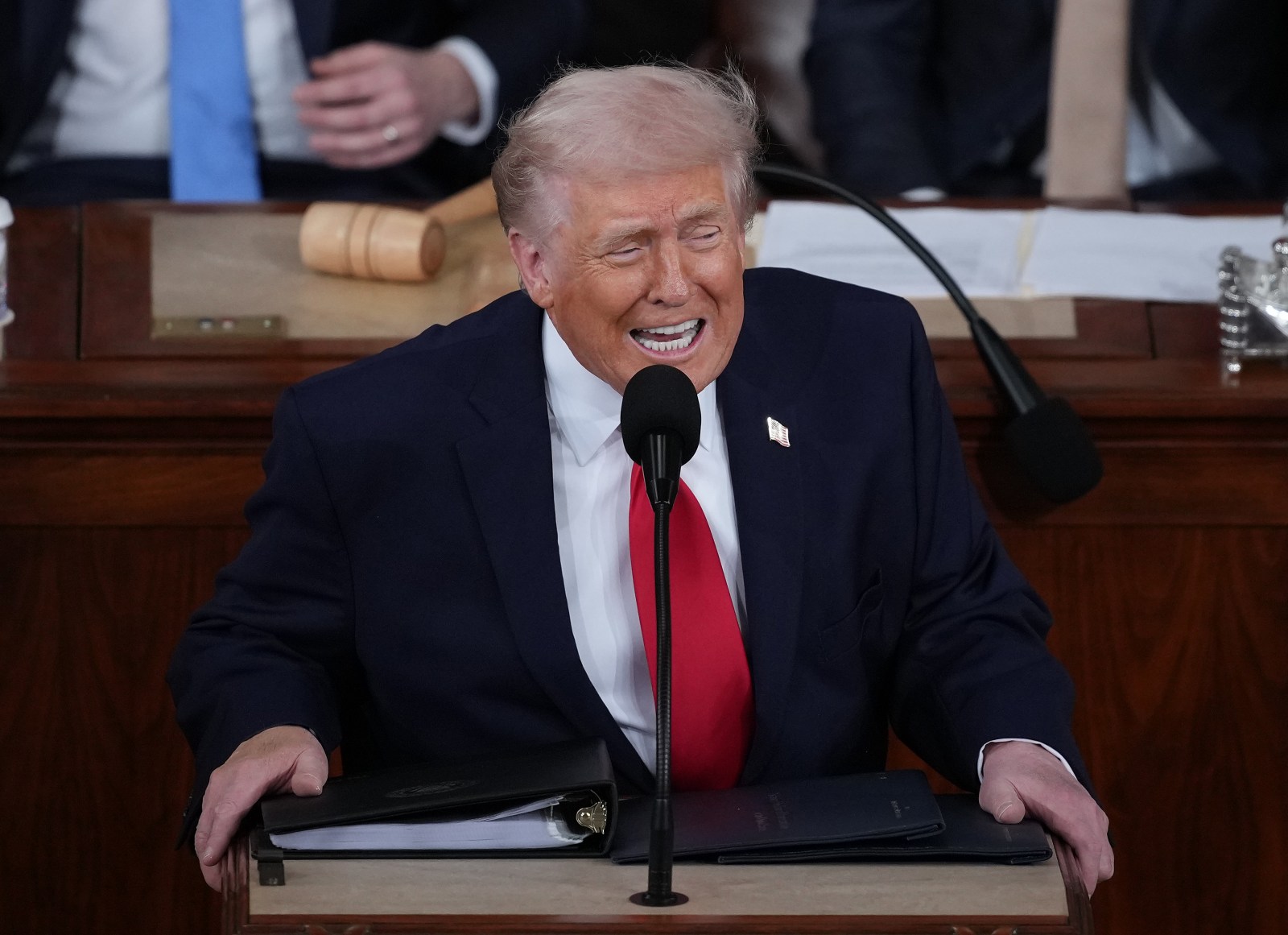
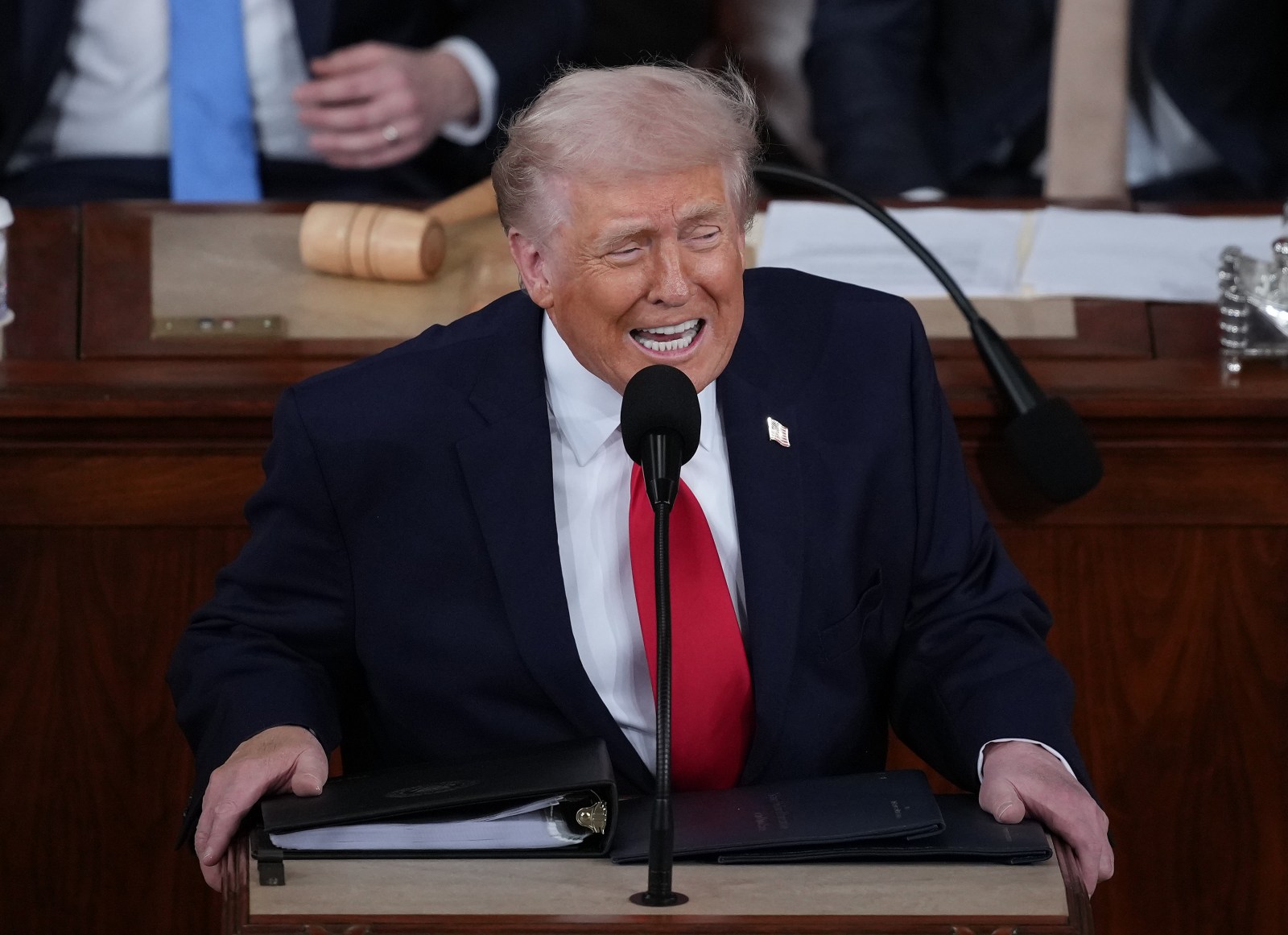
Trump’s State of the Union Threatens Iran’s Nuclear Ambitions In his February 25 address, President Donald Trump declared the United States will never permit “the world’s number one sponsor of terror” to acquire a nuclear weapon, recalling the 2020 Soleimani strike and the 600‑plus U.S. casualties linked to Iran‑backed militias [1]. He invoked Operation Midnight Hammer, the June 2024 strikes on three Iranian nuclear sites, and gave Tehran a ten‑to‑fifteen‑day window to submit a new proposal after the Geneva talks, with a third round slated for the following Thursday [1].
U.S. Military Posture Expands Across Middle East The Pentagon has positioned air, naval and ground assets capable of multi‑wave strikes, deploying roughly 30‑40 000 troops across eight to nine regional bases, including the carrier USS Abraham Lincoln and a second carrier en route [3][4]. Fighter squadrons of F‑22, F‑35, F‑15E and F‑16, plus EA‑18G jammers, augment the existing footprint of at least 19 U.S. installations such as the Fifth Fleet in Bahrain and al‑Udeid Air Base in Qatar [4]. Analysts note this buildup is the largest since the 2003 Iraq invasion and could precede targeted missile‑site strikes [1][2].
Iran Vows Retaliation and Labels U.S. Bases Legitimate Targets In a UN letter dated Feb 19, Iran’s ambassador Amir Saeid Iravani warned that any attack on U.S. bases—including Diego Garcia and RAF Fairford, which Trump mentioned on Feb 18—would make those facilities “legitimate targets” under Article 51 of the UN Charter [4]. Iravani condemned Trump’s public threats as “explicit” and called for an urgent Security Council response, while Supreme Leader Ayatollah Ali Khamenei warned that a U.S. strike could ignite a regional war [4].
Regional Proxies and Missile Stockpiles Heighten Escalation Risk Tehran asserts it retains thousands of missiles and Shahed drones, replenished after the June 2024 wave of attacks on Israel, and has pledged proxies—including Iraqi Kataeb Hezbollah, Lebanon’s Hezbollah, and Yemen’s Houthis—to defend Iran [3]. Iran’s launch of roughly 200 missiles toward Israeli cities on Oct. 1 2024, most intercepted by U.S. and Israeli defenses, prompted EU sanctions on the IRGC and a renewed UN Chapter VII “snapback” on missile‑drone exports to Russia [2]. Planners envision a multi‑day U.S. campaign beginning with missile infrastructure, then IRGC/Basij nodes, and finally nuclear facilities [2].
Potential Economic Shock From Strait of Hormuz Closure Iran’s ability to disrupt oil and LNG flows through the Strait of Hormuz could trigger a global recession, with energy strategist Umud Shokri warning that even partial closures would spike prices and strain supply chains [3]. Historical precedents, such as the 1988 sea‑mine incident that nearly sank the USS Samuel B. Roberts and recent Houthi Red Sea attacks, underscore Tehran’s capacity to affect worldwide shipping [3].
Sources
-
1.
Newsweek: Trump Issues New Iran Nuclear Warning in State of the Union: Highlights Trump’s deadline, Operation Midnight Hammer, and analysts’ prediction of possible U.S. missile strikes .
-
2.
CNN: Trump’s Riskiest Move: Iran on the Brink of a Multi‑Day U.S. Campaign: Details U.S. multi‑wave strike readiness, EU sanctions on the IRGC, and the “Pickaxe” enrichment site target list .
-
3.
CNN: Iran’s Retaliation Playbook as Trump Threatens Strike: Describes U.S. force buildup, Iran’s missile/drone stockpiles, proxy commitments, and Hormuz economic risks .
-
4.
The Hindu: Iran Warns U.S. Bases in Region Would Be “Legitimate Targets” if Attacked: Reports Iran’s UN letter invoking Article 51, Iravani’s condemnation of Trump’s social‑media threat, and the extensive U.S. base network .
Timeline
Oct 1, 2024 – Iran launches roughly 200 missiles toward Israeli cities, most of which are intercepted by U.S. destroyers in the eastern Mediterranean and Israeli air‑defenses, marking the first direct state‑on‑state missile exchange in decades [3].
June 2024 – The United States conducts “Operation Midnight Hammer,” striking three Iranian nuclear facilities during a 12‑day war with Israel, a campaign Trump later cites as proof of Tehran’s threat [7].
June 21‑22, 2025 – U.S. B‑2 bombers hit Fordow, Natanz and Isfahan nuclear sites in a coordinated strike, which the Trump administration touts as a “major victory” and sets the stage for future pressure on Tehran [6][3].
June 23, 2025 – In retaliation for the June nuclear strikes, Iran fires missiles at Qatar’s Al Udeid Air Base; most are intercepted after advance warning, underscoring Tehran’s pattern of delayed, limited retaliation [2][9].
Dec 28, 2025 – Jan 2026 – Nationwide protests erupt over a soaring rial, leading to a violent crackdown that kills thousands (officially >3,000, foreign monitors estimate tens of thousands) and triggers an internet blackout, the worst repression since 1979 [8].
Jan 13, 2026 – President Donald Trump hints at “very strong options” against Iran, signaling a possible military response as U.S. officials weigh their next steps [10].
Jan 13‑15, 2026 – Iran’s parliamentary speaker Mohammad Bagher Qalibaf declares U.S. bases “legitimate targets” if attacked, while President Masoud Pezeshkian vows a “harsh and discouraging” response to any aggression [10].
Jan 15, 2026 – Analysts warn that Tehran faces an existential threat and may abandon its usual restraint, potentially launching a more aggressive retaliation if Washington moves toward regime‑change [9].
Jan 15, 2026 – Reports reveal Iran’s IRGC is developing chemical and biological warheads for ballistic missiles, prompting Trump to warn the U.S. could back further Israeli strikes if Tehran rebuilds its long‑range missile capability [11].
Jan 29, 2026 – The United States expands air and naval assets in the Middle East and Trump threatens regime change, while Iran’s IRGC warns its “finger is on the trigger” and vows retaliation [1][4].
Jan 30, 2026 – The USS Abraham Lincoln carrier strike group enters the U.S. Central Command area near Iran, heightening the risk of a broader confrontation [2].
Jan 30, 2026 – U.S. warships and fighter jets gather off Iran’s coast after Trump’s public threat, an “armada” that raises regional alertness [8].
Jan 30, 2026 – Iran endures its most severe protest crackdown since 1979, with thousands dead, mass detentions and a two‑week internet blackout; officials label the unrest “terrorist‑driven” [2].
Jan 30, 2026 – The IRGC rehearses a naval battle in the Sea of Oman, preparing for possible U.S. retaliation [8].
Jan 30, 2026 – Iraqi, Lebanese and Yemeni proxy militias pledge direct retaliation for any U.S. strike on Iran, urging “all‑out war” in support of the Islamic Republic [5].
Jan 30, 2026 – Secretary of State Marco Rubio warns that 30‑40 k U.S. personnel across eight or nine regional bases sit within range of Iranian one‑way drones and short‑range ballistic missiles [5].
Jan 30, 2026 – Energy strategist Umud Shokri cautions that Iran’s threat to close the Strait of Hormuz could spike oil prices and trigger a global recession [5].
Jan 30, 2026 – Iranian leaders declare any U.S. attack an act of war, heightening Gulf‑state anxieties about spillover [2].
Jan 30, 2026 – U.S. military buildup in the region reaches its largest scale since the 2003 Iraq invasion, reflecting a “massive build‑up” that could support strikes on missile sites [7].
Jan 30, 2026 – U.S. planners state the United States is “poised for limited precision strikes” within days, targeting IRGC and Basij bases, ballistic‑missile launch sites and nuclear facilities [1].
Feb 18, 2026 – Trump posts on social media that the U.S. could use Diego Garcia and RAF Fairford bases against Iran, prompting Iran’s UN envoy to label the remarks “explicit public threats” [14].
Feb 19, 2026 – Iran sends a UN letter warning that any regional U.S. bases, facilities or assets will be treated as “legitimate targets,” invoking Article 51 of the UN Charter for a “decisive and proportional” response [14].
Feb 20, 2026 – Supreme Leader Ayatollah Ali Khamenei warns that an attack on Iran would spark a broader regional war, underscoring the high stakes of any U.S. action [14].
Feb 21, 2026 – Iran’s “retaliation playbook” notes that U.S. forces are within range of Iranian UAVs, proxies stand ready, and a Hormuz closure could trigger a worldwide recession [4].
Feb 23, 2026 – The Pentagon positions assets across the Middle East for multi‑wave strikes, planning a multi‑day campaign that would begin with missile infrastructure, then IRGC/Basij nodes, and finally nuclear facilities, tying escalation to Iranian retaliation [3].
Feb 25, 2026 – In his State of the Union, Trump declares the U.S. will not allow Iran to obtain a nuclear weapon, cites past attacks and sets a 10‑15‑day deadline for Tehran to present a new nuclear proposal, with a third Geneva round slated for the following Thursday [7].
Feb 27‑Mar 2026 (planned) – The United States may launch limited precision strikes within days on IRGC, missile and nuclear sites, while a second carrier is en route to the region, expanding the naval presence [14][1].
Feb 2026 (planned) – Iran conducts a joint live‑fire naval drill with Russia in the southern Persian Gulf, demonstrating maritime coordination that could support future disruption of shipping lanes [14].
Dive deeper (13 sub-stories)
-
Newsweek: Trump Issues New Iran Nuclear Warning in State of the Union
-
CNN: Trump’s riskiest move: Iran on the brink of a multi‑day U.S. campaign
-
CNN: Iran’s Retaliation Playbook as Trump Threatens Strike
-
The Hindu: Iran warns U.S. bases in region would be “legitimate targets” if attacked
-
Newsweek: Iranians Brace for Possible U.S. Attack Amid Rising Tensions
-
BBC: Iran’s heightened risk of escalation as US carrier group arrives
-
CNN: Iran’s Options to Respond if Trump Orders a Strike
-
BBC: Potential Outcomes if the U.S. Strikes Iran
-
Newsweek: Iran could retaliate more aggressively if U.S. intervenes, experts warn
-
CNN: Analysts map potential US targets and risks in possible Iran strike
-
Newsweek: Iran's military assessed against US as Tehran vows retaliation amid Trump threats
-
Newsweek: Iran developing chemical and biological warheads for long-range missiles, report says
-
Iran President Vows Harsh Retaliation After Trump Threat, Protests Intensify
(2 articles)
All related articles (14 articles)
-
Newsweek: Trump Issues New Iran Nuclear Warning in State of the Union
-
CNN: Trump’s riskiest move: Iran on the brink of a multi‑day U.S. campaign
-
CNN: Iran’s Retaliation Playbook as Trump Threatens Strike
-
The Hindu: Iran warns U.S. bases in region would be “legitimate targets” if attacked
-
Newsweek: Iranians Brace for Possible U.S. Attack Amid Rising Tensions
-
BBC: Iran’s heightened risk of escalation as US carrier group arrives
-
CNN: Iran’s Options to Respond if Trump Orders a Strike
-
BBC: Potential Outcomes if the U.S. Strikes Iran
-
Newsweek: Iran could retaliate more aggressively if U.S. intervenes, experts warn
-
CNN: Analysts map potential US targets and risks in possible Iran strike
-
Newsweek: Iran's military assessed against US as Tehran vows retaliation amid Trump threats
-
Newsweek: Iran developing chemical and biological warheads for long-range missiles, report says
-
Newsweek: Iran warns of harsh response to any attack after Trump threat
-
AP: Iranian president pledges harsh response to aggression in apparent rebuke to Trump warning