Annular Solar Eclipse Rings Antarctica on Feb 17, 2026, With 96% Peak Coverage
Updated (4 articles)
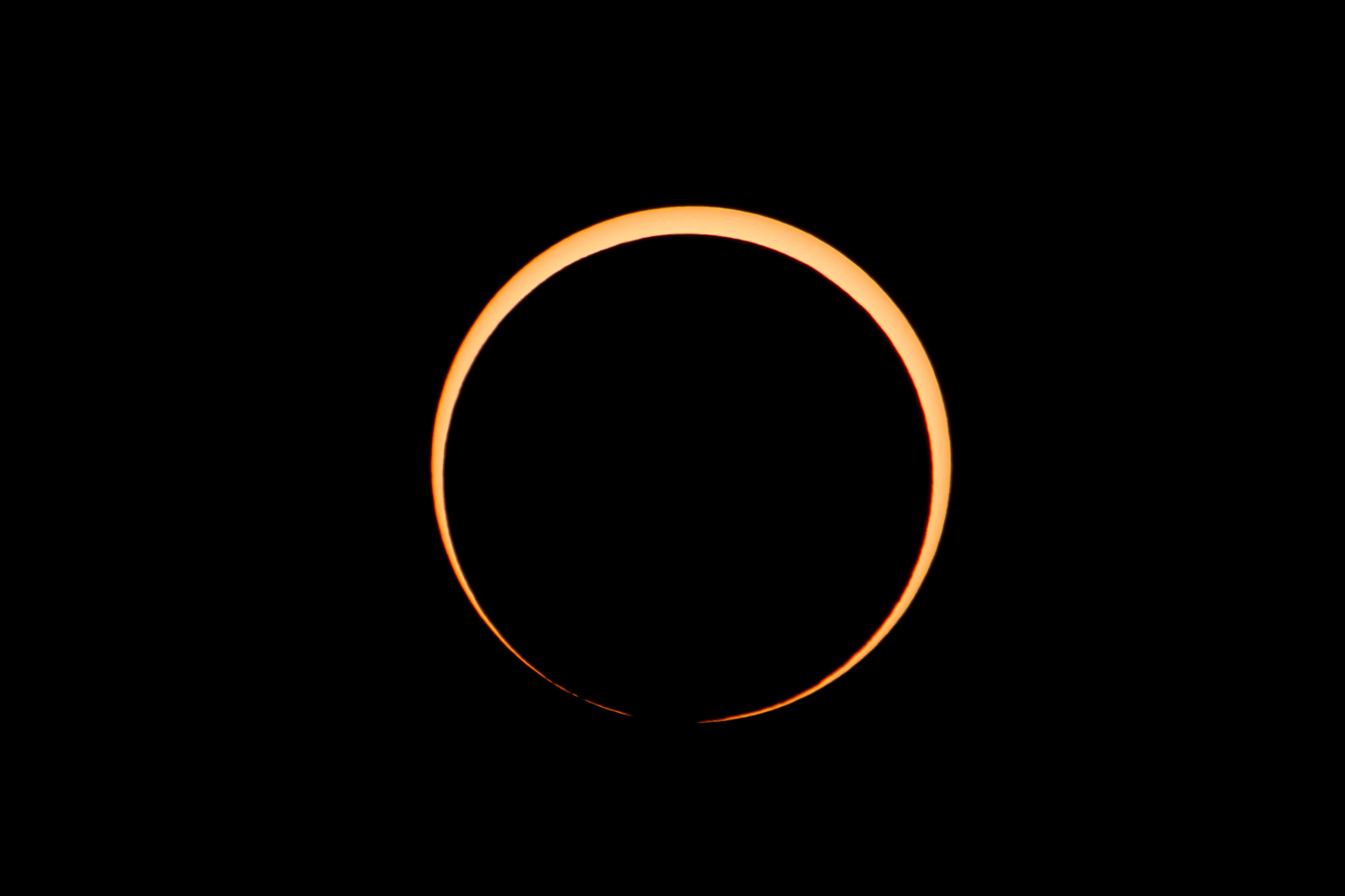
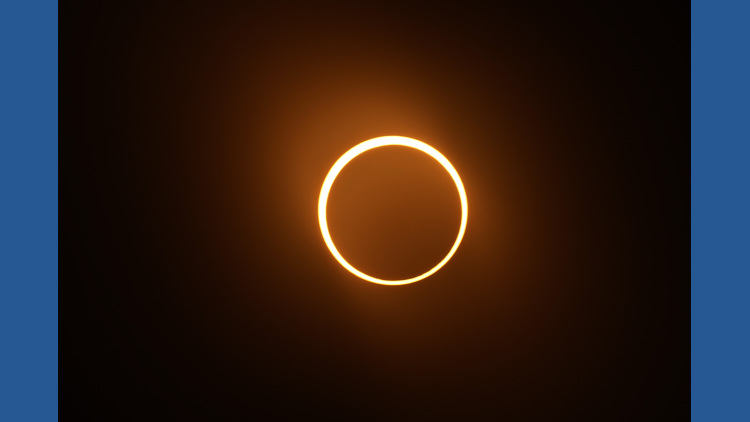
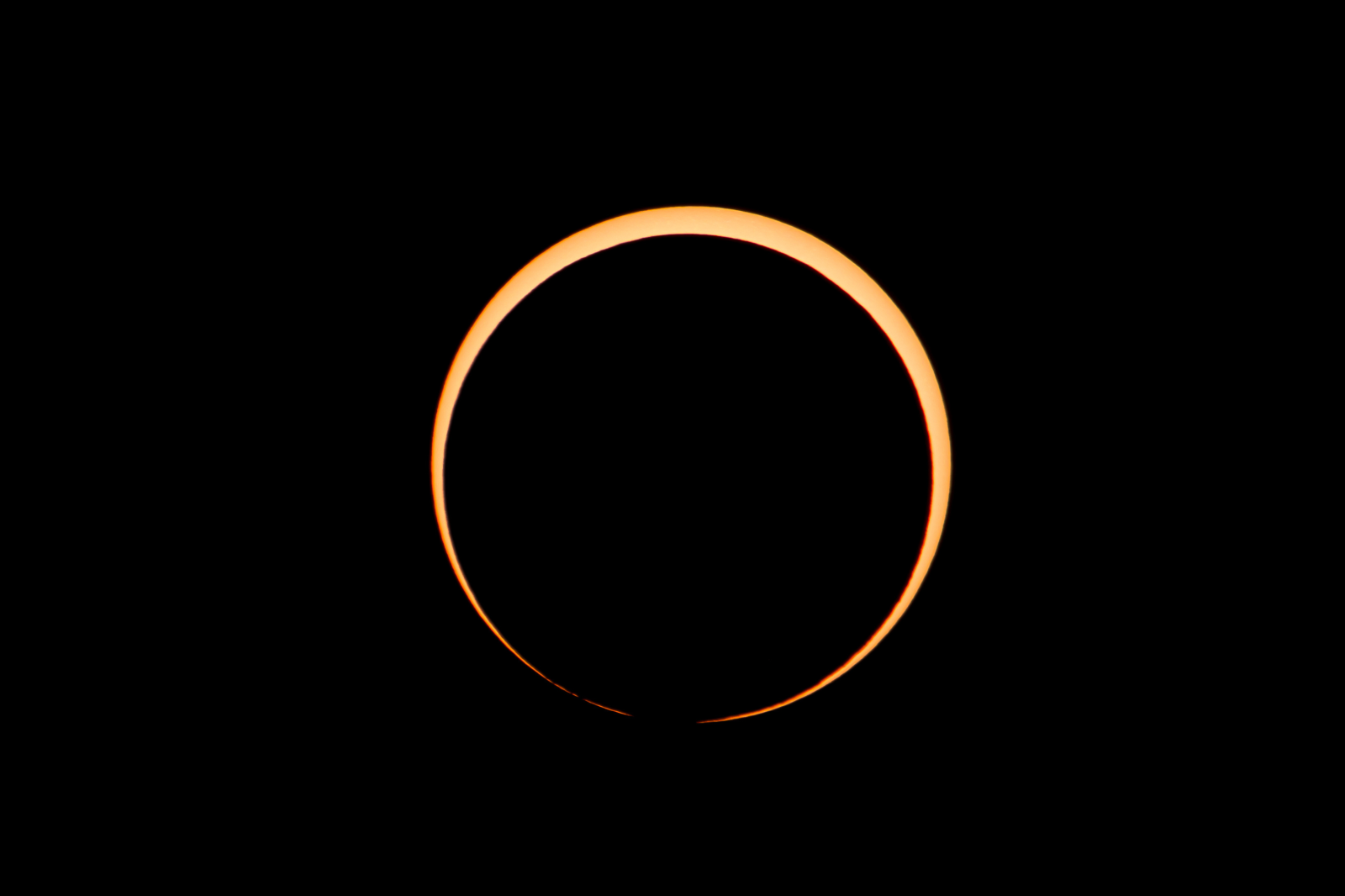
Rare Ring‑of‑Fire Eclipse Occurs Over Antarctica on Feb 17 The Moon will pass between Earth and the Sun on Tuesday, Feb 17 2026, creating an annular solar eclipse often called a “ring of fire.” Because the Moon is near apogee, its apparent diameter is smaller than the Sun’s, leaving a bright outer rim visible [1][2]. NASA and NOAA confirm the event will be observable only from a narrow corridor along the western coast of Antarctica facing Australia [2]. No total eclipse will occur, so the solar corona will remain hidden [2].
Partial Eclipse Visible From Southern Continents and Islands Residents of southern Chile, Argentina, Madagascar, Lesotho, and South Africa can see a partial eclipse if skies are clear [1]. The partial phase will cover much of the continent of Antarctica and extend to the southernmost tips of South America and Africa [1]. Both outlets note that the eclipse’s magnitude will drop to about 10 % by 13:50 UTC for observers outside the annular path [1].
Timing Shows 96 % Solar Coverage at Peak The eclipse begins at 11:45 UTC (06:45 am EST) and reaches maximum coverage of roughly 96 % at 12:00 UTC [1]. SpaceWeather.com reports the eclipse declines to 80 % at 12:50 UTC and to 10 % by 13:50 UTC [1]. Ground‑level observers at Antarctic stations will experience an annular phase lasting between 1 minute 40 seconds and 2 minutes 20 seconds, with the longest duration near the center of the path [2].
Observation Limited to Researchers, Penguins, and Online Streams Antarctica has no permanent civilian population, so only scientists stationed at research bases—and, humorously, native penguins—will witness the full annular display [1]. NOAA will not provide an on‑site live broadcast; instead, EarthSky will stream commentary on YouTube and Space.com will host live posts [2]. Both sources mention upcoming eclipses later in 2026 and 2027 that will be visible from more populated regions [2].
Sources
-
1.
Newsweek: Ring of Fire Solar Eclipse Visible Only from Antarctica Today – Highlights the exact start time, peak 96 % coverage, and the novelty of penguins observing the event .
-
2.
WBNS (Columbus, OH): Annular Solar Eclipse on Feb 17 2026 Visible Only from Antarctica – Emphasizes the limited ground‑level duration, the western Antarctic viewing corridor, and the lack of live on‑site streaming, while noting future eclipses .
Videos (1)
Timeline
Jan 2–3, 2026 – The Quadrantids meteor shower peaks, delivering up to 120 meteors per hour under ideal dark skies, while a full Moon shines, slightly reducing visibility; observers in the Northern Hemisphere enjoy the brief but intense display. [3][4]
Feb 17, 2026 – An annular solar eclipse—commonly called a “ring of fire”—occurs as the Moon, near apogee, covers 96 % of the Sun, creating a bright rim visible only from western Antarctica’s coast; the event begins at 11:45 UTC, peaks at 96 % coverage, and fades to 10 % by 13:50 UTC. [1][2]
Feb 17, 2026 – Lowell Observatory astronomer Joe Llama says, “the only permanent residents who will see the full ring are the researchers and even the native penguins of Antarctica,” highlighting the eclipse’s rarity. [1]
Feb 17, 2026 – NASA heliophysicist Michael Kirk explains, “during an annular eclipse the Moon appears as a dark disk against a larger bright Sun, leaving a ring, unlike a total eclipse where the corona becomes visible.” [2]
Feb 17, 2026 – NOAA Space Weather scientist Dimitrios Vassiliada notes, “the annular phase will last about two minutes and twenty seconds at the best‑placed stations, and the event will be streamed online rather than on‑site.” [2]
Feb 17, 2026 – NOAA does not stream the eclipse live; instead, EarthSky provides YouTube commentary and Space.com hosts live posts, ensuring global audiences can follow the event online. [2]
Mar 3, 2026 – A total lunar eclipse sweeps across East Asia, Australia, and the Americas, darkening the Moon as Earth’s shadow passes over it, offering a dramatic night‑time spectacle. [3][4]
Apr 21–22, 2026 – The Lyrid meteor shower peaks, producing up to 15 fast fireballs per hour; occasional outbursts can boost rates, and the shower, known for its historic observations, delights skywatchers worldwide. [3][4]
May 5–6, 2026 – The Eta Aquariids, debris from Halley’s Comet, reach their maximum, delivering about 20–30 meteors per hour, though an 84 % full Moon may wash out fainter streaks. [4]
Aug 12, 2026 – A total solar eclipse traverses Greenland, Iceland, Spain, Russia, and a small part of Portugal, allowing observers in those regions to see the Sun’s corona, while a partial eclipse shades much of Europe, Africa, and North America. [4]
Aug 12–13, 2026 – The Perseid meteor shower peaks under a new Moon, providing dark skies that reveal 50–100 meteors per hour, making it one of the year’s brightest displays. [3][4]
Oct 21–22, 2026 – The Orionids, also sourced from Halley’s Comet, deliver about 10–20 meteors per hour as the Moon is roughly 80 % full, offering a modest but reliable show. [4]
Nov 16–17, 2026 – The Leonids reach their peak, producing around 15 meteors per hour while a 45 % full Moon glows, followed by the Beaver Moon (a supermoon) on Nov 24, which appears larger and brighter than typical full moons. [4]
Mid‑December 2026 – The Geminid meteor shower peaks, delivering up to 120 meteors per hour with many greenish fireballs; NASA estimates observers can see roughly one meteor per minute under clear conditions. [3][4]
Dec 24, 2026 – The Cold Moon rises on Christmas Eve, described as a large and bright full Moon that caps the year’s sky‑watching calendar. [4]
Feb 2027 – An annular solar eclipse will cross southern Chile and Argentina, providing another “ring of fire” opportunity for observers in the Southern Hemisphere. [2]
Aug 2, 2027 – A total solar eclipse will sweep across southern Europe and northern Africa, offering yet another chance to view the Sun’s corona. [2]
All related articles (4 articles)
-
Newsweek: Ring of Fire Solar Eclipse Visible Only from Antarctica Today
-
WBNS (Columbus, OH): Annular Solar Eclipse on Feb 17 2026 Visible Only from Antarctica
-
WBNS (Columbus, OH): Quadrantids, eclipses and major meteor showers define 2026 skywatch calendar
-
King5 (Seattle, WA): Quadrantids launch 2026 skywatching year with eclipses to follow
External resources (21 links)
- https://www.youtube.com/watch?v=2XiuNsB-nBQ (cited 1 times)
- https://blogs.nasa.gov/Watch_the_Skies/2023/12/ (cited 4 times)
- https://science.nasa.gov/solar-system/meteors-meteorites/eta-aquarids/ (cited 4 times)
- https://science.nasa.gov/solar-system/meteors-meteorites/leonids/ (cited 4 times)
- https://eclipse.gsfc.nasa.gov/SEplot/SEplot2001/SE2026Feb17A.GIF (cited 2 times)
- https://science.nasa.gov/eclipses/future-eclipses/ (cited 2 times)
- https://science.nasa.gov/moon/eclipses/#h-upcoming-lunar-eclipses (cited 2 times)
- https://science.nasa.gov/solar-system/meteors-meteorites/geminids/ (cited 2 times)
- https://science.nasa.gov/solar-system/meteors-meteorites/quadrantids/ (cited 2 times)
- https://www.nasa.gov/goddard/ (cited 1 times)
- https://www.nesdis.noaa.gov/our-environment/optical-phenomena/solar-eclipse/total-solar-eclipse (cited 1 times)
- https://www.nesdis.noaa.gov/our-satellites/future-programs/space-weather-follow-program (cited 1 times)
- https://www.swpc.noaa.gov/products/coronagraph (cited 1 times)
- https://en.wikipedia.org/wiki/Solar_eclipse_of_February_17,_2026 (cited 2 times)
- https://en.wikipedia.org/wiki/Ring_of_Fire_(song) (cited 1 times)
- https://earthsky.org/astronomy-essentials/everything-you-need-to-know-lyrid-meteor-shower/ (cited 4 times)
- https://earthsky.org/astronomy-essentials/everything-you-need-to-know-perseid-meteor-shower/ (cited 2 times)
- https://www.amsmeteors.org/meteor-showers/meteor-shower-calendar/#Orionids (cited 2 times)
- https://www.timeanddate.com/eclipse/annular-solar-eclipse.html#:~:text=The%20name%20%E2%80%9Cannular%E2%80%9D%20comes%20from,called%20an%20annular%20solar%20eclipse. (cited 2 times)
- http://space.com/ (cited 1 times)
- https://phys.org/news/2026-02-solar-eclipse-dazzle-people-penguins.html (cited 1 times)