Trump Open to Unconditional Talks with Kim; North Korea Demands U.S. Policy Shift
Updated (14 articles)
-
 Image: YonhapThis photo, carried by North Korea's official Korean Central News Agency on Feb. 21, 2026, shows the North's leader Kim Jong-un (C) reporting on reviewing policy achievements the previous day, the second day of the ninth party congress of the ruling Workers' Party of Korea. (For Use Only in the Republic of Korea. No Redistribution) (Yonhap) Source Full size
 -
 Image: YonhapNorth Korean leader Kim Jong-un (R) attends a military parade at Kim Il Sung Square in Pyongyang on Feb. 25, 2026, accompanied by his daughter Ju-ae, in this Korean Central News Agency photo published the following day. (For Use Only in the Republic of Korea. No Redistribution) (Yonhap) Source Full size
 -
Image: YonhapThis photo, carried by North Korea's official Korean Central News Agency on Feb. 21, 2026, shows the North's leader Kim Jong-un (C) reporting on reviewing policy achievements the previous day, the second day of the ninth party congress of the ruling Workers' Party of Korea. (For Use Only in the Republic of Korea. No Redistribution) (Yonhap) Source Full size
-
 Image: YonhapThis photo, carried by North Korea's official Korean Central News Agency on Feb. 21, 2026, shows the North's leader Kim Jong-un (C) attending a review session of policy achievements the previous day, the second day of the ninth party congress of the ruling Workers' Party of Korea. (For Use Only in the Republic of Korea. No Redistribution) (Yonhap) Source Full size


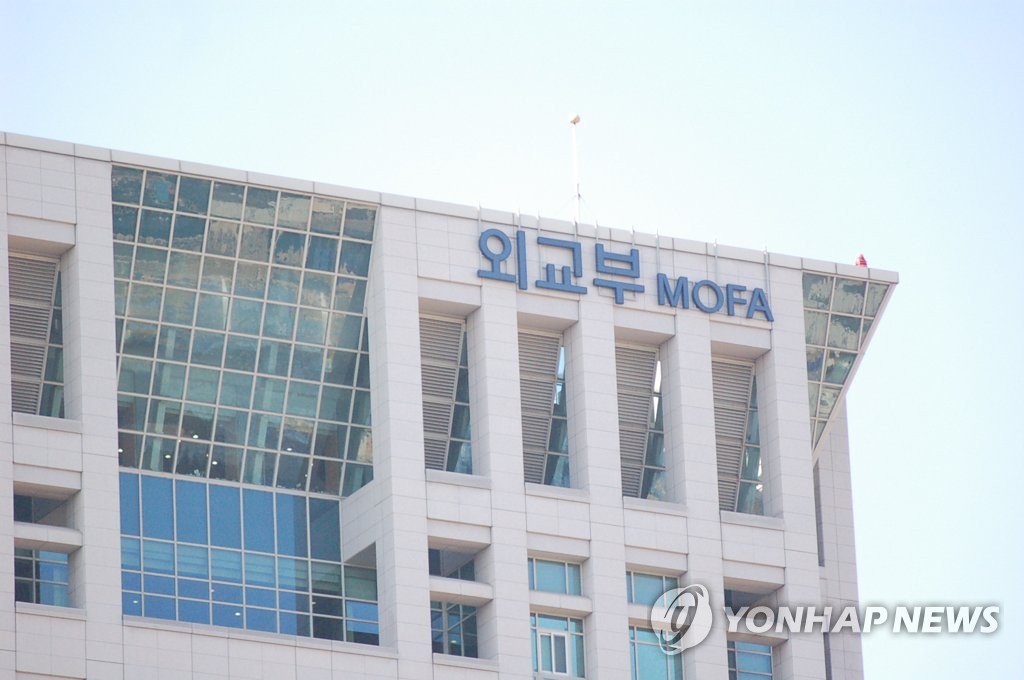


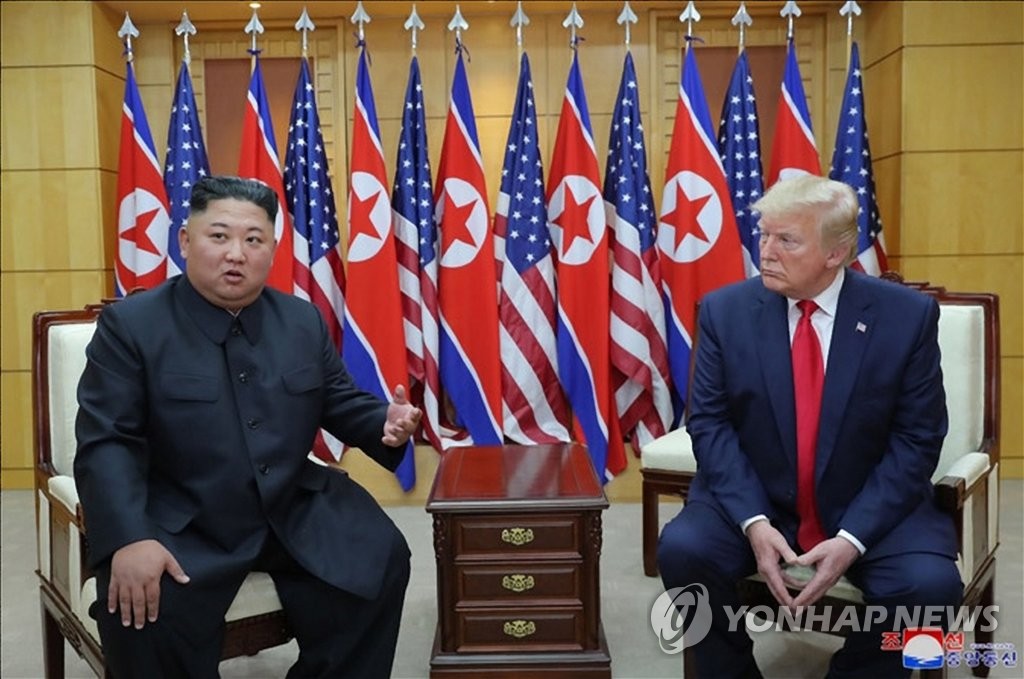


White House Reaffirms Trump’s Unconditional Talk Offer The administration confirmed on Feb. 27 that President Donald Trump “remains open to talking with Kim Jong‑un without any preconditions,” echoing his three historic summits in Singapore (June 2018), Hanoi (Feb. 2019) and Panmunjom (June 2019) as precedents for future dialogue [1][2]. An unnamed White House official stressed that U.S. policy has not changed despite recent North Korean statements [1]. South Korea’s top nuclear envoy, Jeong Yeon‑doo, echoed the same stance, describing Seoul as a “pacemaker” for inter‑Korean talks [1].
Kim Jong‑un Conditions Dialogue on U.S. Policy Change Speaking at the Workers’ Party congress (Feb. 19‑25), Kim declared there is “no reason not to get along with the U.S.” if Washington drops its “hostile” policy, implicitly demanding recognition of North Korea’s nuclear‑armed status and a halt to denuclearization pressure [1][4][9]. The same remarks were reported as a conditional openness, linking any future talks to a shift in U.S. attitude toward the DPRK [4]. Analysts note the demand could block denuclearization negotiations while leaving diplomatic channels technically open [4].
Seoul Positions Itself as Pacemaker While Awaiting Working‑Level Progress Jeong Yeon‑doo and senior officials in Seoul said the United States is “open to dialogue without preconditions,” but a senior Seoul source confirmed there is “no new development in terms of working‑level engagement” to pave the way for bilateral talks [1][3]. The South Korean foreign ministry pledged continued joint efforts with Washington to accelerate any U.S.–North Korea dialogue and reiterated its goal of complete denuclearization [3][5]. Despite the hostile rhetoric toward Seoul, the unification ministry said it would maintain a reconciliatory approach and not be deterred [5].
Potential Diplomatic Window Tied to Trump’s China Visit Analysts highlighted that President Trump’s upcoming trip to China, scheduled for March 31‑April 2, could provide a timing opportunity for renewed U.S.–North Korea talks, as Kim’s congress remarks align with a possible diplomatic opening [2][4]. The window is seen as the most plausible near‑term chance for engagement before the April U.S.–China summit [2]. No concrete meeting dates have been set, and the situation remains contingent on U.S. policy adjustments [2].
U.S. Delegation’s Seoul Visit Delayed, Security Talks Still Pending A senior Seoul official announced that a planned U.S. delegation visit was postponed due to scheduling conflicts, not trade disputes, leaving the new date unspecified [6]. The delegation was expected to discuss a joint fact sheet covering nuclear‑powered submarines, nuclear energy cooperation, and shipbuilding projects [6]. Despite the delay, both governments remain ready to continue security negotiations, including the possibility of Seoul hosting talks in Washington if needed [6].
Sources
-
1.
Yonhap: Trump Open to Talks with North Korea Without Preconditions, White House Says: Details the White House’s reaffirmation that Trump is willing to engage Kim without preconditions, cites past summits, and notes Seoul’s “pacemaker” role while confirming no new working‑level talks .
-
2.
Yonhap: White House says Trump Open to Talks with Kim Without Preconditions: Mirrors the Feb. 26 statement, adds analysis of a potential diplomatic window during Trump’s China visit and repeats the conditional openness expressed by Kim .
-
3.
Yonhap: South Korea to Keep Working with U.S. for Fast U.S.–North Korea Talks: Emphasizes Seoul’s pledge to cooperate with Washington to speed up dialogue, reiterates Kim’s conditional willingness, and restates South Korea’s denuclearization goals .
-
4.
Yonhap: North Korea Opens Door to U.S. Dialogue While Escalating Rhetoric Toward South Korea: Highlights Kim’s demand that the U.S. recognize North Korea’s nuclear status, notes heightened anti‑South rhetoric, and connects the stance to the upcoming Trump‑China summit .
-
5.
Yonhap: South Korea Condemns North Korea’s Renewed Hostile Stance, Reaffirms Peace Pursuit: Reports Seoul’s regret over North Korea’s hostile declaration, confirms continued pursuit of peaceful coexistence despite the provocation .
-
6.
Yonhap: U.S. Delegation’s Seoul Visit Delayed Over Scheduling, Not Trade Disputes: Explains the postponement of a security‑focused U.S. delegation, outlines agenda items like nuclear submarines, and dismisses trade‑related speculation .
-
7.
Yonhap: Kim Says Security Changes Won’t Hinder North Korea’s Progress at Party Congress: Notes Kim’s omission of any address to the U.S. or South Korea, signaling a cautious stance amid diplomatic overtures .
-
8.
Yonhap: North Korea claims “remarkable” five‑year policy success at ninth party congress: Covers the congress’s claim of major policy achievements, economic gains, and continued hostile posture toward the South .
-
9.
Yonhap: North Korea’s 9th Party Congress Sets Agenda on U.S. Dialogue, New Weapons and Succession: Outlines the congress agenda, potential openness to U.S. talks, planned weapons development, and speculation on succession for Kim’s daughter .
Timeline
June 2018 – President Donald Trump meets Kim Jong‑un in Singapore, marking the first U.S.–North Korea summit and establishing a precedent for high‑level dialogue that later informs U.S. openness to talks [1].
February 2019 – Trump and Kim hold a second summit in Hanoi, reinforcing the diplomatic momentum created by the Singapore meeting [1].
June 2019 – The third Trump‑Kim summit occurs at Panmunjom, completing the trio of historic contacts that the White House later cites as stabilizing the peninsula [1].
2023 – Kim Jong‑un declares the two Koreas “hostile states,” a policy later reiterated at the 2026 Workers’ Party congress and used by Seoul to frame its diplomatic stance [5].
Nov 28, 2025 – South Korea’s Unification Minister warns that North Korea may adopt a more hostile posture in 2026, urges renewed dialogue, and highlights the upcoming U.S.–China summit in April 2026 as a decisive moment for peace [14].
Dec 16, 2025 – The Korea‑focused think tank KNDA forecasts that 2026 could see renewed U.S.–North Korea momentum if Seoul and Washington create “concrete conditions,” and it points to a possible Kim‑Trump summit around Trump’s April 2026 China visit [13].
Dec 25, 2025 – Analysts note that a Kim‑Trump summit could be arranged during Trump’s planned April 2026 trip to China, linking the prospect to U.S. midterm elections and North Korea’s conditional openness if the U.S. drops its denuclearization demand [12].
Jan 16, 2026 – Former U.S. Special Representative Joseph Yun says North Korea would seek sanctions relief and formal nuclear‑state acknowledgment before talks, stresses Seoul’s essential facilitation role, and predicts U.S. backing for South Korea’s nuclear‑submarine program [11].
Feb 6, 2026 – A senior South Korean official in Washington predicts “some new progress in a few days,” describing a modest goodwill gesture that falls short of full U.S.–North Korea dialogue and noting uncertainty due to Pyongyang’s deepening ties with Russia and China [10].
Feb 19‑25, 2026 – The Workers’ Party of Korea convenes its ninth congress, the first in five years, to review the past five‑year plan and set a new agenda for the economy, defense, and diplomacy [9].
Feb 20, 2026 – The congress agenda signals that dialogue with the United States remains possible but contingent on Washington abandoning its denuclearization demand; it also likely codifies the 2023 “hostile states” policy toward South Korea and outlines new weapons development, while observers watch for a formal succession announcement for Kim’s daughter [9].
Feb 21, 2026 – North Korean state media claim “remarkable” five‑year policy success, declare the regime’s status “irreversible,” and reiterate a hostile stance toward South Korea, providing no detail on U.S. relations despite external interest [7].
Feb 23, 2026 – Kim Jong‑un tells the congress that no security change can delay the country’s advance, calls for a bold ideological, technological, and cultural “revolution,” and omits any reference to the United States or South Korea, a silence analysts link to the upcoming U.S.–China summit in April [6].
Feb 24, 2026 – A senior Seoul official announces that a U.S. delegation’s security‑focused visit to Seoul is postponed for scheduling reasons, leaving the date open while negotiations on a joint nuclear‑submarine and energy fact sheet remain pending [8].
Feb 26, 2026 – South Korea’s foreign ministry pledges continued cooperation with the United States to accelerate U.S.–North Korea talks, reaffirms its goal of complete denuclearization, and stresses a “pacemaker” role for Seoul in inter‑Korean diplomacy [4].
Feb 26, 2026 – The South Korean unification ministry condemns North Korea’s renewed hostile policy, reiterates a reconciliatory approach, and notes that Kim’s 2023 hostile‑states declaration is being reaffirmed at the congress [5].
Feb 26, 2026 – The White House confirms that President Trump remains open to talks with Kim without preconditions, cites the three 2018‑2019 summits as stabilizing precedents, and highlights a potential diplomatic window during Trump’s planned China visit from late March to early April [3].
Feb 26, 2026 – North Korea signals willingness to engage with the United States if Washington drops its “hostile” stance, tying the condition to recognition of its nuclear‑armed status and noting that the stance could create a dialogue opening ahead of Trump’s China trip [2].
Feb 27, 2026 – The White House reiterates that Trump is open to dialogue with Kim without any preconditions, echoes the historic summit record, and notes that Seoul’s nuclear envoy confirms the U.S. position while reporting no new working‑level engagement [1].
Late March – Early April 2026 (planned) – President Donald Trump travels to China to meet President Xi Jinping, with analysts expecting a possible Kim‑Trump summit on March 31‑April 2 and a broader U.S.–China summit in April that could shape the diplomatic environment for North Korea [2][3][12][13][14].
Dive deeper (13 sub-stories)
-
Trump Remains Open to Unconditional Talks with North Korea, White House Says
(2 articles)
-
Yonhap: South Korea to Keep Working with U.S. for Fast U.S.–North Korea Talks
-
Yonhap: North Korea Opens Door to U.S. Dialogue While Escalating Rhetoric Toward South Korea
-
Yonhap: South Korea Condemns North Korea’s Renewed Hostile Stance, Reaffirms Peace Pursuit
-
Yonhap: U.S. Delegation’s Seoul Visit Delayed Over Scheduling, Not Trade Disputes
-
Yonhap: Kim Says Security Changes Won’t Hinder North Korea’s Progress at Party Congress
-
Yonhap: North Korea claims “remarkable” five‑year policy success at ninth party congress
-
Yonhap: North Korea’s 9th Party Congress Sets Agenda on U.S. Dialogue, New Weapons and Succession
-
Yonhap: Senior South Korean Official Predicts Near‑Term Diplomatic Step on North Korea
-
Yonhap: North Korea would seek sanctions relief and nuclear acknowledgment to engage in talks, ex-envoy says
-
Yonhap: Prospects for Kim-Trump summit rise around Trump's planned April China trip
-
Yonhap: Dialogue momentum may arise in 2026 to revive stalled N.K.-U.S. diplomacy: think tank
-
Yonhap: South Korea Urges Dialogue as North Korea May Escalate Hostility Next Year
All related articles (14 articles)
-
Yonhap: Trump Open to Talks with North Korea Without Preconditions, White House Says
-
Yonhap: White House says Trump Open to Talks with Kim Without Preconditions
-
Yonhap: South Korea to Keep Working with U.S. for Fast U.S.–North Korea Talks
-
Yonhap: North Korea Opens Door to U.S. Dialogue While Escalating Rhetoric Toward South Korea
-
Yonhap: South Korea Condemns North Korea’s Renewed Hostile Stance, Reaffirms Peace Pursuit
-
Yonhap: U.S. Delegation’s Seoul Visit Delayed Over Scheduling, Not Trade Disputes
-
Yonhap: Kim Says Security Changes Won’t Hinder North Korea’s Progress at Party Congress
-
Yonhap: North Korea claims “remarkable” five‑year policy success at ninth party congress
-
Yonhap: North Korea’s 9th Party Congress Sets Agenda on U.S. Dialogue, New Weapons and Succession
-
Yonhap: Senior South Korean Official Predicts Near‑Term Diplomatic Step on North Korea
-
Yonhap: North Korea would seek sanctions relief and nuclear acknowledgment to engage in talks, ex-envoy says
-
Yonhap: Prospects for Kim-Trump summit rise around Trump's planned April China trip
-
Yonhap: Dialogue momentum may arise in 2026 to revive stalled N.K.-U.S. diplomacy: think tank
-
Yonhap: South Korea Urges Dialogue as North Korea May Escalate Hostility Next Year