Trump Raises Global Tariffs to 15% After Supreme Court Limits Emergency Powers
Updated (4 articles)

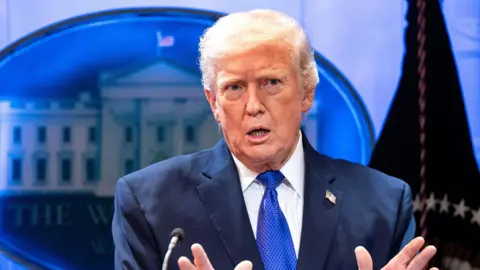

Tariff hike announced with immediate effect and 150‑day window On 21 Feb 2026 President Donald Trump posted on Truth Social that the United States will raise the worldwide customs duty from 10 % to the statutory maximum of 15 % effective immediately, with the decree slated to begin on 24 Feb and remain for 150 days [1][2][3][4]. The proclamation exempts pharmaceuticals and goods covered by the USMCA, while other sectoral tariffs on steel, aluminium, lumber and autos stay unchanged [1][2]. Trump framed the move as retaliation against nations he claims have “ripped” the U.S. off for decades [4].
Supreme Court 6‑3 ruling curtails use of IEEPA for tariffs The Court held that the president cannot invoke the 1977 International Emergency Economic Powers Act without explicit congressional authorization, overturning the legal basis for the earlier 10 % global tariff [1][2][3][4]. Chief Justice John Roberts emphasized the need for a clear legislative mandate, and dissenting Justice Brett Kavanaugh noted the decision does not address reimbursement of duties already collected [1]. The ruling opens the door for businesses to seek refunds of the roughly $130 billion collected in 2025 [1][2].
Section 122 of the 1974 Trade Act provides temporary legal footing Trump’s administration invoked Section 122, which permits a temporary duty of up to 15 % for a limited period pending congressional approval, typically about five months or 150 days [2][3][4]. After that window, Congress must enact legislation to extend or replace the measure, otherwise the tariffs expire [2][3]. The administration also continues to rely on other authorities such as Section 232 for steel and aluminium and Section 301 for investigations into unfair trade practices [4].
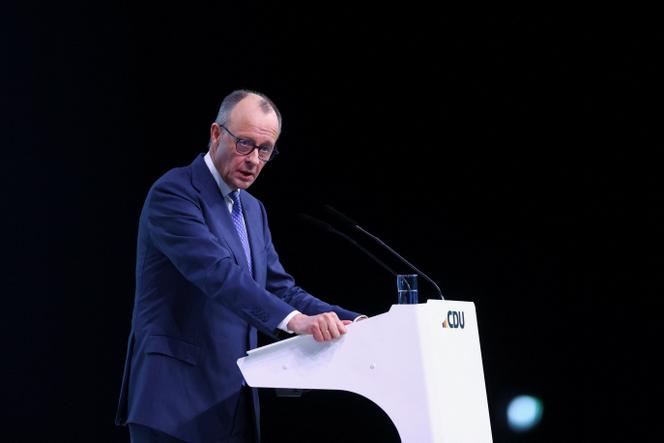
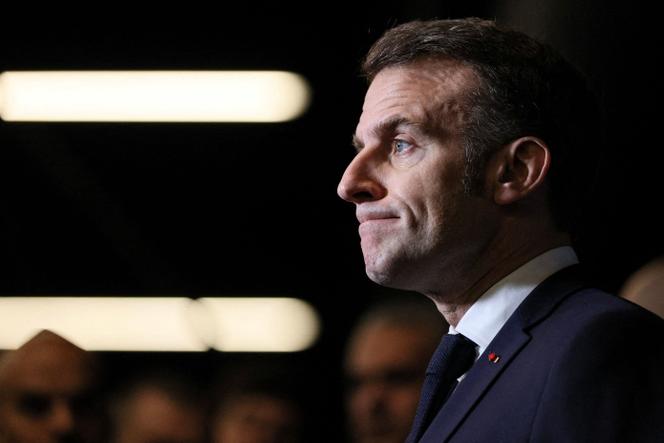
EU, UK and Brazil outline coordinated responses and concerns French trade minister Nicolas Forissier warned the EU could deploy its anti‑coercion instrument to limit U.S. investment and digital exports if the tariffs persist [1]. German Chancellor Friedrich Merz pledged a joint European stance before his Washington meeting, while President Emmanuel Macron called for “powers and counter‑powers” in democracies [1]. Brazil’s President Luiz Inácio Lula da Silva, speaking in New Delhi, urged equal treatment of all nations and cautioned against a new Cold War [1]; the UK maintains that its privileged trade deals on steel, pharma and aerospace remain intact [2].
Refund debate intensifies as businesses seek restitution The Supreme Court decision has triggered lawsuits demanding repayment of the $130 bn in duties collected under the invalidated IEEPA tariffs [1][2]. The U.S. Chamber of Commerce, National Retail Federation and Senators Maria Cantwell and John Kennedy have pressed the administration for swift reimbursement, arguing the delays could affect the 2026 midterm election climate [2]. Trump responded that the courts will resolve the refund issue over years, and his legal team has not indicated an immediate reversal of the collected amounts [1].
Sources
-
1.
Le Monde: Trump lifts global tariffs to 15% as U.S. Supreme Court curtails his emergency authority – Details the 15 % increase, the 6‑3 Court ruling, sectoral exemptions, and EU’s anti‑coercion plans, emphasizing diplomatic reactions from France, Germany and Brazil .
-
2.
BBC: Trump Raises Global Tariffs to 15% Amid Supreme Court Ruling – Highlights the use of Section 122, the temporary five‑month window, exemptions, and the political fallout including refund battles and UK/EU trade‑deal uncertainty .
-
3.
CNN: Trump lifts global tariff to 15% after Supreme Court rebuke – Focuses on the immediate announcement, legal ceiling of 15 %, projected overall tariff burden of 6 %, and mixed economic impacts on specific countries and consumers .
-
4.
Yonhap: Trump Raises Global Tariff to 15% After Supreme Court Ruling – Stresses Trump’s criticism of the Court, the subsequent proclamation of a 10 % provisional tariff, and the launch of Section 301 investigations targeting major partners .
Related Tickers
Timeline
2025 – The United States collects roughly $130 billion in duties imposed under the International Emergency Economic Powers Act (IEEPA), a revenue stream the administration later must justify after a court challenge [1].
2025 – The Supreme Court’s 6‑3 decision voids earlier IEEPA‑based tariffs, marking a major check on presidential trade authority and opening the door for businesses to seek refunds [1].
Feb 20, 2026 – The U.S. Supreme Court issues a 6‑3 ruling that limits President Trump’s emergency‑tariff power under the 1977 IEEPA, stating that any such duties require explicit congressional authorization [1][4].
Feb 21, 2026 – President Trump signs a proclamation invoking Section 122 of the 1974 Trade Act to impose a temporary 10 % global tariff, set to take effect at 12:01 a.m. Washington time on Tuesday [3].
Feb 21, 2026 – On Truth Social, Trump announces an immediate increase of the worldwide tariff from 10 % to 15 %, arguing it counters countries that have “ripped” the U.S. off for decades [2][4].
Feb 21, 2026 – U.S. Trade Representative Jamieson Greer launches Section 301 investigations into most major trading partners, targeting industrial excess capacity, forced labor, pharmaceutical pricing, discrimination against U.S. tech firms, and digital services [3].
Feb 21‑22, 2026 – French trade minister Nicolas Forissier calls for a coordinated EU response, citing the bloc’s anti‑coercion instrument (ACI) to curb U.S. investment and digital exports if tariffs persist; German Chancellor Friedrich Merz pledges a joint European stance before his upcoming Washington meeting [4].
Feb 22, 2026 – The 15 % tariff begins on Feb 24 for a 150‑day period, with exemptions for pharmaceuticals and USMCA‑covered goods; analysts note the measure can remain only until Congress acts [4].
Feb 22, 2026 – Brazilian President Luiz Inácio Lula da Silva, speaking in New Delhi, urges Trump to treat all nations equally and warns against a new Cold War, highlighting broader geopolitical tensions [4].
Feb 2026 – July 2026 (expected) – The 150‑day tariff window is slated to expire in mid‑July 2026, after which Congress must approve any continuation, creating a legislative deadline for the administration [4].
Feb 2026 – future – The EU prepares to activate anti‑coercion tools if U.S. surcharges continue, while the Washington meeting between Merz and U.S. officials will shape the bloc’s coordinated retaliation [4].
Feb 2026 – future – Legal scholars anticipate refund litigation over the $130 billion already collected to occupy the courts for years, as the Supreme Court’s decision leaves reimbursement procedures unresolved [4].
External resources (2 links)
- https://google.com/search?q=furniture+tariff+cnn&rlz=1C5GCCM_en&oq=furniture+tariff+cnn&gs_lcrp=EgZjaHJvbWUqBggAEEUYOzIGCAAQRRg7MggIARAAGBYYHjIKCAIQABiABBiiBDIKCAMQABiABBiiBDIKCAQQABiABBiiBDIGCAUQRRg8MgYIBhBFGDzSAQgzNjYxajBqNKgCALACAfEF1yZPvfUj5tQ&sourceid=chrome&ie=UTF-8 (cited 1 times)
- https://www.ft.com/content/b1177a90-56ed-4936-8a02-a72424df510d (cited 1 times)