Bomb Cyclone Intensifies Off Carolina Coast, Dumping Snow and Arctic Cold Into Florida
Updated (3 articles)
Rapid Deepening Meets Bomb‑Cyclone Definition The low‑pressure system that formed off the North Carolina coast early Saturday dropped 30‑35 mb in 24 hours, surpassing the 24 mb threshold that defines a bomb cyclone [1][3]. The Weather Prediction Center warned the storm would continue strengthening as it moved northward, expanding its wind field and precipitation shield [1][2]. Meteorologist Brandon Buckingham described the event as “exceptionally powerful,” noting its potential for damaging winds, heavy snow, and coastal flooding [1].
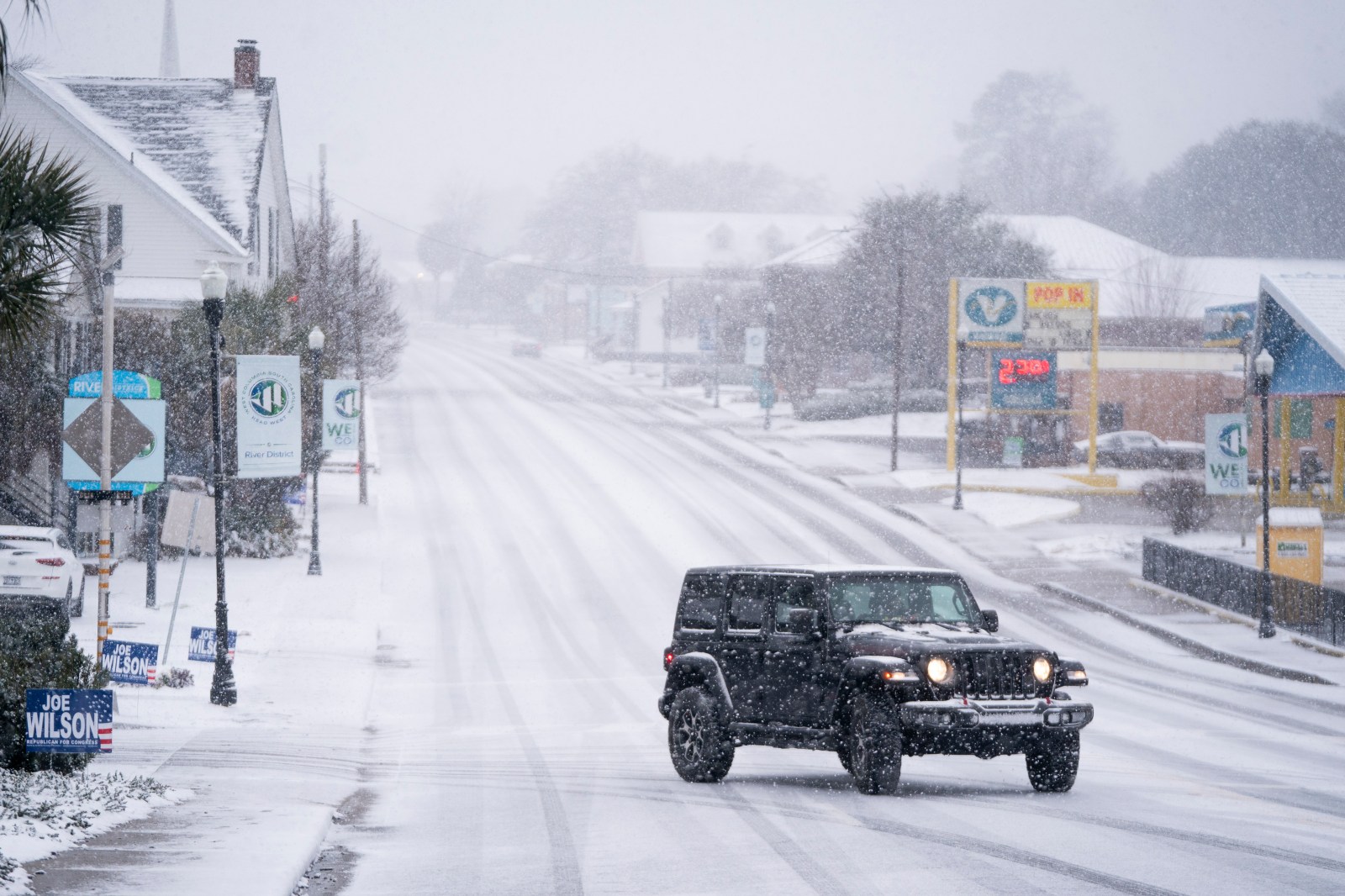
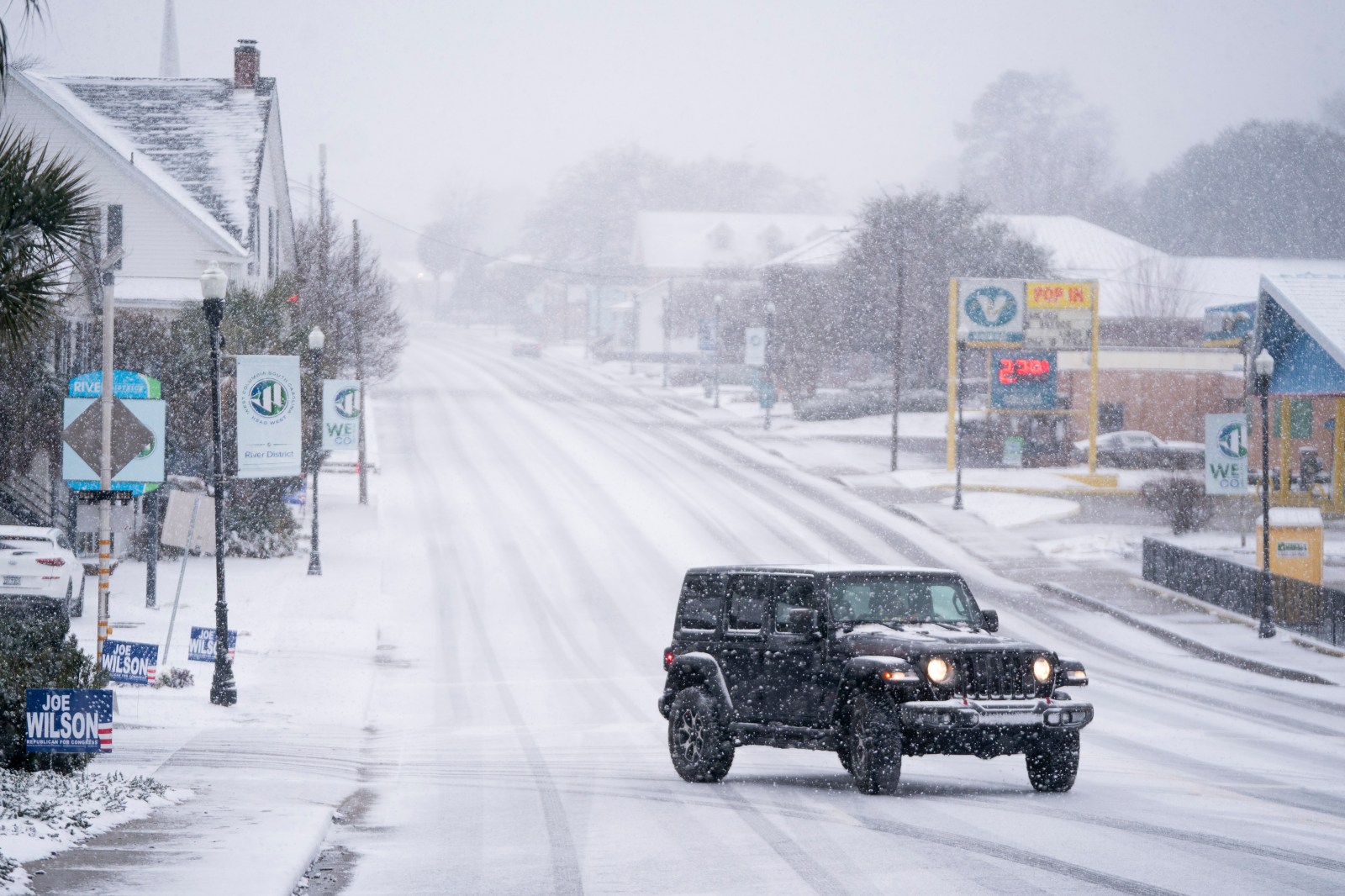
Snowfall Ranges From Five to Over Twelve Inches Snowfall exceeded a foot in parts of eastern North Carolina, while the CNN forecast on Jan 30 projected 5‑10 inches across central and eastern NC, central‑northeast SC, and southern VA [2]. An earlier CNN model on Jan 29 suggested 6‑12 inches for coastal NC and VA, with possible bands reaching Atlanta and Knoxville [3]. Record‑type snowfalls were expected in Columbia, SC (8.6 inches, its heaviest since 2010) and Wilmington, NC (≥3 inches, a first in eight years) [2].
Hurricane‑Force Gusts Trigger Coastal Flooding and Erosion Near‑coastal gusts were forecast to reach 70‑75 mph in North Carolina and Virginia, meeting hurricane‑force criteria [2][3]. Combined with astronomical high tides, these winds raise the risk of moderate to locally significant flooding along the Outer Banks and Virginia Tidewater, with overwash already responsible for more than two dozen beachfront home losses since 2020 [2]. Strong onshore flow also threatens beach erosion and scattered power outages where blowing snow reduces visibility [3][1].
Arctic Air Drives Freezing Temperatures Into Southern Florida deep surge of Arctic air pushed freezing temperatures into the southern Florida Peninsula for the first time since December 1989, prompting extreme‑cold warnings statewide [1]. Similar alerts covered Louisiana, Alabama, Mississippi, Georgia, the Carolinas, Virginia, and West Virginia, while winter‑storm warnings remained in effect for North Carolina, South Carolina, and Virginia [1]. The Weather Prediction Center cautioned of frostbite and hypothermia risks as the cold air mass spreads southward [1].
Millions Under Winter Storm Watches as Communities Prepare More than 28 million people across northern Georgia, the Carolinas, and southern Virginia were placed under winter‑storm watches and warnings, many still coping with power outages from the previous deadly winter event [2]. Authorities urged residents to secure property, monitor updates, and limit travel to reduce exposure to hazardous conditions [3]. Ongoing power‑restoration efforts and debris clearance underscore the compounded threat posed by the bomb cyclone [2].
Sources
-
1.
Newsweek: Bomb Cyclone Hits East Coast, Drives Arctic Air to Florida: Highlights the storm’s rapid deepening, foot‑plus snow in North Carolina, and unprecedented freezing temperatures in southern Florida, emphasizing extreme‑cold alerts across the Southeast .
-
2.
CNN: Bomb Cyclone Brings Snow, Hurricane‑Force Winds and Flood Threat to Southeast: Focuses on 5‑10 inch snowfall forecasts, 75 mph gusts, coastal flooding risks, and the fact that over 28 million people are under watches while still recovering from a prior deadly winter storm .
-
3.
CNN: Bomb cyclone set to unleash snow, wind and coastal flooding from the Southeast to the Northeast: Stresses track uncertainty, 6‑12 inch snow potential for coastal NC/VA, near hurricane‑force winds, possible blizzard conditions along I‑95, and power‑outage concerns amid ongoing recovery .
Timeline
Early Jan 2026 – A deadly cold outbreak drives record low temperatures across the Southeast and Mid‑Atlantic, and a historic winter storm earlier in the week leaves widespread power outages and fatalities, setting a vulnerable backdrop for the coming system [2].
Jan 29, 2026 – Meteorologists project a low‑pressure area to form off the Carolina coast early Saturday, deepening into a bomb cyclone with a ≥24 mb pressure drop in 24 hours and forecast 6‑12 inches of snow for coastal North Carolina and Virginia, with bands reaching as far west as Atlanta [2].
Jan 29, 2026 – Forecast models warn that a 100‑200‑mile shift in the storm’s track could decide whether I‑95 corridor cities face a blizzard or only light snow, creating high uncertainty for the Mid‑Atlantic and Northeast [2].
Jan 30, 2026 – The bomb cyclone forms near the North Carolina coast late Friday and undergoes bombogenesis Saturday, delivering 5‑10 inches of snow across central/eastern North Carolina, central/northeast South Carolina and southern Virginia, with Columbia, SC expecting a record 8.6 inches [1].
Jan 30, 2026 – Near‑coastal wind gusts may reach 75 mph Saturday night, producing blizzard‑like visibility and power‑outage risk, while inland gusts of 25‑35 mph affect Georgia through the Carolinas to southern Virginia [1].
Jan 30, 2026 – Astronomical high tides combined with strong onshore winds raise the threat of moderate to locally significant coastal flooding along the Outer Banks and Virginia Tidewater, where more than two dozen beachfront homes have been lost since 2020 [1].
Jan 30, 2026 – Over 28 million people across northern Georgia, the Carolinas and southern Virginia remain under winter‑storm watches and warnings while still recovering from the prior deadly storm [1].
Jan 30, 2026 – Authorities urge residents from the Carolinas to the Northeast to secure property, monitor updates, and prepare for hazardous travel, power disruptions and possible flooding [2].
Feb 1, 2026 – The bomb cyclone intensifies offshore, dropping more than a foot of snow in parts of North Carolina and meeting bomb‑cyclone criteria, while the Weather Prediction Center warns the system will keep strengthening and expand strong winds up the coast [3].
Feb 1, 2026 – AccuWeather meteorologist Brandon Buckingham calls the projected 30‑35 mb pressure drop “exceptionally powerful,” warning of damaging winds, heavy snow, coastal flooding and significant beach erosion [3].
Feb 1, 2026 – Near‑blizzard to blizzard conditions spread from South Carolina’s Grand Strand through southeastern Virginia, with heavy snow and gusty winds persisting through Sunday morning [3].
Feb 1, 2026 – An Arctic air surge pushes freezing temperatures to southern Florida for the first time since Dec 1989, prompting extreme‑cold warnings across the entire state and neighboring southeastern states [3].
Feb 1, 2026 – Extreme‑cold and winter‑storm warnings stay in effect for Florida, Louisiana, Alabama, Mississippi, Georgia, the Carolinas, Virginia and West Virginia, indicating hazardous winter weather continues [3].
External resources (2 links)
- https://forecast.weather.gov/wwamap/wwatxtget.php?cwa=TBW&wwa=extreme%20cold%20warning (cited 1 times)
- https://x.com/NWSWPC (cited 1 times)