US‑Iran Indirect Oman Talks Advance Nuclear Dialogue Amid Sanctions and Naval Buildup
Updated (4 articles)
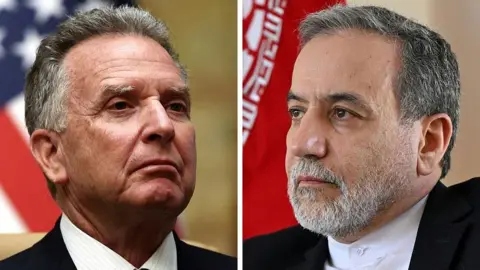
Talks Convened in Muscat With High‑Level Delegations On Friday, 7 February 2026, U.S. and Iranian teams met in Muscat, Oman, with U.S. Central Command head Adm. Brad Cooper attending in dress uniform and special envoys Steve Witkoff and Jared Kushner joining the American side, while Iran’s foreign minister Abbas Araghchi and Omani foreign minister Badr al‑Busaidi mediated the session [1][2][3].
Iran Emphasizes Nuclear‑Only Agenda While Rejecting Missile Limits Tehran insisted the talks remain “exclusively nuclear,” seeking a regional uranium‑enrichment consortium and the transfer of its 400 kg HEU stockpile, but rejected any U.S. demand to curb its ballistic‑missile program or end support for regional proxies, framing missile issues as a sovereignty breach [1][2][3].
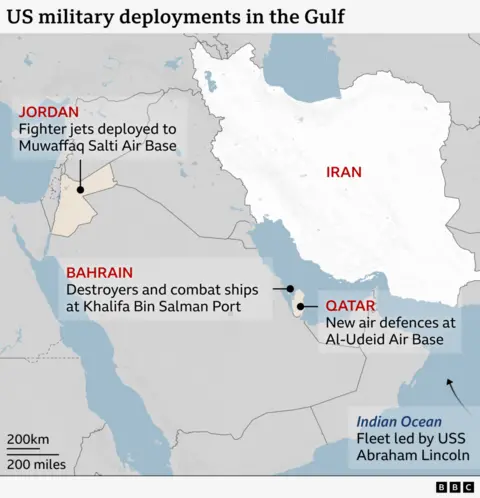
U.S. Couples Diplomacy With New Sanctions and Naval Presence The United States announced fresh sanctions targeting 14 oil tankers, 15 trading firms and two executives, and issued an executive order authorizing a 25 % import tax on goods from countries buying Iranian oil, while the aircraft carrier USS Abraham Lincoln and additional warships sailed in the Arabian Sea to underscore military pressure [1][2].
Negotiations Occur Against Backdrop of Domestic Repression and Regional Tensions The talks follow Iran’s violent crackdown on nationwide protests that killed at least 6,941 people and led to over 50,000 arrests, prompting a U.S. military buildup in the region; President Trump warned Supreme Leader Ayatollah Ali Khamenei to be “very worried,” whereas Secretary of State Marco Rubio argued any deal must extend beyond nuclear issues [2][3][1].
Sources
-
1.
AP: US and Iran Hold Indirect Talks in Oman Amid Military Posturing: Summarizes the Feb 7 meeting, highlights Adm. Brad Cooper’s presence, Trump’s “very good” comment, new sanctions and a possible import tax, and notes Iran’s 60 % uranium enrichment level.
-
2.
BBC: Iran‑U.S. Talks in Oman Signal Tentative Nuclear Dialogue: Emphasizes the “good beginning” assessment, details envoys Steve Witkoff and Jared Kushner, reports Iran’s openness to a uranium‑enrichment consortium but refusal on missile limits, and notes divergent U.S. political views.
-
3.
AP: Iran‑U.S. Nuclear Talks Set for Friday in Oman Amid Heightened Tensions: Provides background on the scheduled Feb 5 talks, Trump’s warning to Khamenei, Iran’s demand for a nuclear‑only format, and mixed reactions from regional leaders.
Timeline
June 2025 – Israel engages in a brief 12‑day war with Iran, after which the United States carries out airstrikes on Iranian nuclear facilities, causing the previously scheduled Oman nuclear talks to collapse and heightening regional tensions[3].
Dec 2025 – Nationwide anti‑government protests erupt across Iran; the regime begins a violent crackdown that later escalates, setting the stage for heightened U.S. diplomatic and military activity[4].
Jan 13, 2026 – President Donald Trump tells reporters that Iran wants to negotiate, while his team weighs cyber‑attacks or strikes in response to Tehran’s crackdown that activists estimate has killed at least 646 people; Oman’s foreign minister visits Iran as a mediator, and Iranian Foreign Minister Abbas Araghchi declares the situation “under total control” and blames Israel and the United States for the unrest[4].
Feb 4, 2026 – Iranian Foreign Minister Abbas Araghchi announces that a bilateral nuclear‑only meeting will take place on Friday in Muscat, aiming to ease post‑crackdown tensions; he notes that the previous year’s Oman talks collapsed after Israel’s war and U.S. strikes on Iranian nuclear sites[3].
Feb 5, 2026 – In an NBC interview, President Trump warns Iran’s Supreme Leader Ayatollah Ali Khamenei that he “should be very worried,” while Tehran pushes for a “different” format that excludes missiles and human‑rights issues; regional leaders voice mixed positions, with Iran’s reformist President Masoud Pezeshkian urging “fair and equitable” talks, Secretary of State Marco Rubio demanding a broader agenda, Vice President JD Vance highlighting Khamenei’s refusal to speak directly with Trump, and Turkish President Recep Tayyip Erdogan calling for a diplomatic resolution[3].
Feb 6, 2026 – Indirect talks in Muscat commence, and Iranian Foreign Minister Abbas Araghchi calls the meeting a “good beginning” focused exclusively on nuclear matters, while delegations agree to return to their capitals for further consultations; the U.S. delegation includes special envoy Steve Witkoff and Jared Kushner, who seek to raise Iran’s ballistic‑missile program and proxy support, but Tehran rejects any limits on its missile arsenal and insists such demands breach its sovereignty[1].
Feb 6, 2026 – Oman’s Foreign Minister Badr Albusaidi says the talks clarify both Iranian and American thinking and identify possible progress, underscoring the diplomatic significance of the Muscat session[1].
Feb 6, 2026 – Tehran signals openness to a regional uranium‑enrichment consortium and to transferring its 400 kg stockpile of highly enriched uranium to a third country, while maintaining its stance against missile‑limit demands[1].
Feb 6, 2026 – The United States launches fresh sanctions targeting Iran’s energy sector—14 oil tankers, 15 trading firms and two executives—and issues an executive order that could impose a 25 % import tax on goods from countries buying Iranian oil, with the tariff slated to begin Saturday and removable if Iran aligns with U.S. security interests[2].
Feb 6, 2026 – A U.S. military buildup unfolds in the Middle East, featuring the aircraft carrier USS Abraham Lincoln and other warships in the Arabian Sea, as human‑rights groups estimate the recent Iranian crackdown has killed at least 6,941 people and led to over 50,000 arrests[1].
Feb 7, 2026 – U.S. Central Command’s top Middle East commander, Adm. Brad Cooper, attends the Muscat talks in dress uniform, highlighting the parallel naval deployment; President Trump declares the discussions “very good,” promises additional talks early next week, and warns that failure to reach a nuclear deal will bring “steep consequences”[2].
Feb 7, 2026 – Iran’s nuclear program reaches 60 % uranium enrichment—a short step from weapons‑grade—and Tehran continues to limit IAEA inspections after the 2018 U.S. withdrawal from the JCPOA, reinforcing concerns over its nuclear trajectory[2].
Feb 7, 2026 – The United States maintains its demand to discuss Iran’s ballistic‑missile program and support for the “Axis of Resistance” proxies, while Iran insists that any such demands infringe on its sovereignty, leaving the scope of a potential agreement uncertain[1].
All related articles (4 articles)
External resources (2 links)
- https://outrider.org/ (cited 1 times)
- https://www.carnegie.org/ (cited 1 times)