9th Circuit Dismisses Trump Appeal, Ends Guard Deployment Dispute in Portland
Updated (9 articles)
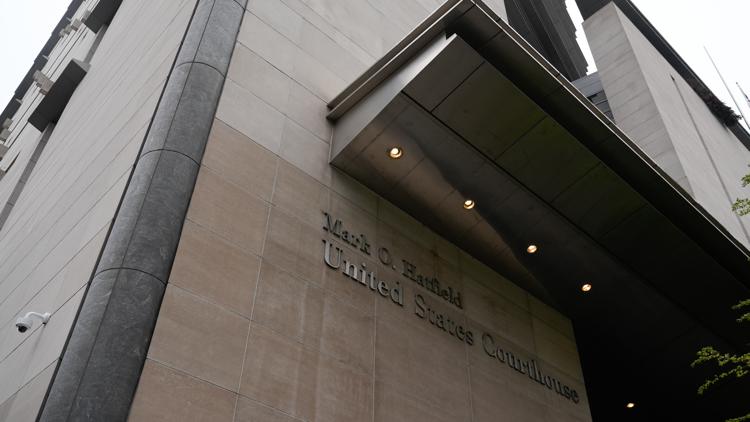
Court Ruling Ends Federal Attempt to Deploy Guard On February 18, 2026 the U.S. Court of Appeals for the 9th Circuit formally dismissed the Trump administration’s appeal, leaving in place U.S. District Judge Karin Immergut’s permanent injunction that bars any National Guard deployment to Portland [1]. The appellate decision rejected the administration’s request to overturn the injunction, emphasizing the lack of credible evidence that protests had escalated into widespread violence or caused serious injuries to federal personnel [1]. By upholding the injunction, the court effectively closed the legal fight over the federal effort to send Guard troops into the city [1].
Oregon Officials Celebrate Legal Victory Oregon Attorney General Dan Rayfield called the dismissal “a win for Oregon,” highlighting the state’s successful challenge to what he described as an overreach of presidential authority [1]. Governor Tina Kotek confirmed that the remaining Oregon National Guard members were ordered home by U.S. Northern Command after being demobilized at Fort Bliss, Texas [1]. Both officials noted that the decision restores state control over Guard deployments and ends the federal presence that had been poised for activation [1].
Trump Administration’s Prior Moves Blocked Earlier, President Donald Trump had declared Portland “war‑ravaged” and ordered 200 Oregon National Guard troops to be federalized, alleging an ICE facility siege by “Antifa and other domestic terrorists” [1]. After the initial injunction, the administration attempted to substitute California Guard units for the barred Oregon troops, but the courts again prevented that deployment [1]. These efforts were consistently rebuffed, reinforcing the judiciary’s stance against the administration’s deployment strategy [1].
Injunction Originated from Judge Immergut’s Findings Judge Immergut’s permanent injunction was based on a finding that there was “no credible evidence” of protests escalating into widespread violence or causing serious injuries to federal agents [1]. The ruling explicitly barred any National Guard involvement in Portland, setting a legal precedent that the federal government could not unilaterally deploy state troops without demonstrable justification [1]. This legal foundation underpinned the appellate court’s decision to dismiss the appeal [1].
Timeline
June 2025 – President Trump federalizes California National Guard troops for Los Angeles protests without Governor Newsom’s request, marking the first such out‑of‑state activation in decades and setting the stage for later legal battles[7].
September 2025 – U.S. District Judge Charles Breyer rules that Trump lacks authority to keep California Guard under federal control, calling the federalization “profoundly un‑American” and ordering a return to state command[5].
Sept 27, 2025 – About 100 Oregon National Guard soldiers are mobilized under Title 10 authority for a planned deployment to Portland and other Democratic‑led cities, part of a broader national Guard federalization effort[9].
Nov 20, 2025 – U.S. District Judge Jia Cobb issues a removal order directing the President and the Defense Department to withdraw National Guard troops from Washington, D.C., asserting the city’s right to self‑governance[4].
Nov 26, 2025 – A shooting near the White House kills one Guard member and critically injures another, prompting the administration to add 500 troops to the existing D.C. deployment and intensifying scrutiny of the Guard’s presence[6].
Dec 4, 2025 – The D.C. Circuit Court of Appeals issues an unsigned order temporarily suspending Judge Cobb’s removal directive, preserving a 21‑day delay while the court considers an indefinite stay[4].
Dec 10, 2025 – Judge Charles Breyer grants a preliminary injunction ordering the return of California National Guard troops to state control and pauses enforcement until Monday noon PT, limiting the Los Angeles deployment to a few hundred soldiers[7].
Dec 10, 2025 – In a separate ruling, Judge Breyer orders the end of federalization, noting only about 300 California Guard members remain under federal command and emphasizing that Congress did not intend indefinite service[3].
Dec 10, 2025 – White House spokesperson Abigail Jackson says President Trump “exercised lawful authority” to deploy Guard troops to support federal officers after violent riots and “looks forward to ultimate victory on the issue”[5].
Dec 10, 2025 – Governor Gavin Newsom declares the federalization “illegal” and demands the Guard’s return to state service, arguing the President removed troops from essential public‑safety operations[5].
Dec 15, 2025 – The Los Angeles federalization order is set to take effect, giving the administration time to appeal the judge’s injunction before the Guard must revert to state control[1].
Dec 17, 2025 – The D.C. Circuit Court of Appeals unanimously pauses Judge Cobb’s removal order, allowing several thousand Guard members to remain in Washington, D.C. through at least late February while the case proceeds[2].
Dec 17, 2025 – Judge Patricia Millett warns that forcing Guard troops to leave would cause a “profound level of disruption” to service members already deployed for four months[2].
Late Dec 2025 – President Trump announces he will drop the push for Guard deployments to Portland, Los Angeles, and Chicago after months of legal roadblocks, signaling a shift in the administration’s strategy[9].
Late Dec 2025 – The administration confirms the California Guard deployment will remain in effect through February, while plans to use California troops in Portland are blocked by courts[7].
Late Dec 2025 – The U.S. Supreme Court schedules arguments on Trump’s attempt to deploy Guard troops to Chicago, a case that could affect similar deployments in Los Angeles, Portland, and other cities[6].
Jan 17, 2026 – About 100 Oregon National Guard soldiers return home after demobilization following a federal injunction; Governor Tina Kotek greets them at Portland International Airport and notes they are now under state authority[9].
Feb 18, 2026 – Oregon Attorney General Dan Rayfield declares a “win for Oregon” after the 9th Circuit dismisses the Trump administration’s appeal, leaving Judge Immergut’s permanent injunction—citing “no credible evidence” of widespread violence—intact[8].
Feb 18, 2026 – Governor Tina Kotek confirms the remaining Oregon Guard troops have been sent home, completing the demobilization process after the federal order is lifted[8].
All related articles (9 articles)
-
King5 (Seattle, WA): Oregon AG Hails Dismissal of Trump Appeal Over Guard Deployment
-
King5 (Seattle, WA): Oregon National Guard troops demobilized and return home after federalization
-
CNN: Appeals Court Allows Trump’s National Guard Deployment in D.C. to Continue
-
CNN: Federal judge orders Trump’s National Guard deployment in Los Angeles to end
-
Newsweek: Judge Orders Trump to Halt California Guard Deployment in Los Angeles
-
BBC: US judge blocks Trump's National Guard deployment in Los Angeles
-
AP: Judge orders Trump to end California National Guard troop deployment in Los Angeles
-
Newsweek: Trump Court Order Allows National Guard to Stay in Washington, D.C.
-
CNN: Appeals Court Temporarily Halts Trump’s Order to Remove National Guard from Washington, DC
External resources (6 links)
- https://www.fjc.gov/history/judges/breyer-charles-r (cited 1 times)
- https://www.gov.ca.gov/2025/12/10/federal-court-to-trump-keeping-a-standing-army-is-illegal-the-federalization-of-californias-national-guard-must-end/ (cited 1 times)
- https://storage.courtlistener.com/recap/gov.uscourts.ca9.4e2731d4-cbd8-4803-a59f-a1d0c6023daf/gov.uscourts.ca9.4e2731d4-cbd8-4803-a59f-a1d0c6023daf.137.0.pdf (cited 1 times)
- https://storage.courtlistener.com/recap/gov.uscourts.cand.450934/gov.uscourts.cand.450934.225.0_3.pdf (cited 1 times)