DeepMind’s AlphaGenome Gains Widespread Use While Company Emphasizes Responsible AI Roadmap
Updated (2 articles)
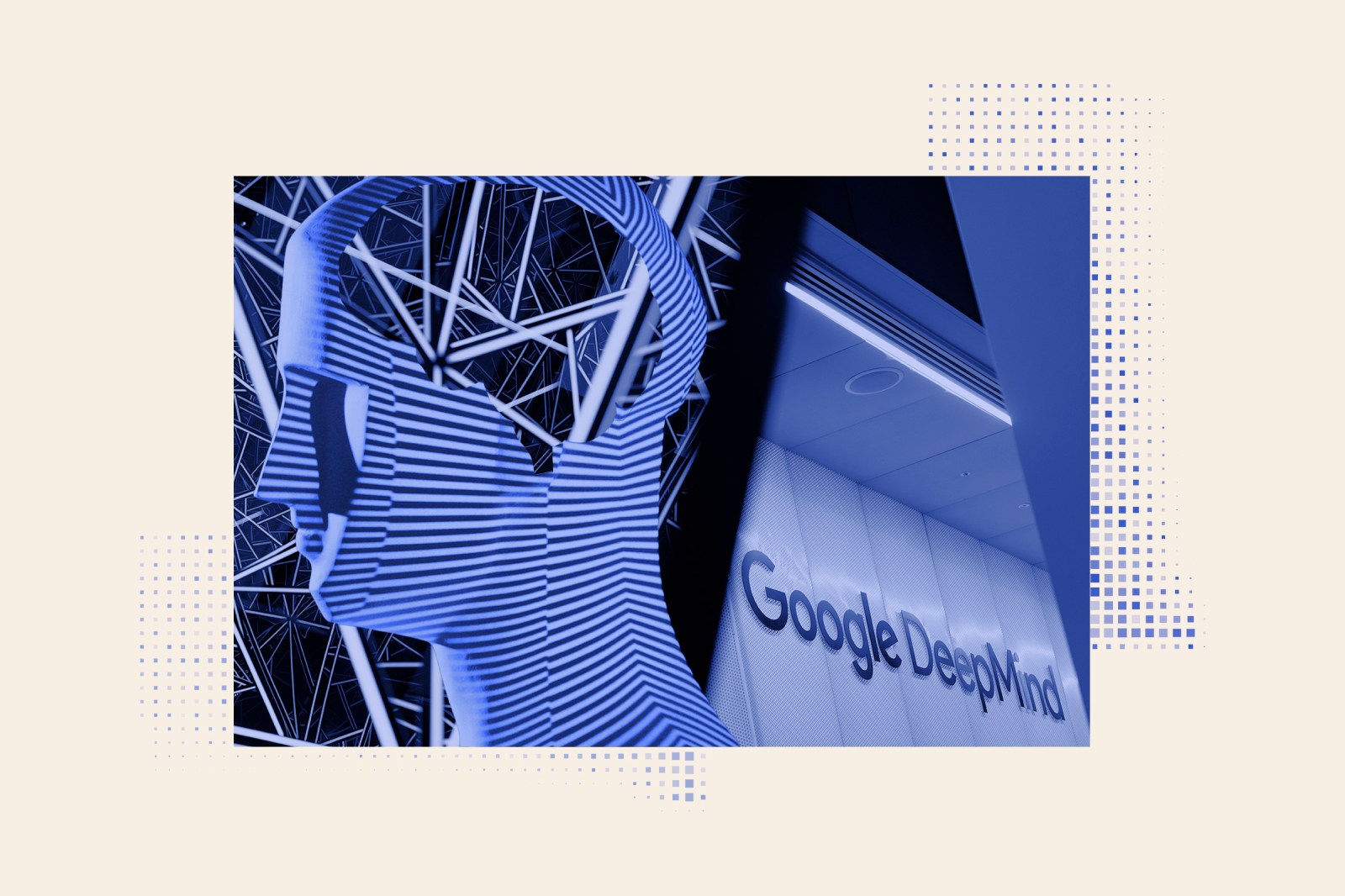
AlphaGenome translates DNA sequences into functional predictions DeepMind’s new model scans up to one‑million nucleotides at once, pinpointing gene locations, dark‑genome influences on expression and splicing, and forecasting the impact of single‑base edits, extending the AI‑driven insight pioneered by AlphaFold [1]. It is described in Nature as a “sequence‑to‑function” system rather than a conventional language model, underscoring its specialized biological focus [1].
Thousands of scientists integrate AlphaGenome into research pipelines Since its non‑commercial release last year, roughly 3,000 researchers have accessed the tool for projects ranging from obesity‑risk modeling to cancer‑mutation profiling [1]. Rapid in‑silico predictions help prioritize wet‑lab experiments, accelerating discovery across biomedical fields [1].
Model accuracy drops for long‑range regulatory effects and tissue specificity Benchmarks show reduced performance when estimating gene regulation beyond 100 kb and when distinguishing activity between neuronal and cardiac tissues [1]. DeepMind acknowledges these gaps and plans iterative refinements to improve distant and tissue‑specific predictions [1].
DeepMind adopts a “pioneering responsibly” development philosophy CEO Demis Hassabis and COO Lila Ibrahim publicly reject a “move fast and break things” approach, citing moral lessons from the Manhattan Project and emphasizing controlled, risk‑aware deployment of powerful AI [2]. Their roadmap stresses early ethical safeguards and transparent collaboration with the scientific community [2].
Root‑node strategy expands AI into multiple scientific domains DeepMind categorizes foundational challenges—protein folding, genomics, quantum chemistry, climate science—as “root nodes” and builds hierarchical models such as AlphaProteo, AlphaMissense, WeatherNext 2, and AlphaEarth atop the AlphaFold architecture [2]. This tree‑like organization aims to generate downstream breakthroughs while maintaining a unified research agenda [2].
Sources
-
1.
BBC: DeepMind’s AlphaGenome AI Maps DNA Function and Disease Risk – Highlights AlphaGenome’s technical capabilities, broad researcher adoption, and current limitations in long‑range and tissue‑specific predictions .
-
2.
Newsweek: DeepMind’s “pioneering responsibly” roadmap: from protein folding to AI‑powered education – Details DeepMind’s ethical stance, root‑node research framework, and new initiatives in education and universal assistants, positioning the company as a modern Bell Labs .
Videos (1)
Timeline
2024 – AlphaFold wins the Nobel Prize in Chemistry for predicting protein structures, mapping over 200 million proteins and enabling researchers worldwide to apply the data across biology, medicine, and industry [2].
2025 – DeepMind releases AlphaGenome as a non‑commercial tool, offering a “sequence‑to‑function” AI that can analyze up to one million DNA letters and forecast the impact of single‑nucleotide changes [1].
2025 – Approximately 3,000 scientists begin using AlphaGenome for projects ranging from obesity‑risk assessment to cancer‑mutation profiling, accelerating experimental prioritisation [1].
Jan 27, 2026 – In the documentary The Thinking Game, CEO Demis Hassabis declares “rapid, unchecked development is unsafe,” citing the Manhattan Project’s moral oversights and stressing DeepMind’s “pioneering responsibly” ethos [2].
Jan 27, 2026 – COO Lila Ibrahim asks, “How do we make sure that the AI is happening with us and not to us?” and frames AI development as a partnership with humanity, emphasizing early risk mitigation [2].
Jan 28, 2026 – DeepMind publishes the AlphaGenome study in Nature, describing it as a “sequence‑to‑function” model that predicts DNA function beyond genes and the influence of the dark genome on expression and splicing [1].
Jan 28, 2026 – Research engineer Natasha Latysheva calls AlphaGenome “an incredible technical feat,” while University of Exeter’s Gareth Hawkes says it offers “a big leap” for interpreting dark‑genome variants [1].
Jan 28, 2026 – Robert Goldstone (Francis Crick Institute) and Ben Lehner (Wellcome Sanger) warn that AlphaGenome is “far from perfect,” noting reduced accuracy for regulatory effects beyond 100 kb and in tissue‑specific contexts [1].
2026 onward – DeepMind plans refinements to AlphaGenome to improve long‑range regulatory predictions and tissue‑specific modelling, aiming to close current accuracy gaps [1].
2026 onward – DeepMind expands into education with LearnLM and Gemini for Education for personalised tutoring, and advances Project Astra to build an AI universal assistant with audio‑video context, conducting parallel ethics research [2].
Historical context – DeepMind’s open‑science approach is likened to Bell Labs, IBM Watson Research Center, and Xerox PARC, reflecting a tradition of exploratory innovation without immediate commercial pressure [2].
External resources (25 links)
- https://www.youtube.com/watch?v=d95J8yzvjbQ (cited 2 times)
- https://en.wikipedia.org/wiki/Bell_Labs (cited 1 times)
- https://en.wikipedia.org/wiki/Coursera (cited 1 times)
- https://en.wikipedia.org/wiki/Craig_Barrett_(chief_executive) (cited 1 times)
- https://en.wikipedia.org/wiki/Google_DeepMind (cited 1 times)
- https://en.wikipedia.org/wiki/PARC_(company) (cited 1 times)
- https://en.wikipedia.org/wiki/The_Idea_Factory (cited 1 times)
- https://en.wikipedia.org/wiki/Thomas_J._Watson_Research_Center (cited 1 times)
- https://en.wikipedia.org/wiki/Tree_(abstract_data_type) (cited 1 times)
- https://cloud.google.com/solutions/learnlm#get-started-with-learnlm-now-directly-in-gemini (cited 1 times)
- https://dataconomy.com/2026/01/16/google-deepmind-ceo-claims-china-trails-western-ai-by-only-months/ (cited 1 times)
- https://deepmind.google/blog/a-catalogue-of-genetic-mutations-to-help-pinpoint-the-cause-of-diseases/ (cited 1 times)
- https://deepmind.google/blog/alphaearth-foundations-helps-map-our-planet-in-unprecedented-detail/ (cited 1 times)
- https://deepmind.google/blog/alphagenome-ai-for-better-understanding-the-genome/ (cited 1 times)
- https://deepmind.google/blog/alphaproteo-generates-novel-proteins-for-biology-and-health-research/ (cited 1 times)
- https://deepmind.google/models/project-astra/ (cited 1 times)
- https://deepmind.google/models/synthid/ (cited 1 times)
- https://deepmind.google/science/ (cited 1 times)
- https://deepmind.google/science/weathernext/ (cited 1 times)
- https://edu.google.com/intl/ALL_us/ai/gemini-for-education/ (cited 1 times)
- https://futurism.com/artificial-intelligence/meta-top-ai-scientist-reason-quit (cited 1 times)
- https://www.kleinerperkins.com/people/advisors/john-doerr/ (cited 1 times)
- https://www.nature.com/articles/s41586-025-09922-y (cited 1 times)
- https://www.nature.com/articles/s41586-025-10014-0 (cited 1 times)
- https://www.nobelprize.org/prizes/chemistry/2024/press-release/ (cited 1 times)