Peru’s Congress Elects 83‑Year‑Old José María Balcázar as Interim President
Updated (3 articles)
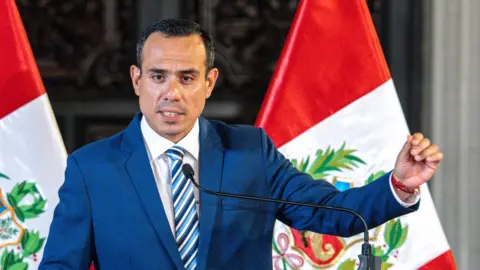
Congress elects Balcázar, ending Jerí’s brief tenure On February 19, 2026, Peru’s 130‑member Congress voted to install 83‑year‑old former judge José María Balcázar as interim president, replacing José Jerí who was removed the day before [1]. Balcázar, a veteran of the left‑wing Perú Libre party, defeated three rivals and secured a legislative majority in the vote [1]. His five‑month mandate runs until the April 12 general election, with a possible runoff in June [1].
Jerí removed after secret meetings with Chinese businessmen Congress voted 75‑24 on February 18, 2026, to oust Jerí, citing undisclosed encounters with Chinese entrepreneur Zhihua Yang captured on security footage [2]. The video also showed a second Chinese national, under house arrest for alleged illegal timber links, meeting Jerí, intensifying concerns over foreign influence [2]. Prosecutors opened two preliminary investigations into illegal sponsorship and influence‑peddling following the revelations [1][2].
“Permanent moral incapacity” repeatedly invoked to dismiss presidents Lawmakers have repeatedly applied the constitutional clause on permanent moral incapacity, using it to remove three heads of state since the 2021 congressional term began [1]. This broad interpretation has contributed to Peru’s record of eight presidential changes in a decade, including the impeachments of Pedro Castillo, Dina Boluarte, and now Jerí [1][2]. Critics argue the clause undermines democratic stability and fuels political turmoil [1].
New interim faces security, transparency, and election pressures Balcázar inherits a climate of rising murders, extortion of small businesses, and demands from political groups for guarantees of a transparent vote [1]. Lawmaker Ruth Luque, who backed Jerí’s removal, called for leadership that ends “the agony” of hidden influence [2]. The interim administration must oversee the April election while addressing corruption probes and maintaining public order [1][2].
Sources
-
1.
*AP*: Peru’s Congress Chooses José María Balcázar as Interim President Amid Ongoing Crisis – Details Balcázar’s election, his background, the use of “permanent moral incapacity,” and the challenges he faces until the April election .
-
2.
BBC: Peru’s Congress Removes Interim President José Jerí Over Secret China Meetings** – Focuses on Jerí’s ouster, the secret meetings with Chinese businessmen, related corruption investigations, and the broader pattern of presidential turnover .
Timeline
2016 – Peru experiences a wave of presidential turnover, reaching its seventh president by 2026, reflecting deepening political instability that fuels public distrust [1].
Dec 7, 2022 – Former President Pedro Castillo attempts to dissolve Congress, triggering his removal and a cascade of prosecutions, including the rebellion conviction of ex‑prime minister Betssy Chávez [3].
Oct 2025 – Congress impeaches President Dina Boluarte on grounds of “permanent moral incapacity,” creating a power vacuum that leads to the appointment of interim President José Jerí [1].
Nov 3, 2025 – Mexican President Claudia Sheinbaum grants political asylum to former Peruvian Prime Minister Betssy Chávez, who then takes refuge inside Mexico’s embassy in Lima [3].
Nov 2025 – Peru severs diplomatic relations with Mexico, labeling the asylum “interference” and declaring President Sheinbaum persona non grata, heightening regional tensions [3].
Jan 25, 2026 – Brazil assumes control of Mexico’s embassy in Lima, guarding the premises and flying its flag after coordinating with Peruvian authorities, while Mexico remains silent [3].
Feb 18, 2026 – Congress votes 75‑24 to remove interim President José Jerí after four months, citing undisclosed meetings with Chinese businessman Zhihua Yang and a second Chinese national under house arrest, prompting corruption probes and a sharp drop in his approval [1].
Feb 18, 2026 – Lawmaker Ruth Luque demands “transparent leadership” and condemns “the agony of hidden influence and hooded figures” in a call for accountability [1].
Feb 19, 2026 – Congress elects 83‑year‑old former judge José María Balcázar, a Perú Libre veteran, as interim president, securing a majority over three rivals and marking the eighth presidential change in a decade [2].
Feb 19, 2026 – Balcázar pledges to steer the country for five months until the April 12 election, confronting rising murders, extortion of small businesses, and demands for a transparent vote, with a possible runoff in June if no candidate exceeds 50 % [2].
Apr 12, 2026 (planned) – Peru holds a general election to select a permanent president, a critical test of democratic stability after a decade of frequent leadership turnovers [2].
June 2026 (possible) – A runoff election may occur if no candidate secures an absolute majority, extending the political transition period [2].