Coroner Sends Bondi Junction Stabbing Psychiatrist to Queensland Health Regulators
Updated (2 articles)
Inquest Findings Prompt Regulator Referral After a five‑week, 800‑page inquest, the NSW coroner formally referred Dr Andrea Boros‑Lavack to Queensland health regulators for investigation, citing her failure to act on family warnings as a major lapse [1]. The referral follows the coroner’s recommendation that the doctor’s conduct be examined by the Queensland Health Professional Board [1]. The inquest report, due late 2025, was delayed out of respect for victims of the December 2023 Bondi Beach shooting [1].
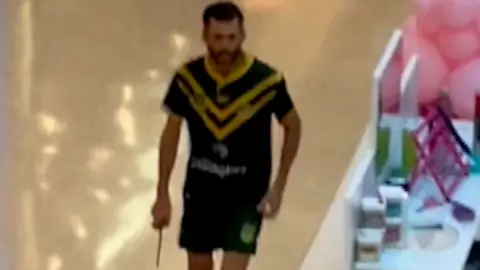
Stabbing Rampage Resulted in Six Deaths and Ten Injuries Joel Cauchi, a 40‑year‑old homeless man diagnosed with schizophrenia, carried out a three‑minute stabbing spree inside Westfield Bondi Junction in April 2024, killing Dawn Singleton, Yixuan Cheng, Jade Young, Ashlee Good, Faraz Tahir and Pikria Darchia while wounding ten others [1]. NSW police inspector Amy Scott shot and killed Cauchi after the attack, ending the rampage [1]. The incident prompted extensive testimony from doctors, police, survivors and victims’ families during the inquest [1].
Systemic Failures and Recommendations Highlighted The coroner identified 23 recommendations, calling for improved mental‑health outreach, short‑term housing, a public “escape, hide, tell” campaign and bravery awards for responders [1]. Testimony revealed that Boros‑Lavack ignored a 2019 warning from Cauchi’s mother, Teresa O’Sullivan, and omitted urgent follow‑up instructions in a discharge letter to a new psychiatrist [1]. Additional lapses included an overlooked police email, an incompetent security‑room guard and poor inter‑operability among agencies [1]. Families praised the inquiry’s depth but criticized media coverage, while the coroner commended police and emergency services [1].
Timeline
Late 2019 – Joel Cauchi’s mother warns psychiatrist Dr Andrea Boros‑Lavack of a possible relapse; Teresa O’Sullivan testifies that the doctor “failed to take more active steps” after the warning [1].
Dec 2023 – Naveed Akram opens fire at a Bondi Beach festival, killing his father Sajid Akram (shot by police) and injuring multiple victims, marking the city’s deadliest mass‑casualty shooting in years [2].
Dec 2023 – Probationary Constable Jack Hibbert is shot in the head and shoulder, loses vision in one eye, yet continues assisting festival‑goers before being evacuated; Commissioner Mal Lanyon later calls him “a positive young man” and pledges suitable duties after recovery [2].
Dec 2023 – Constable Scott Dyson remains hospitalized with serious injuries sustained during the Bondi Beach attack [2].
Apr 2024 – Joel Cauchi, a 40‑year‑old homeless man diagnosed with schizophrenia, carries out a three‑minute stabbing spree at Westfield Bondi Junction, killing six (Dawn Singleton, Yixuan Cheng, Jade Young, Ashlee Good, Faraz Tahir, Pikria Darchia) and wounding ten before Inspector Amy Scott shoots him dead [1].
Apr 2024 – Police and emergency services respond within minutes; the coroner later commends the rapid police response that ended the rampage [1].
Late 2025 – The coroner’s 800‑page inquest report on the Bondi Junction stabbing, originally due late 2025, is postponed out of respect for the December 2023 Bondi Beach shooting victims [1].
Dec 2025 – After months of recovery, Constable Jack Hibbert is released from hospital to convalesce at home for Christmas; his family thanks medical staff and highlights his continued bravery during the attack [2].
Jan‑Feb 2026 – A five‑week inquest hears testimony from doctors, police, survivors and families, identifies systemic failures, and issues 23 recommendations—including improved mental‑health outreach, short‑term housing, and a public “escape, hide, tell” campaign [1].
Feb 5 2026 – The coroner refers Dr Andrea Boros‑Lavack to Queensland health regulators, stating her failure to act on the 2019 family warning constitutes a “major lapse” and recommending a formal investigation [1].
2026 onward – Queensland health authorities are expected to conduct a formal investigation into Dr Boros‑Lavack’s conduct following the coroner’s referral [1].