Venezuela’s Acting President Signs Oil Privatization Law as U.S. Eases Sanctions
Updated (2 articles)
-
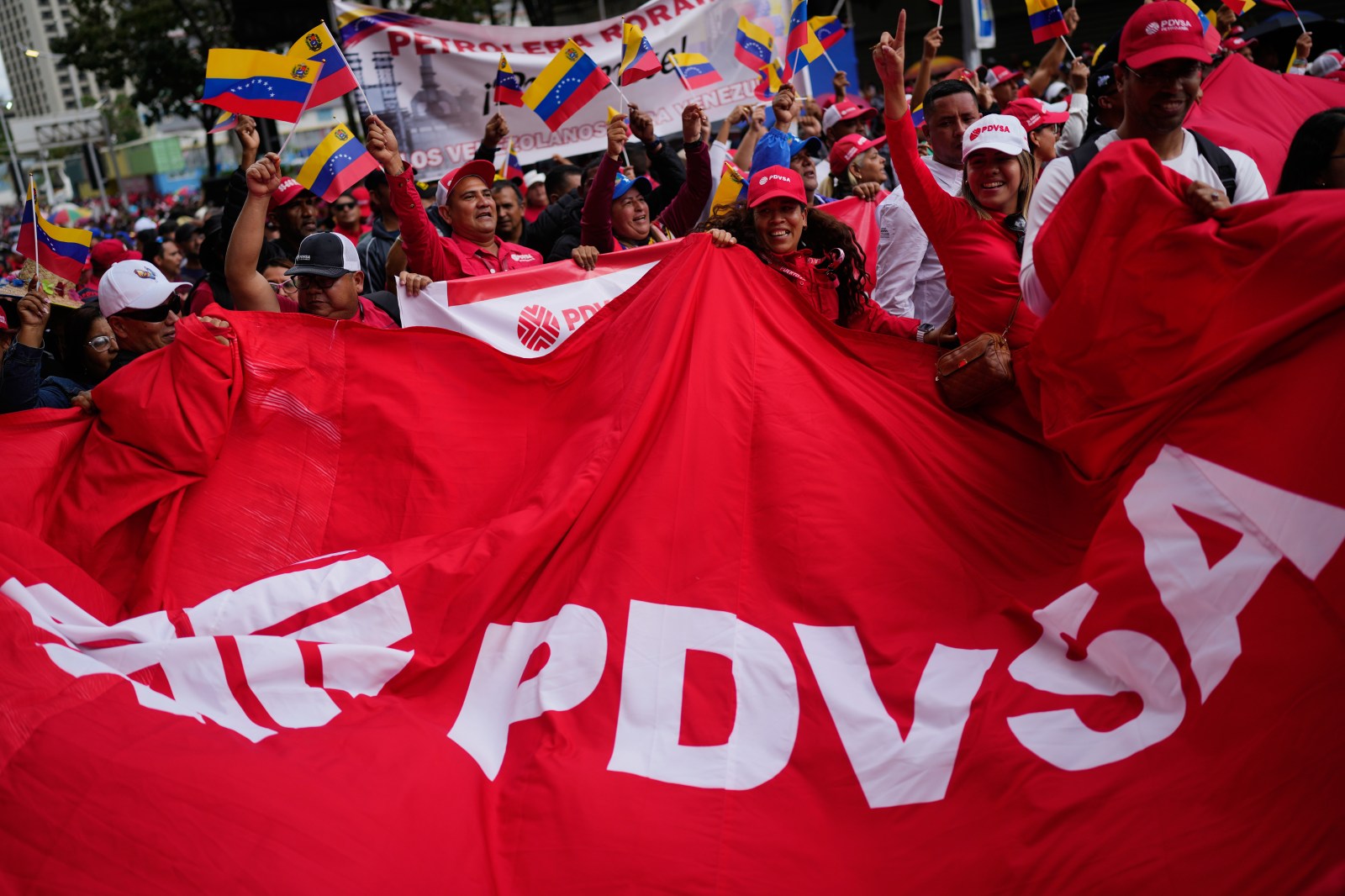 Image: NewsweekWorkers of Venezuela’s state-owned PDVSA oil company rally to back an oil reform bill proposed by acting President Delcy Rodriguez to loosen state control and open the industry to private and foreign investment in Caracas, Venezuela, Thursday, Jan. 29, 2026. (AP Photo/Ariana Cubillos) Source Full size
 -
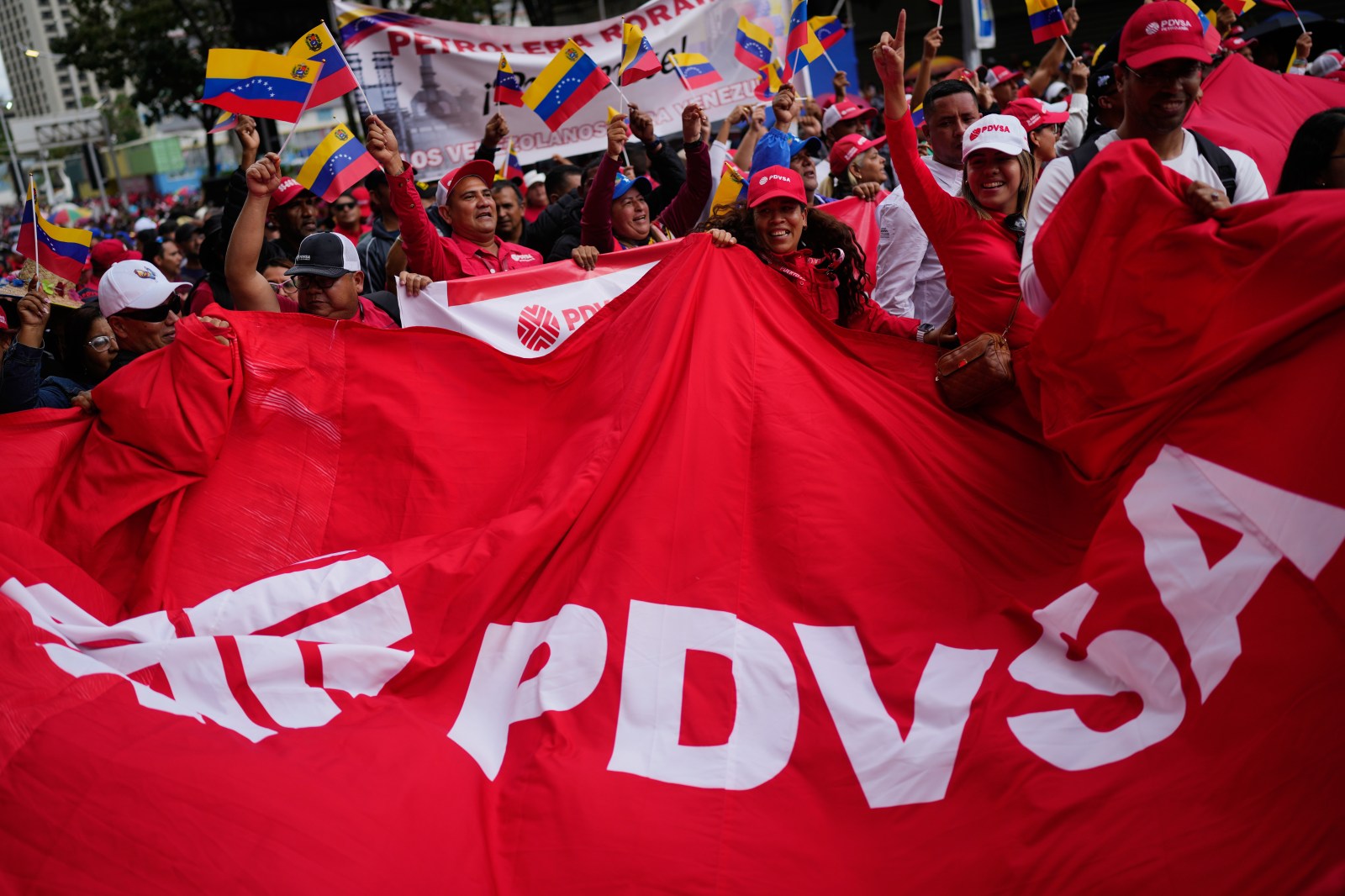 Image: NewsweekWorkers of Venezuela’s state-owned PDVSA oil company rally to back an oil reform bill proposed by acting President Delcy Rodriguez to loosen state control and open the industry to private and foreign investment in Caracas, Venezuela, Thursday, Jan. 29, 2026. (AP Photo/Ariana Cubillos) Source Full size
Delcy Rodríguez Signs Oil Reform Into Law Acting President Delcy Rodríguez signed the oil‑privatization bill on January 30, 2026, after the National Assembly approved it earlier that day, ending more than two decades of strict state control over the sector [1][2]. The legislation authorizes private companies to own and operate production assets, a reversal of Hugo Chávez’s 2006 nationalization framework. Rodríguez framed the reform as a legacy project for future generations, emphasizing economic renewal [1].
U.S. Treasury Issues Targeted Sanctions Relief The U.S. Treasury Department released restricted licenses on the same day, permitting U.S. energy firms to conduct oil‑related activities in Venezuela while barring entities from China, Russia, Iran, North Korea and Cuba [1][2]. The licenses align with a plan announced by Secretary of State Marco Rubio and reflect a calibrated approach to pressure rival states while encouraging foreign investment. Treasury officials stressed that the relief is conditional and subject to ongoing compliance monitoring.
Privatization Provisions Include 30% Royalty Cap and Arbitration The new law caps royalties at 30% of gross production and grants the executive branch authority to set project‑by‑project tax rates [1][2]. It also shifts oil‑related dispute resolution from Venezuelan courts to independent arbitration panels, addressing investor concerns about politicized judiciary outcomes. These mechanisms aim to make the market more attractive to hesitant foreign firms after years of expropriation risk.
Political Leaders Demand Transparency and Anti‑Corruption Safeguards Ruling‑party oil committee head Orlando Camacho hailed the reform as “a change for the country’s economy,” while opposition deputy Antonio Ecarri called for a public website to track contracts, revenues, and expenditures [1][2]. Rodríguez reiterated the government’s commitment to “the future” and promised oversight, though critics warned that privatization alone would not eradicate entrenched graft. The debate underscores the political stakes surrounding the sector’s opening.
Historical Context Highlights Shift From Chávez’s Nationalization Chávez’s 2006 hydrocarbons law had nationalized foreign oil assets and made PDVSA the dominant revenue source, a policy that later contributed to severe economic decline and the exodus of over 7 million Venezuelans since 2014 [1]. The current reform represents a dramatic policy pivot, seeking to revive production by courting private capital after years of sanctions‑driven contraction. Analysts note that the success of the shift will depend on sustained U.S. support and investor confidence.
Sources
-
1.
AP: Venezuela’s acting president signs law to privatize oil sector – Reports Rodríguez’s signature, the law’s 30% royalty cap, arbitration shift, and U.S. sanctions easing with restricted licenses, plus background on Chávez’s nationalization and the humanitarian crisis .
-
2.
Newsweek: Trump‑Backed Venezuela Oil Law Passes Amid U.S. Sanctions Shift – Highlights the National Assembly vote, U.S. military‑diplomatic context, targeted sanctions relief, and calls from lawmakers for transparency, emphasizing the political dynamics surrounding the reform .
Timeline
2006 – Hugo Chávez enacts a hydrocarbons law that nationalizes foreign oil assets and makes state‑run PDVSA the dominant producer, establishing the socialist model that will later shape Venezuela’s economy. [2]
2014‑present – Falling oil prices, mismanagement and sanctions trigger a severe economic collapse, prompting over 7 million Venezuelans to flee the country. [2]
Jan 29, 2026 – The Venezuelan National Assembly votes to approve an oil‑privatization bill that opens the sector to private firms, caps royalties at 30 %, and allows independent arbitration instead of Venezuelan courts, aiming to attract foreign investment. [1]
Jan 29, 2026 – A U.S. special‑operations raid captures President Nicolás Maduro, and President Donald Trump publicly pledges to take control of Venezuela’s oil exports to lure investors, signaling a dramatic shift in U.S. policy. [1]
Jan 29, 2026 – The U.S. Treasury Department issues restricted licenses that ease oil‑sector sanctions for U.S. companies while barring entities from China, Russia, Iran, North Korea and Cuba, aligning with Secretary of State Marco Rubio’s plan. [1][2]
Jan 29, 2026 – Acting President Delcy Rodríguez signs the oil reform law, granting private firms production control, maintaining the 30 % royalty cap, and authorizing project‑by‑project tax adjustments, thereby overturning two decades of state‑centric policy. [2]
Jan 29, 2026 – Rodríguez tells reporters, “We’re talking about the future. We are talking about the country that we are going to give to our children,” emphasizing the reform’s long‑term vision. [2]
Jan 29, 2026 – Ruling‑party oil committee head Orlando Camacho declares the reform “will change the country’s economy,” highlighting expected economic transformation. [1][2]
Jan 29, 2026 – Opposition deputy Antonio Ecarri demands a public website to track contracts and revenues, urging “Let the light shine on in the oil industry,” reflecting concerns over transparency and corruption. [2]
2026 onward – Implementation of the law hinges on Rodríguez’s continued political will, sustained U.S. support, and foreign companies’ readiness to re‑enter a market scarred by past expropriations, leaving analysts uncertain about the sector’s revival. [1]