Ukraine War Enters Fourth Year With Stalemate, Kremlin Faces Growing Time Disadvantage
Updated (5 articles)
-
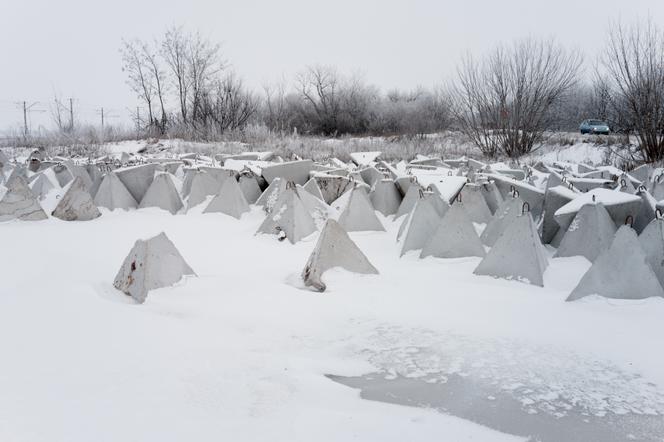 Image: Le Monde
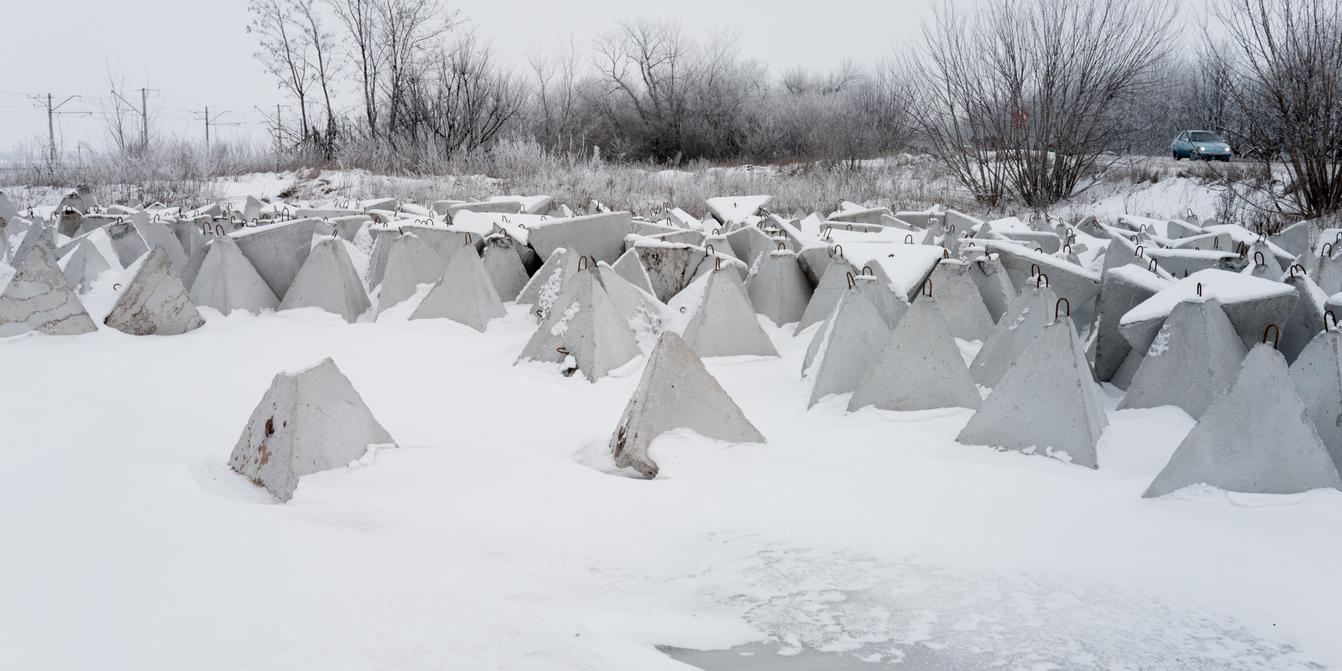
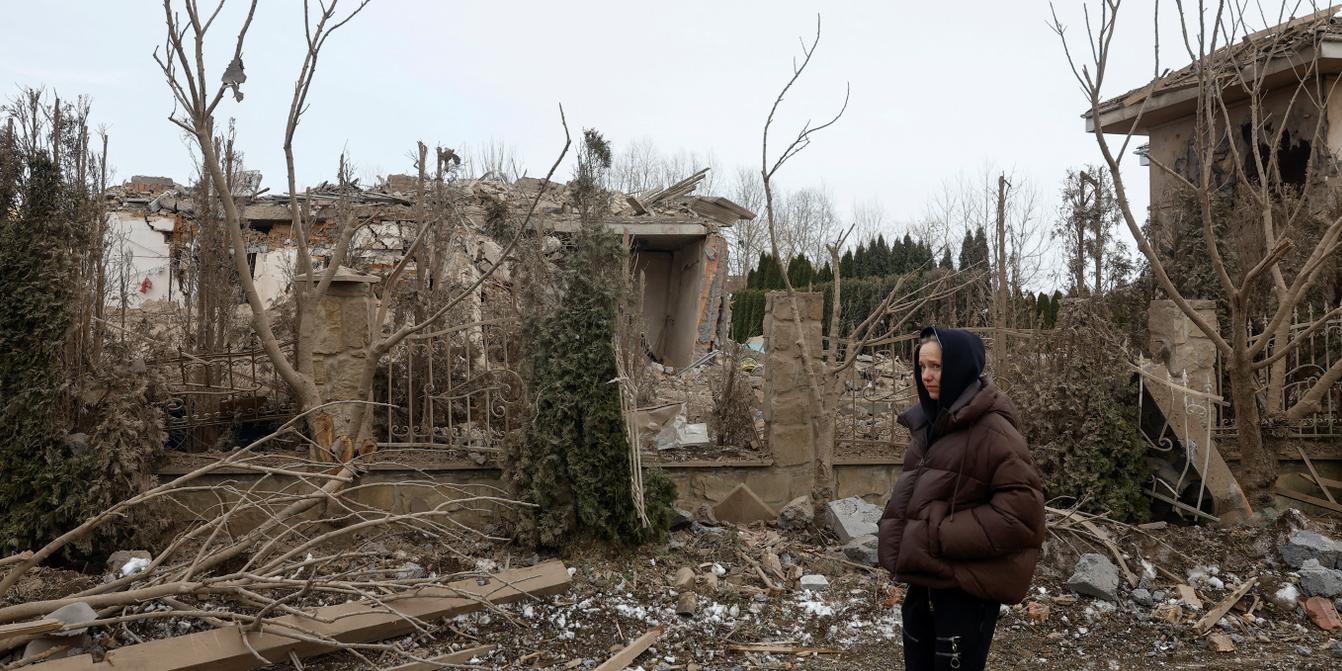
Continued Frontline Deadlock After Four Years The conflict marked its fourth anniversary on February 24, 2026, with frontlines largely unchanged; Russia controls roughly 20 % of Ukrainian territory, a share largely secured in the 2022 offensive, and added only about 1 % more in 2024‑2025 [1]. Kyiv retains the remaining 80 % and continues to repel incremental Russian advances, underscoring a entrenched stalemate [2]. Both sides face a protracted war of attrition with no decisive breakthrough in sight.
Kremlin’s Strategic Position Worsens As Time Advances Analysts warn that the passage of time increasingly works against Moscow, as battlefield losses grow exponentially year‑by‑year despite Russia’s larger manpower reserves [1]. The cumulative attrition erodes the Kremlin’s strategic flexibility and may extend the conflict for years [1]. This mounting pressure compounds the Kremlin’s diplomatic isolation and limits its capacity to achieve swift victory.
Western Allies Maintain Indirect Pressure, Avoid Ground Troops The United States and European nations continue to favor sanctions, weapons shipments, and recruitment challenges over committing ground forces, keeping Ukraine to bear the frontline burden [2]. A Paris summit on February 24 aimed to coordinate aid but produced ambiguous outcomes, reflecting indecision among Kyiv’s supporters [2]. Economic sanctions and the difficulty of replenishing Russian combatants remain central to Western hopes for a non‑military resolution.
Both Sides Exhaust Resources, Unclear Who Will Yield First IFRI security director Elie Tenenbaum describes the war as a “cynical race” where each side is being consumed, questioning which party will exhaust its resources first [2]. Moscow views the prolonged conflict as a slow‑acting poison intended to drain Western democracies through massive defense spending [2]. The mutual depletion of manpower and material heightens uncertainty about the war’s eventual conclusion.
Sources
-
1.
Le Monde: Ukraine conflict may linger for years as time works against Kremlin: Highlights that Russia holds about 20 % of Ukraine, has made minimal territorial gains since 2022, and faces escalating losses that make a swift end unlikely, emphasizing the Kremlin’s deteriorating strategic position .
-
2.
Le Monde: Western Allies Drag Their Feet in Ukraine War as Fourth Anniversary Highlights Stalemate: Focuses on the four‑year deadlock, Western reluctance to deploy ground troops, the ambiguous Paris summit, and Elie Tenenbaum’s warning of a resource‑draining “cynical race” between the combatants .
Related Tickers
Videos (1)
Timeline
2022 – Russia launches a full‑scale invasion of Ukraine, seizing roughly 20 % of Ukrainian territory and establishing a fortified “Fortress Belt” in Donetsk that later becomes a focal point of peace negotiations. [4]
2024‑2025 – Russian forces add only about 1 % more land to their holdings, indicating ultra‑incremental advances after the initial 2022 offensive. [4]
Nov 27, 2025 – Russian troops push faster than the previous year, but analysts say Moscow may not capture the remaining third of Donetsk by 2026, leaving the front contested. [2]
Nov 28, 2025 – Ukrainian artillery gunner “Kelt” and Da Vinci Wolves commander Serhii Filimonov voice skepticism that Moscow will honor any peace pact, fearing a short‑term truce would let Russia regroup and re‑invade. [2]
Dec 2025 (mid‑December) – President Vladimir Putin demands that Ukraine surrender the remaining 20 % of Donetsk, accept Russian sovereignty over all occupied lands, and renounce NATO membership, asserting that Russia’s diplomatic position is now favorable. [1]
Dec 2025 (mid‑December) – President Donald Trump suggests the United States might “let people fight it out,” hinting at pressuring Ukraine toward a cease‑fire that cedes territory and could reduce U.S. intelligence support. [1]
Dec 2025 (mid‑December) – Kyiv limits conscription to men aged 25‑60, describing the policy as protecting “the fathers of the future” while demographic concerns rise amid desertions. [1]
Dec 18, 2025 – EU leaders schedule a summit to revisit a proposed €200 bn “reparation loan” using frozen Russian assets, after Belgium blocks the deal pending risk‑sharing arrangements. [1]
Dec 2025 (late) – The European Union prepares a “coalition of the willing,” expanding the European Sky Shield Initiative and debating limited deployment of Western troops to defend western Ukraine, though proposals stall over escalation fears. [1]
Feb 13, 2026 – The Russian Central Bank cuts its key interest rate to 15.5 % to free capital for the defence sector, following a series of reductions from 21 % in mid‑2025. [3]
Feb 13‑14, 2026 – The United States signals it will not finalize a security pact with Kyiv until Moscow’s territorial conditions are met, effectively linking U.S. guarantees to Ukrainian concessions on land. [3]
Feb 13‑14, 2026 – Ukraine offers to freeze the front and withdraw from Donetsk’s “Fortress Belt,” but lacks firm Western security guarantees, risking exposure to renewed Russian offensives. [3]
Feb 13‑14, 2026 – Kyiv secures $38 bn of Western military aid for 2026, including loans for drones, air‑defence, Gripen fighters, and Patriot interceptors, while advancing near Oleksandrivka and Hulyaipole. [3]
Feb 23, 2026 – Western powers continue a war‑of‑attrition strategy, avoiding ground troops and relying on sanctions and aid, as the Paris summit scheduled for Feb 24 seeks to coordinate allies but yields uncertain outcomes. [5]
Feb 24, 2026 – The Paris summit convenes to align Kyiv’s supporters on aid and diplomatic steps, yet strategic options remain indecisive, reflecting the entrenched deadlock. [5]
Feb 26, 2026 – Analysts warn the conflict is likely to endure for years, noting that time increasingly works against the Kremlin while Russia controls about 20 % of Ukraine and recent gains are minimal. [4]
Feb 26, 2026 – The war erodes Russia’s global standing, exposing limits such as its inability to protect allies and prompting President Trump to create a “Board of Peace” to supplant the UN. [4]
All related articles (5 articles)
-
Le Monde: Ukraine conflict may linger for years as time works against Kremlin
-
Le Monde: Western Allies Drag Their Feet in Ukraine War as Fourth Anniversary Highlights Stalemate
-
ISW: Russia‑Ukraine war: diplomatic deadlock, Russian strain and new Western aid (Feb 13‑14 2026)
-
BBC: Putin’s Calculus and the International Push to End the Ukraine War
-
AP: Ukrainian Troops Doubt Russia Will Honor Peace Pact, Demand Strong Military
External resources (117 links)
- https://www.youtube.com/live/PUQxyORGs_8?si=EuaBZuxZkh8RMGEr (cited 1 times)
- https://www.youtube.com/watch?v=nIcm9oupyPo (cited 1 times)
- https://www.politico.com/news/2026/02/13/munich-security-conference-ukraine-fate-00779545 (cited 1 times)
- https://www.reuters.com/business/aerospace-defense/germany-wants-deliver-5-more-missile-interceptors-ukraine-defence-minister-says-2026-02-12/ (cited 1 times)
- https://t.me/GeneralStaffZSU/34956 (cited 9 times)
- https://t.me/GeneralStaffZSU/34977 (cited 9 times)
- https://t.me/wargonzo/32264 (cited 8 times)
- https://www.facebook.com/share/p/1DQD5wSjyu/ (cited 8 times)
- https://t.me/dva_majors/88062 (cited 6 times)
- https://t.me/Joint_Forces_Task_Force/20055 (cited 4 times)
- https://t.me/GeneralStaffZSU/34976 (cited 3 times)
- https://t.me/motopatriot78/48598 (cited 3 times)
- https://t.me/rybar/77453 (cited 3 times)
- https://t.me/DnevnikDesantnika/39723 (cited 2 times)
- https://t.me/DnevnikDesantnika/39742 (cited 2 times)
- https://t.me/DnevnikDesantnika/39745 (cited 2 times)
- https://t.me/RVvoenkor/109156 (cited 2 times)
- https://t.me/boris_rozhin/197800 (cited 2 times)
- https://t.me/dva_majors/88050 (cited 2 times)
- https://t.me/fatumgroup/377 (cited 2 times)
- https://t.me/kiber_boroshno/12560 (cited 2 times)
- https://t.me/motopatriot78/48602 (cited 2 times)
- https://t.me/rusich_army/28303 (cited 2 times)
- https://t.me/rusich_army/28308 (cited 2 times)
- https://t.me/severnnyi/6747 (cited 2 times)
- https://t.me/usf_army/1516 (cited 2 times)
- https://www.facebook.com/dtekoem/posts/pfbid0242tWDcDbgjAewpstbfzCsgv9E35dFfrHvqWfw2pkEjPzc5bAMXgD1pQVBucT33LDl (cited 2 times)
- https://x.com/99Dominik_/status/2022228362769608751?s=20 (cited 2 times)
- https://t.me/BalitskyEV/7268 (cited 1 times)
- https://t.me/DnevnikDesantnika/39716 (cited 1 times)
- https://t.me/DnevnikDesantnika/39734 (cited 1 times)
- https://t.me/OleksiiKuleba/8157 (cited 1 times)
- https://t.me/Osintpen/2536 (cited 1 times)
- https://t.me/RVvoenkor/109153 (cited 1 times)
- https://t.me/SALDO_VGA/13450 (cited 1 times)
- https://t.me/boris_rozhin/197836 (cited 1 times)
- https://t.me/creamy_caprice/11266 (cited 1 times)
- https://t.me/creamy_caprice/11267 (cited 1 times)
- https://t.me/gvZapad/17745 (cited 1 times)
- https://t.me/kpszsu/55472 (cited 1 times)
- https://t.me/luhanskaVTSA/32885 (cited 1 times)
- https://t.me/mod_russia/61130 (cited 1 times)
- https://t.me/mod_russia/61140 (cited 1 times)
- https://t.me/mykolaivskaODA/18487 (cited 1 times)
- https://t.me/nm_dnr/15017 (cited 1 times)
- https://t.me/nm_dnr/15019 (cited 1 times)
- https://t.me/notes_veterans/26912 (cited 1 times)
- https://t.me/oleksandrkoval_rv/9020 (cited 1 times)
- https://t.me/rybar/77460 (cited 1 times)
- https://t.me/rybar/77472 (cited 1 times)
- https://t.me/severnnyi/6750 (cited 1 times)
- https://t.me/tass_agency/361122 (cited 1 times)
- https://t.me/tass_agency/361176 (cited 1 times)
- https://t.me/tass_agency/361177 (cited 1 times)
- https://t.me/tass_agency/361178 (cited 1 times)
- https://t.me/tass_agency/361179 (cited 1 times)
- https://t.me/tass_agency/361192 (cited 1 times)
- https://t.me/tass_agency/361195 (cited 1 times)
- https://t.me/tass_agency/361204 (cited 1 times)
- https://t.me/verumreactor/32775 (cited 1 times)
- https://t.me/voin_dv/18648 (cited 1 times)
- https://t.me/voin_dv/18651 (cited 1 times)
- https://t.me/vrogov/23413 (cited 1 times)
- https://t.me/zedigital/6633 (cited 1 times)
- https://t.me/zvizdecmanhustu/3238 (cited 1 times)
- https://www.facebook.com/gavrusiknata/posts/pfbid02Yet8rABvuDfZQBghZwuU9DjVWBkqbZufptBtjG46dvVKD4FWdFrhzNT7WSfJJcRal? (cited 1 times)
- https://www.facebook.com/photo/?fbid=1570615917555499&set=pcb.1570616397555451 (cited 1 times)
- https://www.facebook.com/reel/1845615156133998 (cited 1 times)
- https://www.facebook.com/reel/910451528014574 (cited 1 times)
- https://www.facebook.com/reel/910451528014574/ (cited 1 times)
- https://www.instagram.com/36_obrmp/reel/DUsoJvUiLDw/ (cited 1 times)
- https://x.com/AudaxonX/status/2022306470281269663 (cited 1 times)
- https://x.com/Forsvarsdep/status/2021991973339488659 (cited 1 times)
- https://x.com/RoadtoMars9/status/2022100898596687997 (cited 1 times)
- https://x.com/richardzai38580/status/2022309066094387448 (cited 1 times)
- https://x.com/wartranslated/status/2022245740526141695 (cited 1 times)
- (cited 5 times)
- https://cbr.ru/press/pr/?file=13022026_133000key.htm (cited 2 times)
- https://suspilne.media/odesa/1238998-ataka-bezpilotnikiv-na-odesu-e-vlucanna-v-zitlovij-budinok-ta-obekti-infrastrukturi/ (cited 2 times)
- https://www.rbc.ru/rbcfreenews/698e86f49a79470fb4707fcc (cited 2 times)
- http://kremlin.ru/events/president/news/74285 (cited 1 times)
- https://armyinform.com.ua/2026/02/13/38-mlrd-dlya-ukrayiny-na-drony-ppo-ta-rakety-do-patriot-rezultaty-odnogo-z-najuspishnishyh-ramshtajniv/ (cited 1 times)
- https://armyinform.com.ua/2026/02/13/panika-z-czogo-pryvodu-u-voroga-tryvaye-i-dosi-na-kupyanskomu-napryamku-rosiyany-jdut-v-ataku-bez-zvyazku-naoslip/ (cited 1 times)
- https://armyinform.com.ua/2026/02/13/rosiya-zavdala-masovanyh-udariv-po-portovij-ta-zaliznychnij-infrastrukturi-na-odeshhyni/ (cited 1 times)
- https://armyinform.com.ua/2026/02/13/rozcharuvalysya-rozstroyilysya-sydyat-tam-plachut-na-oleksandrivskomu-napryamku-v-rosiyan-myshyna-voznya/ (cited 1 times)
- https://armyinform.com.ua/2026/02/13/sposterezhennya-trishky-v-nyh-zipsuvalos-na-pokrovskomu-napryamku-u-vorozhyh-droniv-rozvidnykiv-pogirshyvsya-zir/ (cited 1 times)
- https://isw.pub/UkrWar022725 (cited 1 times)
- https://isw.pub/UkrWar031425 (cited 1 times)
- https://isw.pub/UkrWar031725 (cited 1 times)
- https://isw.pub/UkrWar032525 (cited 1 times)
- https://isw.pub/UkrWar040425 (cited 1 times)
- https://isw.pub/UkrWar041825 (cited 1 times)
- https://isw.pub/UkrWar042225 (cited 1 times)
- https://isw.pub/UkrWar050125 (cited 1 times)
- https://isw.pub/UkrWar050325 (cited 1 times)
- https://isw.pub/UkrWar051225 (cited 1 times)
- https://isw.pub/UkrWar051725 (cited 1 times)
- https://isw.pub/UkrWar052125 (cited 1 times)
- https://isw.pub/UkrWar080825 (cited 1 times)
- https://meduza.io/news/2026/02/13/gosudarstvennyy-vneshniy-dolg-rossii-vpervye-za-20-let-prevysil-60-milliardov-rubley (cited 1 times)
- https://meduza.io/news/2026/02/13/tsb-rf-snizil-klyuchevuyu-stavku-do-15-5 (cited 1 times)
- https://militarnyi.com/uk/news/norvegiya-profinansuye-zakupivlyu-aviabomb/ (cited 1 times)
- https://militarnyi.com/uk/news/u-bilorusi-vyprobuvaly-rosijskyj-perehoplyuvach-droniv-molot/ (cited 1 times)
- https://militarnyi.com/uk/news/ukrayina-planuye-zakupyty-shvedski-gripen-za-koshty-kredytu-yes/ (cited 1 times)
- https://suspilne.media/1238944-35-raket-dla-ukraini-nimeccina-vnesla-propoziciu-sodo-pac-3/ (cited 1 times)
- https://suspilne.media/1239110-fedorov-nazvav-detali-dopomogi-na-38-mlrd-pisla-ramstajnu/ (cited 1 times)
- https://suspilne.media/crimea/1239256-sbs-urazili-vijskovij-aerodrom-gvardijskij-u-krimu/ (cited 1 times)
- https://suspilne.media/donbas/1238494-ostanni-dva-dni-buli-duze-napruzenimi-147-brigada-pro-boi-u-pokrovsku/ (cited 1 times)
- https://suspilne.media/donbas/1239264-sili-oboroni-urazili-pidstanciu-u-lugansku/ (cited 1 times)
- https://suspilne.media/mykolaiv/1237906-vnaslidok-ataki-sahediv-poskodzeno-energoobekt-castina-bastanskogo-rajonu-bez-svitla/ (cited 1 times)
- https://suspilne.media/rivne/1239764-poskodzeno-gopodarski-budiveli-magazin-e-poranenij-naslidki-cergovoi-ataki-na-rivnensinu/ (cited 1 times)
- https://suspilne.media/zaporizhzhia/1239286-sili-oboroni-urazili-sklad-rosijskih-boepripasiv-ta-data-centr-rf-na-tot-zaporizkoi-oblasti/ (cited 1 times)
- https://www.cbr.ru/statistics/macro_itm/external_sector/ed/ext-debt/ (cited 1 times)
- https://www.tv4.se/artikel/tt-260211-euforsvar1-ec0402ba/gripensamtal-i-ett-intensivt-skede (cited 1 times)
- https://youtu.be/Z2kLK-sO3yg?t=1494 (cited 1 times)
- https://youtu.be/Z2kLK-sO3yg?t=2741 (cited 1 times)
- https://youtu.be/Z2kLK-sO3yg?t=714 (cited 1 times)