Johnson Pushes Immediate Non‑Combat UK Troops to Ukraine Before Fourth Anniversary
Updated (2 articles)
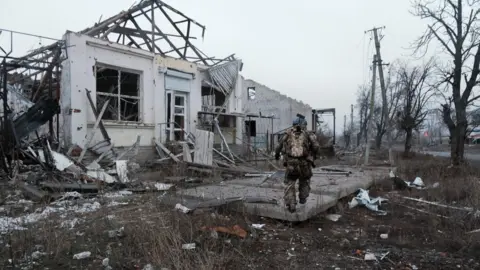
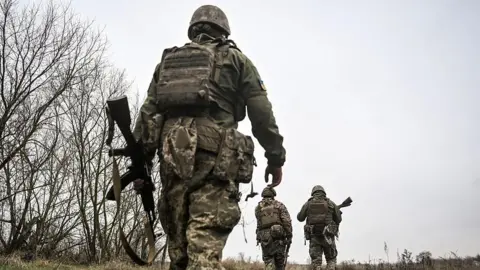
Johnson Urges Immediate Non‑Combat Deployment Former prime minister Boris Johnson told BBC’s Laura Kuenssberg and former chief of defence staff Adm Sir Tony Radakin that the UK and its allies should send peace‑keeping personnel to Ukraine now, framing the move as a “switch” for Putin ahead of the war’s fourth anniversary [2]. He repeated the same call in an AP interview, emphasizing that non‑combat troops would demonstrate Western resolve without escalating fighting [1]. Both outlets note his appeal targets “peaceful ground forces” rather than combat units.
Deployment Tied to Ceasefire and Peace‑Keeping Tasks Johnson stressed that any British contingent would operate only after a negotiated ceasefire, stationed in tranquil regions to police peace and support reconstruction [1][2]. The plan envisions a “coalition of the willing” that would assume non‑fighting duties once hostilities end, avoiding direct combat involvement. Russia’s previous rejection of foreign peace‑keepers, labeling them legitimate targets, is cited as a risk but not a deterrent to the proposal [1][2].
UK Ministry of Defence Mobilises Funding and International Partners The MoD confirmed ongoing planning under UK leadership, coordinating with over 30 nations to ready a multinational force [1]. It highlighted a record‑high defence aid package, including a £500 million air‑defence shipment and £200 million earmarked for deployment preparation [2]. These resources aim to equip the non‑combat contingent and sustain the broader coalition after the ceasefire.
Johnson Blames Past Western Hesitation and Calls for Faster Aid Johnson linked the current conflict to earlier Western failures in Crimea (2014), Syria and Afghanistan, arguing that delayed responses emboldened Putin [1][2]. He echoed Sir Tony Radakin’s criticism of allies’ “incrementalism,” describing the slow aid pace as “deeply frustrating” for Kyiv [2]. Both sources present Johnson’s narrative that decisive, immediate action now could alter Russia’s calculus.
Sources
-
1.
AP: Boris Johnson Calls for Non‑Combat Troops in Ukraine: Johnson urges the UK and allies to send non‑combat personnel before the invasion’s fourth anniversary, argues deployment poses no escalation risk, and cites Russian rejection of peace‑keepers .
-
2.
BBC: Boris Johnson Calls for Immediate Non‑Combat UK Troops in Ukraine: Johnson pushes for swift deployment, details the coalition’s ceasefire‑linked plan, criticises Western hesitation, and notes the MoD’s £500 million air‑defence and £200 million preparation funding .
Related Tickers
Timeline
2014 – Russia annexes Crimea, prompting Western condemnation but limited action, a failure Johnson later cites as emboldening Putin and contributing to the 2022 invasion [1][2].
2018 – A Syrian chemical‑weapon attack triggers a tepid Western response, which Johnson references as another missed opportunity that encouraged Russian aggression [1][2].
Aug 2021 – The chaotic U.S. and UK withdrawal from Afghanistan concludes, a Western failure Johnson says further boosted Putin’s confidence [1][2].
Sep 2025 – President Vladimir Putin declares any foreign troops in Ukraine would be “legitimate targets,” rejecting Russia’s own “reassurance force” proposal [1][2].
Early 2026 – The UK unveils a £500 million air‑defence package for Ukraine and £200 million to prepare a post‑war deployment, marking a record‑high level of British military aid [1][2].
Feb 2026 (fourth anniversary of the invasion) – Former Prime Minister Boris Johnson urges immediate deployment of non‑combat UK troops to Ukraine, saying it would “flip a switch” in Putin’s mind and signal unwavering support for a free Ukraine [1][2].
Feb 21, 2026 – Johnson tells Laura Kuenssberg and former chief of defence staff Adm Sir Tony Radakin that the UK and allies should send peace‑keeping forces to safe areas now, contingent on a cease‑fire, and criticises Western “incrementalism” as too slow for Kyiv [1][2].
Feb 21, 2026 – Johnson links the war to Western failures in Crimea, Syria and Afghanistan, blaming the lack of decisive response for the escalation and loss of lives [1][2].
Feb 21, 2026 – The Ministry of Defence confirms that planning continues under UK leadership for a “coalition of the willing” to ready a multinational non‑combat force that would secure long‑term peace after hostilities cease [1][2].
2026‑2027 (post‑ceasefire) – The coalition of the willing prepares to deploy non‑combat troops for policing and peace‑keeping in tranquil Ukrainian regions once a negotiated settlement is reached [1][2].