NASA‑Guided Release of 158 Hybrid Tortoises Begins Floreana’s Ecological Revival
Updated (4 articles)
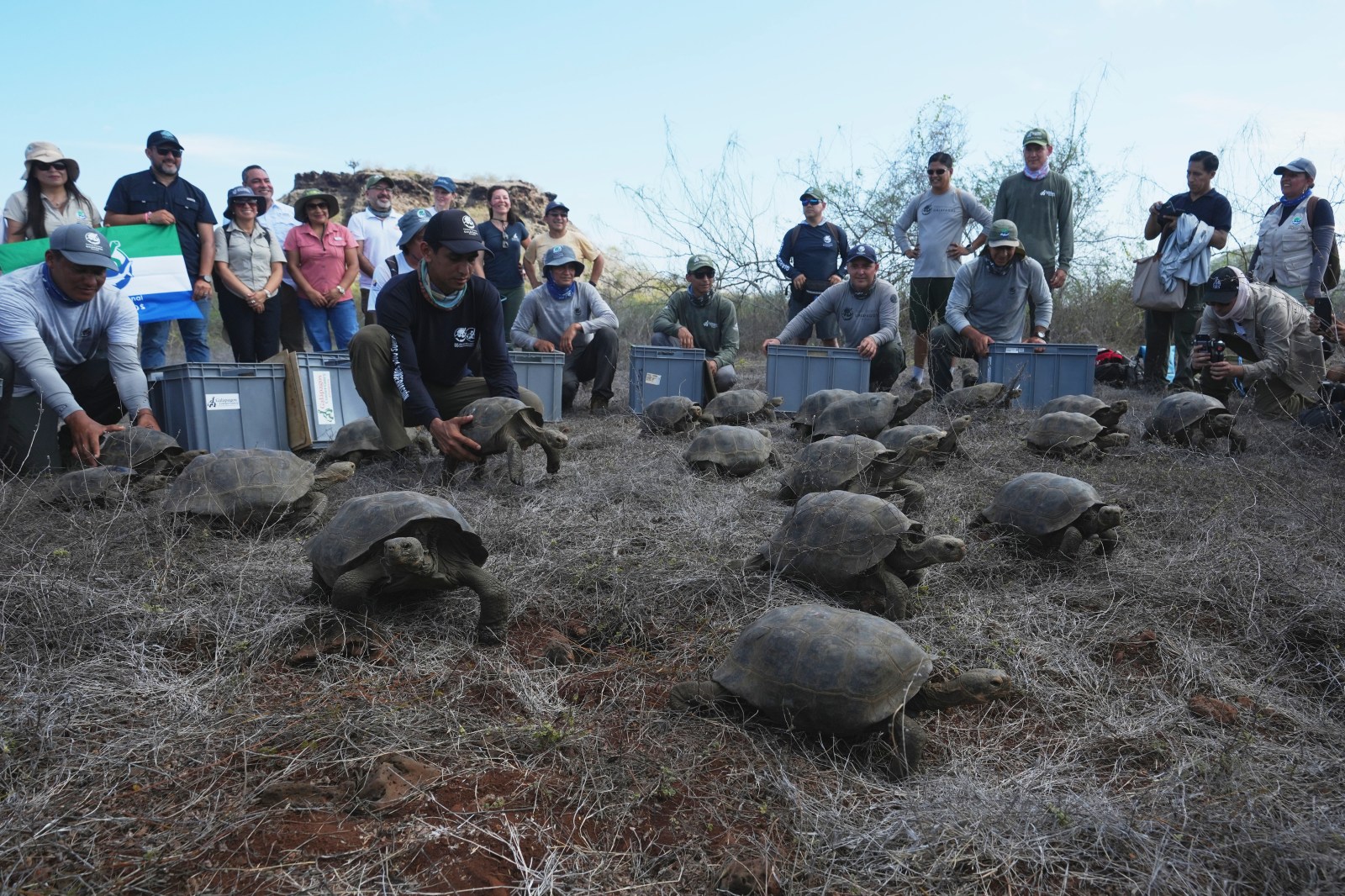
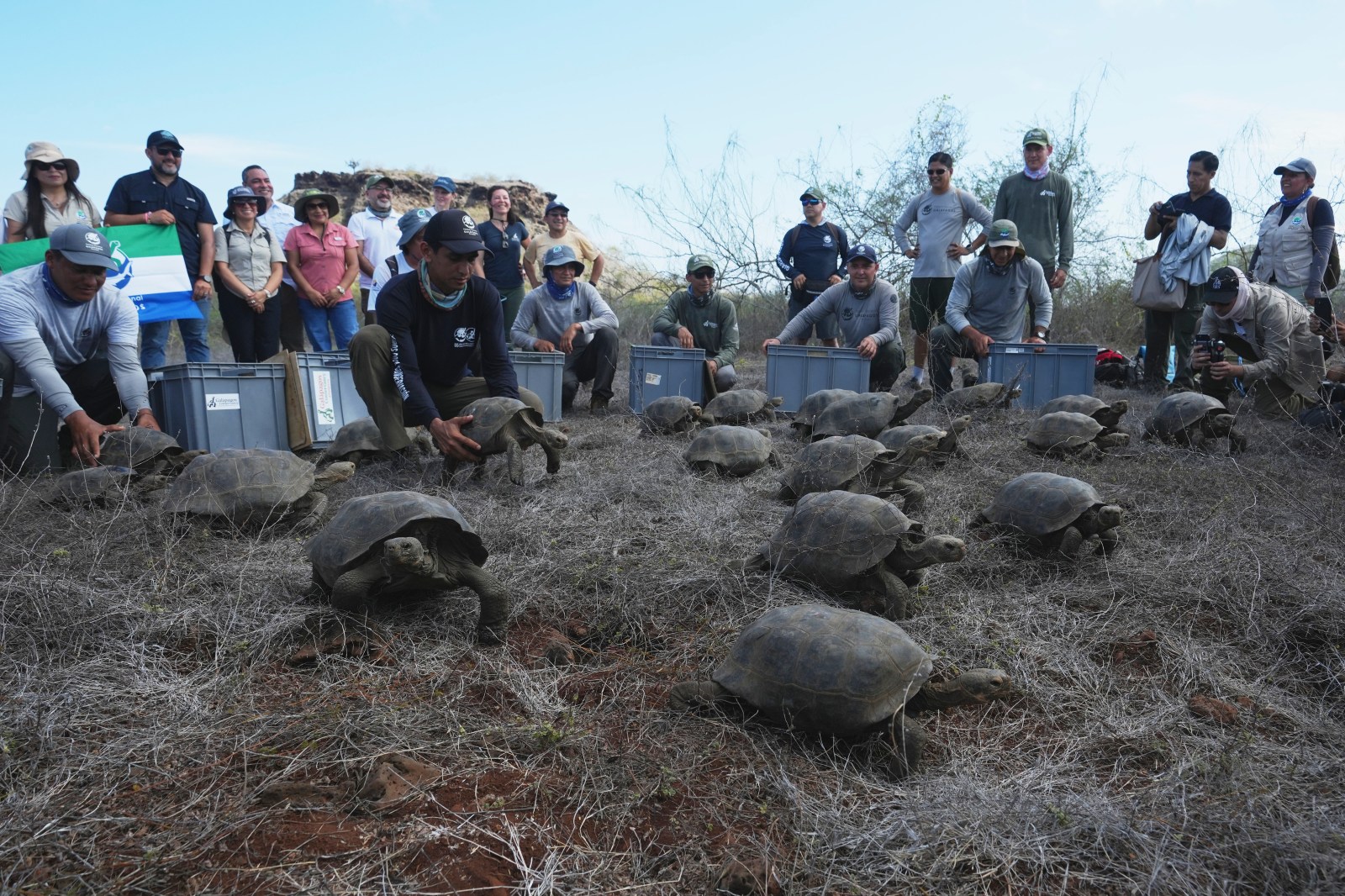
Historic Release of Juvenile Tortoises Restores Species After Centuries On 20 February 2026, the Galápagos National Park Directorate and conservation partners released 158 captive‑bred juvenile giant tortoises, aged 8‑13, onto Floreana Island, marking the first presence of the species there in roughly 150‑180 years [1][2][3][4]. The release was timed with the season’s first winter rains to maximize survival prospects. Coordinated efforts involved the Galápagos Conservation Trust, the Galápagos National Park breeding centre, and local stakeholders.
Hybrid Individuals Retain 40‑80 % of Extinct Floreana DNA The juveniles are hybrids that carry between 40 % and 80 % of the genetic makeup of the extinct Chelonoidis niger subspecies, traced to ancestors found on Wolf Volcano on Isabela Island [2][4]. Park director Christian Sevilla and breeding centre director Fredy Villalba emphasized that the selected tortoises are large enough to defend against invasive rats and cats. The breeding program originated after DNA from 19th‑century tortoise bones confirmed Floreana lineage, prompting back‑breeding in 2017 [1][3].
NASA Satellite Observations Determined Optimal Release Sites Researchers combined Landsat, Global Precipitation Measurement and Terra satellite data to produce habitat‑suitability maps forecasting vegetation, rainfall, temperature and terrain conditions for up to 40 years [1]. These maps identified release zones where the tortoises are most likely to thrive and guide future rewilding across the archipelago. The tool will be used to monitor the released cohort and inform subsequent releases.
Reintroduction Integrated Into Broad Floreana Restoration Plan The release initiates the Floreana Ecological Restoration Project, which also targets eradication of invasive rats, feral cats, and invasive plants such as blackberry and guava [1][2][4]. The project aims to introduce a total of 700 tortoises over several years and to re‑introduce 11 additional native species [1][2]. Floreana’s 173 km² landscape supports ~200 human residents, flamingos, iguanas, penguins and hawks, all of which will now share the island with the new tortoises.
Breeding Programme Generates Hundreds of Hatchlings for Release Back‑breeding began after a 2008 survey identified tortoises with Floreana ancestry, leading to the selection of 23 hybrids for captive breeding on Santa Cruz [3]. By the end of 2025 the program produced more than 600 hatchlings, several hundred of which reached release‑ready size [3][1]. Conservation leaders describe the February release as a milestone for global restoration efforts.
Sources
-
1.
Newsweek: NASA Satellite Data Guides Return of 158 Giant Tortoises to Floreana Island – Details NASA‑driven habitat‑suitability modeling, the DNA‑verified breeding lineage, and the broader restoration agenda .
-
2.
CNN: Giant Tortoises Reintroduced to Floreana Island After 150‑Year Absence – Highlights hybrid genetics, selection criteria for predator defense, and the projected 700‑tortoise program .
-
3.
BBC: 158 Captive‑Bred Giant Tortoises Reintroduced to Floreana After 180 Years – Focuses on the back‑breeding origin, the extinction history of C. niger niger, and statements from the Galápagos Conservation Trust .
-
4.
AP: Giant Tortoises Return to Floreana After 150‑Year Absence – Emphasizes the release timing with winter rains, invasive‑species challenges, and the World Heritage significance of the effort .
Timeline
1840s – Sailors hunt the native Floreana giant tortoise to extinction, wiping out the subspecies Chelonoidis niger niger and ending its presence on the island for more than a century [1].
1978 – UNESCO inscribes the Galápagos archipelago as a Natural World Heritage Site, highlighting its unique terrestrial and marine biodiversity and underscoring the global importance of any restoration effort [2][4].
2000 – Researchers extract DNA from tortoise bones on Isabela’s Wolf Volcano, confirming Floreana genetic ancestry and prompting the concept of a breeding program to resurrect the lost lineage [3].
2008 – A field survey on Wolf Volcano identifies living tortoises carrying Floreana ancestry, providing the living genetic stock needed for a back‑breeding effort [1].
2017 – Conservationists launch a back‑breeding programme, selecting 23 hybrid individuals with the closest Floreana links for captive breeding on Santa Cruz Island [1].
2025 – The breeding programme yields more than 600 hatchlings, and several hundred juveniles reach release‑ready size, demonstrating the program’s scalability and readiness for reintroduction [1].
Feb 20, 2026 – NASA’s Landsat, GPM and Terra observations produce habitat‑suitability maps that guide the release of 158 juvenile hybrid tortoises on Floreana, the first tortoises on the island in over 150 years [3].
Feb 20, 2026 – Park director Christian Sevilla states the released juveniles retain 40‑80 % of the extinct Floreana DNA, emphasizing their role as genetic proxies for the lost subspecies [2].
Feb 20, 2026 – Fredy Villalba explains the selection criteria focus on size and defensive ability, ensuring the tortoises can survive invasive rats and cats on the island [2].
Feb 21, 2026 – The Galápagos Conservation Trust calls the release a “hugely significant milestone,” and chief executive Dr Jen Jones describes it as “truly spine‑tingling,” underscoring its promise for global restoration [1].
Feb 21, 2026 – The release marks the first time in 180 + years that giant tortoises roam Floreana, officially launching the Floreana Ecological Restoration Project coordinated by the Galápagos National Park Directorate [1].
2026 – future – The Floreana Ecological Restoration Project plans to introduce a total of 700 tortoises, eradicate invasive rats and feral cats, and reintroduce 11 additional native species to rebuild the island’s ecosystem [4][3].
2026 – future – The Galápagos Conservancy aims to replicate the NASA‑driven decision tool archipelago‑wide, using the Floreana success to guide future rewilding efforts across the Galápagos [3].